
Elderly people keep the craft alive in the mountainous region of Nghe An.
In many villages in western Nghe An province, numerous traditional crafts are still preserved and passed down from generation to generation by local women. This not only generates additional income but also contributes to the preservation of the culture of ethnic minority communities.
Preserving traditional crafts
In Chinh Yen village, Yen Khe commune, despite being nearly 80 years old, Mrs. Vi Thi Hong remains deeply committed to the traditional craft of rattan weaving. Not only is she the oldest member, but she also serves as the head of the village's rattan and bamboo weaving cooperative. Most of the remaining members are over 70 years old, with the youngest being 50. Many have more than 40 years of experience in the craft.
What makes Ms. Hong proud is not only the products she creates, but also the fact that the local traditional craft is well-received by customers. In 2024, a hand-woven rattan wallet she made won second prize at the Vietnam Handicrafts Competition. Outperforming many entries nationwide, the product from this woman from the mountainous region impressed with its natural materials, handcrafted weaving techniques, and colors created from readily available resources.
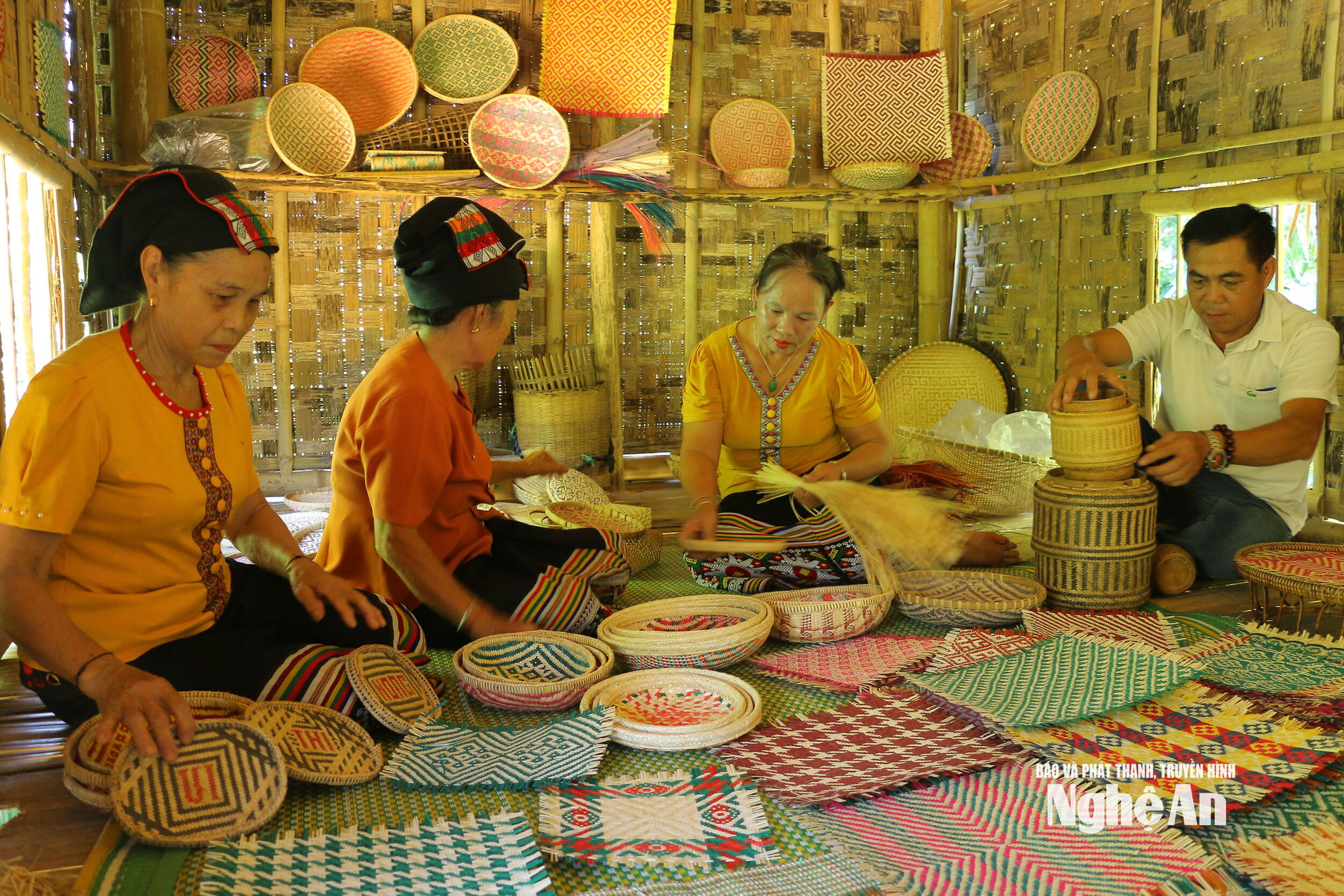
Recalling the competition, Ms. Hong said that meeting artisans from many regions and introducing products made by her own hands was a memorable experience. She didn't expect that products made entirely from natural materials, from shaping the bamboo strips and weaving to dyeing, would receive so much appreciation. This recognition further motivates her and the team to continue perfecting the designs and preserving the traditional craft.
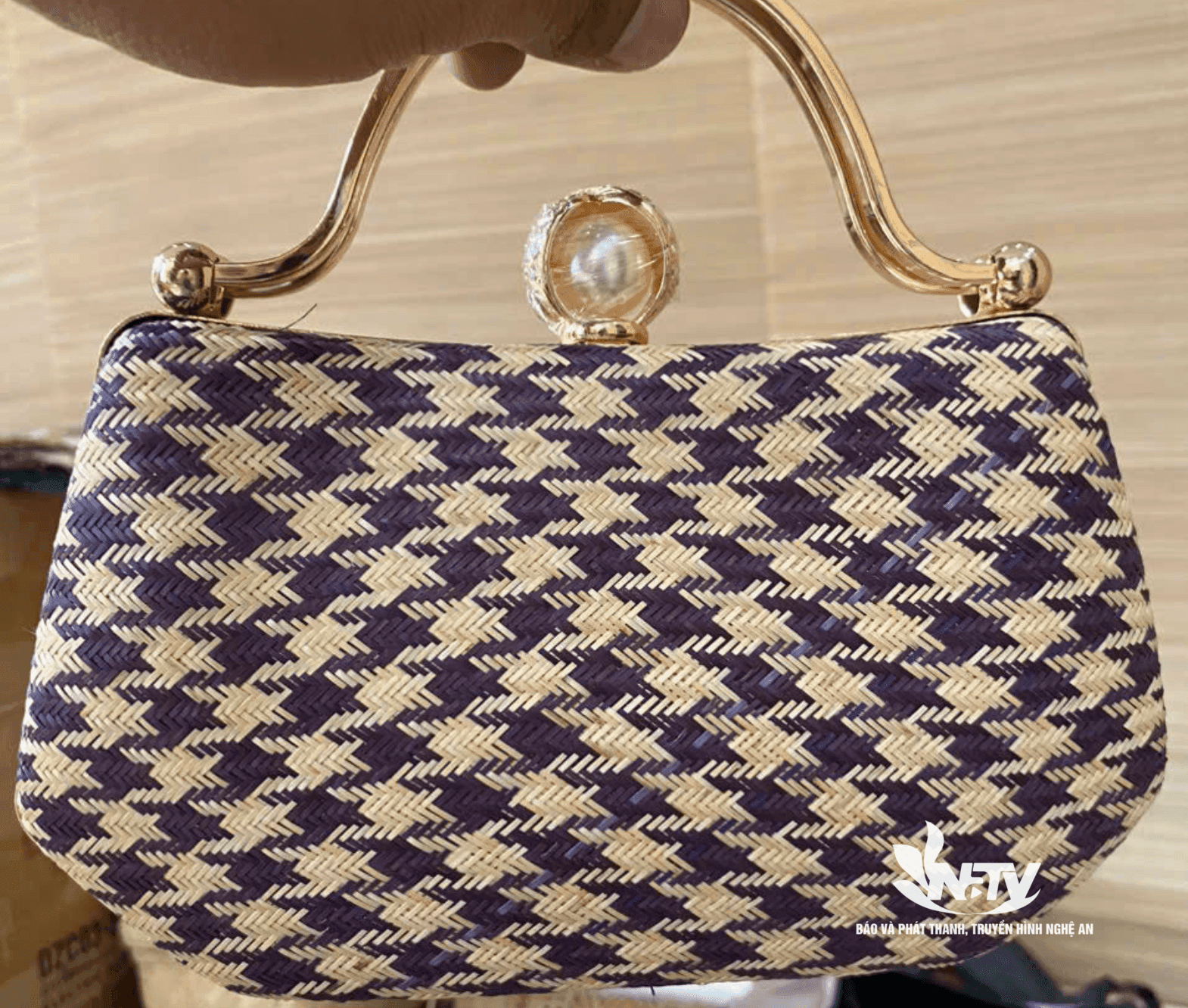
The craft of weaving in Chinh Yen village has a long history, but to maintain and develop it into a commercial production activity, the people need more techniques, equipment, and a stable market. Nearly five years ago, through the Sustainable Forest Management and Biodiversity Conservation Project funded by USAID, people in Yen Khe commune, formerly Con Cuong district, received support to develop sustainable rattan and bamboo weaving. Participants received technical training, access to new product samples, and support in the form of machines for shaping and splitting bamboo strips, drying machines, raw materials, and connections to markets.
With this support, rattan and bamboo weaving cooperatives were formed, creating conditions for those already familiar with traditional crafts to continue production and gradually meet market demands.
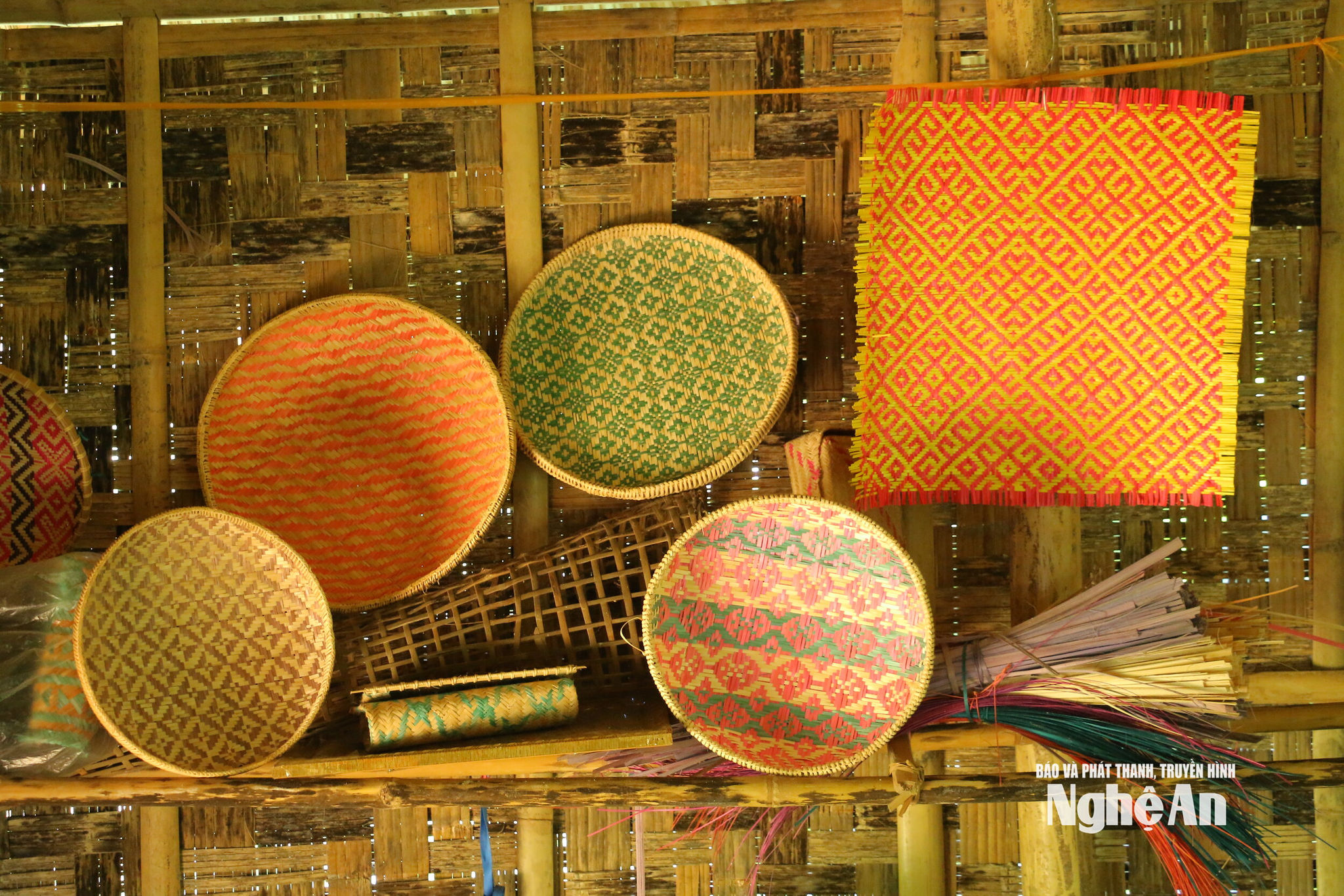
To introduce their products to a wider audience, for nearly six months now, the members have also built a small stilt house made of bamboo and rattan to serve as a display area. The project was undertaken with the support of family and villagers, showcasing weaving patterns while also providing a resting place for tourists visiting the old Con Cuong area and experiencing community tourism.
One advantage of the cooperative is that its products have a relatively stable output through orders. Instead of independently seeking markets, members mainly produce according to customer requirements, supplying the markets of Ho Chi Minh City, Hanoi, and some export orders. Income is calculated based on the quantity of products completed and the labor capacity of each individual. Members who work hard and are skilled can earn around 2-3 million VND/month; those who work less earn about 1 million VND/month. This is not a large sum of money, but it helps members have an additional source of income outside of agricultural production.
Conservation and development
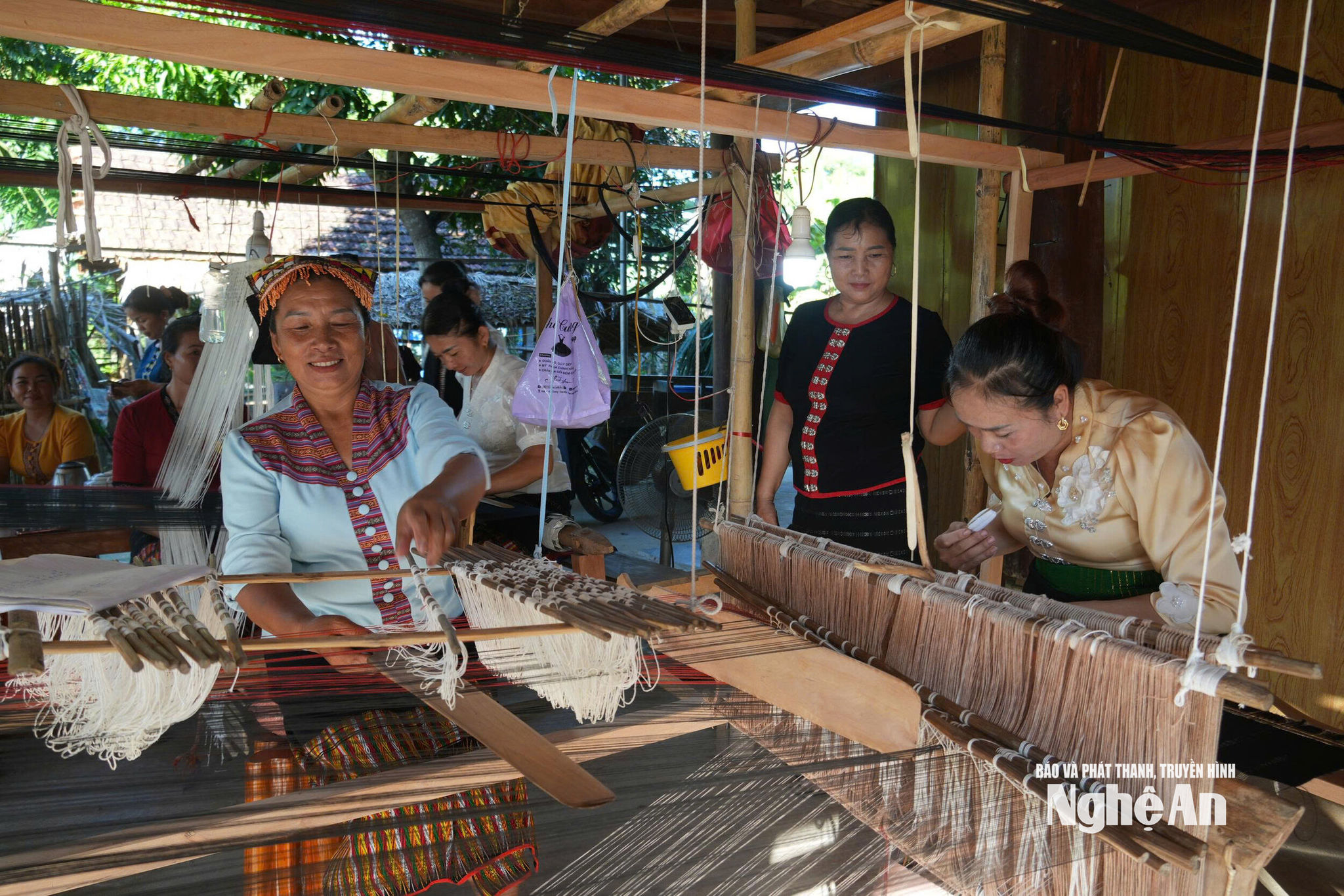
Further north in Chau Khe commune, the people are making efforts in various ways to preserve traditional crafts, focusing particularly on the craft ofbrocade weavingand weaving. Besides maintaining production, the people also focus on passing on skills, gradually restoring cultural values associated with the lives of the Thai ethnic group.
At a traditional brocade weaving training class in Gạo village, Ms. Lô Thị Quý (54 years old) said that she started learning weaving at the age of 15-16. Through many years of working with the loom, she has not only mastered the techniques but also preserved many traditional patterns. Her main products are skirts, headscarves, and white fabric. Weaving skirts requires more effort and complex techniques than weaving scarves. If she works during her free time between farming and livestock raising, a skirt can take 1-2 months to complete; if she works continuously, it takes about 10 days.
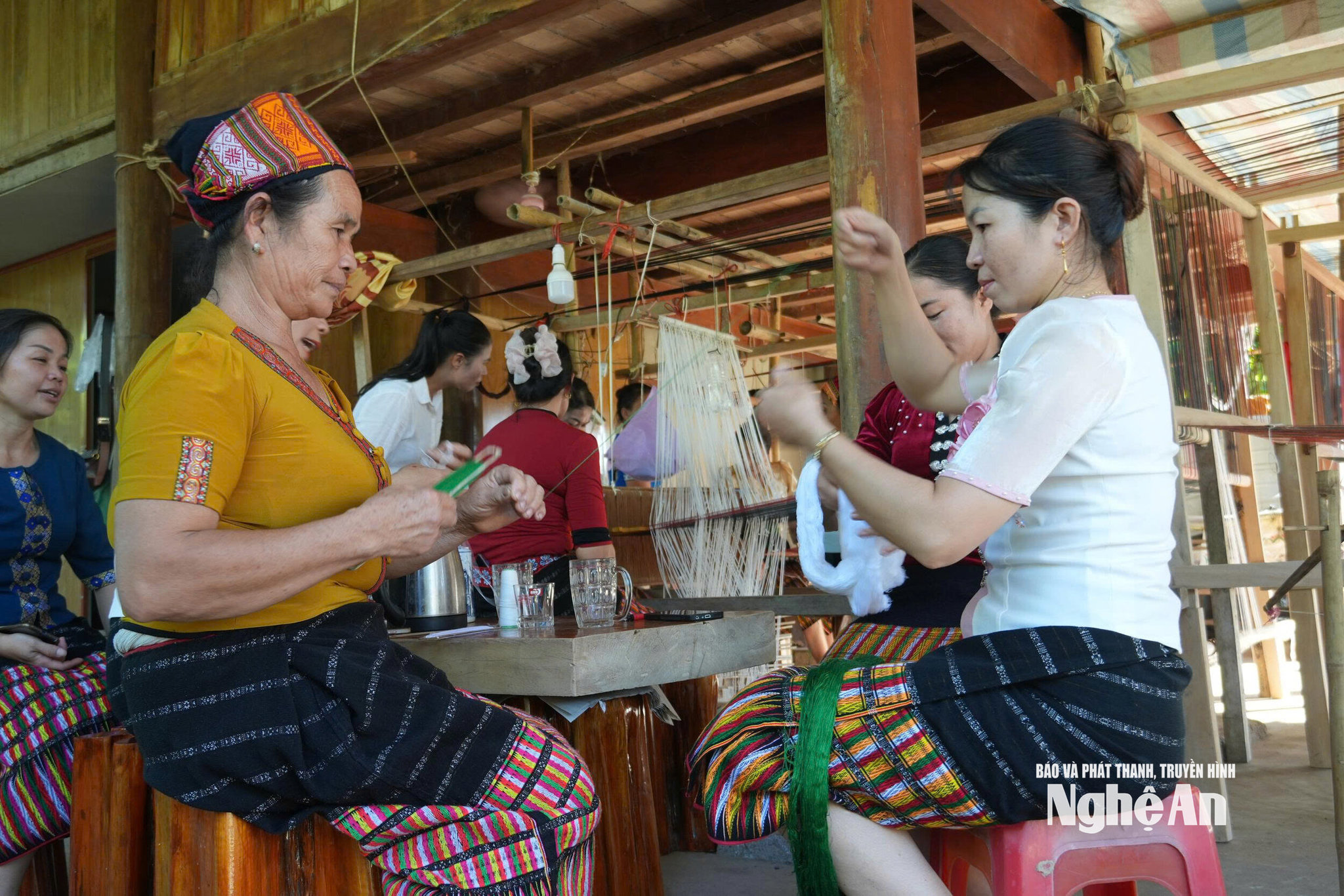
In the class, Ms. Quy is both a student and a mentor, sharing her experience. The teaching staff includes instructors from vocational training centers and skilled artisans and craftsmen from the region. Beginning in mid-September and lasting for three months, the class combines theory with practice. After mastering the basic techniques, students continue practicing on looms at home in the evenings or during their free time, reinforcing their skills and proactively managing their daily work.
Along with brocade weaving, the craft of basket weaving in Chau Khe commune is also being diligently preserved and developed by the local people. Previously, since 2016, recognizing the decline of basket weaving in the area, Ms. Lang Thi Hoa and nearly 20 other villagers established the Diem Bamboo and Rattan Weaving Cooperative, gradually restoring the traditional craft, organizing production, and seeking markets for consumption. Throughout the process, the villagers have preserved techniques for creating colors from natural materials such as forest trees, taro roots, and turmeric; at the same time, they have created and developed patterns reflecting Thai cultural identity, giving local bamboo and rattan products a unique character.
Beyond simply reviving the craft, the locality also aims to create a stable market for the products. According to the plan, after the training course, the commune will research registering its brocade products as OCOP (One Commune One Product) certified, while also promoting and introducing many other local products on e-commerce platforms and at border digital markets.
Local authorities are developing a "Border Market Fair" project on a fanpage platform to promote local products associated with tourism development. The goal is not only to expand the consumer market but also to introduce the image of the land, people, cultural identity, and tourism potential of Chau Khe to a wide range of tourists.
Mr. Phan Anh Tài - Vice Chairman of the People's Committee of Châu Khê Commune
Following this approach, individuals, households, cooperatives, and businesses will directly participate in introducing products; local authorities will play a connecting, coordinating, and promotional support role. Through the Fanpage, distinctive products are introduced along with stories about traditional crafts, customs, local culture, and experiential destinations in the area.
This approach aims to connect activities that are currently taking place separately: handicraft production, product promotion, organizing local markets, and developing community tourism.
Digital markets are also being developed in parallel with traditional markets, cultural spaces, community tourism, and product promotion events. Through this, localities can connect with tourist destinations.
My Ha