
Preserving traditional crafts in challenging areas - when the government 'ignites' the flame for the people.
The exquisite patterns on the brocade products of the Na Loi people are not only woven by the skillful hands of the Thai ethnic minority women, but also woven from the story of "keeping the flame" of the craft alive, a story filled with the concerns of the local Party committee and government. Today, a new vitality is spreading throughout this borderland, as traditional values have crystallized into 3-star OCOP products, opening a path to sustainable poverty alleviation for this particularly disadvantaged commune.
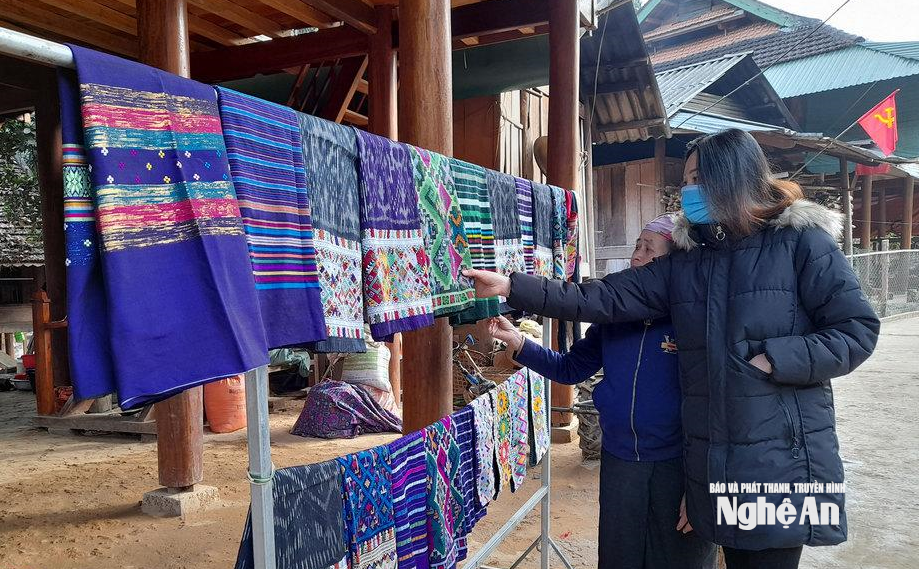
From self-sufficiency to cross-border OCOP products.
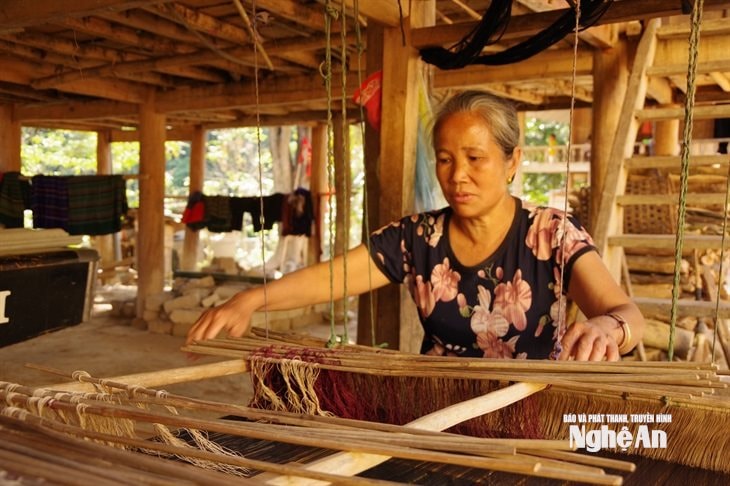
The craft of weaving brocade in Na Loi is a traditional cultural practice passed down through generations. However, for a long time, these vibrant brocade fabrics remained confined to the home, serving only the clothing needs of women or as wedding gifts. The real turning point came when the local Party committee and government began developing specific projects that closely aligned with the strengths of the local people.
It was in 2019 that the former Ky Son district government and Xieng Khouang province of Laos signed an agreement to expand the Nam Can border market, creating favorable conditions for local people to trade, improving the operation of the border market, and promoting economic development in the border region. The leaders of Na Loi commune personally inspected the Nam Can border market and recognized its potential value for their people. Thus, a plan to bring traditional local handicrafts to Laos was developed. Pieng Lau and Na Loi villages, two villages known for their traditional crafts in Na Loi commune, were selected to pilot the program of bringing brocade products to market.
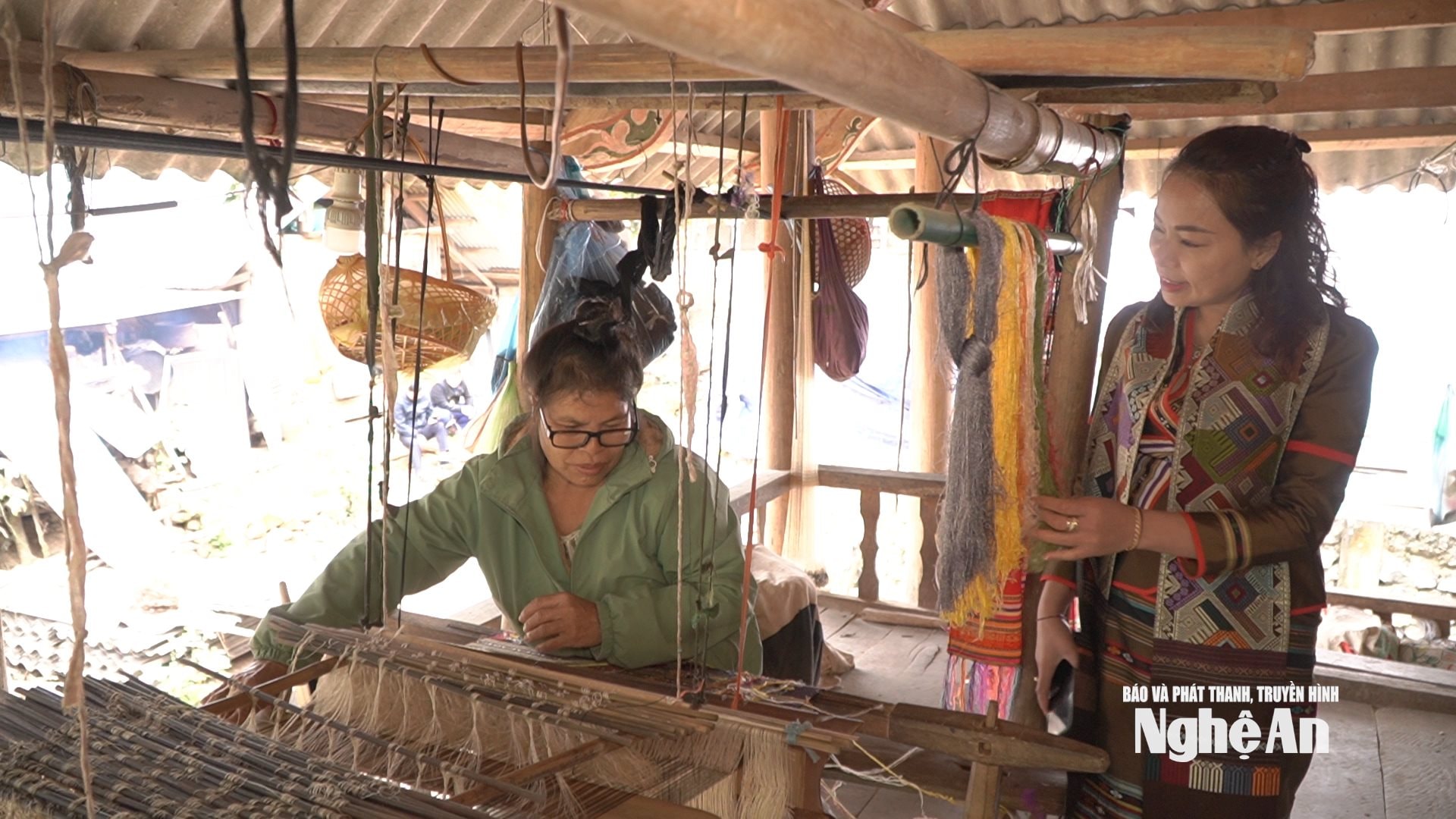
When Na Loi brocade first appeared at the Nam Can border market, it wasn't easy for it to attract consumers. Besides price competition, the patterns on the products were a crucial factor in attracting buyers. Undeterred by the chosen direction of "poverty alleviation," the Na Loi commune People's Committee at the time organized tours and training courses, inviting renowned artisans to the area to share their experience in producing brocade with the local people.
The Chairwoman of the People's Committee of Pit Thi Ha commune personally dedicated her free time to learning and experimenting, weaving brocade scarves and clothing for herself, blending traditional and modern patterns and designs. During numerous trips outside the commune, this young Chairwoman introduced Na Loi brocade to many other localities through the very outfits she wore. Gradually, more and more people learned about the traditional handicrafts of the Na Loi people. The local brocade market expanded in this way. By 2022, Na Loi village, Na Loi commune, was recognized as a "brocade craft village," with nearly 90% of households participating in the production and sale of this product.
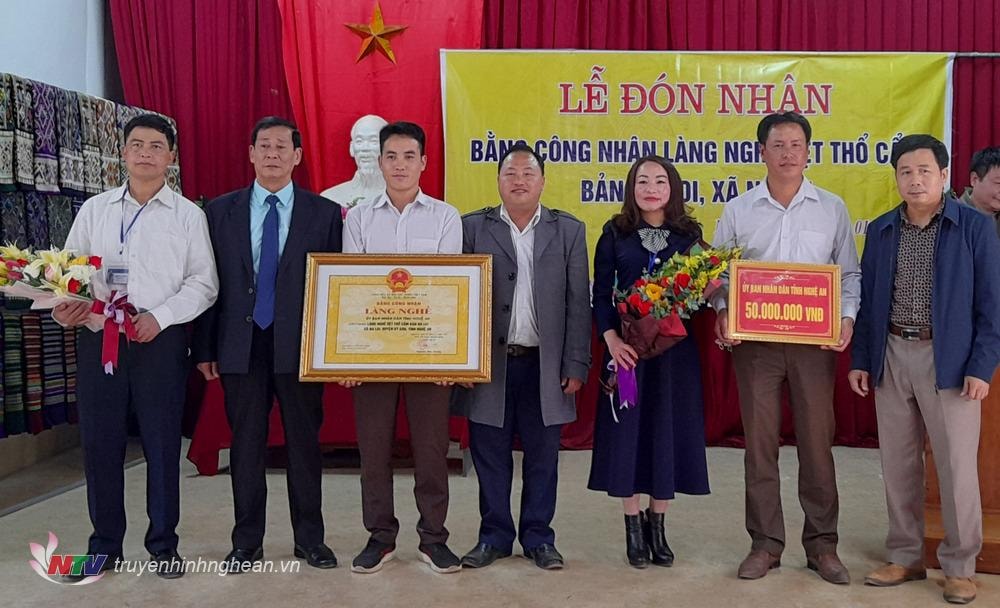
Furthermore, in 2022, the Na Loi commune government submitted an application to participate in the OCOP product evaluation and received a 3-star certification. This truly presents an opportunity for Na Loi brocade to reach even greater heights.
As proof of this, the amount of brocade sold at the Nam Can market now accounts for 50% of the market share. From a few dozen households involved in brocade weaving, there are now several hundred households in the entire commune dedicated to production, concentrated in the two villages of Pieng Lau and Na Loi. The shift from a "self-sufficient" mindset to a "commercialized" one is proof of the government's astuteness in bringing the spirit of the market to the border villages.
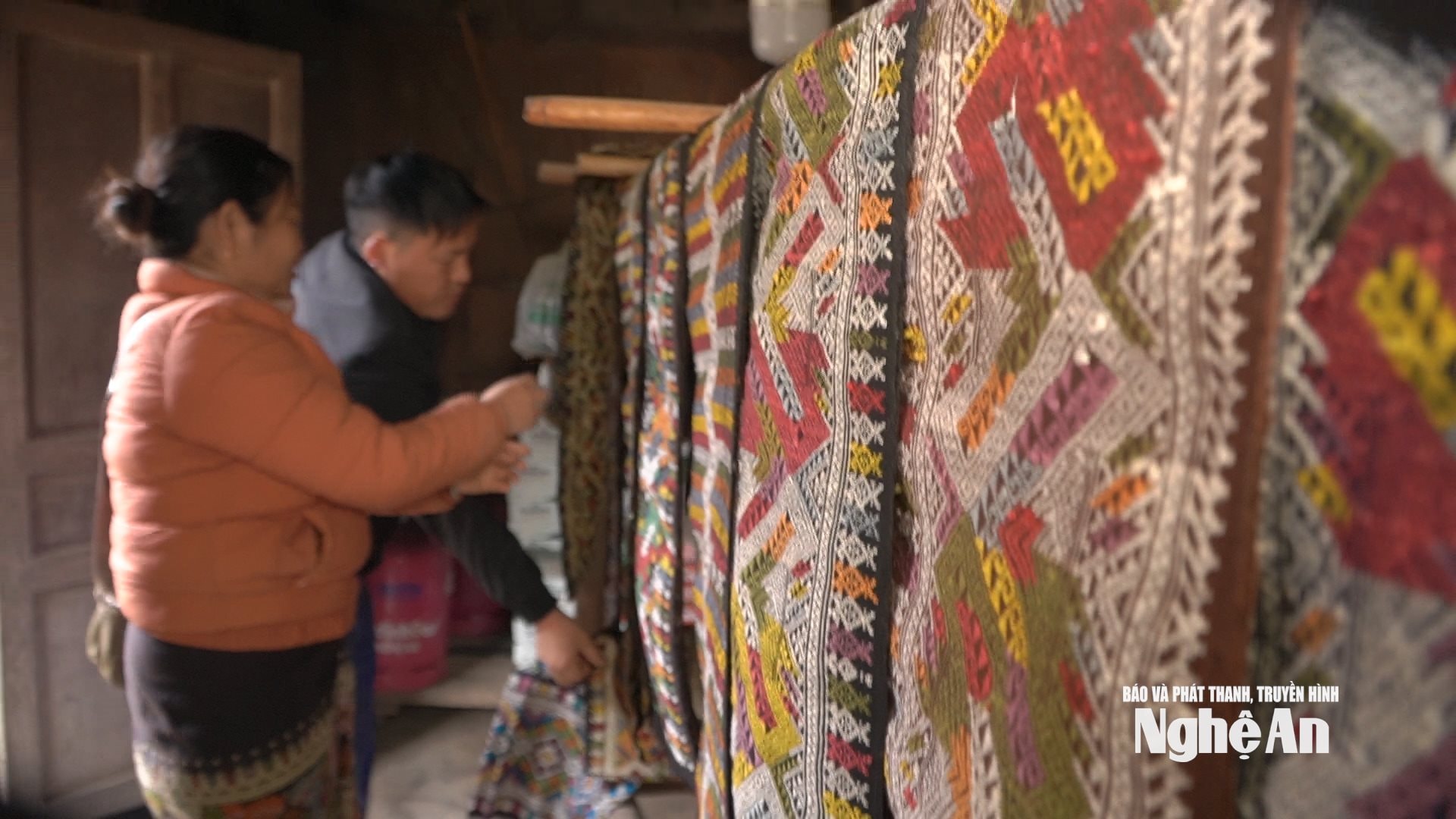
From "needing money to buy salt and rice" to earning tens of millions of dong per month.
From being recognized as a "Traditional Craft Village" in 2014, to achieving OCOP 3-star product certification in 2022, it has been a long journey in which the government has always played the role of a "pioneer".
Following the reforms and mergers of the state administrative apparatus, from July 1, 2025, Na Loi commune merged with Dooc May commune, retaining its new name, Na Loi. This opens up further opportunities to promote traditional crafts, as the commune now comprises 11 villages with over 4,300 inhabitants. A plan to expand the scale of brocade production in this poor border commune has been implemented, with continued efforts to promote and encourage people to join cooperatives. For households that do not yet have the means to participate, especially poor households, the commune has a policy of mobilizing resources to support women in gradually accessing the craft.
Without close engagement and a connection with the people, the government can hardly empathize with the anxieties of Mrs. Luong Thi Khun, an elderly Thai woman with failing eyesight who still diligently works at her loom. For households with elderly and frail members and little land for production, weaving is not only about preserving culture but also a lifeline to earn money to buy fish sauce, salt, and rice to feed their children and grandchildren. Mrs. Luong Thi Khun further shared: "Before, I only occasionally did simple knitting and embroidery, but now, my sisters have taught me, and I make many more products. I work every day, and I learn quickly."
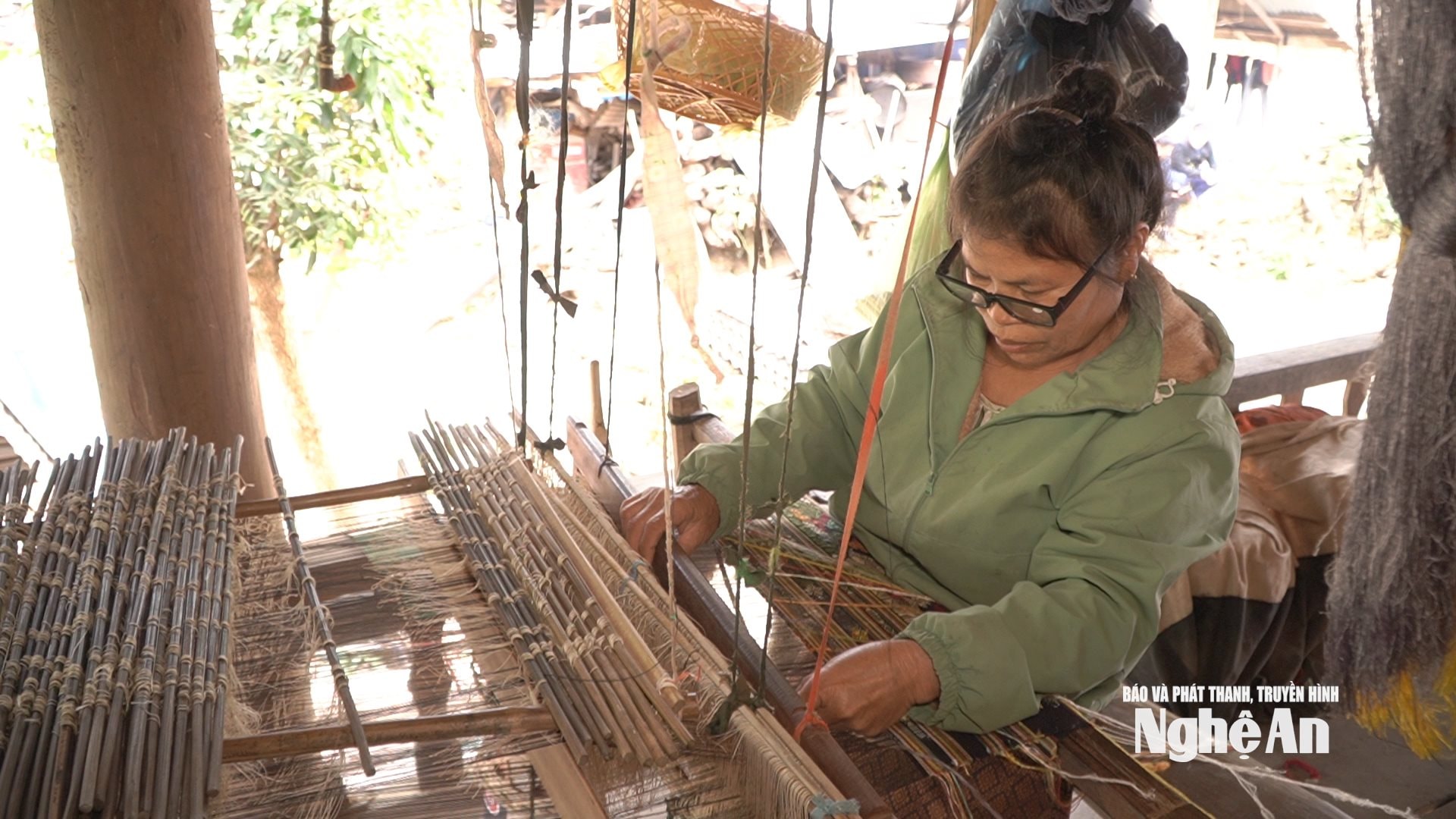
It was from these simple, heartfelt voices that the Na Loi commune government identified weaving as a key sector in its social welfare efforts. A system encompassing the Women's Association and the commune Party Committee worked together to connect trade and commerce. The emergence of the Cooperative model helped consolidate small, individual efforts into a unified force. Within this cooperative, skilled weavers earn up to 18 million VND per month, becoming "leaders" pulling the entire village forward. For example, Kha Thi Mien, a member of the Na Loi brocade weaving cooperative, is dynamic in her thinking. She not only diligently works at her loom every day but also actively seeks out new designs and pioneers in guiding other women in the cooperative, making Na Loi brocade products increasingly diverse and attractive.
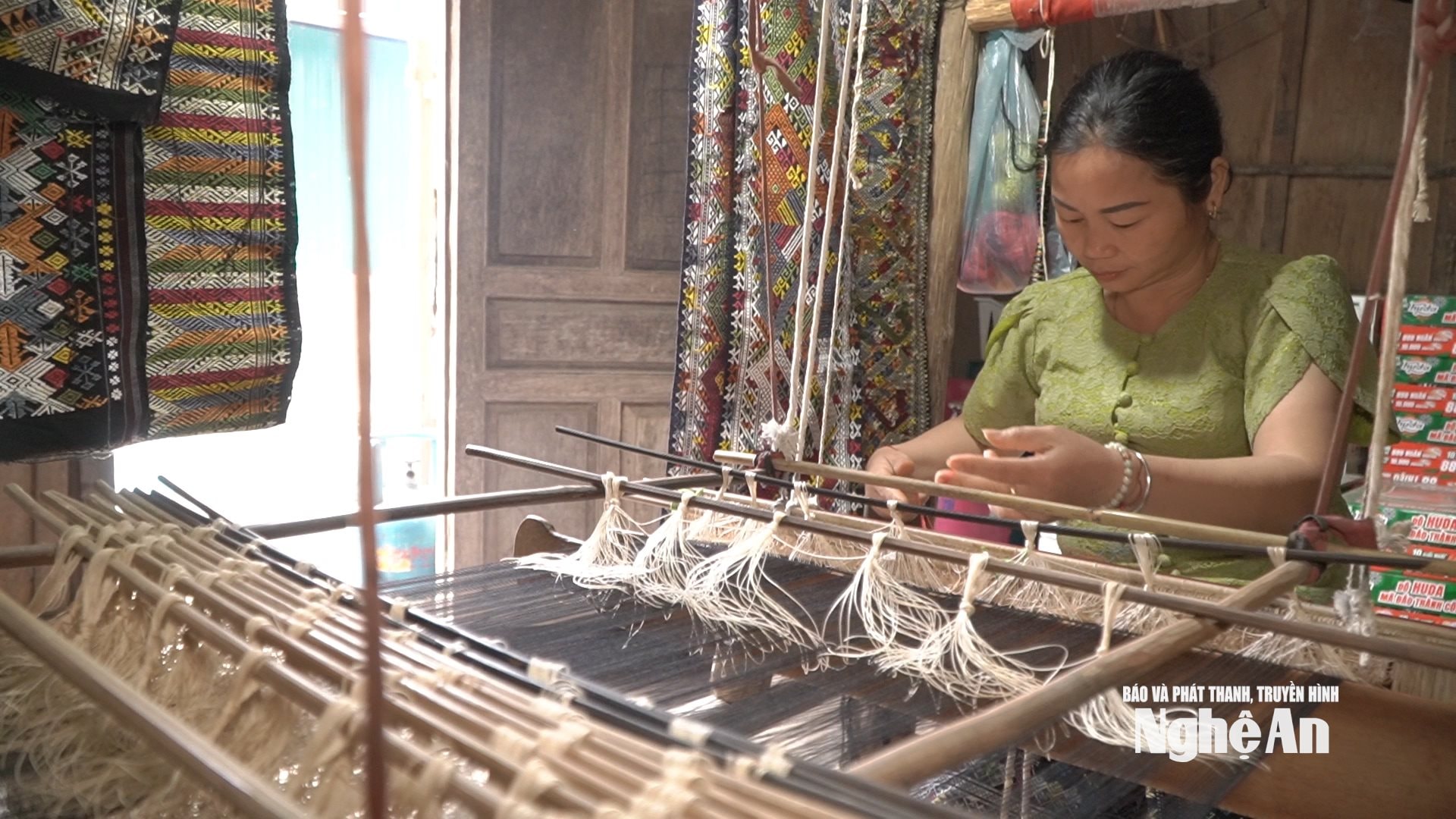
Aspiration stemming from companionship.
Despite encouraging results, concerns remain. The villagers still long for a centralized production workshop to motivate women to compete, and they desire additional support in terms of capital and raw materials so that even the most disadvantaged households are not left behind. Na Loi Commune People's Committee Chairwoman Pit Thi Ha emphasized: "In the near future, the commune will merge into an agricultural cooperative encompassing rattan and bamboo weaving, and agricultural products, with brocade weaving remaining the leading craft." This is not just an economic plan, but a commitment from the government to create sustainable livelihoods locally, so that the people of Na Loi no longer have to leave their homes to seek work elsewhere.
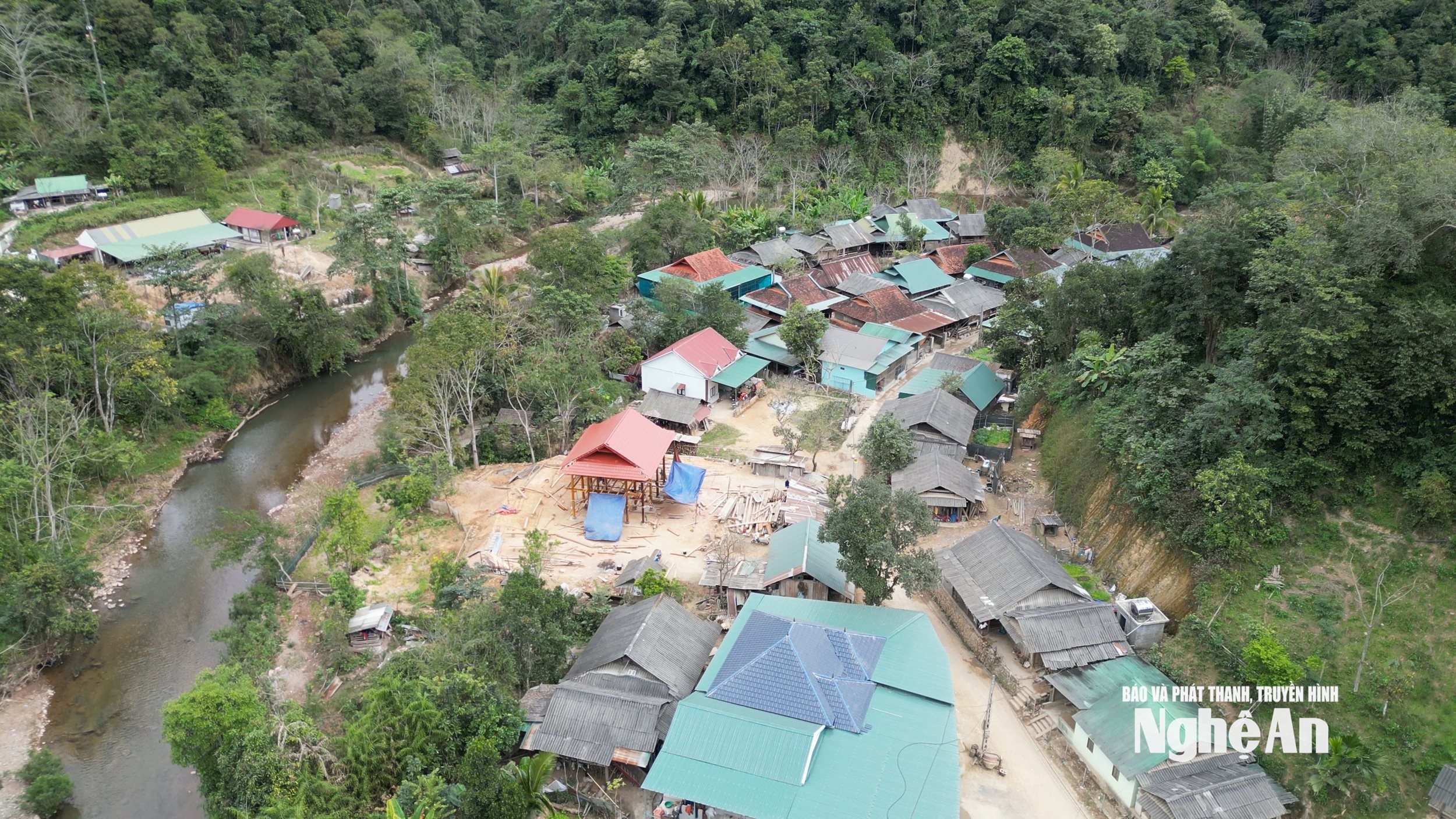
The fight against poverty in the border commune of Na Loi is gradually becoming "easier," not because the natural conditions are less harsh, but because the gap between officials and the people has been narrowed. When the Party's will is woven from the most practical needs of the local people, that bond will create lasting bridges of happiness.


