

Fishermen in Nghe An province earn over 2 trillion VND from fishing at sea.
Despite the difficulties, fishermen in Nghe An province remain actively engaged in fishing, catching nearly 107,000 tons of seafood worth over 2,000 billion VND in the first six months of 2024.
Coastal
FishermenThe coastal areas of Hoang Mai town, Quynh Luu, Dien Chau, Nghi Loc districts, and Cua Lo town, despite facing many difficulties due to high fuel prices, depleted marine resources, and a shortage of fishing labor, have remained actively engaged in fishing since the beginning of the year. Some large-capacity vessels have spent extended periods at sea, bringing back holds full of seafood.
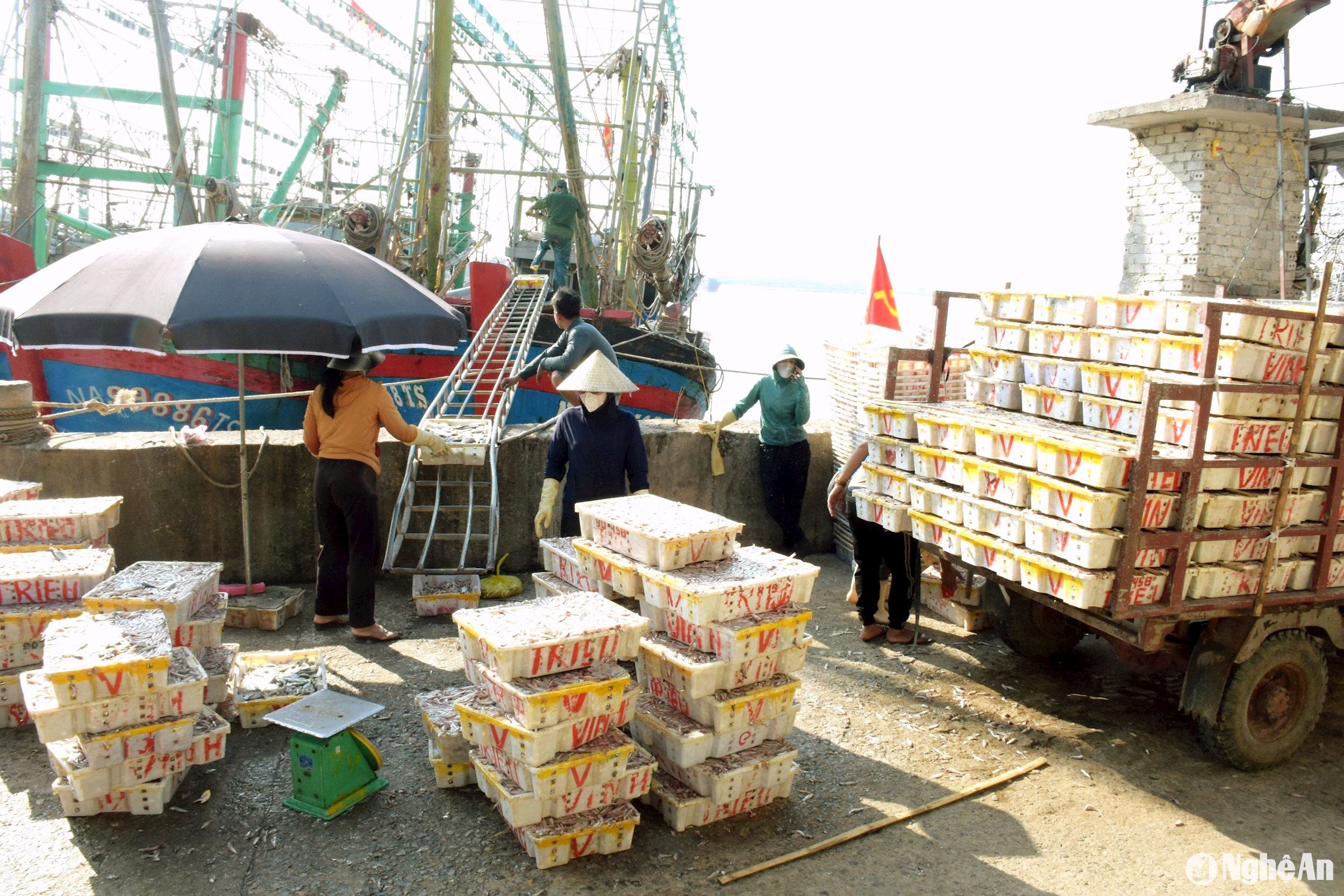
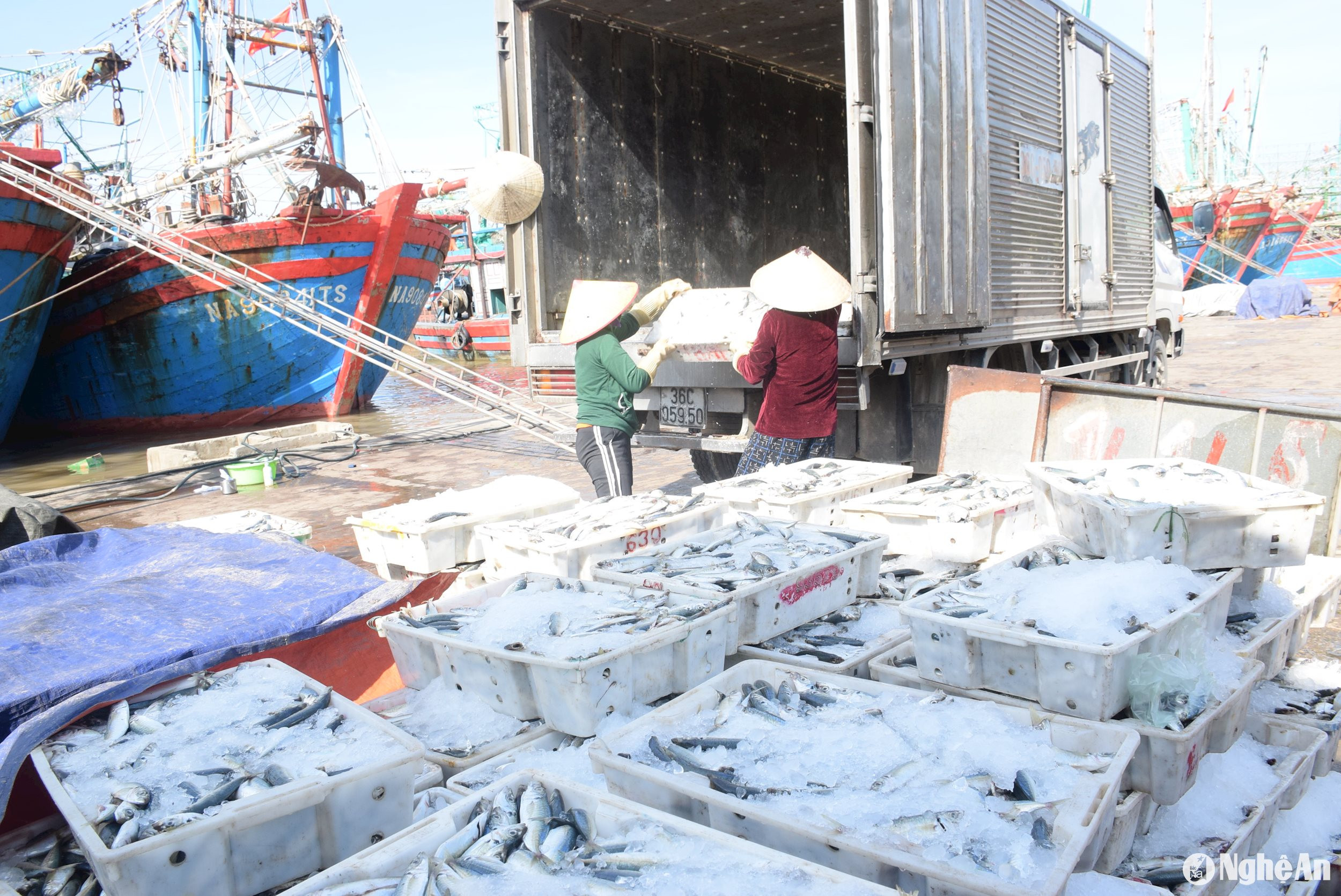
Therefore, the fishing ports in the province are bustling with activity whenever boats return, with fishermen and traders transporting and selling seafood. Trucks loaded with seafood leave the ports one after another, heading to cold storage facilities, seafood processing plants, and traditional fishing villages.
Mr. Phan Van Tai's boat, from Hong Hai hamlet, Quynh Lap commune (Hoang Mai town), has made many successful fishing trips in the first few months of this year, harvesting tons of valuable seafood and earning hundreds of millions of dong. Mr. Tai said that his boat usually goes out for 7-9 days per trip, thanks to his experience in the trade.seafood harvestingTherefore, most fishing trips are profitable. Some trips yield 4-5 tons of fish, and after deducting expenses, each crew member receives 5-6 million VND.
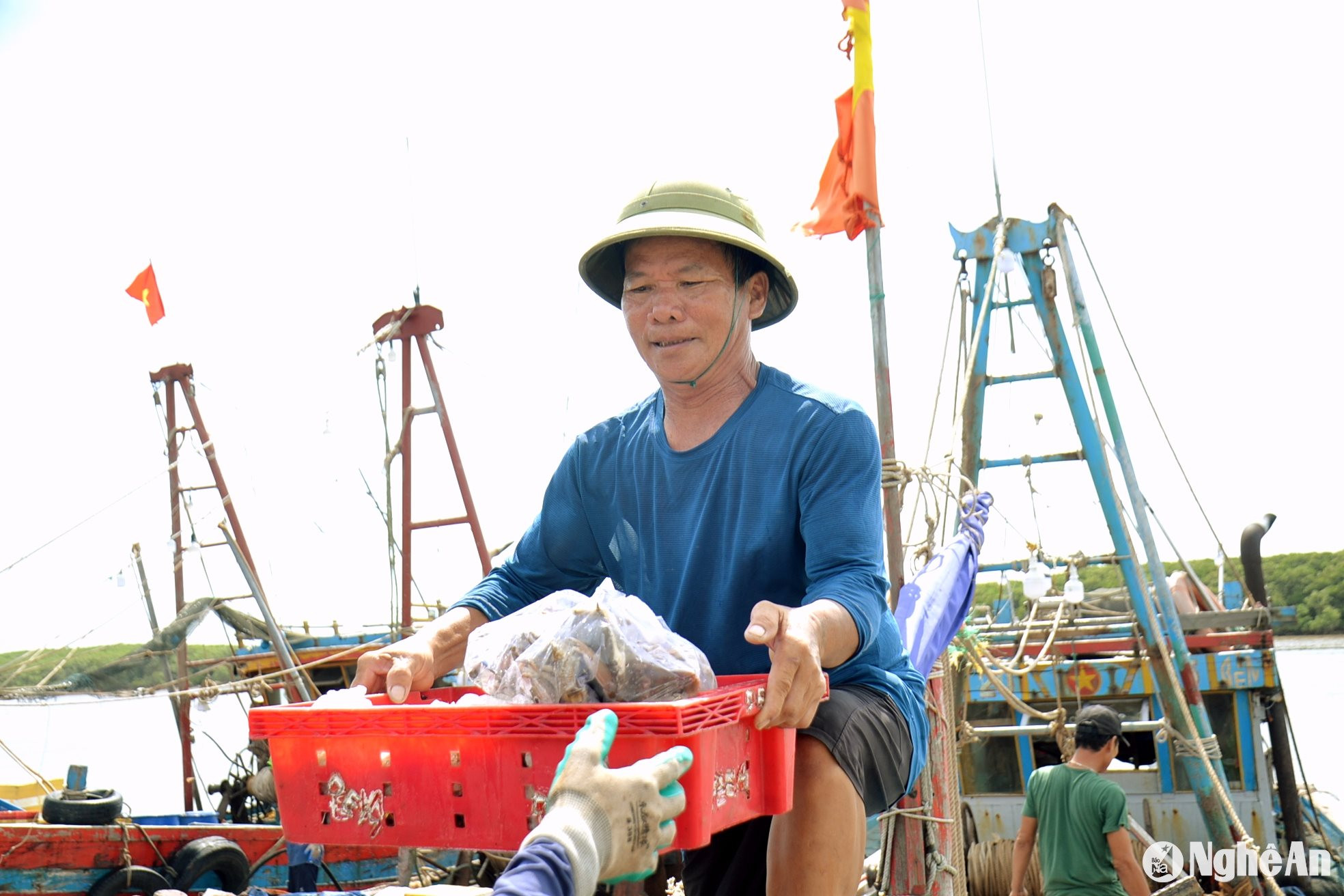
Lach Quen fishing port in Quynh Luu district is where hundreds of large fishing vessels anchor after each fishing trip. These large ships, equipped with powerful engines, are used by fishermen employing purse seine and trawling nets in the open sea, resulting in high-value seafood such as tuna, squid, mackerel, scad, and anchovies. Some ships bring back hundreds of kilograms of squid, which are sun-dried right on the ship's deck, fetching hundreds of thousands of dong per kilogram.
According to boat owners, after catching squid, they select the largest ones to dry in the sun. Once dry, they pack them into crates. Squid dried at sea is the best, making it highly valuable. A lucky fishing trip that yields over 100 kg of dried squid can bring in nearly 100 million VND, not including other seafood.
According to the Lach Quen Fishing Port Management Board, except for unfortunate fishing trips that encounter monsoon winds or unfavorable weather, forcing boats to return to shore early and resulting in low catches, successful trips yield at least 3-4 tons of various seafood per boat. Some lucky boats even catch over 10 tons of fish, earning hundreds of millions of dong in just 5 days. However, the costs of each fishing trip are also high: fuel, ice, food, and labor costs.
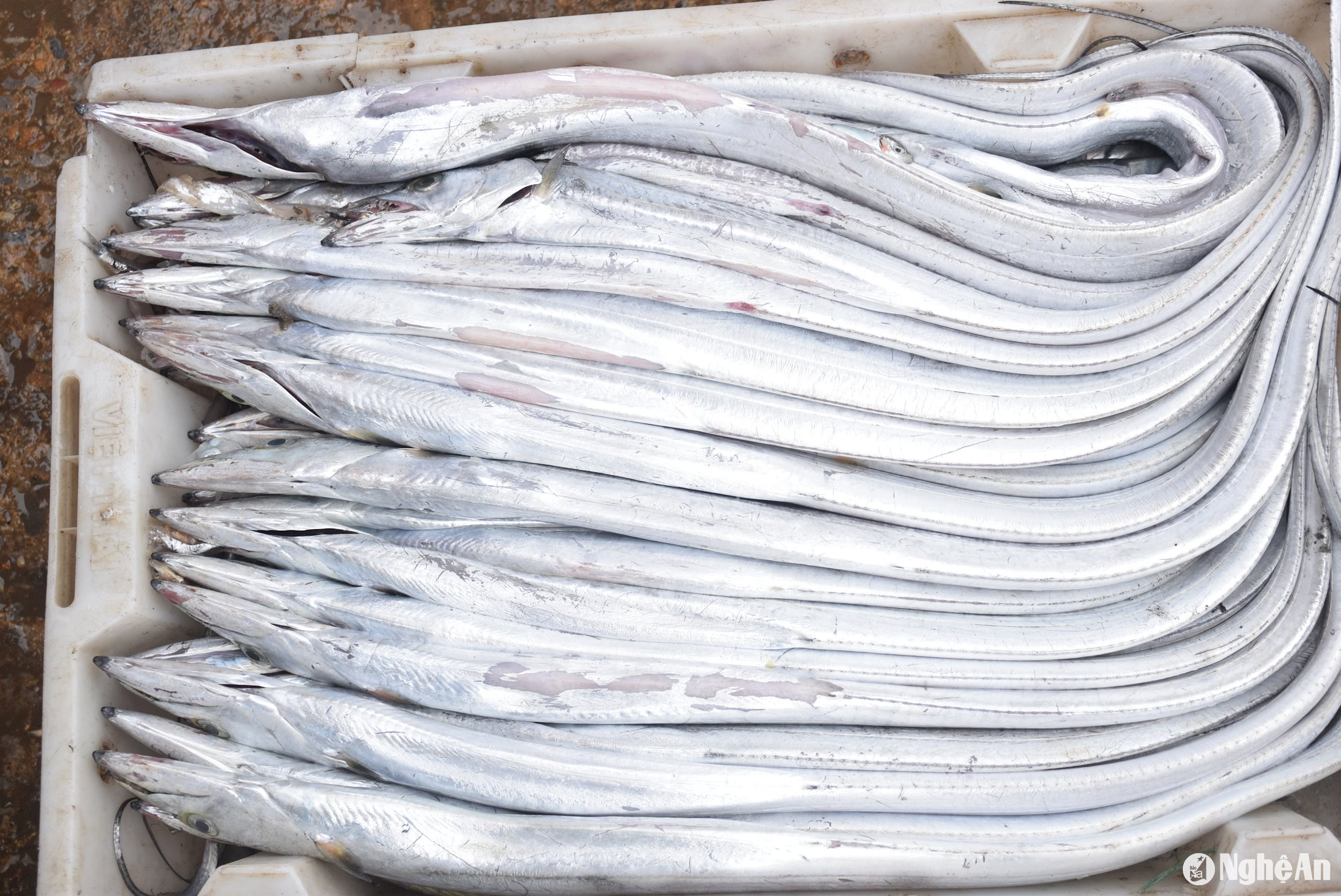
The Lạch Vạn fishing port in Diễn Ngọc commune, Diễn Châu district, is bustling with boats, people, and vehicles coming and going almost every midday, buying fish, especially transporting trays of fresh squid, mantis shrimp, and crabs from the boats to the shore to sell at a good price. Mr. Trần Đức Giang, a fisherman from Diễn Ngọc commune, happily shared: "Each season has its own catch. The boats fish in the sea about 25 nautical miles from the shore, and the fishing time is only one night. Although the yield isn't high, the seafood is fresh and delicious, and doesn't require ice preservation, so it's popular in the market, especially during the tourist season."
Mr. Nguyen Van Dung, Vice Chairman of the People's Committee of Dien Ngoc commune, said: Currently, Dien Ngoc commune has more than 252 boats of various sizes, mainly exploiting nearshore seafood, mostly anchovies, squid, shrimp, crabs, etc. On average, they catch around 100 tons of seafood each day, some of which is sold fresh by traders at rural markets. During the anchovy fishing season, traders come directly to the fishing port to buy the catch for steaming and drying to make dried fish, or for processing into fish sauce.
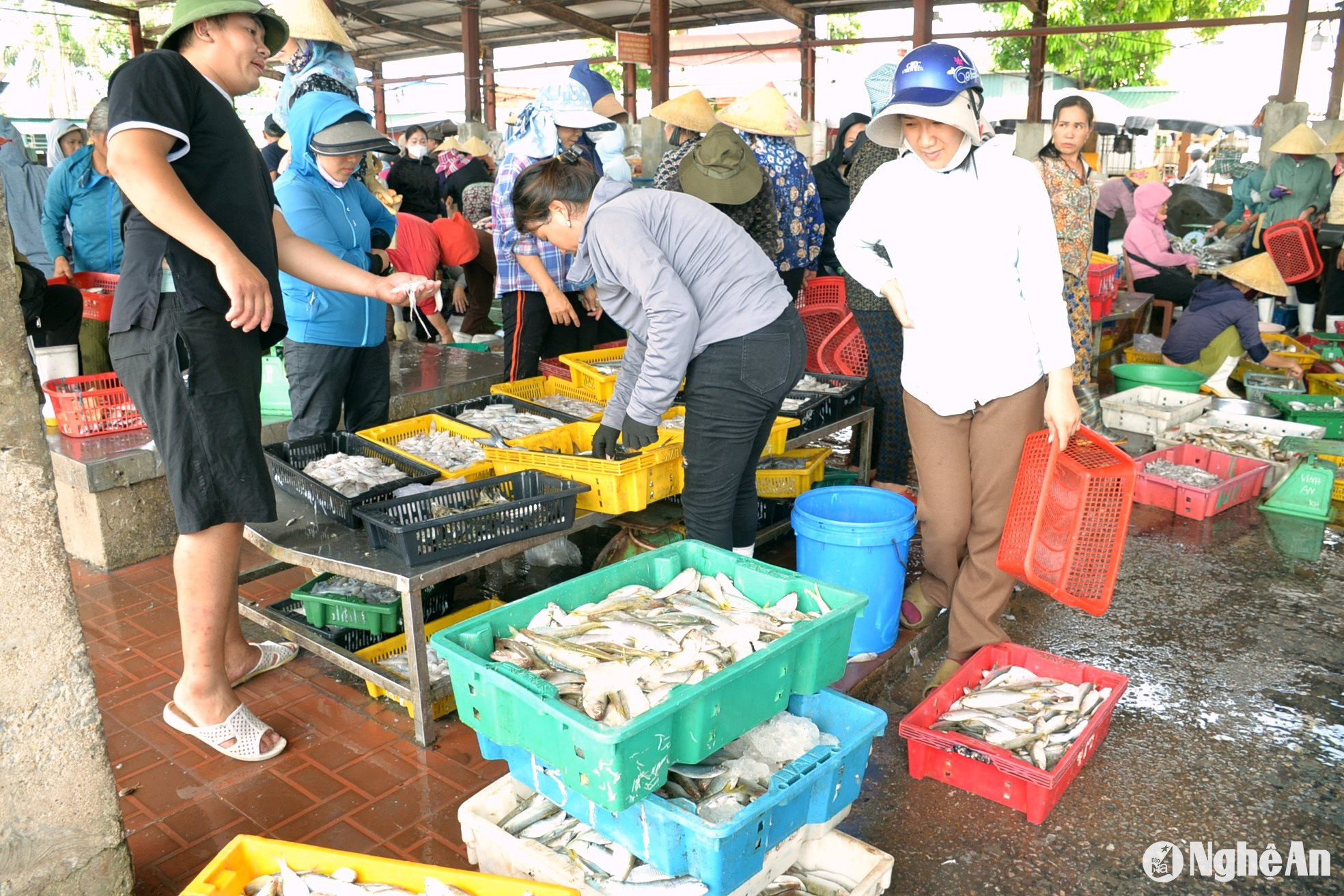
Along the coast of Dien Chau district, fishermen from the communes of Dien Thanh, Dien Ngoc, Dien Bich, Dien Hai, etc., not only fish with boats but also use rafts to catch herring, jellyfish, and anchovies, bringing in tens of tons per day. Although the yield is not very high, these seafood items are fresh and in high demand for processing into delicious dishes to serve the tourist season.
They caught nearly 107,000 tons of seafood.
In the first six months of 2024, despite persistently high fuel prices, declining fish stocks, and labor shortages in fishing communities, local fishermen still persevered.Nghe AnActively engage in maritime activities.
According to data from the Fisheries and Aquaculture Inspection Department, in the first six months of the year, seafood production reached nearly 107,000 tons out of a planned 188,000 tons, achieving 56.9% of the annual plan and increasing by 3.15% compared to the same period last year. The economic value exceeded 2,000 billion VND.
In addition, aquaculture production reached 36,479 tons/planned 70,000 tons, achieving 52.11% of the annual plan, an increase of 3.96% compared to the same period last year. Of this, freshwater aquaculture production was over 30,000 tons; brackish water aquaculture production was 6,317 tons.
Nghe An currently has 3,624 fishing vessels. Of these, 2,727 are registered fishing vessels with a maximum length of 6 meters or more. The total number of people working in the province's fisheries is over 11,000. Of these, 7,460 work in offshore waters, 1,904 in inshore waters, and 1,729 in coastal waters. Nghe An fishermen mainly use the following fishing methods: purse seine, trawl, seine, trawling, and longline fishing.
Fishery logistics in coastal localities consistently meet the needs of fishermen. Accordingly, the province has 88 fuel supply facilities directly serving fishing vessels with a total maximum supply capacity of 40,497 liters/hour; 111 ice production facilities of various sizes with a total maximum design capacity of 1,221 tons/day; 48 fishing gear facilities; 42 marine engine service facilities; and 172 cold storage facilities with a total volume of approximately 16,430 m³.3With a maximum capacity of 15,000 tons, there are 266 small-scale seafood processing facilities, 3 facilities equipped with modern technology, 5 traditional fish sauce processing units, and 10 craft villages involved in purchasing products for processing into fish sauce, various types of fermented fish paste, steaming and drying, etc.
According to data from the Nghe An Fisheries and Fisheries Inspection Department.