
1,041 people were included in the preliminary list of candidates for the National Assembly, including 95 non-Party members.
The total number of people included in the preliminary list of candidates for the 16th National Assembly is 1,041, of which 95 are non-Party members.
The Central Committee of the Vietnam Fatherland Front has just released a report on the results of the second consultative conference on the election of deputies to the 16th National Assembly and deputies to People's Councils at all levels for the 2026-2031 term.
At the conclusion of the second consultative conference, both at the central and local levels, the total number of people included in the preliminary list was 1,041 (217 at the central level and 824 at the local level), achieving a ratio of 2.08 candidates per elected representative, ensuring the required surplus as stipulated by the Election Law and adhering to the established structural and compositional guidelines.
Of these, 471 candidates were women (45.24%); 228 were young people (under 40 years old) (21.90%); 229 were ethnic minorities (21.99%); 95 were non-Party members (9.12%); and 145 were re-elected members of the 15th National Assembly (29%).
Regarding the structure of the nominated individuals, Party agencies accounted for 10 people, or 4.60%; the Office of the President accounted for 2 people, or 0.92%; National Assembly agencies (full-time National Assembly deputies at the central level) accounted for 145 people, or 66.82%; and the Government and government agencies accounted for 15 people, or 6.91%.
Ministry of National Defence (including the Minister, ministerial agencies, military regions, and branches): 14 people, 6.45%; Ministry of Public Security (including the Minister): 3 people, 1.38%; Supreme People's Court: 1 person, 0.46%; Supreme People's Procuracy: 1 person, 0.46%; State Audit Office: 1 person, 0.46%; Vietnam Fatherland Front and its member organizations: 25 people, 11.52%.
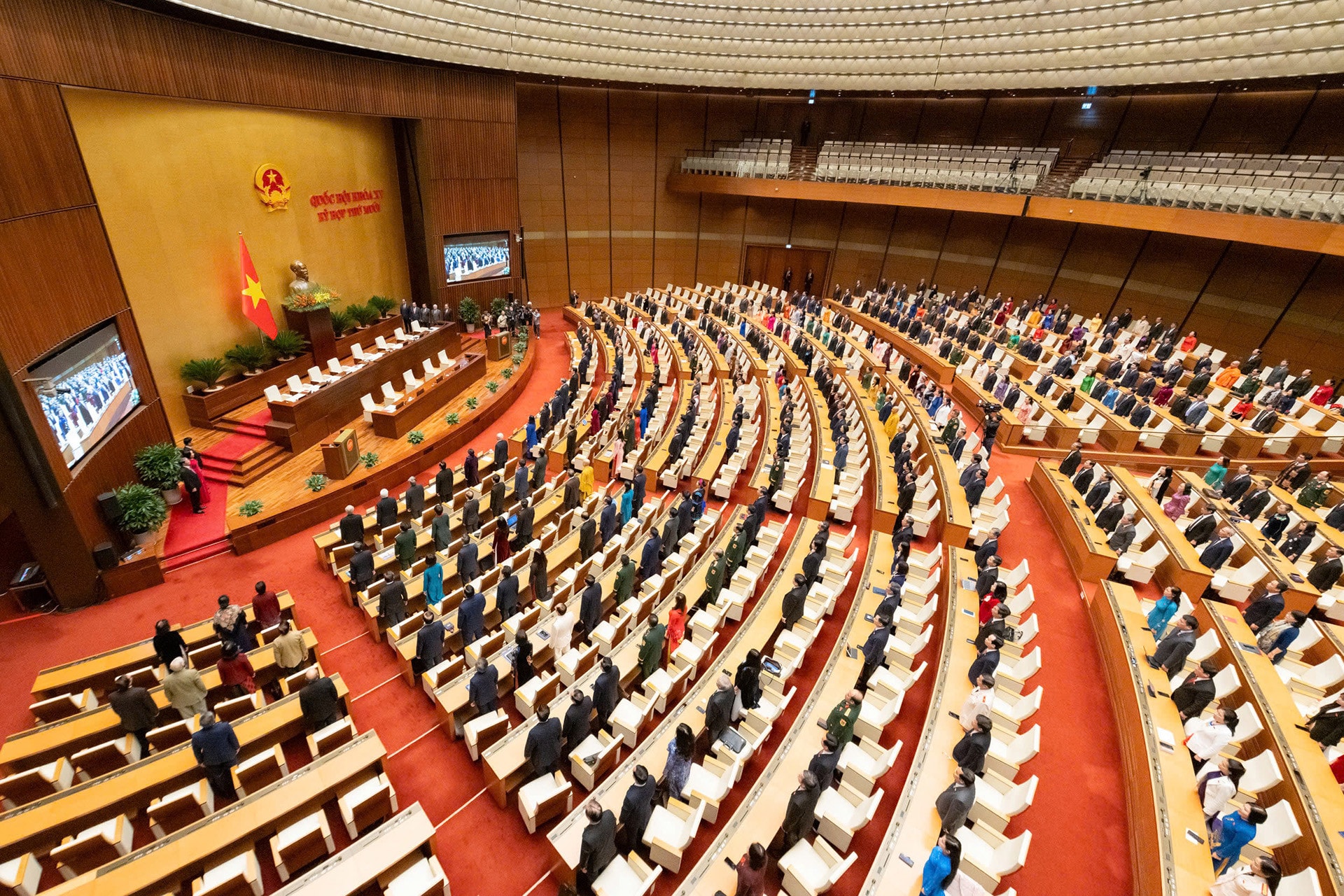
Of the 217 people nominated to run for election at the central level, 138 are re-elected, including 28 with a university degree and 189 with a postgraduate degree.
Of the 824 candidates nominated by local authorities, 420 are women, with provinces and cities having a high percentage of female candidates including Thai Nguyen, Phu Tho, Da Nang, Bac Ninh, Cao Bang, Hai Phong, Quang Ngai, and Thanh Hoa.
Ninety candidates are non-Party members; 227 are under 40 years old, and 23 are self-nominated. 381 are university graduates; 488 have postgraduate degrees, and 21 have degrees below university level.
5,078 people are running for election to the Provincial People's Council.
The total number of provincial People's Council representatives elected according to law is 2,555.
According to the report, the total number of candidates for provincial People's Council representatives after the second consultative meeting was 5,078, a decrease of 34 compared to the projection at the first consultative meeting, achieving an average ratio of 1.98 times the number of representatives to be elected.
The total number of commune-level People's Council representatives elected according to law is 75,878.
According to preliminary reports from 31 out of 34 provinces, the total number of candidates for commune-level People's Council representatives after the second consultative meeting is 136,279, reaching an average ratio of 1.79 times the number of representatives to be elected.
The Vietnam Fatherland Front assessed that the second consultative conference for the election of deputies to the 16th National Assembly at both the central and local levels, and the election of deputies to the People's Councils at all levels for the 2026-2031 term, took place democratically, in accordance with the law, and on time as prescribed; demonstrating a high level of consensus in discussing, selecting, and agreeing on the preliminary list of candidates for the National Assembly and People's Councils.
Despite the very short timeframe, the process of allocating resources and guiding agencies, organizations, and units in nominating candidates was basically completed on time and in accordance with the election guidelines.
Agencies, organizations, and units must follow the correct steps in nominating candidates for the National Assembly and People's Councils at all levels, according to the allocated structure, composition, and number.
The process of gathering feedback and assessing the trust of voters at the workplace was conducted seriously and in accordance with regulations.
The process of agreeing on the preliminary list of candidates for the National Assembly and People's Councils at all levels basically ensures compliance with regulations on the inclusion of women, young people, ethnic minorities, and non-Party members in the structure, while also making timely adjustments to ensure suitability to the local situation and units. The nomination of candidates generally ensures the necessary surplus, demonstrating democracy and broad participation in the consultation process.


