
10 intangible cultural heritage sites in Vietnam
(Baonghean.vn) - With its vast and unique cultural treasure spanning 4000 years of national history, Vietnam has become one of the world's most famous tourist destinations, boasting 10 intangible cultural heritage sites recognized by UNESCO.
1. Hue Royal Court Music
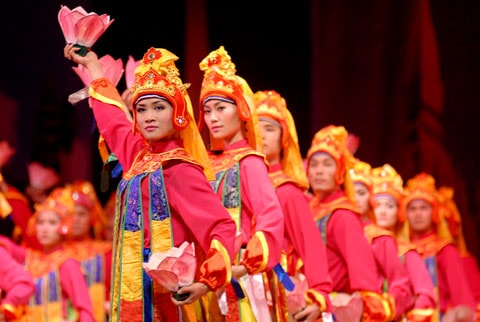 |
For the first time (November 2003), a Vietnamese cultural form was inscribed by UNESCO: Hue Royal Court Music. This is a genre of music from the feudal court, performed on ceremonial occasions (coronation, death, and other solemn festivals) throughout the year during the Nguyen Dynasty of Vietnam. Hue Royal Court Music has been recognized by UNESCO as a Masterpiece of Oral and Intangible Heritage of Humanity.
2. The Gong Culture Space of the Central Highlands
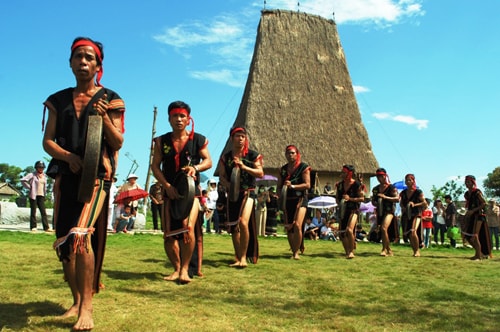 |
The Gong Culture Space of the Central Highlands was recognized by UNESCO as a Masterpiece of Oral and Intangible Heritage of Humanity on November 15, 2005. After Hue Royal Court Music, this is the second intangible cultural heritage of Vietnam to receive this title.
The cultural space of the Central Highlands Gong Music includes the following components: gongs, musical pieces played on gongs, gong players, festivals that utilize gongs (New Rice Festival, Water Source Worship Festival, etc.), and the locations where these festivals are held (longhouses, communal houses, gươl houses, fields, water sources, burial grounds, forests near Central Highlands villages, etc.).
3. Quan Ho folk songs of Bac Ninh
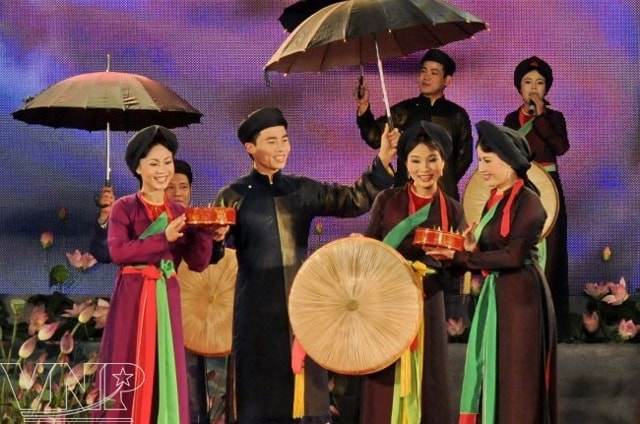 |
Quan Ho folk songs from Bac Giang and Bac Ninh are one of the typical folk song styles of the Red River Delta region in Northern Vietnam. They are also known as Kinh Bac Quan Ho folk songs because they originated and developed in the ancient Kinh Bac cultural region, especially in the area bordering the present-day Bac Giang and Bac Ninh provinces. On September 30, 2009, UNESCO officially recognized Quan Ho as an intangible cultural heritage of the world.
4. Ca trù
Ca trù singing is a traditional art form in Northern Vietnam that combines singing with several traditional musical instruments. Popular since the 15th century, it was once a type of court singing favored by the aristocracy and intellectuals. Ca trù is a masterful and sophisticated blend of poetry and music.
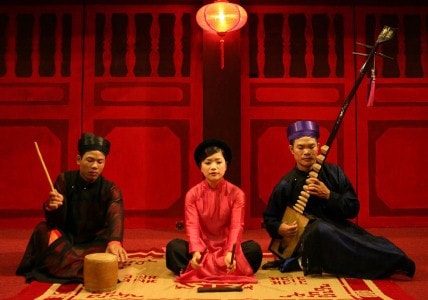 |
On October 1, 2009, at the 4th session of the Intergovernmental Committee of the UNESCO Convention for the Protection of Intangible Cultural Heritage (from September 28 to October 2, 2009), Ca Tru was recognized as an intangible heritage in need of urgent safeguarding.
5. Giong Festival
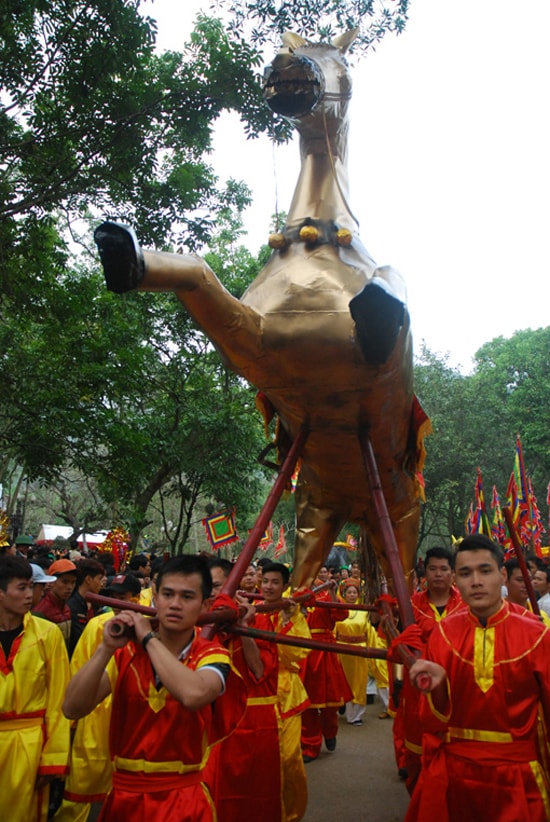 |
The Giong Festival is a traditional festival held annually in many localities in Hanoi to commemorate and celebrate the heroic deeds of the legendary hero Saint Giong, one of the four immortals in Vietnamese folk beliefs. In 2010, the Giong Festival at Phu Dong Temple (Gia Lam) and Soc Temple (Soc Son district) was recognized by UNESCO as an intangible cultural heritage of humanity.
6. Xoan singing
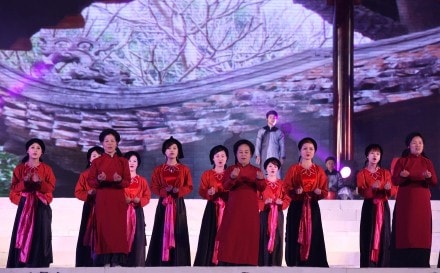 |
Xoan singing is a precious intangible cultural heritage of the Hung Kings' ancestral land. Phu Tho Xoan singing belongs to the category of ritual folk songs, performed at communal houses, and combines many artistic elements such as music, singing, and dancing. On November 24, 2011, Xoan singing was officially recognized by UNESCO as an intangible cultural heritage.
7. The Hung Kings worship belief
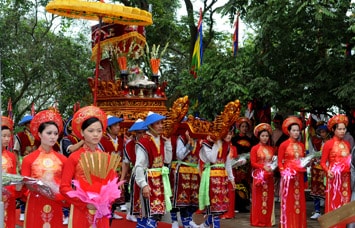 |
In December 2012, at its 7th session, the Intergovernmental Committee of the 2003 Convention on the Preservation of Intangible Cultural Heritage officially recognized the Hung Kings worship belief in Phu Tho, Vietnam, as a representative intangible cultural heritage of humanity. According to the assessment, the Hung Kings worship belief has become a cultural identity, moral principle, and tradition of the Vietnamese people, expressing gratitude for the blessings of their ancestors in the cause of nation-building and national defense.
8. Southern Vietnamese folk music and singing
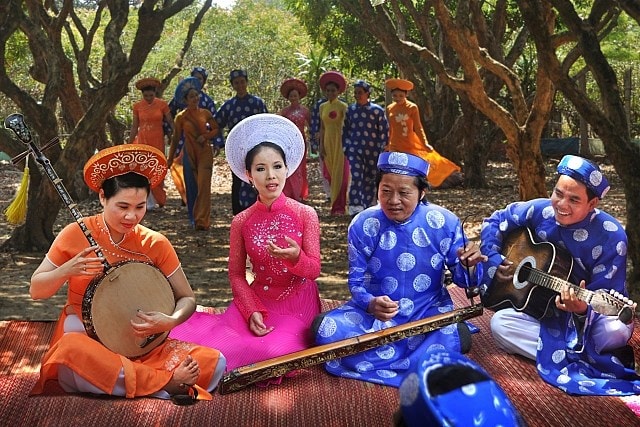 |
In December 2013, at the 8th session of UNESCO on the Protection of Intangible Cultural Heritage held in Baku (Azecbaijan), the Southern Vietnamese folk music and singing tradition was inscribed on the Representative List of Intangible Cultural Heritage of Humanity.
9. Nghe Tinh folk songs (Vi and Giam)
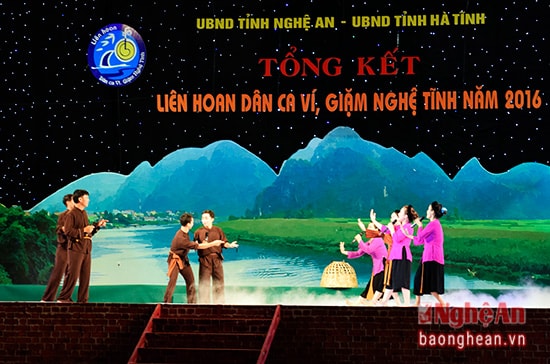 |
| The performance of "Ví giặm bỏ bùa" by the folk song club of Phúc Thành commune (Yên Thành). |
On November 27, 2014, at the 9th session of the Intergovernmental Committee for the Protection of Intangible Cultural Heritage in Paris (France), Nghe Tinh folk songs were recognized by UNESCO as a Representative Intangible Cultural Heritage of Humanity with 100% of the votes in favor. Nghe Tinh folk songs are a form of folk performing art that holds an important place in the cultural life of the people of Nghe An and Ha Tinh provinces.
10. Tug-of-war ceremony
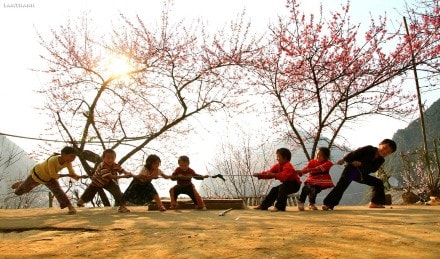 |
In December 2015, the UNESCO Intergovernmental Committee for the Protection of Intangible Cultural Heritage inscribed the tug-of-war ritual and game in Vietnam on the Representative List of Intangible Cultural Heritage of Humanity. This is the 10th intangible cultural heritage of Vietnam to be inscribed by UNESCO.
Le Hoa
(Synthetic)
| RELATED NEWS |
|---|


