
117 out of 200 votes were against the British Prime Minister.
Surviving the no-confidence vote with 200 votes in favor can be seen as a major victory for May, who became leader of the Conservative Party in 2016 with 199 votes.
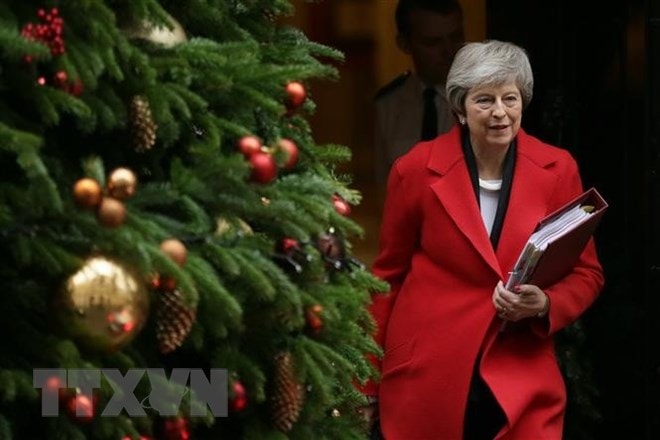 |
| British Prime Minister Theresa May in London. Photo: THX/VNA |
On the evening of December 12th (local time), British Prime Minister Theresa May survived a no-confidence vote within the Conservative Party with 200 votes in favor and 117 against.
This outcome was predictable, as immediately after the confidence vote against May was announced that morning, a majority of Conservative MPs in the House of Commons, including all members of the cabinet, publicly declared they would vote to continue supporting her as leader of the Conservative Party, and consequently as Prime Minister of the UK.
Even as the voting and counting process was still underway in the House of Commons, a number of prominent figures in the Conservative Party publicly posted their votes in support of the Prime Minister on social media.
MP Alan Duncan urged Conservative MPs in his party to support May, “for the good of Britain, the Government and the Conservative Party.”
Meanwhile, International Trade Secretary Liam Fox said this was a "completely inappropriate" time for a leadership race in Britain.
This victory is all the more significant at this difficult time for the British Prime Minister in asserting his credibility amidst pressure from all sides in recent days, and in securing further support from Conservative MPs for the Brexit agreement reached between the UK and the EU in November.
This vote of no confidence is a direct result of the British Prime Minister's decision to postpone the Brexit agreement's approval in the House of Commons on December 11th as originally planned, because the prospect of failure was almost certain with more than 100 Conservative MPs confirming they would vote against it.
Theresa May's Conservative Party only held 317 out of 650 seats in the House of Commons after the 2016 snap election, and had to form a coalition with the Democratic Unionist Party of Northern Ireland (DUP) (with 10 seats in the House of Commons) to form a government.
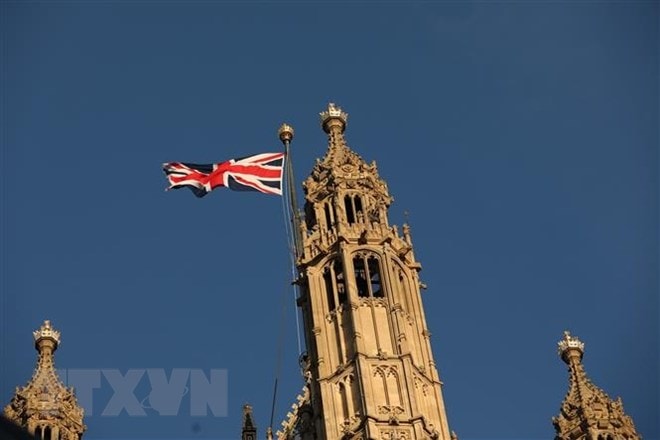 |
| The view outside the British House of Commons in London. Photo: THX/VNA |
British Finance Minister Philip Hammond called the Conservative MPs behind the no-confidence vote "extremists" seeking to push through a no-deal Brexit scenario.
Surviving the no-confidence vote within the Conservative Party doesn't change the fact that the biggest challenge facing the British Prime Minister in the coming days remains how to get the Brexit deal passed in the House of Commons. If May fails to secure sufficiently convincing concessions after meetings with European leaders between now and the end of the week, it's unlikely the current Brexit agreement will gain a majority when it's retried after Christmas.
In addition, there is the risk of another vote of no confidence against the British Prime Minister and her government, this time in the House of Commons, initiated by the opposition Labour Party.
The British Prime Minister affirmed that she is still making progress in negotiations with European leaders and pledged to see the outcome of the British referendum on Brexit through to the end.
Before the no-confidence vote, May had also warned that any attempt to replace the head of government at this time would only threaten to delay or completely reverse the Brexit process, as whoever succeeded her would not have enough time to negotiate an agreement with the EU.
The result of the no-confidence vote means that May's position will be secure for the next 12 months. However, as she stated to MPs just before the no-confidence vote, the British Prime Minister affirmed that she would not continue to lead the Conservative Party in the next general election in 2022. She also reiterated her stance against holding an early election, despite pressure from the opposition in the House of Commons.
The early announcement of her plan to step down from party leadership and the position of Prime Minister can be seen as part of May's "bargaining" package, aimed at persuading rebellious Conservative MPs to support her in completing Brexit before she steps down.


