
3 ways to identify Deepfakes to avoid becoming a victim of scams.
Deepfakes are exploding at an unprecedented rate, making it increasingly difficult to distinguish between real and fake content in the digital environment. Experts advise users to equip themselves with identification skills to avoid being deceived by content created by artificial intelligence (AI).
Deepfake is a technology that uses AI to swap faces or fake voices in videos or images. This technology is being extensively exploited by cybercriminals to conduct fraudulent video calls for the purpose of scamming and stealing money.
This technology has rapidly become a part of the modern digital world, appearing on social media, video platforms, in advertising, and even in sophisticated scam campaigns.
According to recent statistics, the number of deepfake online cases has increased from approximately 500,000 in 2023 to nearly 8 million in 2025, equivalent to a growth rate of almost 900% per year.

The explosive growth of generative artificial intelligence (AI) is making it increasingly easy to create fake videos, images, and voices. This is posing a major challenge to individuals, businesses, and organizations worldwide.
Deepfakes not only cause millions of dollars in losses for businesses, but also erode trust in the digital environment. Surveys show that 63% of cybersecurity leaders are concerned that AI is being exploited to create increasingly sophisticated fake content.
Meanwhile, more than half of businesses in the US and UK reported having faced some form of deepfake-related scam.
Notably, research by the UK-based biometric technology company iProov shows that only about 0.1% of survey participants could reliably identify deepfakes.
So how can we minimize the risk of being deceived by this increasingly realistic fake content?
1. Observe consciously instead of jumping to conclusions.
The most common mistake when consuming information online is quickly concluding that the content being viewed is either entirely true or entirely false.
According to experts, this approach carries many risks. In fact, content may be true but may have been edited, taken out of context, or only reflect a part of the truth.
In the age of AI, judging content in a "black or white" manner becomes even more dangerous because current content creation tools can produce highly convincing images and videos.
When viewing a video or image online, users should ask themselves questions such as: Is this content real, fake, or only partially true? Is the source truly reliable?
Maintaining critical thinking and avoiding hasty judgments is the first line of defense against deepfakes.
2. Carefully analyze the unusual details.
One of the most effective ways to identify deepfake content is to take the time to carefully observe the small details in images or videos.
Despite the increasing sophistication of AI technology, many AI-generated products still exhibit anomalies that users can detect if they observe carefully.
A common indicator is the appearance of meaningless text or characters. Current AI tools still face considerable difficulty in accurately reproducing text.
Therefore, billboards, printed text on clothing, electronic screens, or other objects containing text often display spelling errors, distorted characters, or meaningless phrases.
In addition, unnatural movements are also a suspicious sign. In deepfake videos, the face, eyes, or movements of the characters sometimes do not follow the normal movement patterns of the human body.
Viewers may notice expressions such as unnatural facial expressions, unusual head or eye movements, or limb movements that are out of sync with the rest of the body.
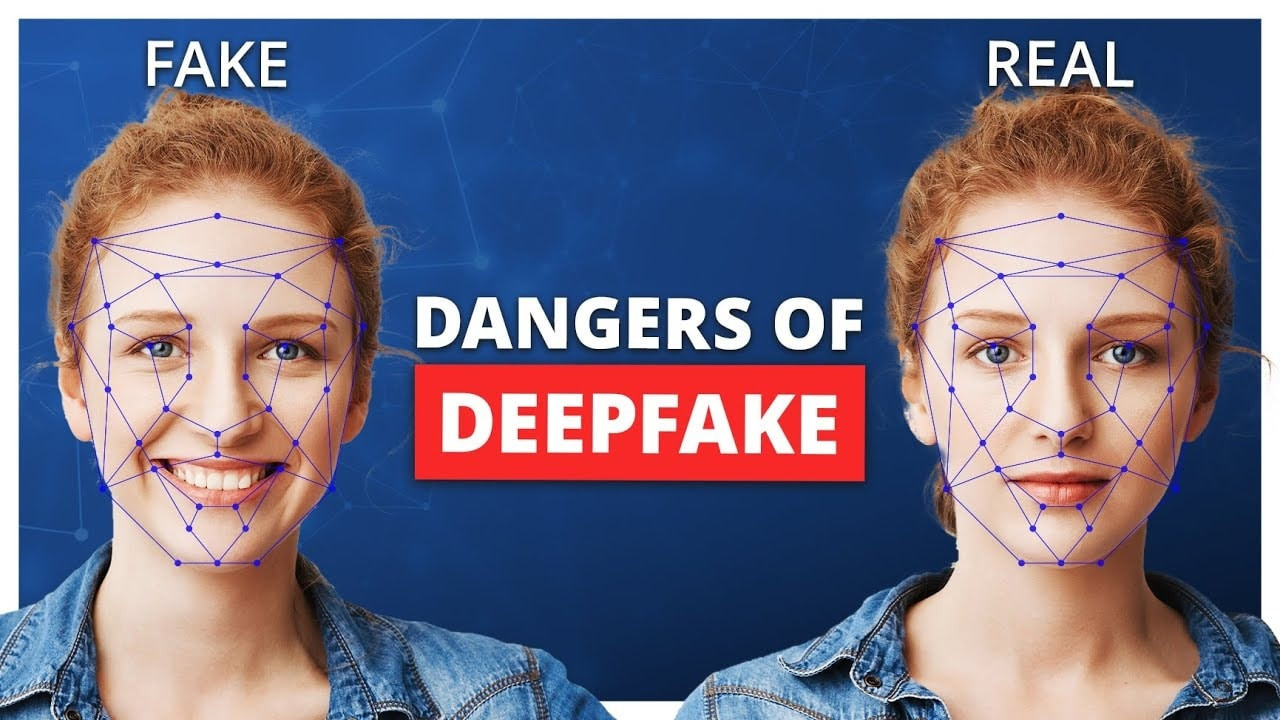
Additionally, many fake videos exhibit blurring, image distortion, or pixel noise in certain areas. These errors may only appear for a very short time between frames, so users should slow down the video playback or rewatch it multiple times if they have any doubts.
According to experts in deepfake detection, the details that most often reveal errors include hair, ears, teeth, facial contours, hands, and fingers. These are complex structures that AI models still cannot perfectly replicate in all cases.
3. Use technical tools to verify.
Although human observational skills play a crucial role in identifying fake content, the reality is that deepfake products are becoming increasingly sophisticated, making detection with the naked eye more difficult.
Therefore, technical support tools are becoming an indispensable part of the process of verifying the authenticity of images and videos.
Modern deepfake detection solutions are capable of analyzing many factors that are difficult for the average user to recognize, including file metadata, traces of editing in images or videos, invisible digital watermarks, and anomalies in data structure.
Through advanced analytical techniques, these tools can detect hidden signs of forgery that are difficult for the human eye to recognize.
In many cases, when provided with the original image or video file, deepfake detection systems can identify the source and extent of content tampering with significantly greater accuracy.
However, experts warn against relying entirely on technology. Despite their increasing sophistication, deepfake detection tools still have limitations and can be bypassed by new forgery techniques.
Therefore, maximum effectiveness is only achieved when technological solutions are combined with users' observational skills, critical thinking, and information verification habits.
Deepfake should be considered a new form of fraud.
Experts suggest that businesses and individuals not only need to learn how to detect deepfakes but also need to develop appropriate response procedures.
For businesses, training employees to recognize anomalies, verify information through multiple independent channels, and establish procedures for checking before processing important transactions is essential.
No single method is effective enough when used alone. Conscious observation, detailed analysis, and the use of technical tools must be combined to enhance the ability to detect fake content.
In the age of AI, the "see it, believe it" principle is gradually losing its value. Instead, users need to develop the habit of verifying information before trusting it or making decisions.
Only by building such proactive defenses can we minimize the risks posed by the increasingly sophisticated and difficult-to-detect wave of deepfakes.


