
Four ministers appeared before the National Assembly for the first time to answer questions.
Many government members will be appearing before the National Assembly for the first time to answer questions, including the Ministers of: Interior, Industry and Trade, Education and Training, and Natural Resources and Environment.
Recently, the Secretary General of the National Assembly, Nguyen Hanh Phuc, sent out a request for opinions from delegates on five groups of issues slated for questioning and answering during the National Assembly session. Speaking to the press on the sidelines of the National Assembly on the morning of November 11th, Mr. Nguyen Hanh Phuc provided more specific details on this matter.
PVSir, have the ministers who will answer questions been finalized yet, and will the Prime Minister answer questions during this session?
Mr. Nguyen Hanh Phuc:Based on the groups of issues compiled from the beginning of the term and from the beginning of the session, through voter feedback channels, practical experience, and speeches of National Assembly deputies in the parliamentary chamber, we grouped them into several issues. After that, we sought opinions and narrowed it down to 11 issues, reporting to the National Assembly only 5 issues.
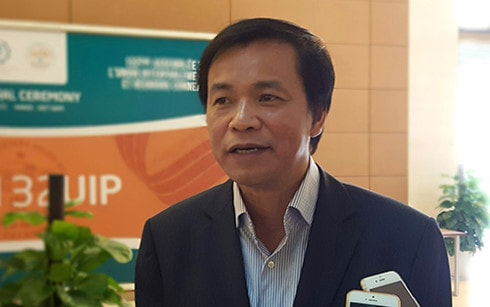 |
| National Assembly Secretary General Nguyen Hanh Phuc answered questions from the press on the morning of November 11. |
Yesterday, after consulting with National Assembly deputies, we selected 4 out of 5 issues to be reported on and raised for questioning at the upcoming session.
Those are questions related to the Ministry of Industry and Trade, so naturally the Minister of Industry and Trade must answer. Other ministers must also answer on related issues.
The second group of questions relates to resources and the environment, and the Minister of Natural Resources and Environment will take the podium to answer them.
The third group relates to the Ministry of Education and Training and involves many areas of concern.
The fourth group relates to internal affairs, the Minister of Internal Affairs responded.
And of course, the Prime Minister will respond after the Ministers have finished their responses. During that process, the Deputy Prime Ministers in charge of each sector must also provide further clarification.
The Prime Minister gave the final answer, encompassing all the major issues. The Prime Minister also had to directly answer some questions from delegates during the plenary session.
PV:How much time do you have allocated for the Prime Minister, sir?
Mr. Nguyen Hanh Phuc:The questioning time remains 2.5 days, and of course, the Prime Minister will have half a day. The Prime Minister will give a general report and then answer questions from the National Assembly deputies.
PV:This session saw an innovation in the discussion process, allowing delegates to raise a sign requesting to debate. Will this format be continued in this question-and-answer session?
Mr. Nguyen Hanh Phuc:Yes, absolutely. This is an innovative aspect of the National Assembly's activities during this 14th term. It's not just limited to regular sessions; it includes questioning, allowing representatives to speak up and ask questions thoroughly, pursuing issues to the point where government members must provide further clarification. This ensures lively questioning that addresses the issues of concern to the representatives.
PV:Could you tell us if there were any other innovations in this question-and-answer session?
Mr. Nguyen Hanh Phuc:Over the past five years, we have gained valuable experience, and this time will be no different. During a term, there are two rounds of questioning: one mid-term and one final term, inviting all members of the Government and the Prime Minister to question directly. However, the annual meetings, as per usual practice, select groups of issues and choose specific ministers for questioning.
The depth, relevance, and intensity of the discussion ultimately depend on the National Assembly representatives. Those who choose the questions must ensure that the ministers provide accurate and concise answers.
This is also the first time a member of the new government has answered questions during this term, so they may be unfamiliar with the process and will gradually learn from experience. Delegates should avoid being long-winded, focus on the main points, and get straight to the point.
PV:Thank you, sir!
According to VOV


