
4 signs that your power bank needs replacing
Power banks are familiar items to many people, but they can't be used forever. If you notice any of the signs below, you should stop using them to avoid the risk of fire, explosion, or damaging your phone.
Portable power banks are often seen as a "lifesaver" when your phone is running low on battery, especially during long trips, business trips, or when you need to use your device constantly. However, many people have a habit of keeping a power bank in their bag for years without realizing that the battery inside also has a limited lifespan.
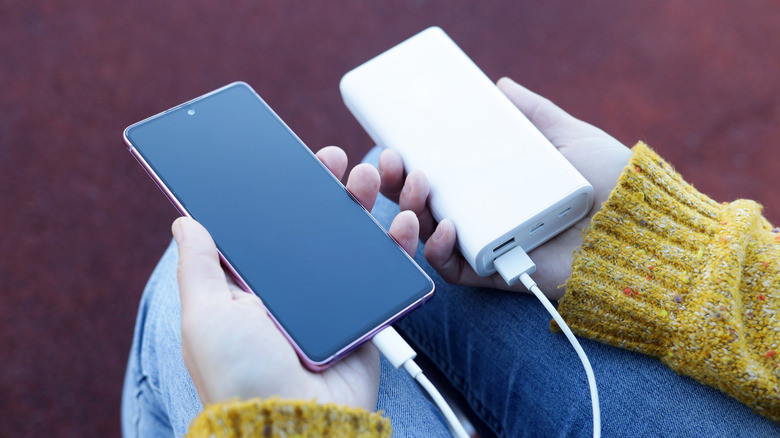
Most power banks currently use lithium-ion batteries. These batteries degrade over time and after many charging cycles, even if the product was initially of good quality. When batteries age or fail, the problem isn't just a decrease in capacity; safety risks can also arise.
Therefore, if you notice any of the four signs below, it's time to stop using your power bank.
1. The power bank casing is swollen or deformed.
This is the most easily recognizable sign and also the one that needs special attention.
A normal power bank should have a relatively flat surface. If the device starts to bulge, bend slightly, the seams of the casing separate, or the product no longer lies flat on the table as before, users should stop using it immediately.
This phenomenon typically occurs when the lithium-ion cells inside degrade and produce gas. The accumulated pressure causes the battery casing to bulge outwards. Aging, excessively high or low temperatures, and overcharging can all contribute to faster battery degradation.
In particular, you should not continue to leave a swollen battery plugged into a power outlet for charging, nor should you use it to charge a phone.
A swollen battery is not something you can "try to use a few more times." If subjected to continued mechanical stress, punctures, or continued overheating, a damaged lithium-ion battery can lead to fire or even explosion.
2. The power bank gets unusually hot during use.
It's not unusual for a power bank to get slightly warm while charging a phone or plugged into a power source. The current flowing through the components and the fast charging process can both generate a certain amount of heat.
However, if the device gets so hot that it's difficult to hold, giving the user the feeling of holding something that could burn them, that's a different story.
Unusual temperature increases can be a sign that internal battery components are malfunctioning. High-quality power banks are usually equipped with safety mechanisms, including thermal sensors, to limit operation when the temperature exceeds safe limits.
An unusually hot device can also transfer heat through the charging cable and affect the charging port or components of the connected phone or tablet.
Therefore, if your power bank starts getting extremely hot instead of just slightly warm, unplug it, stop using it, and replace it with a new one.
3. Battery capacity drops sharply, takes forever to fully charge.
Another often overlooked sign is a noticeable decrease in the power bank's ability to hold a charge.
For example, a power bank might have previously held enough power to charge a phone several times, but after a while, it only charges a small portion. Or you might fully charge your device, leave it in your pocket for a few days, and then find the battery almost completely depleted.
This is a fairly common sign that lithium-ion batteries have aged. The battery capacity gradually decreases after prolonged use and an increase in the number of charge cycles.
It's worth noting that many people still keep such batteries for "emergencies." But if the batteries are severely degraded, continued use could cause other problems.
Unstable power supply or fluctuating voltage can affect the device being charged. Additionally, a degraded battery may also overheat abnormally when users attempt to charge it for extended periods to reach 100%.
Therefore, if your power bank is draining unusually quickly, don't try to keep it just because you occasionally still have enough power to use.
4. The packaging is cracked, dented, or has an unusual smell.
Portable power banks are often kept in backpacks, handbags, car trunks, or carried along on trips. Dropping them onto a hard surface, subjecting them to strong impacts, or exposing them to high temperatures inside a car can all damage the internal components.
If the power bank casing is severely cracked, deformed, or dented, users should inspect it and consider replacing it instead of continuing to use it. A strong impact can damage the battery cells even if the device itself doesn't show any serious external damage.
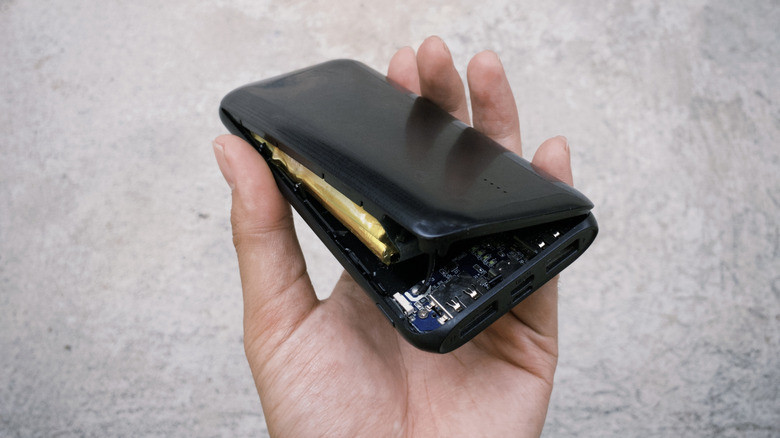
Unusual smells are also a warning sign that shouldn't be ignored.
If the battery emits a burning, chemical, or scorching smell, stop using it immediately. This could be a sign that the electrolyte inside the battery cell is leaking due to damage.
In this case, do not continue charging or attempt to check by removing the battery casing. The electrolyte in lithium-ion batteries is flammable, and direct contact is unsafe.
Don't wait until your power bank is completely dead before replacing it.
Power banks are not devices that can be used indefinitely. Like phone batteries, the lithium-ion cells inside will degrade over time.
It's important that users don't rely solely on the fact that the battery is still charging to determine whether a device is safe or not.
A power bank that is swollen, unusually hot, drains quickly, or shows signs of physical damage could be a warning that the device has exceeded its safe usage limits.
With power banks, saving a few hundred thousand dong by trying to use a degraded device isn't worth the risk of damaging your phone, causing a fire, or compromising your own safety.
If you notice these signs, the most sensible option is to stop using it and replace it with a new, reputable power bank, rather than waiting until it completely breaks down.


