
4 things you shouldn't be afraid of when visiting the highlands.
(Baonghean.vn) - Accepting to have elderly people tie strings around your wrist, happily eating chicken feet, only smiling when water is splashed in your face, and calling elderly people "father" or "mother" are considered beautiful gestures when visiting the highlands of Nghe An province.
When tied around the wrist
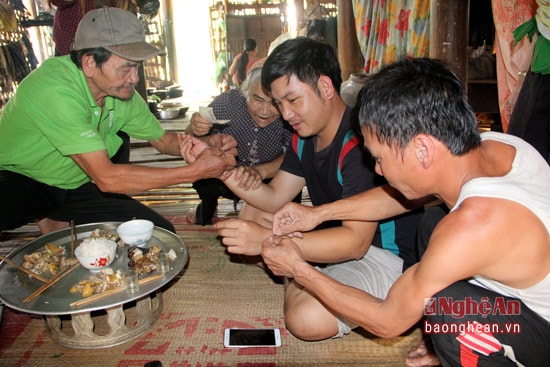 |
| Tying a thread around a guest's wrist during a Thai religious ceremony. Photo: Ho Phuong |
One ritual you'll often encounter when visiting a home in the villages of the Thai, Khmu, or Hmong people in Nghe An is the soul-calling ceremony. Some households, for various reasons, hold dozens of these ceremonies each year. The purpose of this ritual is usually to pray for good fortune, health, and happiness, but many people don't understand its true nature and are hesitant to participate.
It is commonly believed that tying a string around the wrist makes one become a "ghost" in someone's house, or be "bewitched." This belief is incorrect, or at least not true for the minority communities in Nghe An.
When guests come to a house where a spirit-calling ceremony is taking place, knowledgeable homeowners may suggest that the shaman "tie a thread around your wrist" with the hope of good fortune. Therefore, there's no reason to hesitate about this.
The host offered chicken feet.
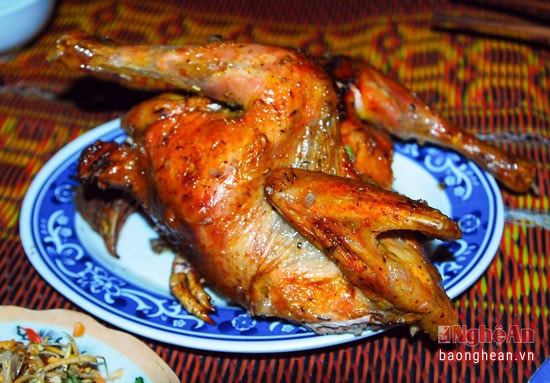 |
| Chicken feet are a prized dish offered to guests, symbolizing the wish for them to have strong legs and a resilient spirit. Photo: Trong Sach |
Many people are hesitant to eat chicken feet because they are bony and the most "difficult" part to eat. However, offering chicken feet at the first meal is a common practice among the Khmu people when guests visit their home. This act signifies a wish for the guest to have strong legs and good fortune in their business endeavors.
During a meal, the host usually sets aside a chicken foot on the table. As soon as a guest finishes eating, someone will pick up a chicken foot and offer it to them. If we reciprocate by eating both chicken feet, it will make the host extremely happy.
Older people refer to themselves as "father" and "mother," and call me "child."
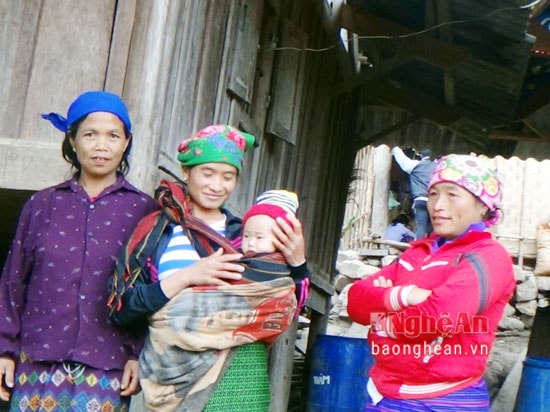 |
| Once married and having children, the Khmu people often refer to younger family members as "father" or "mother." Photo: Huu Vi |
When Khmu and Hmong people get married and have children, they often call those younger than themselves "child" and refer to themselves as "father" or "mother." This may make those unfamiliar with it feel a little awkward, but it is considered normal according to the customs of the Hmong and Khmu people.
Those who are married and have children are often referred to by their child's name and have middle names like "bố" (father), "pỏ" (pỏ), "phò" (phò), "giống" (giòng), and they also refer to themselves as "bố" simply to distinguish themselves as married men with children.
Interestingly, when addressed as "father" and referred to as "son" by someone younger, older people often seem very happy because they feel respected.
Being splashed with water.
.
People in the lowlands are very sensitive about having water thrown at them, considering it an insult, but in many cases, people in the mountainous regions consider throwing water at others and being thrown at as a good thing.
This custom is common among the Thai community. During weddings and festivals, certain individuals are "assigned" the task of splashing water on others. At weddings, when the groom's family arrives to pick up the bride, the bride's family sends a few people, or a whole group, to splash water on the groom's entourage. Some ceremonies only use wild fruits like the fruit of the banyan tree or other forest fruits that stick to clothing. Sometimes, those who go overboard even use water to "punish" the groom's family, simply to make the wedding more joyful.
During the festival, a few girls are positioned along the route, dipping leaves in them and tossing them at visitors. Of course, this is only symbolic, to pray for good luck and health for those attending the festival.
Huu Vi


