
5 new points at the 2019 Asian Cup
Using VAR, allowing a fourth substitution, increasing the number of participating teams to 24... these are some of the new features in the upcoming Asian Nations Championship.
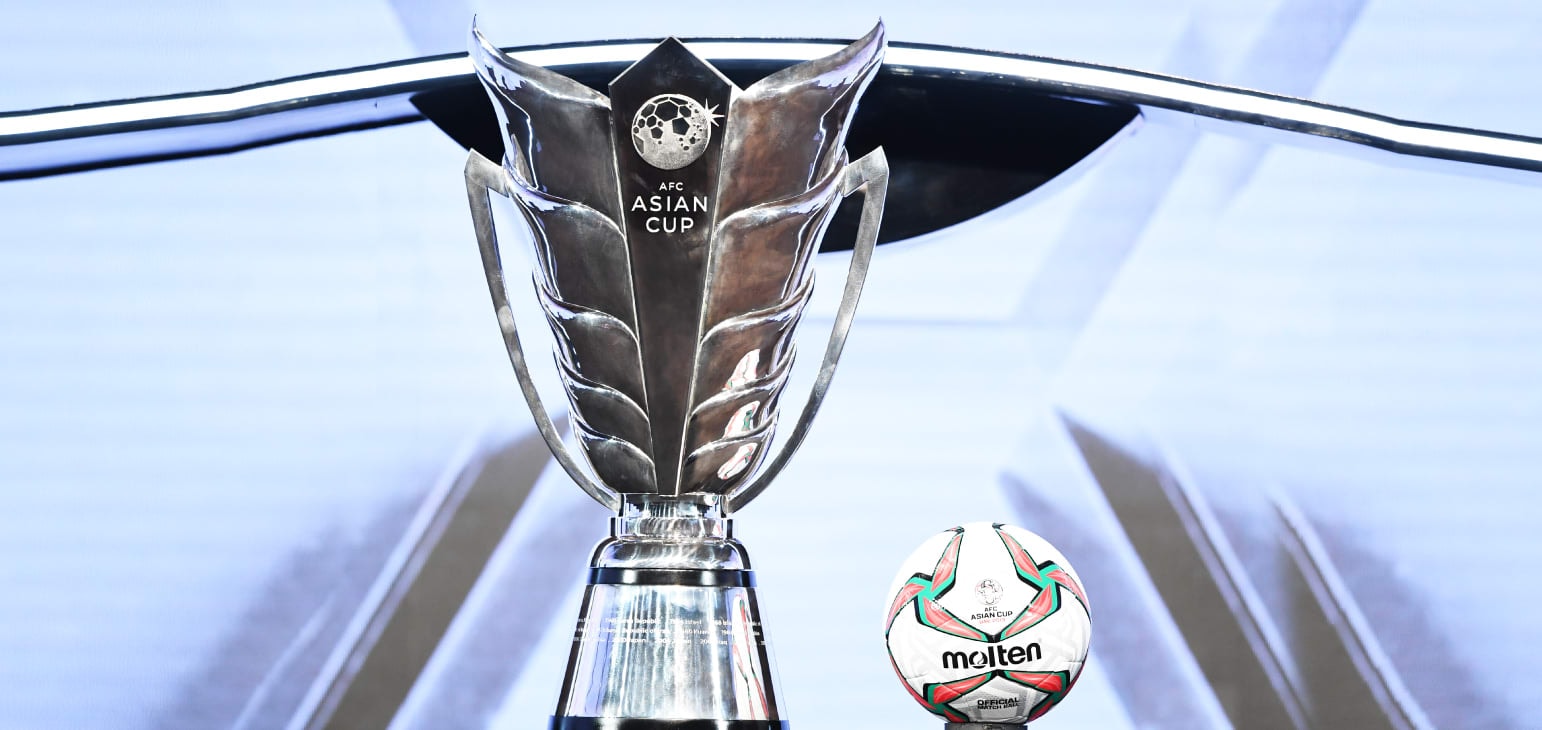 |
| The new Asian Cup trophy features a modern design, measuring 72 cm in height, 42 cm in width, and weighing 15 kg. Photo: AFC |
New features
- Allowing a fourth substitution. At the Asian Football Confederation (AFC) meeting in October 2018, the 2019 Asian Cup Organizing Committee and the AFC agreed that starting from the knockout rounds, if two teams have to play extra time, they will be allowed a fourth substitution.
- Use VAR.Video assistant referee (VAR) technology was used successfully at the 2018 World Cup. With FIFA's approval, the AFC decided to use VAR at the 2019 Asian Cup.
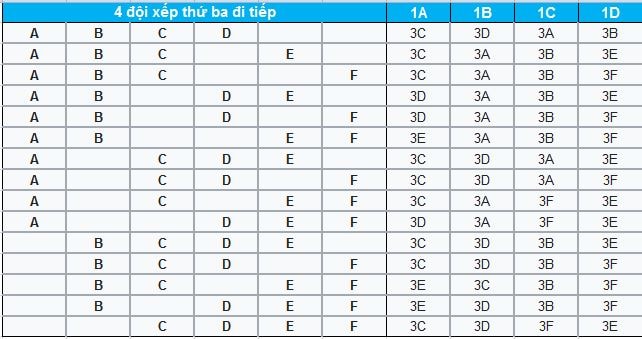
- The number of participating teams is 24. Similar to Euro 2016, the Asian Cup has increased the number of teams in the final tournament to enhance its appeal and television broadcasting rights. The tournament will also include a round of 16, and the four third-placed teams with the best records in the group stage will advance.
 |
| Iran is the strongest contender for the 2019 Asian Cup title. |
- Participation in the Confederations Cup is uncertain. Traditionally, the Asian Cup winner would participate in the Confederations Cup, a pre-World Cup tournament. However, due to the hot summer weather in Qatar, the host country of the 2022 World Cup, and low audience interest, FIFA has left the 2021 Confederations Cup open.
- The new trophy. Instead of the round shape of previous editions, the AFC decided to redesign the continent's number one trophy. The new trophy is inspired by a five-petaled lotus flower, representing the five regional member federations of the AFC (West Asia, Central Asia, South Asia, East Asia, and Southeast Asia). According to assessments...Fox SportsThe new trophy has a modern design and is easier for the winning teams to lift high.
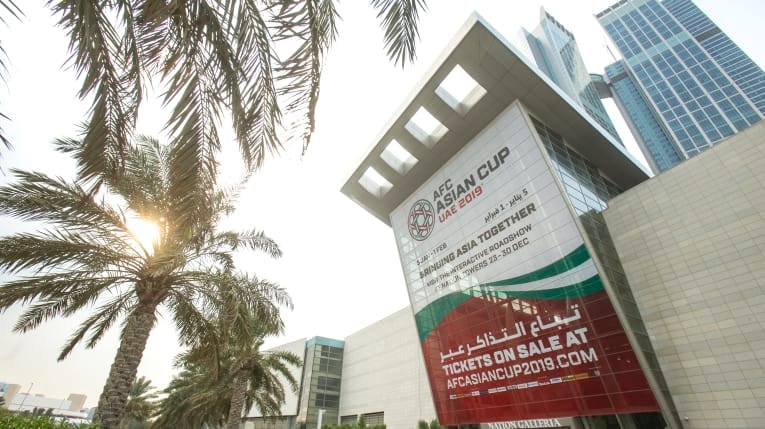 |
| The UAE is ready to welcome 24 teams to compete. Photo: AFC |
Time and location of the event
- The 2019 Asian Cup took place from January 5th to February 1st in the UAE. This was the second time this Gulf nation hosted the Asian Cup.
- The four cities hosting matches of the 2019 Asian Cup are Abu Dhabi, Dubai, Al Ain, and Sharjah. The two largest stadiums hosting the 2019 Asian Cup are Zayed and Mohammed Bin Zayed, with a capacity of over 40,000 seats. The remaining stadiums have capacities ranging from 10,000 to over 20,000 seats.
- The Zayed Stadium will host the opening and final matches. Construction began in 1974 and it opened in January 1980. In 2009, the stadium was renovated, adding function rooms and a VIP area, and reducing its capacity from 60,000 to 43,000 seats. It is the official home stadium of the UAE national team.
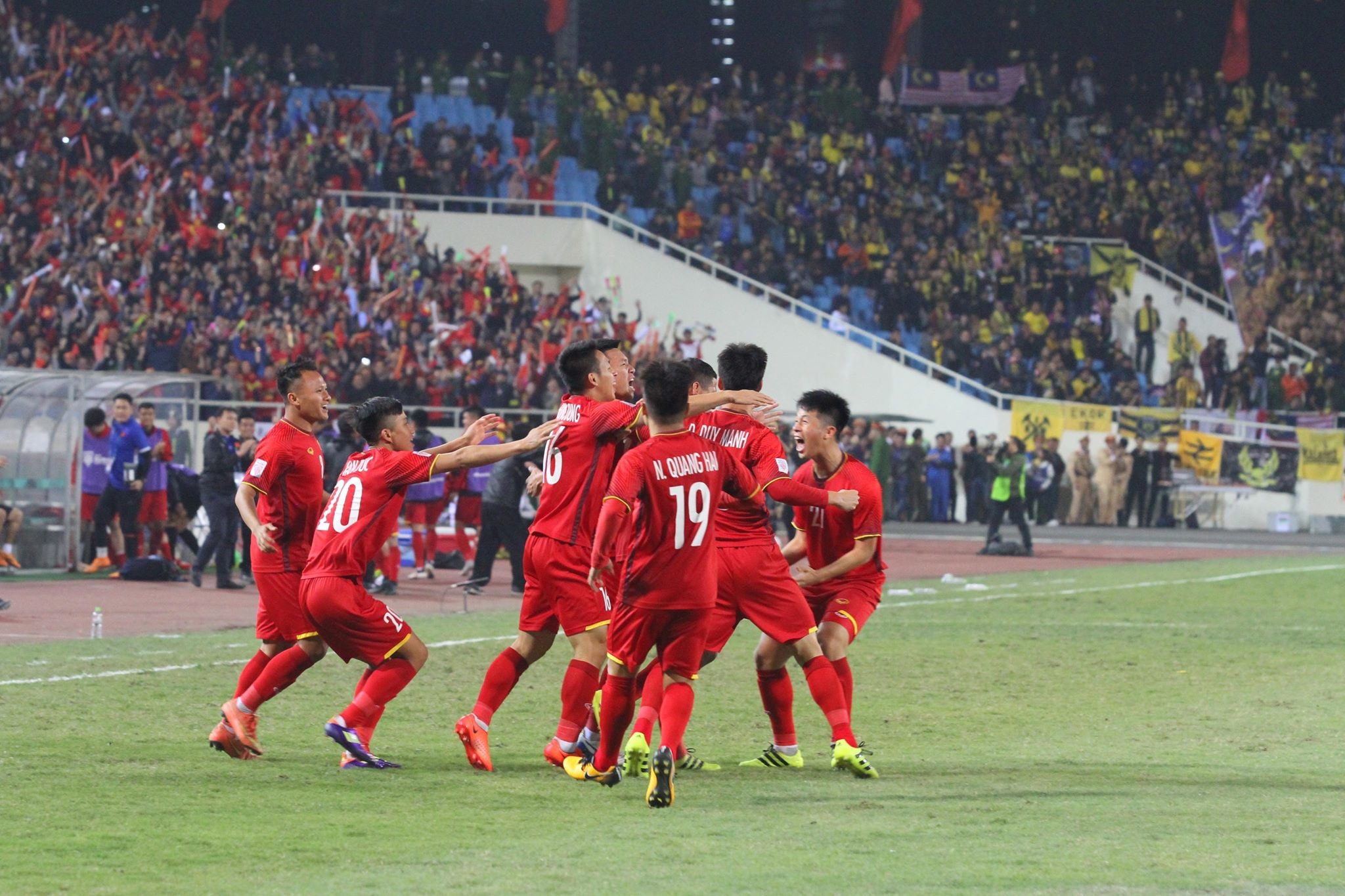 |
| Vietnam has great confidence heading into the 2019 Asian Cup, following their AFF Cup victory. Photo: Trung Kien |
Vietnam national team
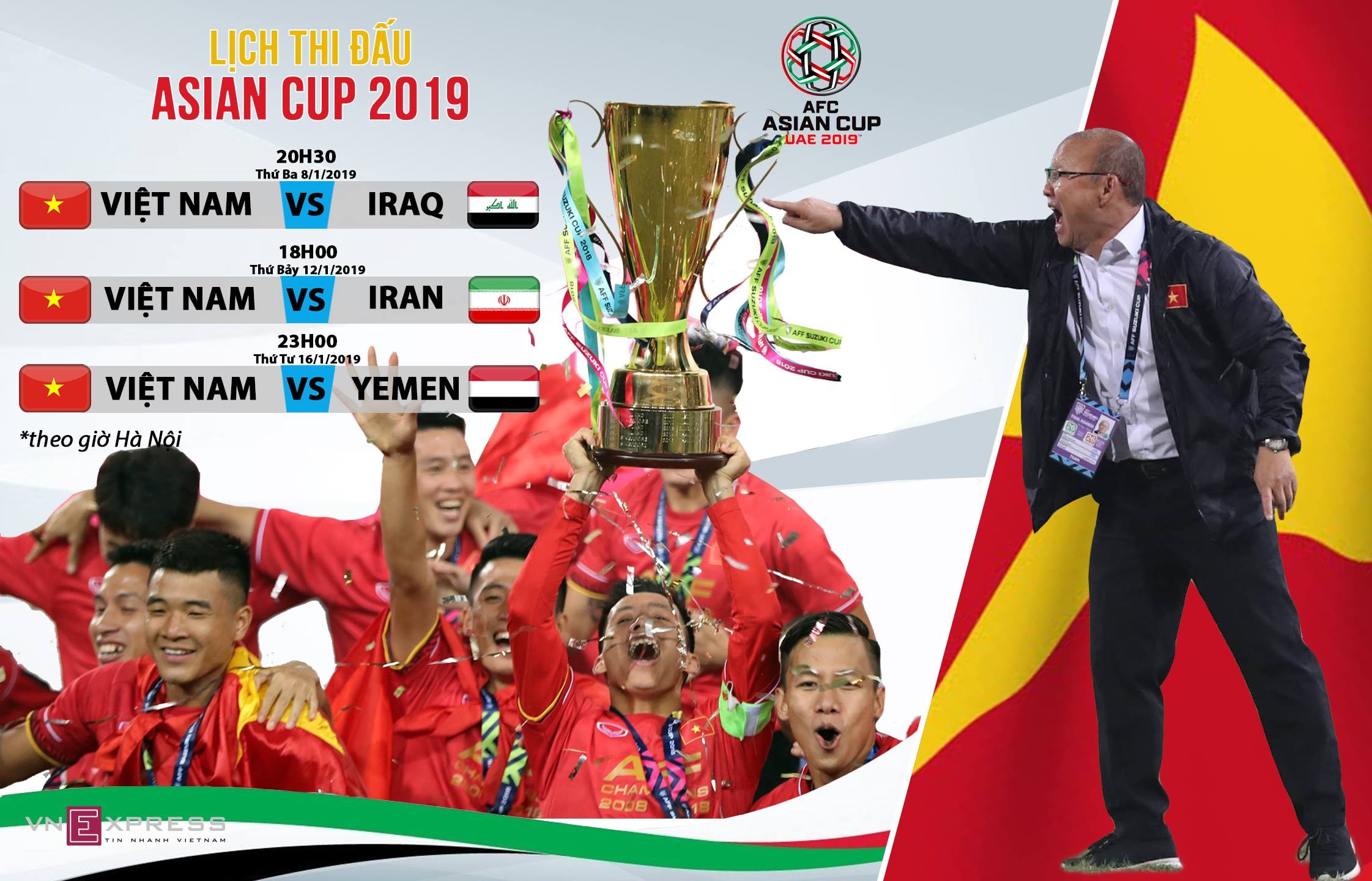
- The 2019 Asian Cup was Vietnam's second continental final tournament appearance, following the 2007 Asian Cup. Including the period when South Vietnam played before 1975, Vietnam has participated in the final tournament a total of four times.
- Vietnam's best performance at the Asian Cup was reaching the quarter-finals in 2007. In the tournament held on home soil, Alfred Riedl's team beat UAE 2-0 in their opening match, drew 1-1 with Qatar in their second, and advanced despite losing 1-4 to Japan in the final match. In the quarter-finals, Vietnam lost 0-2 to Iraq, who went on to win the tournament.
- Coach Park Hang-seo, along with Carlos Queiroz (Iran), Alberto Zaccheroni (UAE), Milovan Rajevac (Thailand), Paulo Bento (South Korea), Marcello Lippi (China), Kim Yong-jun (North Korea), and Hector Cuper (Uzbekistan), are considered World Cup-level coaches at the 2019 Asian Cup.
Competition format
- 24 teams are divided into 6 groups, with 4 teams in each group, playing a round-robin format. The top two teams from each group and the four best third-placed teams will advance to the Round of 16.
- The total prize money for the 2019 Asian Cup was $14.8 million. The champion received $5 million, the runner-up $3 million, and the two teams that lost in the semi-finals shared third place, each receiving $1 million. All 24 participating teams received $200,000.
- If two or more teams are tied on points in the group stage, the following tie-breaking criteria will be considered in order: goal difference in head-to-head matches, number of goals scored in head-to-head matches, goal difference in the group, number of goals scored in the group, penalty shootout (if the two teams need to be considered in the final match). Finally, penalty points will be awarded. Each yellow card counts as one point, a red card as three points. The team with fewer penalty points will be ranked higher.
- The four best third-placed teams are determined by: points, goal difference, number of goals scored, and penalty points. If two or more teams are tied in these criteria, the organizers will conduct a draw to select the teams that advance.
History of the Asian Cup
- First held in 1956 in Hong Kong, the tournament was originally held every four years. In 2007, the AFC switched to odd-numbered years instead of even-numbered years to avoid overlapping with the European Championship (Euro). Also, starting with the 2007 Asian Cup, the AFC used FIFA group rankings to determine seedings, rather than relying on performance in previous tournaments.
- Japan holds the record for most Asian Cup titles, with four wins. Saudi Arabia and Iran each have three titles. South Korea ranks fourth, with two wins.
- Since the 2007 Asian Cup, Australia has participated in Asia's premier tournament, after requesting a transfer from the Oceania Football Confederation and receiving approval from FIFA. In 2011, they were runners-up, losing to Japan in the final. In 2015, on home soil, Australia won the Asian Cup for the first time, defeating South Korea 2-1, and are currently the defending champions.
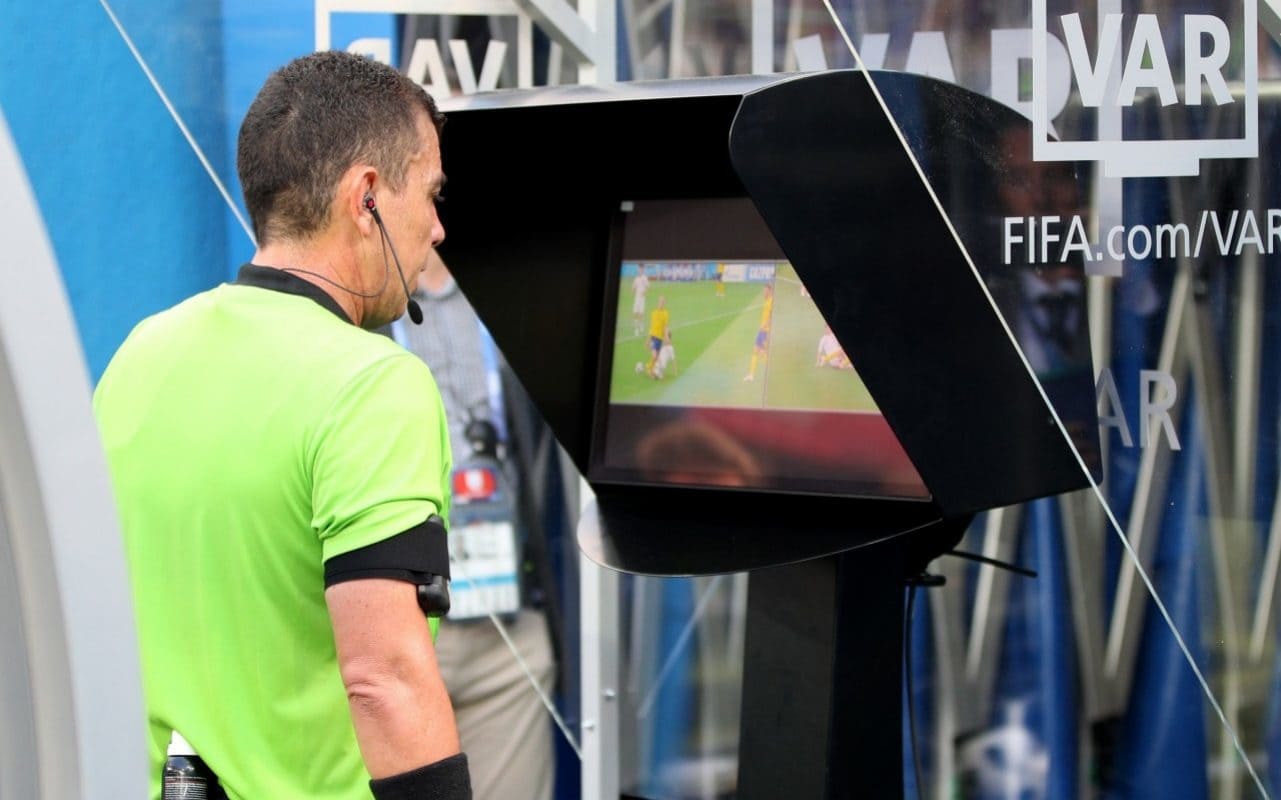 |
| VAR technology will be used at the 2019 Asian Cup. Photo: FIFA |


