
5 of the world's most notorious corruption cases.
(Baonghean.vn) - Many corruption cases involving politicians or military officials, once exposed, shock the public because of the enormous amount of money or assets seized.
1. Sentenced to 400 years in prison for "making laws" to receive bribes.
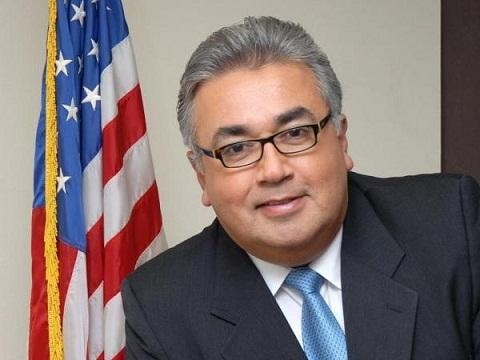 |
| Ron Calderon was supposed to receive a 400-year prison sentence but escaped unscathed after a series of scandals. |
California State Senator Ron Calderon is facing trial for bribery. He allegedly pushed for and implemented laws that benefited a hospital involved in payment fraud and participated in a tax settlement in the film industry.
There are a total of 24 federal indictments against Senator Ron Calderon, a Democrat from a prominent political family in suburban Los Angeles. Prosecutors allege he is a "fake legislator who used his power and influence to enrich himself and his family unjustly."
Specifically, through his power and influence, Ron Calderon used the message "pay to be in the game" to persuade those who wanted his support. From there, he freely extracted money or demanded other financial benefits.
Specifically, investigators also accused Ron Calderon of accepting bribes by requesting several businesses and hospitals to arrange high-paying jobs for his son and daughter, even though they either did not work or worked only minimally. More specifically, in exchange for benefits from tax credit regulations for the film industry enacted by Ron Calderon, film studios hired his daughter to work for $3,000 per month.
Ron Calderon pleaded not guilty, but State Senate President Pro Tem Darrell Steinberg has called for his resignation or leave of absence. Prosecutors said: “If convicted on the charges, Ron Calderon could face nearly 400 years in prison, while his brother could face 160 years.”
2 - It took 20 employees two long nights to inspect all the assets from…4 truckloads.
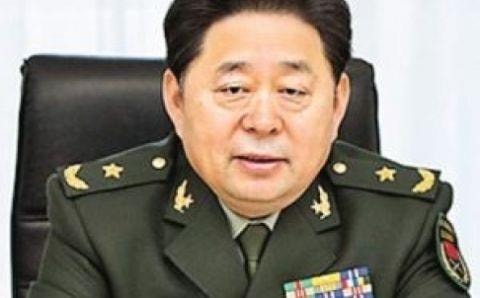 |
| Chinese Army Major General Gu Junshan embezzled four truckloads of rare and valuable items. |
The corruption case involving Major General Guo Junshan in August 2012 was kept secret for a long time. This could be considered the biggest corruption case in the Chinese military in recent years.
Among the items confiscated from Mr. Guo's home were a gold statue of the late Chairman Mao Zedong, a gold washbasin, a gold model boat, and several crates of Maotai liquor.
The two brothers of Mr. Guo also own several houses near his villa. The three houses are connected by a 30-meter-long tunnel filled with expensive Maotai liquor barrels. According to a report in Caixin magazine, most of these barrels remain untouched because Mr. Guo hasn't lived there for many years.
Guo, who had previously overseen real estate and infrastructure issues within the military before being appointed Deputy Director of the General Logistics Department, came under scrutiny and investigation starting on January 19, 2012, for “economic issues” (implying corruption). A month later, his name was removed from the Chinese Ministry of Defense website.
Guo owned dozens of apartments, each nearly 200 square meters in size, in downtown Beijing. The former chairman of the General Logistics Department claimed he intended to use these apartments as "gifts." Furthermore, in Shanghai, each piece of military land was sold for 2 billion yuan, with 6% of that money going into Guo's pocket.
Not only that, Mr. Coc also hired someone to write a completely fabricated article about his father's revolutionary achievements in order to enhance his reputation and profit. He even built a private "revolutionary cemetery" for his father.
3 - President sentenced to life imprisonment for bribery
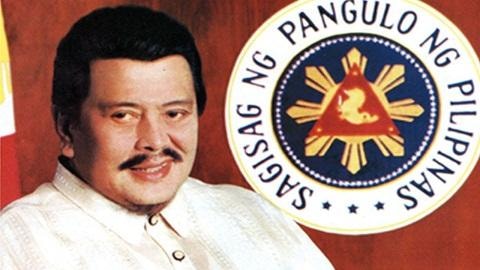 |
| Former Philippine president sentenced to life imprisonment for corruption. |
The Daily Inquirer (Philippines) reported on September 11, 2013, that former Philippine President Joseph Estrada (who served from 1998 to 2001) was accused of corruption within the presidential palace. Joseph Estrada was accused of receiving approximately $11.7 million in protection money from Luis “Chavit” Singson, the governor of Manila. He was also accused of pressuring social security systems to purchase stocks in exchange for a commission of up to $4.7 million; accepting bribes from casinos; and misappropriating tax revenue for personal gain.
Joseph Estrada's objections, coupled with insufficient evidence, prolonged his trial for six years, from 2001 to September 11, 2007. Although he escaped the death penalty, Joseph Estrada received a life sentence. In addition, the former president was fined $15.5 million and had a mansion he had purchased with bribe money confiscated.
4 - Credit cards with "bottomless" capacity
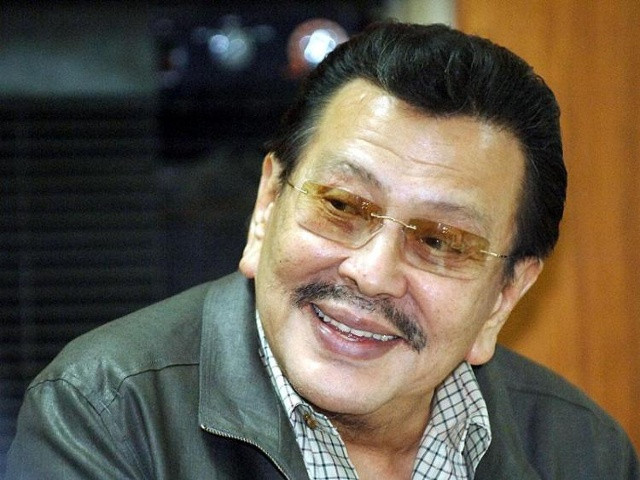 |
| Arnoldo Aleman - President of Nicaragua from 1997-2002 |
Arnoldo Aleman served as President of Nicaragua from 1997 to 2002. Shortly after leaving office in 2002, the 81st president of Nicaragua was arrested on corruption charges related to $100 million in state funds. In 2003, he was convicted of money laundering, fraud, embezzlement, and electoral violations, and sentenced to 20 years in prison. The corruption scandal continued to unfold, and 14 more people were arrested, including several close members of the president's family.
Aleman is famous for using a government credit card with "bottomless" spending limits for personal expenses, including $25,955 for a honeymoon in Italy, $68,506 for hotel and handcrafted souvenirs during a holiday in India (with his wife), and $13,755 for one night at the Ritz Carlton in Bali.
His embezzled funds were laundered through shell companies and fictitious investment accounts in Panama and the United States, then used to purchase high-value assets including real estate and certificates of deposit. The accounts were also used to distribute the embezzled money to his family members.
5 -Half a million USD per day
 |
Pavlo Lazarenko, Prime Minister of Ukraine from 1996-1997. A United Nations calculation shows that Pavlo Ivanovych Lazarenko embezzled $200 million from the state budget (equivalent to half a million dollars per day during his time as prime minister). This money was then transferred to numerous bank accounts in Poland, Switzerland, and Antigua (an island in the Leeward Islands archipelago in the Caribbean Sea), subsequently laundered through shell companies in the United States and used to purchase various assets.
In December 2008, Lazarenko was arrested by Swiss authorities on money laundering charges when he crossed the border from France, but was released a few weeks later after posting $3 million bail. Months later, Ukraine revoked his diplomatic immunity, and he fled to the United States.
But there he was also arrested on suspicion of illegal entry. He was subsequently prosecuted on 53 counts of conspiracy, money laundering, fraud, and trafficking in stolen goods. In November 2009, a California court sentenced him to 97 months in prison, ordered him to pay over $9 million in cash and $22.8 million in assets. Lazarenko was released from a US federal prison in November 2012.
Peace
(Synthetic)


