
China's 5G network surpasses 1 billion subscribers.
According to data released by China's Ministry of Industry and Information Technology (MIIT), the number of 5G mobile subscribers in China surpassed 1 billion at the end of November.
Accordingly, the number of 5G subscribers in China now accounts for 56% of the total mobile subscribers, marking a significant increase of 9.4 percentage points compared to the same period last year.
This figure reflects the remarkable pace of 5G technology development in the world's most populous country, as network operators and the government continuously invest heavily in telecommunications infrastructure, promoting the widespread deployment and application of 5G networks.
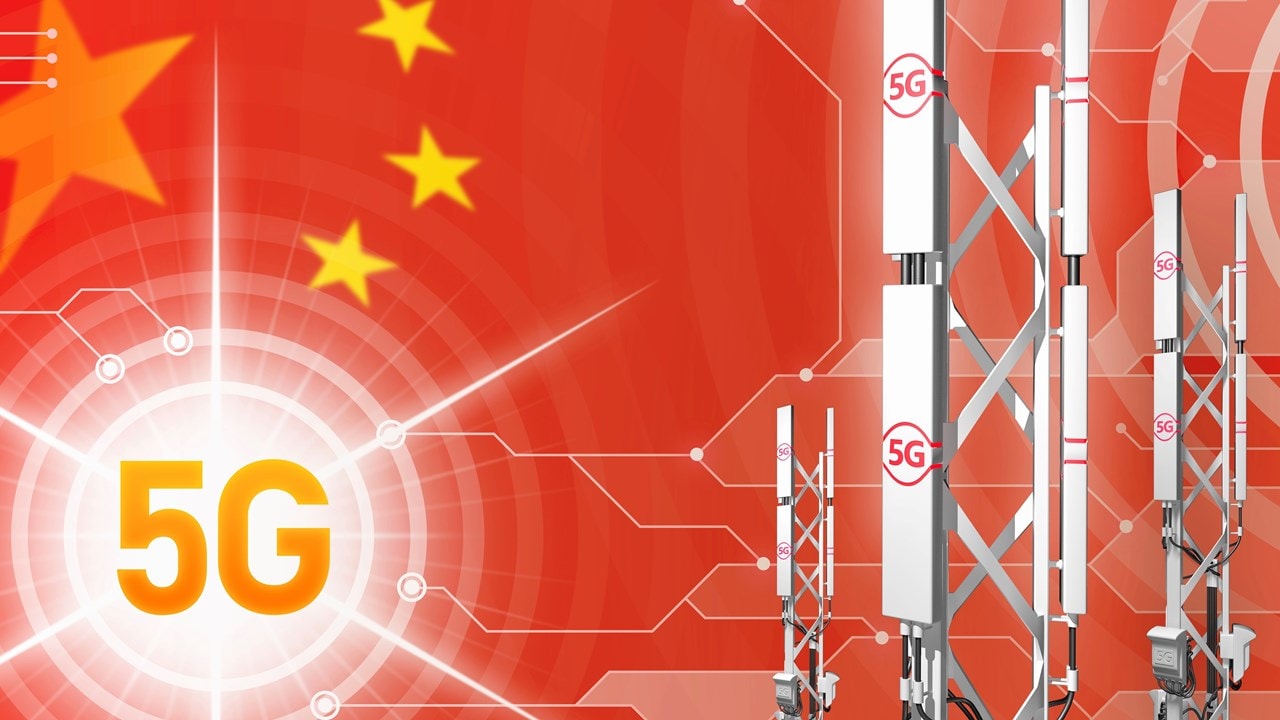
Official data shows that, as of the end of November 2024, China had deployed approximately 4.2 million 5G base stations, affirming the country's leading position in the development of next-generation telecommunications technology.
According to previous industry estimates, these base stations account for more than 60% of the total 5G base stations globally, an overwhelming proportion compared to other countries.
This reflects China's ongoing efforts to build advanced 5G infrastructure, including significant investment from the government and major telecommunications corporations to promote the widespread adoption and application of 5G technology across various economic and social sectors.
According to Zhang Yunming, Vice Minister of Industry and Information Technology, China now boasts 29 5G base stations per 10,000 inhabitants, exceeding the target set in the 14th Five-Year Plan (2021-2025) ahead of schedule.
These 5G networks have achieved widespread coverage, not only encompassing urban areas but also reaching strategic locations such as public service centers, cultural landmarks, popular tourist destinations, and key transportation corridors.
This achievement not only reflects China's commitment to leadership in telecommunications technology, but also opens up new development opportunities in economic, social, and cultural fields.
The report also highlighted that the Chinese government is actively expanding 5G connectivity to rural and remote areas as part of a comprehensive strategy to bridge the digital divide. These efforts not only help remote communities access advanced technology but also boost economic development, improve living standards, and create more equitable opportunities for people in underdeveloped regions.
MIIT, in collaboration with 11 other government agencies, recently announced an action plan to promote the comprehensive expansion and adoption of 5G by 2027.
This plan focuses on prioritizing consumer-oriented applications and sets ambitious goals, including increasing the number of 5G base stations to 38 per 10,000 people; bringing the personal 5G user penetration rate above 85%; and ensuring that more than 75% of network traffic is routed through 5G infrastructure.
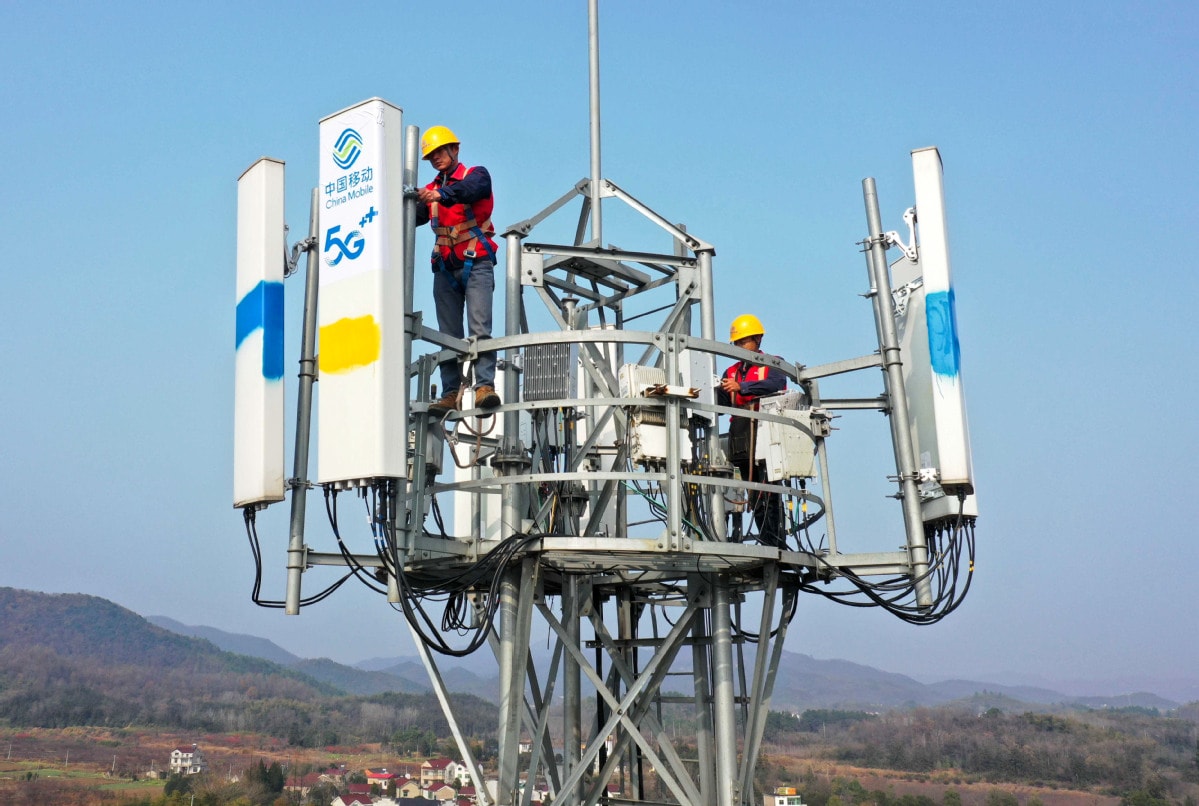
These advances not only solidify China's leading position in telecommunications technology, but also lay the foundation for the development of high-tech fields such as artificial intelligence (AI), the Internet of Things (IoT), and smart cities.
The report indicates that Shanghai, one of China's leading economic hubs, has announced an ambitious three-year strategy to scale up 5G adoption by 2026.
This strategy focuses not only on deploying 5G-Advanced (5.5G) technology but also on promoting the convergence of 5G and AI to enhance efficiency and innovation across multiple sectors.
Accordingly, the specific goals of the strategy include increasing the 5G penetration rate among individual users to over 90%, affirming Vietnam's leading position in popularizing advanced technology.
At the same time, ensuring continuous 5G and 5.5G coverage on low-altitude air routes opens up opportunities for applications in fields such as smart transportation and air logistics.
This plan not only laid the foundation for groundbreaking technological development in Shanghai but also contributed to shaping the digital transformation trend across China.
Shanghai also aims to build high-standard, advanced manufacturing facilities to optimize 5G applications, while exploring the potential for integrating this technology with emerging fields. These efforts include combining 5G with humanoid robots to enhance automation efficiency and applying it in innovative energy systems, paving the way for smart and sustainable solutions in manufacturing and energy.
According to the report'China's Mobile Economy 2024'According to the Global Mobile Suppliers Association (GSMA), China is projected to reach a 90% 5G adoption rate by 2030, solidifying its global leadership position in the field. The report also predicts that by 2030, China will have 1.6 billion 5G connections.
This impressive development not only promotes the widespread application of next-generation telecommunications technology but also contributes significantly to the national economy, with an estimated value of approximately $260 billion to China's GDP by 2030.
Furthermore, the report reveals that mobile data traffic in China is expected to quadruple by the end of this decade. Currently, China has 1.28 billion unique mobile subscribers, representing an impressive penetration rate of 88% of the population.
Furthermore, the nation's advanced mobile ecosystem supports nearly 8 million jobs and contributes $110 billion annually through taxes. In 2023, the revenue of telecommunications operators reached $225 billion.
GSMA predicts that by the end of this decade, the annual economic contribution from China's mobile sector will exceed $1 trillion, demonstrating strong growth and the increasing importance of this industry to the national economy.


