
6 outstanding military technology breakthroughs in 2025
From the Iron Beam laser weapon and the Oreshnik hypersonic missile to mobile nuclear reactors and UAV "motherships," 2025 sees many systems reaching their first real-world deployment milestones, reshaping how forces are organized and logistics are ensured on the modern battlefield.
The year 2025 sees many weapons and military technology programs moving from the testing phase to actual deployment. Breakthroughs range from laser weapons, micro-nuclear reactors, artificial blood, autonomous weapons, hypersonic missiles to UAV "motherships," hybrid systems, and anti-satellite systems.
Laser weapons enter combat phase.
The proliferation of UAVs and inexpensive rockets has led many countries to invest heavily in short-range laser air defense weapons. Compared to traditional interceptor missiles, laser systems only require electricity, have extremely low firing costs, and are suitable for engaging large numbers of targets.
Israel's Iron Beam is a prime example. This system specializes in intercepting rockets, mortar rounds, and UAVs, using high-powered lasers to heat vulnerable parts such as engines or warheads until the target explodes. Each Iron Beam shot costs only about $3, creating a significant cost advantage in defensive operations.
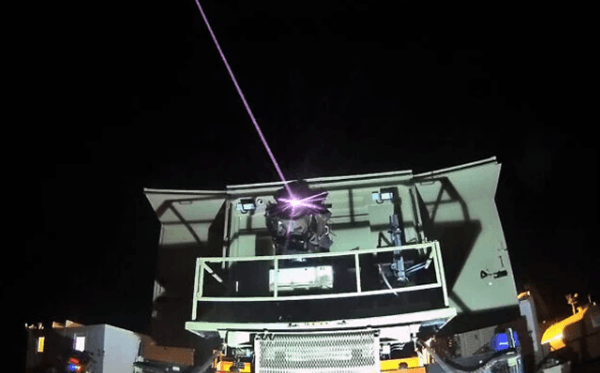
Along with Iron Beam, a number of other laser systems are being intensively tested by the US, Russia, and the UK: a 50kW laser weapon on the Stryker armored vehicle, the HELIOS system on the destroyer USS Preble, the Ignis system on Russia's Kurier ground robot, and the British DragonFire. The Pentagon has also identified that China and Russia are developing anti-satellite laser weapons, aiming to jam or disable targets in orbit without the need for traditional interceptor missiles.
Mobile nuclear reactor for forward base
The Pentagon's Project Pele reached several important milestones in 2025. In February, the program began assembling the final mobile microreactor; by July, the reactor core was completed; and in December, the reactors were first fueled.
These reactors are designed to provide a stable 1–5 megawatt power supply to remote military bases for at least three years, eliminating the need for frequent refueling. They can be transported by truck or aircraft, using TRISO (tristructural-isotropic) fuel which has extremely high heat resistance, preventing radiation leaks even in the event of attack or cooler failure. For expeditionary forces and frontline units, such a mobile power source offers a significant logistical advantage.
Freeze-dried artificial blood turns each soldier into a "blood bank".
In March 2025, human trials of freeze-dried synthetic blood Nano-RBC will begin. This is a new generation of artificial blood that uses nanoparticles to mimic the oxygen-carrying function of red blood cells but without the need for refrigeration.
Nano-RBC nanoparticles are only about 1/10 the size of natural red blood cells, allowing them to move freely through small or blocked blood vessels. Thanks to their easy storage and transport capabilities, Nano-RBCs can be delivered to remote areas, disaster-stricken regions, or battlefields, improving the chances of saving the lives of injured people when traditional supply systems are hampered.
Autonomous weapons and the growing role of artificial intelligence.
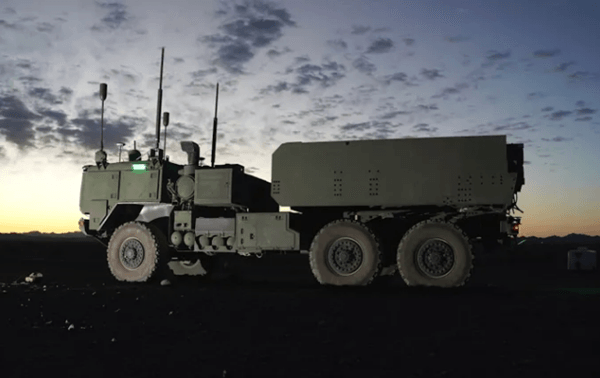
In the field of ground-based firepower, Lockheed Martin introduced the HIMARS self-propelled multiple rocket launcher (AML). Eliminating the crew cabin allowed for an increase in the number of launch tubes from 6 to 12. The system uses passive sensors for autonomous movement and positioning without human intervention, reducing reliance on frontline crews.
Cummings Aerospace has launched the Hellhound suicide drone, boasting a high degree of autonomy thanks to AI. The algorithm allows the drone to patrol a designated area, automatically detect and classify targets, develop attack scenarios, and then await operator confirmation. The Hellhound can also navigate in environments with GPS interference by comparing real-world imagery with digital maps.
Anduril's Roadrunner system, which lies between UAVs and cruise missiles, is scheduled for delivery in 2025. This weapon can automatically detect, track, and calculate intercept trajectories, allowing a single operator to control multiple squadrons simultaneously.
Hypersonic missiles: the long-range race.
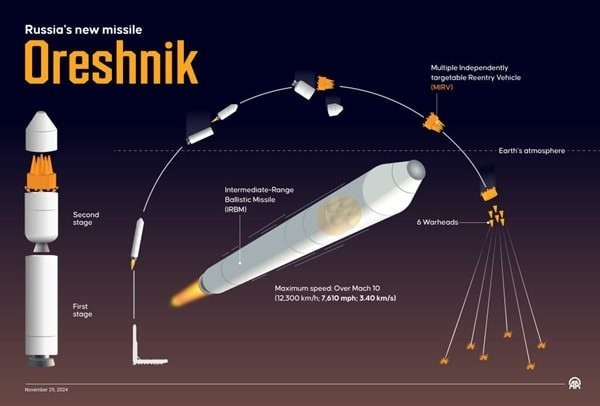
Russia has put the Oreshnik medium-range hypersonic missile into active service. The missile reaches a maximum speed of Mach 10 (12,250 km/h), with an impact temperature of nearly 4,000 degrees Celsius, powerful enough to destroy fortified targets deep underground. Oreshnik is presented as a completely new weapon architecture, not an upgrade from Soviet-era technology, designed to overcome Western missile defense shields.
The Oreshnik has a range of up to 5,500 km, a combat payload of approximately 1.5 tons, and can carry a nuclear warhead with a destructive power of 900 kilotons.
The US arsenal is expected to add three types of hypersonic missiles: the Dark Eagle with a range of over 3,500km, the multi-purpose Mako compatible with most existing fighter jets such as the F-35 and F-22, and the HACM using a turbofan engine without rotating parts. China officially put the YJ-21 missile (maximum speed Mach 10, range approximately 1,500km) into service, and also unveiled the YJ-17, YJ-19, and YJ-20 variants for the first time at the September military parade.
| System | Maximum speed | Estimated range | Notable features |
|---|---|---|---|
| Oreshnik (Russia) | Mach 10 | 5,500km | The medium-range missile, with a payload of approximately 1.5 tons, is capable of carrying a 900-kiloton nuclear warhead. |
| Dark Eagle (USA) | Not to be published | Over 3,500km | Long-range ultrasonic system |
| YJ-21 (China) | Mach 10 | Approximately 1,500km | Hypersonic missiles have been officially put into service. |
UAV "mother ships" and swarm warfare
As UAVs increasingly operate in formations and coordinate missions, the need for large platforms acting as "mother ships" has become apparent. In December, China's Jiu Tian "mother ship" conducted its first test flight. This platform has a wingspan of 25 meters, a maximum takeoff weight of 16 tons, a maximum operating altitude of 15,000 meters, and a maximum operating range of 7,000 kilometers, making it suitable for coordinating multiple autonomous UAVs over a wide area.
Also in December, the littoral combat ship USS Santa Barbara test-fired a UAV from its deck, as part of an effort to transform conventional warships into UAV "motherships." Prior to that, Türkiye demonstrated for the first time the ability to launch UAVs from the aircraft carrier TCG Anadolu, a ship modified to carry 30–50 drones of varying types.
Militarization of space and anti-satellite weapons
In January, China launched the SJ-25 satellite, primarily for refueling tests, but some drills involved scenarios involving attacking or hijacking other satellites. Two months later, France launched the CSO-3 military observation satellite; together with CSO-1 and CSO-2, it forms a constellation of satellites allowing for at least 24-hour flybys of the target.
Meanwhile, anti-satellite weapon systems (ASATs) continue to be unveiled. China publicly announced the HQ-19 and HQ-29, capable of destroying not only ballistic missiles but also satellites in low Earth orbit (below 2,000 km). Russia is reportedly developing a satellite-attack version of the Oreshnik system. According to reports, a 2-watt laser weapon from a distance of 36,000 meters could be sufficient to jam satellite sensors or signals.
Hybrid vehicles reduce heat footprint and logistical requirements.
2025 also saw the launch and field testing of many hybrid (electric-diesel) vehicles, aimed at reducing refueling needs and improving stealth capabilities against modern sensors.
GM Defense introduces the new generation NGTV-H light reconnaissance vehicle, which moves quietly, minimizes noise and heat signatures, making it difficult for acoustic and thermal sensors to detect. China is testing a hybrid version of the Type 99A main battle tank, with the advantages of better fuel efficiency and reduced signal strength on thermal imaging devices, providing better survivability in heavily monitored combat environments.


