
7 reasons why you might lose "control" when visiting Nam Can.
(Baonghean.vn) - Nam Can, in Thai, means "sharing the same stream," carrying a beautiful meaning: Vietnam and Laos share a common water source. On one side are the peaks of Dia Dam and Pa Ca in Noong Het district, Laos, and on the other side is Nam Can (Vietnam).
But is Nam Can really a great destination? Consider the following reasons to help you decide if you're planning to visit this border commune in Nghe An province.
1. Encountering "strange" locals
You will experience "culture shock" when transitioning between where you live and here. They are too different to adapt quickly.
Honest, gentle, and simple-minded – these are the defining characteristics of the people of Nam Can. Because of this, you might be "disturbed" by the fact that you're forced to believe the "unusual" things you witness.
You can leave your belongings in the middle of the road all day without worrying about losing them, and nobody will care what's inside, whether there are any valuables or not. And don't be too surprised if you see a somewhat eccentric hunter who spends the whole day hunting without catching anything. But when he spots a juicy prey caught in a trap, and doesn't know whose trap it is, he'll quickly run back to the village to find the owner and inform them to come and claim their "spoils."
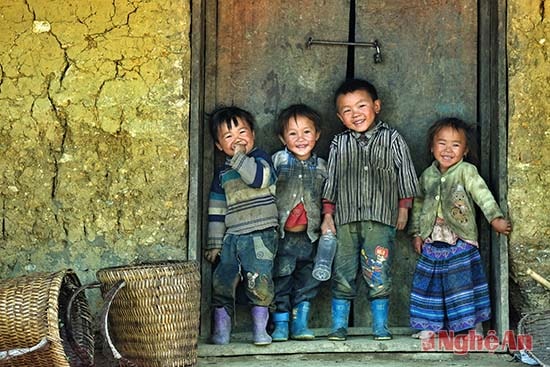 |
| Be prepared to encounter locals who are so honest they're almost "quirky"... |
2. Having to live a life that's too peaceful.
Do you think you could live in a place where you feel completely embraced by Mother Nature – a lush green forest, everything covered in verdant foliage? A place where even a weak, old leaf, unable to cling to a branch, is forced to fall to the ground, creating a musical note. One leaf, two leaves, three leaves… eventually, it becomes a piece of music, and you are the musician.
Where an old Hmong man sits on a wooden chair, the house is almost devoid of furniture, with only piles of dry firewood inside and outside. But the vibrant life of the highlanders lies behind this simple and unpretentious facade, like the sprouts of mustard greens and corn stalks emerging in the fields, striving to grow tall...
If you've ever seen the famous TV series Journey to the West, then when you come here you'll surely feel like you're Wang Lingguan or Chang'e. Where else are there so many clouds, swirling and merging together to form pristine seas of clouds in the early morning; sometimes tinged with the mesmerizing colors of the sunset, clouds floating overhead, clouds hovering just above the ground—doesn't it feel like you've wandered into a fairy realm? So it's not hard to understand why you might imagine yourself as a celestial being.
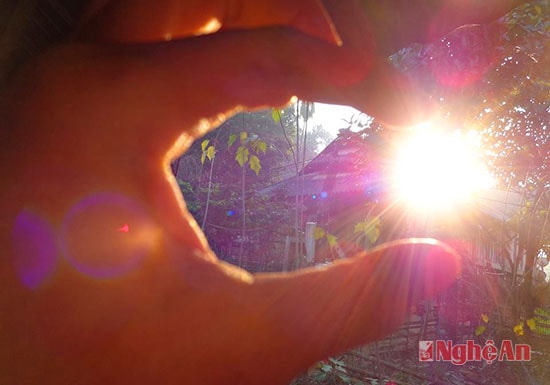 |
| Don't delude yourself into thinking you're a celestial being from heaven, holding the sunset in your hands like this. |
3. Easily leads to addiction and delusions.
The road to Nam Can is ear-splitting due to the altitude. The winding roads, arranged like terraced rice fields, make even skilled drivers wary, but once you've driven there, you feel like you're addicted.
Addicted to the exhilarating feeling behind the wheel, the breathtaking descents along mountain passes; or simply the leisurely stroll and admiring the scenery along the way; or the warm feeling of catching a glimpse of peach blossoms blooming along the precarious roadside, like tiny specks of light amidst the mist at an altitude of over 1,400m on the Phuxailaileng mountain range. The more challenging the road, the more adventurous travelers seek to conquer it.
Viewed from above, National Highway 7A flows like a soft pink silk ribbon across the valley, with proud cypress trees reaching towards the sun, and gray, moss-covered wooden houses with wisps of smoke rising from behind stone fences.
In that far western corner, Nam Can is like a young mountain girl, both brimming with youthful energy and yet shy and awkward.
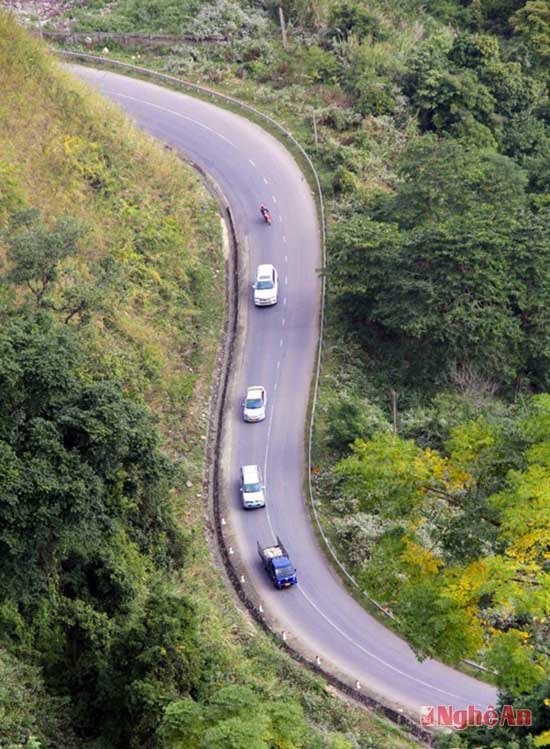 |
| These routes will make any traveler "addicted". |
4. There is a risk of "lung rupture".
Don't come here, you'll "burst your lungs" because the fresh, cool air will make you greedily take deep breaths. Nam Can is like a refreshing rain shower on a dry day when you leave the stifling heat of the city.
Nam Can is likened to a Da Lat or a Sapa in the sunny and windy central region of Vietnam because, although it lies within the path of the Lao winds, its high altitude and the surrounding high mountains provide a very cool climate in the summer.
The mountain peaks here are covered in mist year-round, and a single day can experience all four seasons: spring, summer, autumn, and winter.
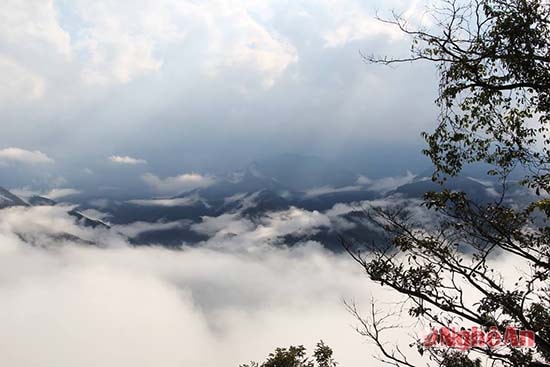 |
| The sea of clouds that covers the area year-round will "shield" you from the stifling heat of the Lao wind. |
5. Life expectancy is extended by a few years.
What's the point of coming here, only to disrupt the cycle of "staying and coming" in life? You'll "have" to live a few more years, because your health will be much better here.
Why? Because here, vegetables, after being harvested, only need a quick rinse before they can be cooked immediately; there's no need to soak them in salt water for hours or treat them in ozone machines. The pigs, chickens, and fish here don't eat "magical feed" to grow incredibly fast, so their lifespans are extended as a result.
Don't be surprised to see an elderly person with gray hair and almost no teeth left, still enthusiastically giving directions to a lost traveler, sometimes even enthusiastically leading them all the way to their destination.
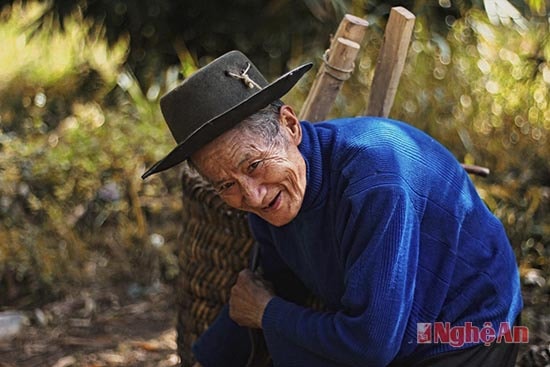 |
| The elderly people of Nam Can will suddenly make you feel insecure about your own health. |
6. You have to "walk across the country" to find the market.
Would you have the stamina to walk across Laos just to visit a market? Just imagining it is daunting, right?
Yet, every time there's a market day, the people of Nam Can still walk 1,000 meters across the border into Laos. Local residents "traveling abroad" without needing to show their passports, crossing the country for a distance of 1,000 meters—is that too far?
As a seasonal market, it only meets twice a month, on the 14th and 29th of the Gregorian calendar. While the early morning mist still blankets the mountains and forests, people from the border region of Vietnam and Laos carry their goods to the market, a variety so diverse that it's impossible to remember the names of each item. The market is called Nam Can, or affectionately known as the Solidarity Market, symbolizing the unity between the Vietnamese and Lao people.
But the market is not just a trading activity; it's also a place for friendly exchanges between the Vietnamese and Lao people. Some people travel dozens of kilometers through the forest to the market not to buy or sell, but simply to meet and socialize with friends, share a drink, and eat a grilled chicken with sticky rice.
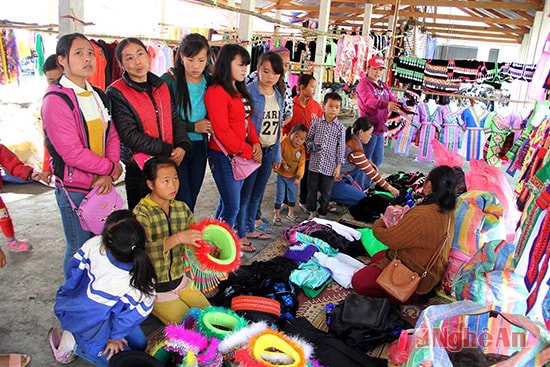 |
| Do these kinds of "international"-scale markets excite you? |
7. Don't go, because once you go, you won't want to come back.
How can one hide the sadness in the moment of farewell, how can one dispel the lingering feelings of attachment and longing? How can one avoid the innocent, melancholic eyes of the children in that border region, who seem to beg us to stay?
Whether you've never been here or have visited many times, it's never enough. The reasons why we're captivated by Nam Can are endless; sometimes it's simply a fondness for the peaceful, simple people, the vast expanse of mountains and hills, and the boundless mist of this place.
Thy Hue
| RELATED NEWS |
|---|


