
7 mysterious cities in the depths of the ocean.
(Baonghean.vn) - No matter how advanced human progress or science and technology may be, no matter how proud humans are of their scientific capabilities, with a wave of nature, everything can collapse and be destroyed…
1. The City of Shicheng (China)
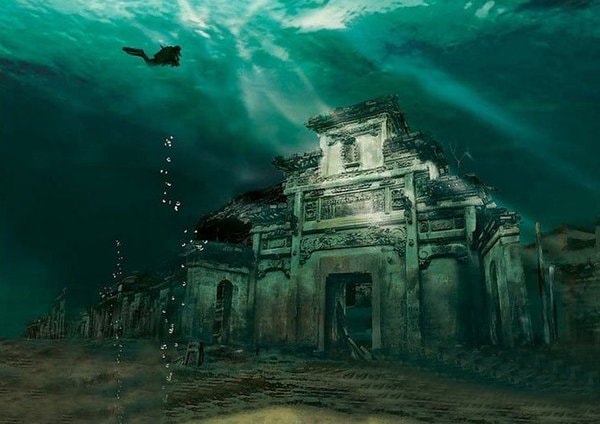 |
| The ancient city of Shicheng lies at the bottom of Qiandao Lake, in Chun'an County, Zhejiang Province, China. (Wikimedia Commons) |
Discovered in 2001 beneath an artificial lake in Chun'an County, Zhejiang Province, China, at the foot of Wushi Mountain, Shicheng City. Submerged in 1959, the city dates back to the Eastern Han Dynasty (which lasted from 25 to 200 AD).
The city, dating back 1,800 years, is the size of 62 football fields. It once held a high political and economic position and, unlike other cities of its time, it had five gates instead of four.
2. The city of Heracleion (Egypt)
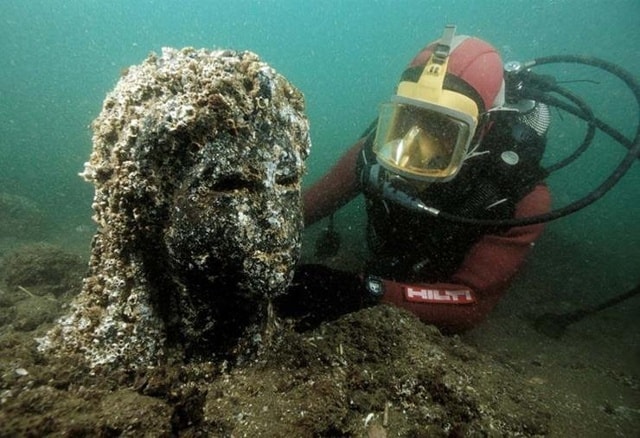 |
| Explore the ancient underwater city of Heracleion. |
Heracleion (or Thonis), a submerged city in the Gulf of Aboukir near Alexandria, Egypt, was once Egypt's main port. The city was named after Hercules and was visited by Helen of Troy.
The city sank around the 6th century and remained undiscovered for 1,200 years until its rediscovery.
Previously, the city of Heracleion was thought to be a myth recounted by Homer. Archaeologists have discovered gold coins, sculptures up to 5 meters tall, inscribed stelae, and sarcophagi containing mummified animals.
3. Historical sites on Yonaguni Island (Japan)
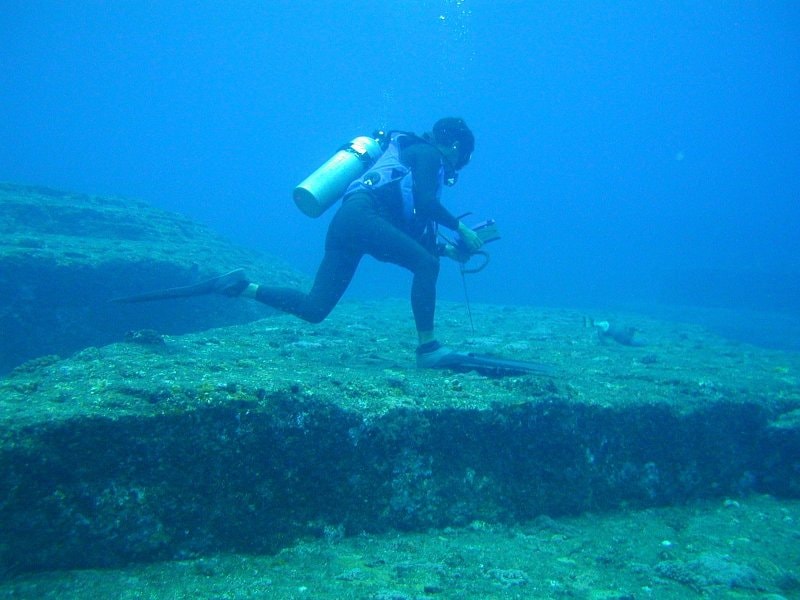 |
| A diver explores the ruins of Yonaguni Island, Japan. (Wikimedia Commons) |
Yonaguni Island, JapanDating back an estimated 14,000 years, the ruins of Yonaguni include numerous structures, such as a pyramid 200 meters long and 30 meters high with five distinct levels resembling steps. Measuring tools and stone carvings have been found on many of the structures. Debates about the origin of these ruins—whether man-made or natural—remain ongoing.
Professor Teruaki Ishii of the University of Tokyo determined that these structures date back to the end of the last ice age, nearly 10,000 years ago. Many tools and unfamiliar hieroglyphs have been found on the ground in the surrounding area.
4. The ruins of Nan Madol (USA)
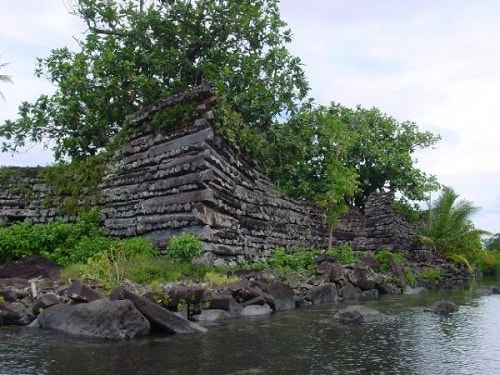 |
| Nan Madol is an artificial island. |
Soun Nan-leng (Heaven's Reef), now known as Nan Madol, is located on the eastern coast of Pohnpei Island in the Federated States of Micronesia. It's called the Venice of the Pacific, comprising monuments scattered across 92 small artificial islands. These megalithic structures, using blocks of stone weighing up to 50 tons, created a series of canals across the islands – giving the name Nan Madol.
Researchers are still puzzled about how and why these islands were built in the middle of the ocean – rather than on land – forcing their inhabitants to travel inland for water and food. According to local legend, the survivors of the continent of Mu, which sank 12,000 years ago, built these islands.
5. The ruins of Cambay (India)
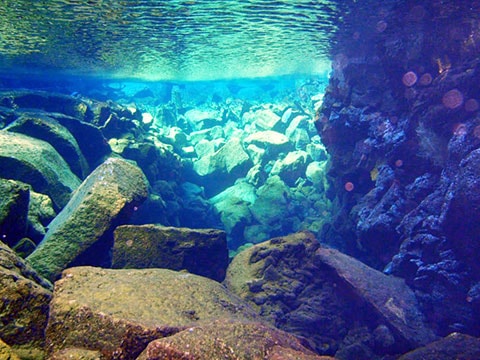 |
| Ruins of Cambay Bay, India |
This 9,500-year-old ancient city, known as the kingdom of Dwarka, defies modern belief that no civilization existed for over 5,500 years.
It is said that this civilization was submerged by prehistoric waves. The city, with its streets and a drainage system stretching 8 km, lies offshore of the modern city of Dwarka and is believed to be the city of the Hindu god Krishna.
6. The city of Pavlopetri (Greece)
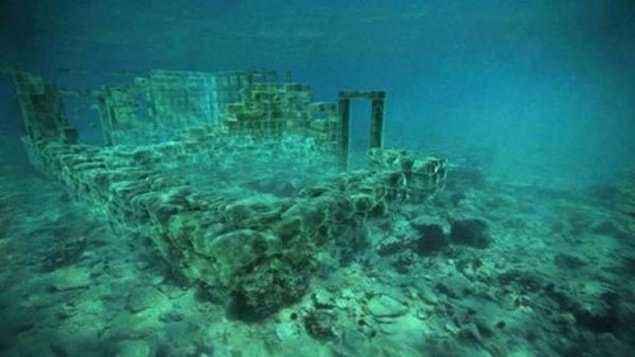 |
| Pavlopetri City. |
The city of Pavlopetri in Greece, dating back to the Micenian period around 2800 BC, lies beneath the ocean, just 3 to 4 meters off the southern coast of Laconia. The city comprises tombs, stelae, and spacious courtyards. At that time, Pavlopetri served as a port for local trade and a connecting point between the Mediterranean regions.
7. The conical monument of Lake Tiberias (Israel)
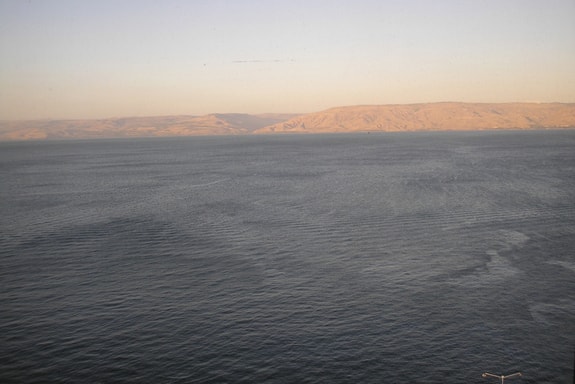 |
| Photo of Lake Tiberias taken near the ancient city of Tiberias. The conical ruins are located to the south. (Avi Deror / Wikimedia) |
Deep within Lake Tiberias, Israel, lies a monumental site. Discovered in 2003 and published in the International Journal of Maritime Archaeology, the mystery of why, when, and who built it remains unsolved.
It has a conical structure, made of primitive basalt and boulders, weighing an estimated 60,000 tons, nearly 10 meters high, and dating back over 4,000 years, estimates based on numerous surrounding megalithic structures dating from the third millennium BC.
Kim Ngoc
(Synthetic)
| RELATED NEWS |
|---|


