(Baonghean.vn) - Identifying signs of poisonous mushrooms: The mushroom has a complete cap, gills, stem, ring, and volva. The inside of the stem is pale pink, the cap is red with white scales, and the mycelium glows in the dark. The poisonous parts are located throughout the entire fruiting body (cap, gills, ring, stem, volva). The toxicity varies with the season, during the mushroom's growth process, and in the soil and climate.
"Alarming number of deaths due to herbal liquors and wild mushrooms."
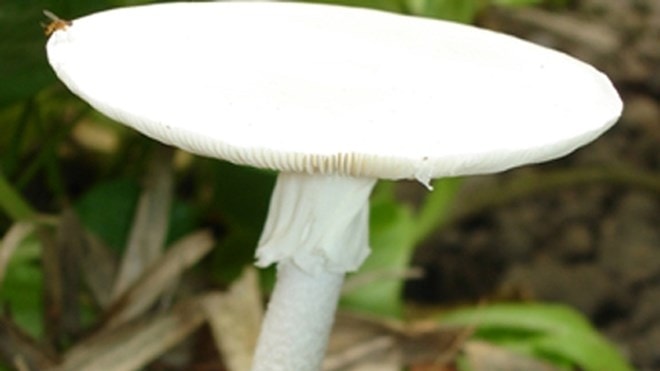 |
| Poisonous white-gilled mushroom:The white-gilled poisonous mushroom (Amanita verna) is an extremely poisonous mushroom in Vietnam. It typically grows in clusters or singly on the ground in forests, sometimes along roadsides or in grasslands, from spring to autumn. The cap is white and smooth. When young, the cap is round and egg-shaped, firmly attached to the stem. When mature, the cap is flat and has a diameter of about 5-10 cm. When old, the edges of the cap may curl downwards. The gills and stem are white; the stem has a membranous form near the cap, the base of the stem is bulbous, and it has a cup-shaped volva. This mushroom contains Amanitin (Amatoxin), which is highly toxic. |
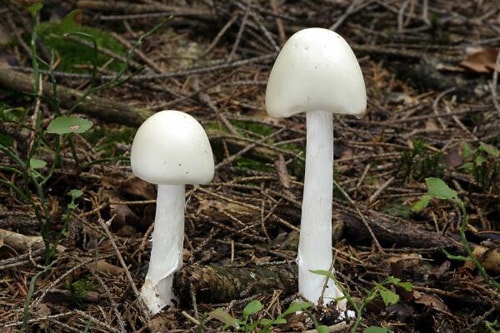 |
| White cone-shaped poisonous mushrooms:The white cone-shaped poisonous mushroom looks quite similar to the white-gilled poisonous mushroom. This species also has a white cap with a smooth, glossy surface; the flesh is soft, white, and has an unpleasant odor; the stem is bulbous and has a cup-shaped volva. Its main toxin is amanitine (amatoxin), which is highly toxic. |
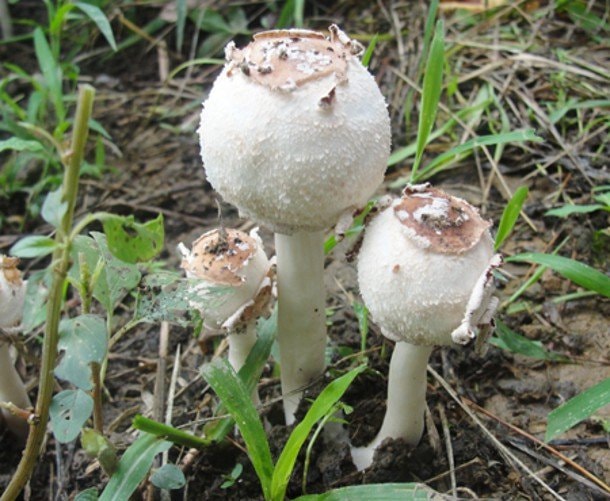 |
| White-gilled poisonous mushroomovoid:The poisonous white-capped egg-shaped mushroom can be fatal if ingested. This species has an egg-shaped, white cap; a cylindrical stem with a bulbous base; and white flesh with a pungent odor. The poisonous white-capped egg-shaped mushroom typically grows in late spring and early summer. |
 |
| Grey-brown notched cap mushroom (Inocybe fastigiata or Inocybe rimosa):The mushroom cap is conical to bell-shaped, pointed at the apex, with yellow to brown filaments radiating from the apex down to the edge. When mature, the edge splits into separate rays, with a diameter of approximately 2-8 cm. The gills are slightly whitish when young, firmly attached to the stem, and become gray or brown and separate from the stem when mature. The stem is whitish to yellowish-brown, 3-9 cm long, and lacks a ring. The flesh is white and contains the toxin muscarin. |
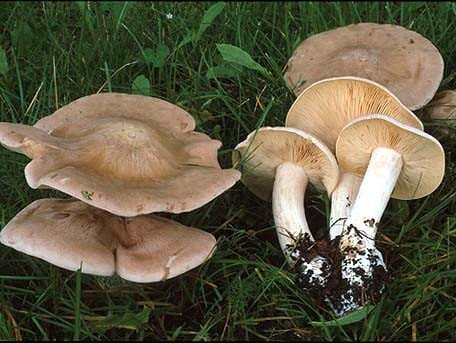 |
| Entoloma sinuatum mushroom:These mushrooms are cone-shaped with cylindrical stems and brown caps. They typically grow at the edge of forests from late spring to early autumn. This type of mushroom contains a highly toxic substance; patients will experience symptoms very quickly within a few hours, such as: altered consciousness, abdominal pain, diarrhea, electrolyte imbalance, hypotension, and rapid coma. The high toxicity can lead to very rapid death. |
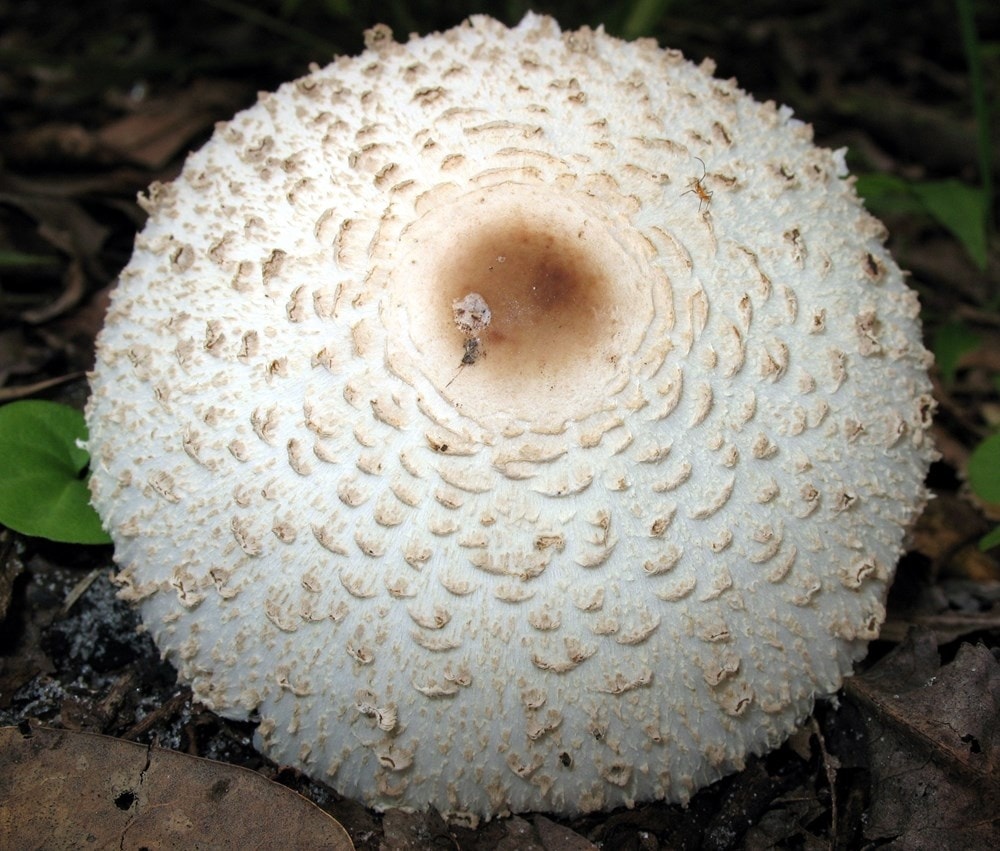 |
| White umbrella mushroom with green gills:This mushroom grows in clusters or singly along the edges of cattle sheds, on grasslands, cornfields, and other locations. When young, the cap is elongated hemispherical, pale yellow, with small light brown or light gray scales. When mature, the cap is umbrella-shaped or flattened, white, 5-15 cm in diameter. The surface of the cap has thin, dirty brown scales, which thicken towards the apex. The gills (underside of the cap) are white when young, and have a pale green or grayish-green tint when mature; the green color becomes more pronounced with age. The stem ranges from white to brown or gray, with a ring near the top, close to the cap. The base of the stem is not bulbous and lacks a volva. The flesh is white, has low toxicity, and primarily causes digestive disorders. |
 |
| Bell-spotted gill fungus:The mushroom cap is bell-shaped, 2-3.5 cm in diameter. The gills are veined, initially green then turning black. The mushroom has a thin, fleshy layer, the color of chamois skin. The flesh of the bell-shaped spotted mushroom is odorless and contains hallucinogenic toxins. The mushroom grows on decaying manure in grasslands from January to September each year. |
 |
| Dark green poisonous mushrooms:The green-black poisonous mushroom, also known as the green mushroom, has white gills, sometimes with a greenish sheen. The cap is initially enclosed in an egg-shaped, white involucre. As it matures, the cap lifts and breaks through the involucre. This mushroom contains two toxins, amanitin and phalloidin, which can be fatal even if only a small piece of the mushroom is consumed. |
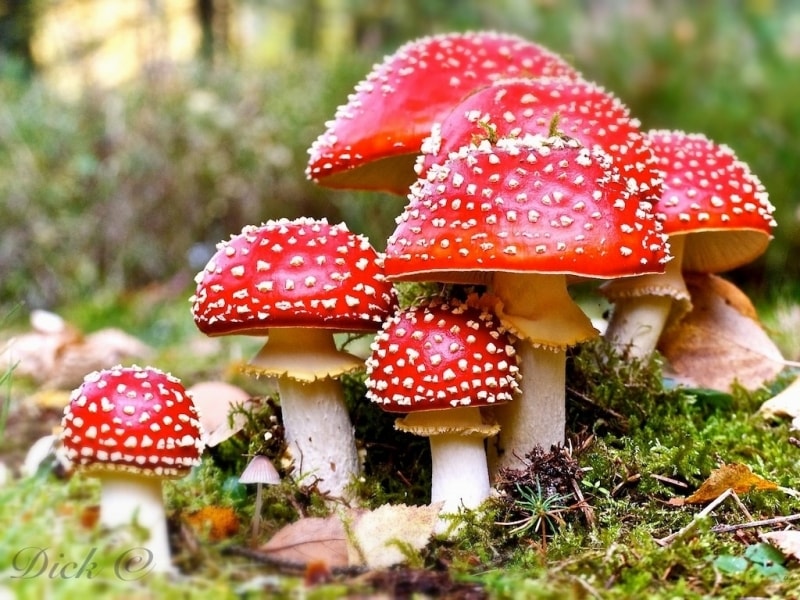 |
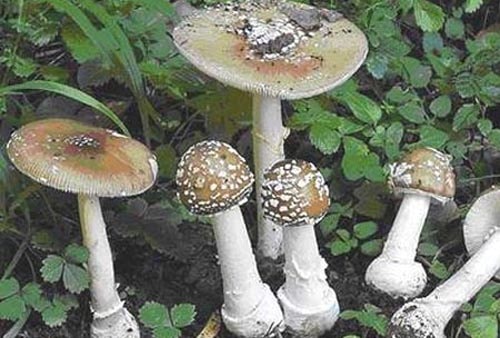
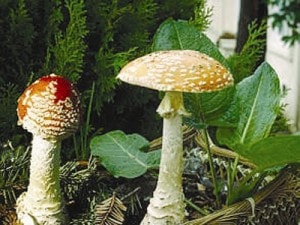
| Red mushrooms:This mushroom has a striking color: bright red or orange, covered with small white spots. They grow singly or in clusters in meadows or forests, and in many places, this mushroom is used to repel flies. The cap is 10-15 cm in diameter, the stem and ring are white or yellow, the base is bulbous, and the flesh is white with no distinctive smell or taste. Despite its eye-catching color, this mushroom contains a deadly poison. |
Hoa Le
(Synthetic)



