
913 hectares of crops in Nghe An have been granted planting area codes.
To date, Nghe An province has issued 118 domestic planting area codes covering a total area of over 913 hectares for crops such as rice, oranges, tea, grapes, cantaloupe, sugarcane, etc. These planting area codes not only help farmers change their production mindset but also open up opportunities to access modern markets, affirm brands, and increase the competitiveness of local agricultural products.
Increasing value through a shift in production mindset.
The family of Mr. Ho Thai Hoan, in Quynh Bang commune (Quynh Luu district), is one of the pioneering households applying the VietGAP standard for vegetable cultivation, combined with a registered growing area code.
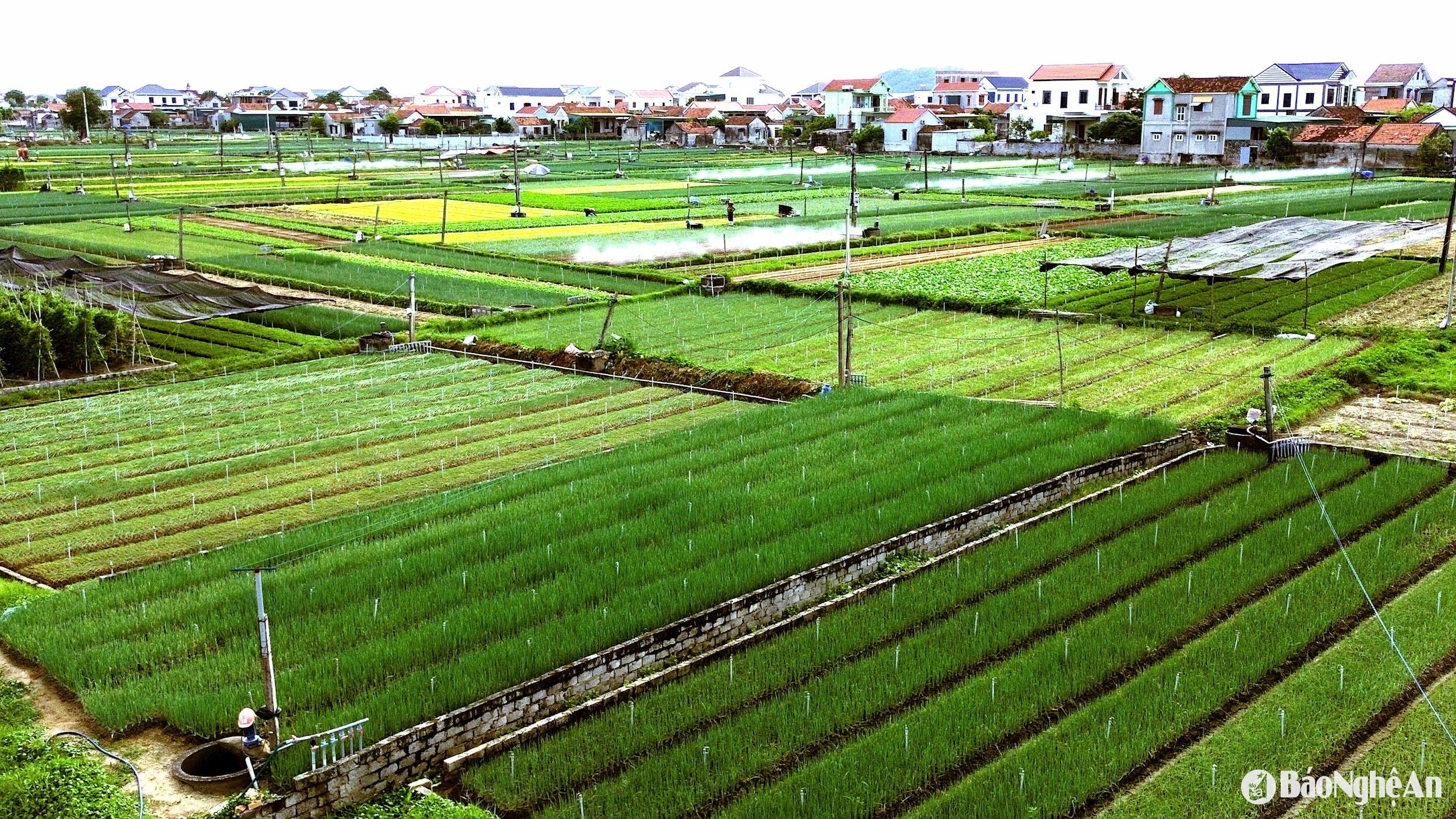
On an area of 1,500 m², vegetables and fruits are grown in rotation year-round, with production logs kept, pesticides used at the correct dosages, and quarantine periods observed. Thanks to strict adherence to technical procedures, vegetable yields are consistently high, and the clean produce is purchased and sold by the cooperative to safe vegetable suppliers.
Not only Mr. Hoan's household, but currently, Quynh Bang commune has 50 households participating in the VietGAP vegetable and fruit production model on an area of more than 25 hectares, all of which have been granted planting area codes. Accordingly, the annual production of vegetables and fruits reaches 1,275 tons of various types of vegetables meeting VietGAP standards.
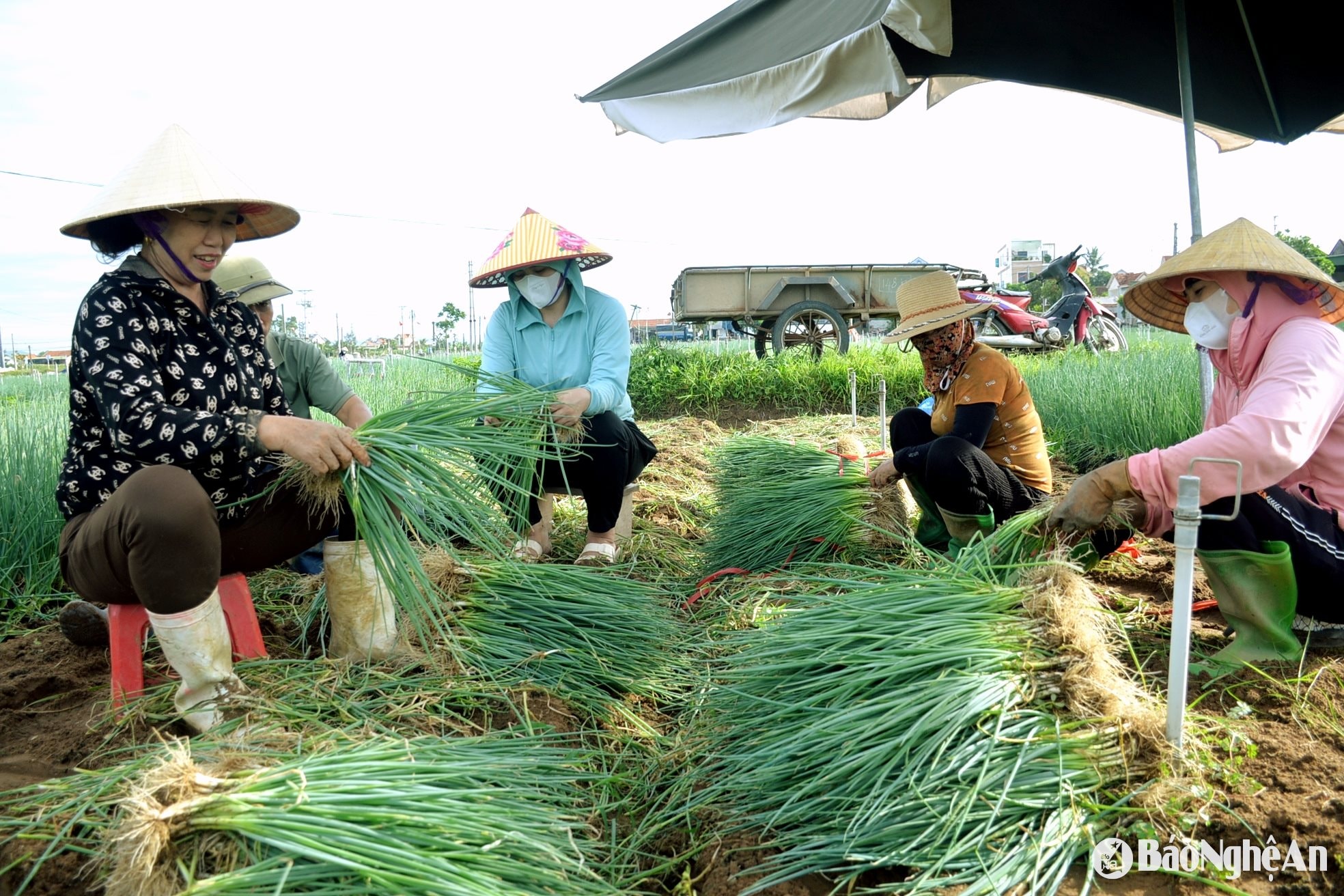
Mr. Ho Dang Tam, Director of Quynh Bang General Agricultural Cooperative, said: “Thanks to the synchronized application of technical solutions and the granting of planting area codes, the products produced not only achieve high yields but also sell at better prices compared to mass production. This is an important motivation for people to confidently commit to high-quality agricultural production.”
If VietGAP is a solution for standardizing farming techniques, then the planting area code is the "identity card" for agricultural products to enter the modern market. When a code is attached, the entire production process is traceable and transparent, from seeds and fertilizers to pesticides and harvesting times. This is especially important for traceability in case of product quality issues, and also enhances the responsibility of producers.
.jpg)
Along with Quynh Luu district, many other localities in Nghe An province such as Yen Thanh, Nghia Dan, Anh Son… are also actively implementing the assignment of planting area codes to key crops. In Yen Thanh district, as of 2024, the locality has been granted 29 valid planting area codes, focusing on strong products such as rice, oranges, pineapples, cantaloupe, Artemisia annua, and vegetables. Of these, rice is the main crop with 21 codes, covering a total area of over 191 hectares.
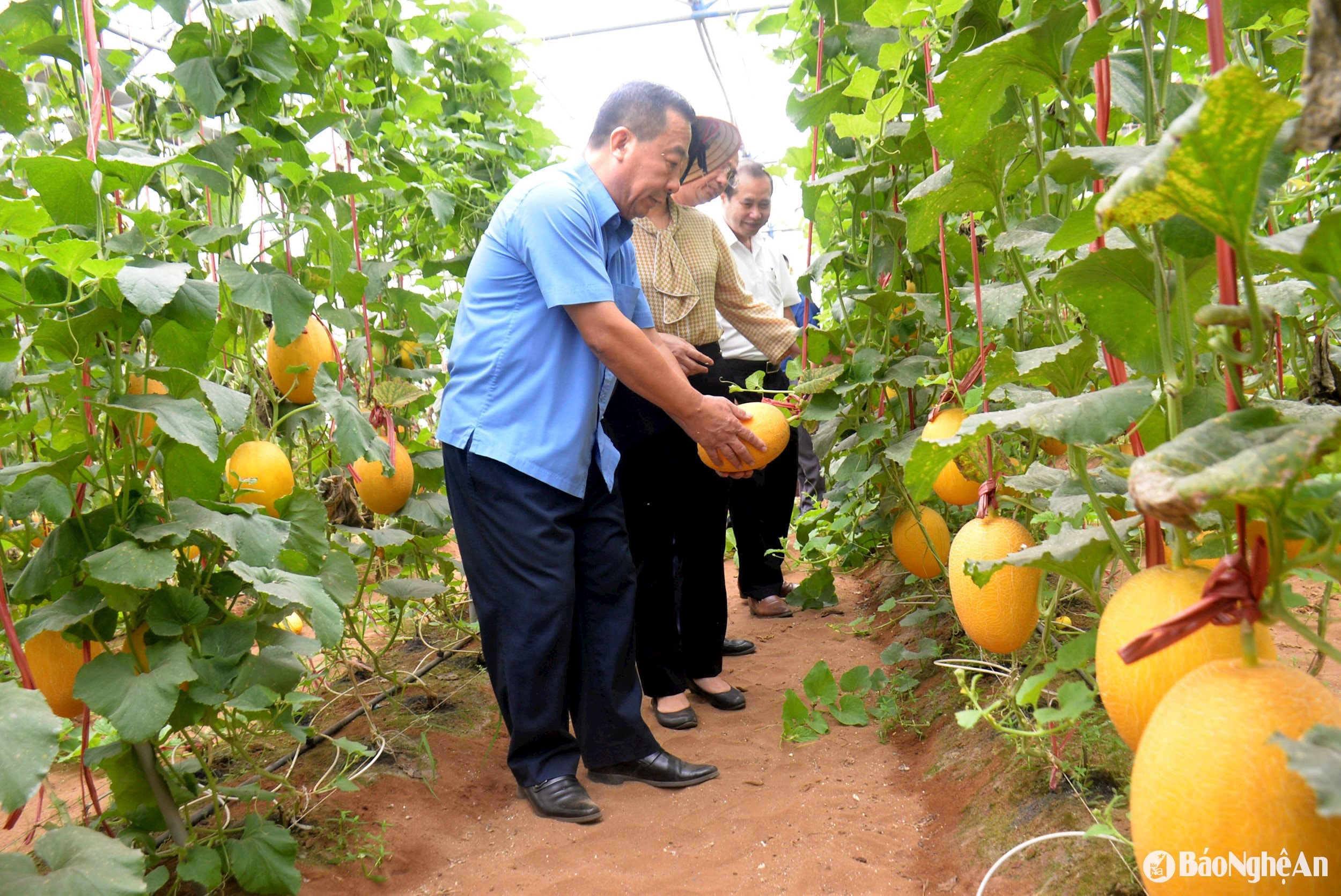
Mr. Cao Minh Tuan, a farmer growing cantaloupe in Tang Thanh commune (Yen Thanh district), happily shared: “Thanks to being granted a planting area code for our 0.3 hectares of greenhouse-grown cantaloupe, we can easily introduce our products to supermarkets and organic food stores. Most importantly, consumers are increasingly concerned about product origin, and having a planting area code helps us to transparently manage the production process and access the market more easily.”
Similarly, the Quynh Minh Agricultural and Salt Production Cooperative currently has 3,000 m² of greenhouses for growing cantaloupe, and has achieved VietGAP certification and a 3-star OCOP product rating. However, according to Mr. Ho Dien Vy, the cooperative's representative, to expand the market, the cooperative's goal is to be granted a planting area code, meeting stricter standards from the distribution system in the market.
Towards sustainable development
Despite positive results, expanding the registration of designated growing areas still faces numerous obstacles. In reality, many farmers are unfamiliar with keeping production logs, quality management in cooperatives remains limited, and agricultural output is unstable and insufficient to meet the demands of modern distribution chains.
According to Mr. Ho Dang Tam, a major current difficulty is that the cooperative's product output is still partly through small-scale traders, and a stable supply chain with purchasing and processing businesses has not yet been formed. Meanwhile, a prerequisite for targeting "demanding" markets is having a clearly defined raw material area, managed by standardized planting area codes.
According to data from the Provincial Department of Crop Production and Plant Protection, from 2023 to the present, the Department has advised on the issuance of 118 domestic planting area codes with a total area of over 913 hectares for crops such as rice, oranges, tea, grapes, cantaloupe, sugarcane, etc. During the monitoring process, 6 area codes were revoked, 6 were suspended, of which 5 have been rectified and are now in use. The revoked codes were due to the organizations and individuals no longer needing to use them in the future.
According to Mr. Nguyen Tien Duc, Head of the Provincial Department of Crop Production and Plant Protection, the coding of growing areas not only serves for traceability but is also an effective tool to help the agricultural sector develop production plans, warn of diseases, and ensure food safety. In particular, post-code issuance monitoring will be tightened to ensure that area codes are maintained according to standards, avoiding superficial compliance or neglect.
Simultaneously, promoting supply chain linkages between producers and processing and consumption businesses will also be an essential direction. Only when a sustainable value chain is formed can Nghe An's agricultural products establish a strong position in the market.


