
A Russian A-60 was destroyed in Taganrog-Yuzhny on November 25.
Ukraine attacked Taganrog-Yuzhny airport on November 25, destroying an A-60 aircraft, a laser weapons test plane; secondary fires and explosions were recorded; the losses are irreplaceable.
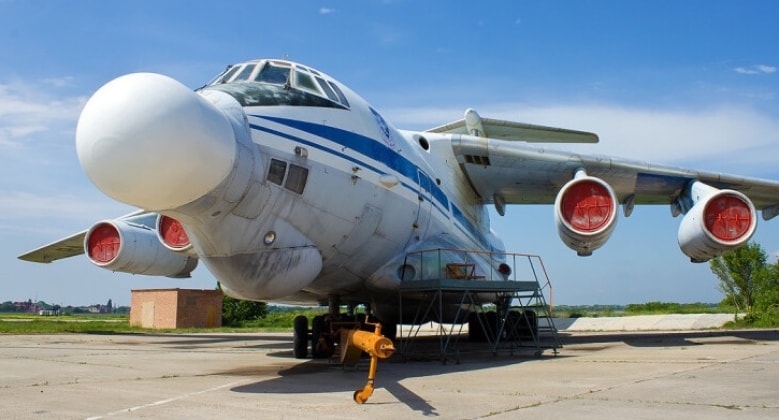
According to Military Watch, a Ukrainian attack on Taganrog-Yuzhny airfield on November 25 destroyed the A-60, Russia's only laser weapon testing aircraft. Videos circulating online show a massive fire engulfing the aircraft, accompanied by secondary explosions in the specialized aircraft testing and maintenance facility area. Given its unique nature and specialized role, this loss is considered irreplaceable in the short term.
A-60's Special Mission
The A-60 entered service in the early 1980s, developed from the Il-76MD transport airframe with significant modifications. This platform was quickly used to study laser beam dispersion in the upper atmosphere and has been continuously modernized in line with the development of new generations of directed energy weapons.
Military Watch reported that a new anti-satellite laser weapon system reportedly completed testing on the A-60 in the late 2010s. When anti-satellite tests using the A-60 platform began in the mid-2010s, U.S. Director of National Intelligence Dan Coats assessed Russia and China's efforts to develop anti-satellite weapons as "a means to reduce the military effectiveness of the United States and its allies."
Despite its experimental nature, the A-60 was not designed for direct combat missions. According to the guidelines mentioned in the article, anti-satellite laser systems are expected to be integrated into interceptor fighters such as the MiG-31 and PAK DP.
Anti-satellite ecosystem: from lasers to missiles
Military Watch notes that, despite the decline in many areas of the defense industry after the collapse of the Soviet Union, Russia has maintained high levels of investment in space warfare and anti-satellite capabilities. Laser programs are supplemented by numerous anti-satellite missile programs such as the S-500, S-550, and A-235, along with related activities.
Ukraine's deep penetration attack tactics using UAVs.
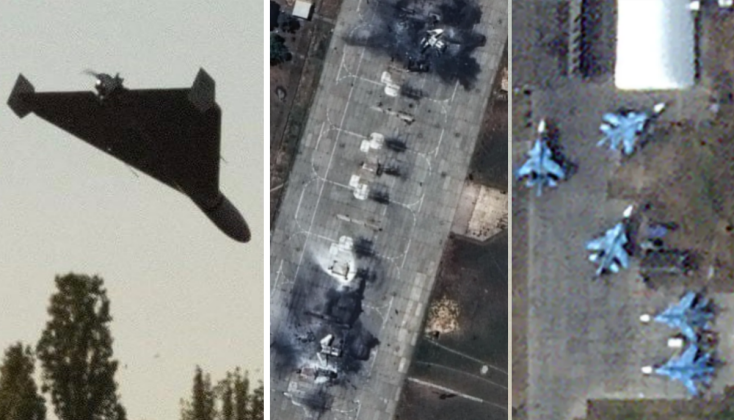
Amidst the difficulties on the front lines, Ukrainian UAV units have still achieved significant results in striking high-value targets deep within Russian territory. Military Watch lists strikes targeting Russian oil processing facilities, potentially impacting oil exports.
According to the article, an "unprecedented" milestone was June 1st, when Operation Spiderweb used large-scale UAVs to destroy numerous Tu-95MS and Tu-22M3 strategic bombers at air bases across Russia – losses that the Russian strategic aviation fleet "may take years to recover."
The value and substitutability of the A-60
The true value of the A-60 is currently unclear due to the unknown extent of its further use in airborne laser weapon testing. Military Watch mentions the Peresvet laser weapon system, which some sources claim has completed testing, raising the possibility that the A-60 may only serve a supporting role for more advanced weapon generations in the future.
The article also points out that the collapse of the Soviet Union led to the loss of many industries that had been involved in manufacturing the A-60 and its unique equipment. This raises the possibility that the aircraft is currently irreplaceable, or that replacement will depend heavily on sourcing components from abroad.
Tactical implications and protection of high-value targets.
The destruction of the A-60 highlights the high risks of deploying single military assets at bases within UAV attack range. According to Military Watch, Ukrainian forces are significantly supported by Western personnel on the ground and have access to satellite intelligence, as well as being supplied with components and funding to maintain UAV production.
Regarding the direction of the attack, in July, German Army Major General Christian Freuding urged Ukraine to intensify its attacks on Russian airfields: “You can also indirectly affect the attack potential of Russian strike forces before they are deployed... Use long-range air warfare assets to attack aircraft and airfields before they are used. At the same time, target weapons production facilities.”
Compilation of platforms and related programs
| Platform/Program | Role by source |
|---|---|
| A-60 (based on Il-76MD) | A platform for testing directed energy weapons; research on laser beam dispersion; previously tested anti-satellite lasers. |
| Peresvet | Laser weapons; some sources claim that testing has been completed. |
| MiG-31, PAK DP | The platforms are expected to integrate anti-satellite laser systems. |
| S-500, S-550, A-235 | Russian-developed anti-satellite missile programs |
Highlights
- Date: November 25th; Location: Taganrog-Yuzhny Airport; Target: A-60.
- Evidence from the scene: large fire, secondary explosion at the testing/maintenance area.
- Consequence: irreplaceable damage due to unique characteristics and specific supply chains.
- Context: Ukraine intensifies deep-penetration UAV attacks; Germany calls for increased airfield strikes.
Given its unique technical and strategic nature, the incident underscores the need for deep-level protection of high-value assets and reflects the escalating trend of anti-satellite and directed energy warfare in modern warfare – as noted by Military Watch.


