
AI monitors UAVs for Russian armored ships; Y-30 test flights.
Russia plans to install AI-powered cameras on armored trains to warn against UAVs; China makes its first flight with the Y-30 military transport aircraft; the US announces the framework for the “Golden Fleet”.
Russia, China, and the US have all made notable moves related to technology and force organization: Russia plans to equip armored trains with AI-powered cameras for early warning of UAVs; China is believed to have made the first flight of its Y-30 military transport aircraft; and the US has approved a new shipbuilding plan called the "Golden Fleet," emphasizing the expansion of surface ships, logistics vessels, and unmanned platforms.
Russia adds AI vision to armored trains to detect UAVs.
According to Russian media, including Izvestia, Russia is planning to equip armored trains operating in combat zones with an AI-powered camera system. The goal is to automatically detect and provide early warning of threats from unmanned aerial vehicles (UAVs).
According to sources, the system uses multiple cameras mounted on the outside of the ship's hull, connected to a processor running machine vision algorithms. When it detects an airborne target suspected to be an enemy UAV, the system sends a direct alert to the ship's crew so they can activate a defensive response.
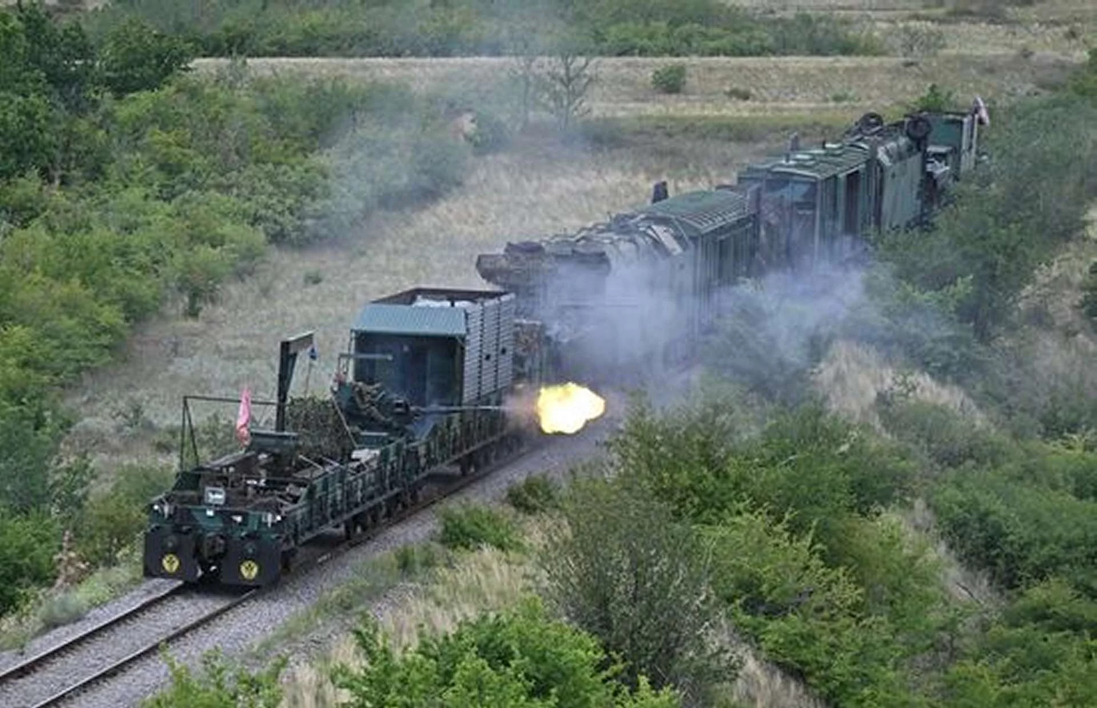
Operational perspective: improved response time but no elimination of the "fixed line" disadvantage.
In the battlefield, armored vehicles are targets with predictable maneuvers due to their dependence on railway lines, having to pass through intersections, bridges, and areas where they can be repeatedly tracked. According to the source, Ukraine exploited this characteristic by using reconnaissance drones to track their movement patterns, then organizing attacks with attack drones or suicide FPV drone squadrons.
Therefore, Russia's description of this as a measure to "enhance security and reconnaissance of the route" is seen as a response to UAV pressure, rather than a "solution" to the structural changes of railway vehicles in a drone warfare environment.
Technical limitations: misidentification and the "saturation attack" problem
Sources indicate that the AI system is still under development and requires further training to minimize false alarms. The railway environment has many interfering factors such as birds, power lines, debris, and civilian vehicles; bad weather or low light can also increase the risk of false alarms.
In terms of combat effectiveness, AI can shorten the time to detect threats and reduce the burden of continuous monitoring for the ship's crew. However, the ability to destroy UAVs still depends on human response, weapon readiness, and the ability to counter saturation attacks or electronic jamming.
The source also states that Russia reportedly operates only a small number of armored trains, primarily for logistical support and route protection. Therefore, the addition of AI is described as a piecemeal reinforcement, unlikely to change the core limitations of the platform against the threat of modern UAVs.
China: Y-30 reportedly made its first test flight.
China's Y-30 medium-range military transport aircraft reportedly made its maiden flight on December 16th, following the circulation of flight videos. According to sources, this marks a milestone indicating the project has entered the field testing phase.
Initial assessments described the Y-30 as designed to fill the gap between the Y-9 (medium-range transport) and the Y-20 (large strategic transport). The Y-30 had an expected payload of approximately 30 tons, a four-engine turboprop configuration, and was positioned to compete directly with popular military transport models such as the American C-130J and the European A400M Atlas.
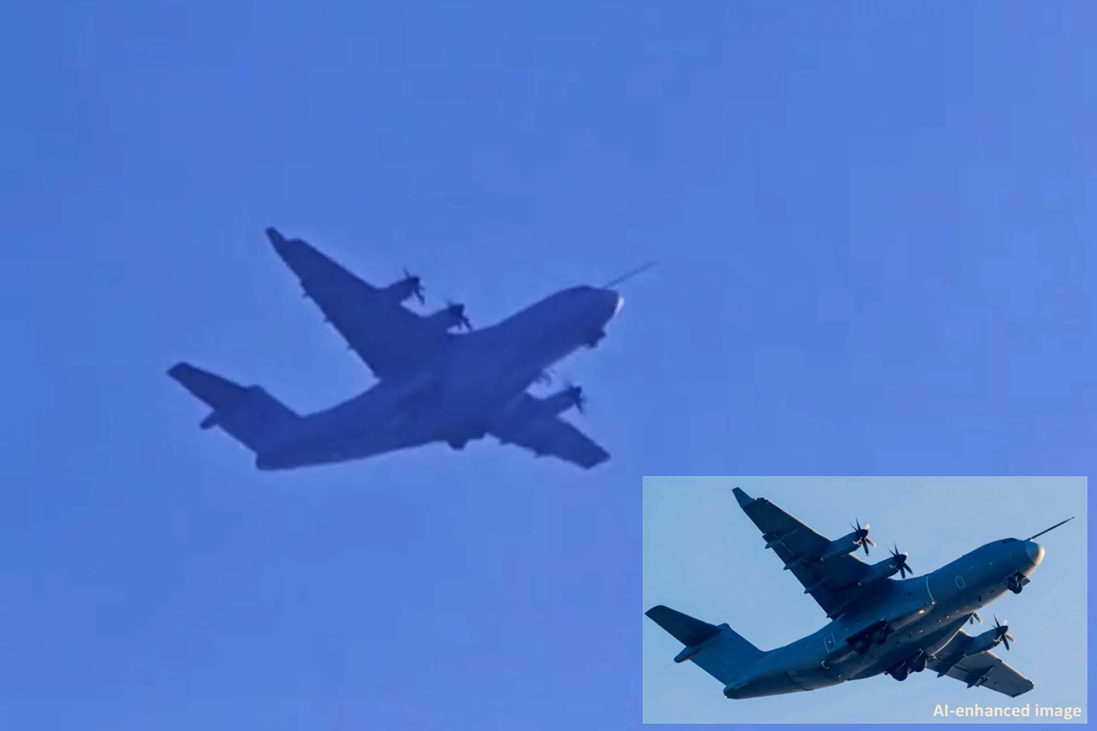
Design highlights based on source: prioritizing cargo space and operational flexibility.
The article states that the introduction of the Y-30 reflects the limitations of older designs such as the Y-8 and Y-9 (derived from the Soviet Antonov An-12). As the Chinese ground forces introduced more heavy wheeled aircraft, cargo bay size became a key factor alongside payload.
The Y-30 is said to have a wider airframe, intended to transport bulky equipment that previous medium-sized transport aircraft struggled with.
Engine configuration and "expected" parameters
The Y-30 concept was first unveiled at the 2014 Zhuhai Airshow through a model of a high-wing aircraft with a T-tail and four turboprop engines. According to sources, the project received little information and underwent configuration changes in the years that followed, particularly regarding engine selection; China considered options ranging from high-powered propeller engines to the possibility of using jet engines.
The most widely available data currently favors a turboprop configuration to balance range, short runway takeoff and landing capability, and operational efficiency. In terms of specifications, the article states that the Y-30 is expected to have a top speed of approximately 600-700 km/h, a range of 6,000-7,000 km, and the ability to operate on unpaved runways.
| Category | Y-30 (according to source) | Y-9 (according to source) | Y-20 (according to source) |
|---|---|---|---|
| Role/Positioning | Filling the gap between the Y-9 and Y-20 | Medium-range transport is currently available. | Large-scale strategic transport |
| Load | Approximately 30 tons are expected. | Not specified | Not specified |
| Engine | Four turboprop engines | Not specified | Not specified |
| Competency objectives | Transporting cargo beyond the practical limits of the Y-9, avoiding the high costs/operational expenses of the Y-20. | Actual limits on goods (as per source comparison) | High costs and demanding extraction requirements (as described by the source) |
| Speed/range (expected) | 600 - 700km/h; 6,000 - 7,000km | Not specified | Not specified |
US: The "Golden Fleet" framework and focus on unmanned platforms.
The Trump administration has approved a new shipbuilding plan for the U.S. Navy, dubbed the “Golden Fleet,” amid the continued expansion and capabilities of the Chinese navy. This announcement followed a meeting at the White House between Trump, Defense Secretary Pete Hegseth, Office of Management and Budget (OMB) Director Russell Vought, and Navy Secretary John Phelan.
According to Phelan, the “Golden Fleet” is not a specific fleet but rather an overall strategic framework for the future of the U.S. Navy. The plan retains core programs such as aircraft carriers, submarines, destroyers, and amphibious ships; while expanding the number of surface ships, support vessels, and, notably, unmanned platforms.
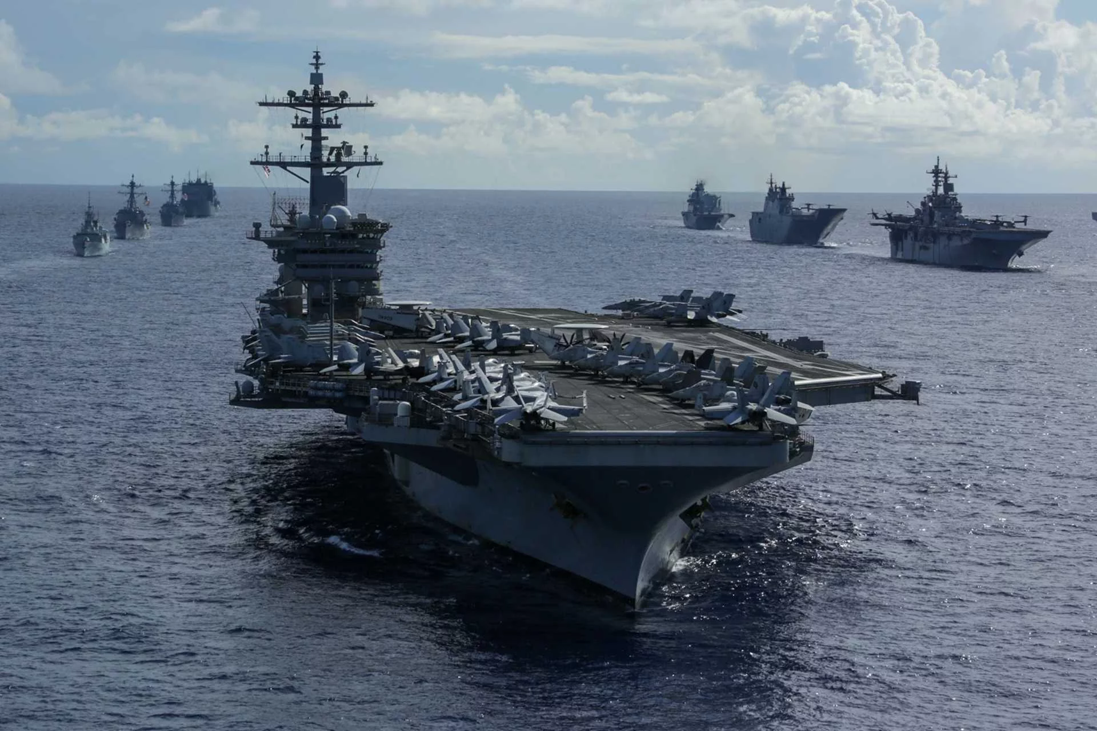
Force development strategy: increase numbers, diversify risks.
The source material describes the focus of the “Golden Fleet” as increasing scale and flexibility, rather than solely concentrating on expensive, manned warships. The U.S. Navy wants to add more unmanned surface vehicles to enhance firepower, reconnaissance, and risk dispersion, while maintaining the central role of its main battleships.
The plan also prioritizes logistics ships such as refueling and transport ships, which the U.S. Navy considers vital to sustaining global operations, especially when forces are deployed over a wide area. The article states that building logistics ships also helps maintain a stable production pace for U.S. shipyards.
Implementation challenges: shipbuilding capacity and budgetary pressures.
According to sources, the ambitious "Golden Fleet" faces challenges from the US shipbuilding capacity, with many programs experiencing delays. At the same time, the cost of the Columbia-class strategic nuclear submarines accounts for a very large proportion of the budget, putting pressure on the ability to expand other projects.
Common technological and operational features drawn from the three events.
- Defense against UAVsRussia is focusing on shortening the detection-warning cycle on fixed-route platforms, but the ultimate effectiveness still depends on weapons, personnel, and combat conditions.
- Tactical airliftChina is aiming for a transport aircraft that is "in between" payload and cargo capacity, to meet the practical needs of transporting bulky equipment in deployments.
- Dispersed and unmanned naval forcesThe US emphasizes increasing the number of platforms and integrating unmanned systems into its fleet structure, but is constrained by shipbuilding industry limitations and budget constraints.


