
Can someone tell me where I can find clean food?
Every time I go to the market, I have a headache choosing safe and clean food. If you ask me, "Why eat contaminated food?", I think that's not the right question. Because no one would accept eating contaminated food if they knew it was contaminated. So, my answer would be, "Because of a lack of information."
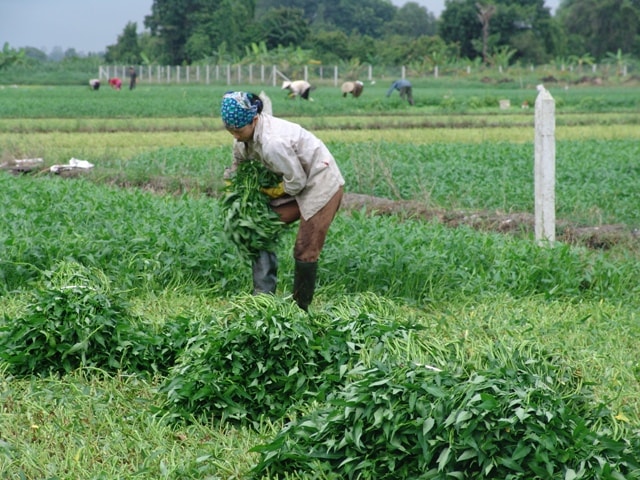 |
In the "matrix" of food products, consumers don't know what to trust (illustrative image). |
When asked, "Why do Vietnamese people have to eat contaminated food?", Ms. Thuy Anh from Tay Ho district (Hanoi) shared her opinion:
I believe that millions of other housewives are just like me. No one would dare to eat contaminated or unsafe food if they knew for sure that it was contaminated.
I find it ridiculous that I occasionally hear responses from some food experts or government officials advising consumers to become smart consumers. After all, people can be smart when choosing an air conditioner, a television, or a refrigerator, but few can be smart in the face of today's "maze" of food products.
Simply put, consumers lack the tools to verify and assess the cleanliness of food. They are even less able to choose food without information about it, especially when information about clean and safe food is so chaotic.
My close friend often confides in me that she's afraid of eating contaminated food, so she usually orders it from her maternal grandparents' home in Thanh Hoa. If something isn't available, she buys it at the supermarket. However, she herself can't be sure it's clean because she has no way to verify or inspect it.
She and her family relied primarily on trust among acquaintances. One day, she angrily called me to complain after hearing in the news that a supermarket was importing fruits and vegetables from the market, labeling them as safe, and selling them for a profit. From then on, her trust in the supermarket's "clean" products was almost completely shattered. She returned to her usual shopping habits and continued to use her own sense of smell to choose clean food.
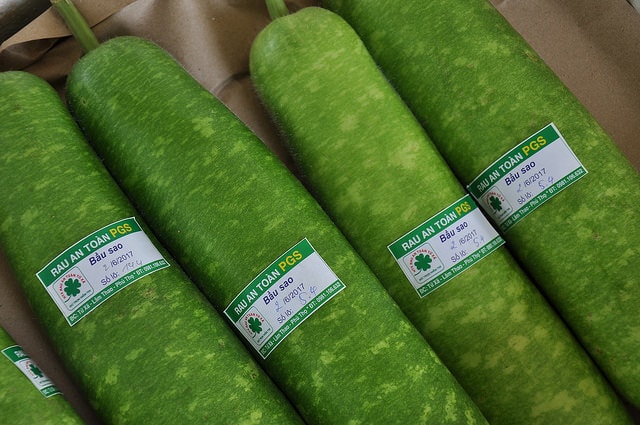 |
| With more information, consumers can confidently choose the food that suits them (illustrative image). |
Returning to my own story, I've never had a concept of clean or dirty food. Simply because I don't know how to identify or distinguish them. If possible, I think that before demanding clean food, perhaps the first thing to demand is that it's safe. Of course, when the market lacks safe food, you'll have to eat unsafe (dirty) food.
Therefore, there are two answers to the question "Why do you eat contaminated food?". Firstly, it's because you lack information; all products are treated the same, and counterfeiting causes consumer confusion and loss of trust. Secondly, consumers prefer good quality products that are also cheap, so naturally, the level of "cleanliness" of those products will be affected to some extent.
From my personal perspective, nobody wants to eat contaminated food; it's just that there isn't enough clean, safe food available, or the prices are simply exorbitant. Lately, the "from kitchen to graveyard" story has been discussed more frequently. Relevant agencies and organizations are once again abuzz with debate about how to manage and restrict access to clean food. The issue has been discussed extensively, but no solution has yet been found.
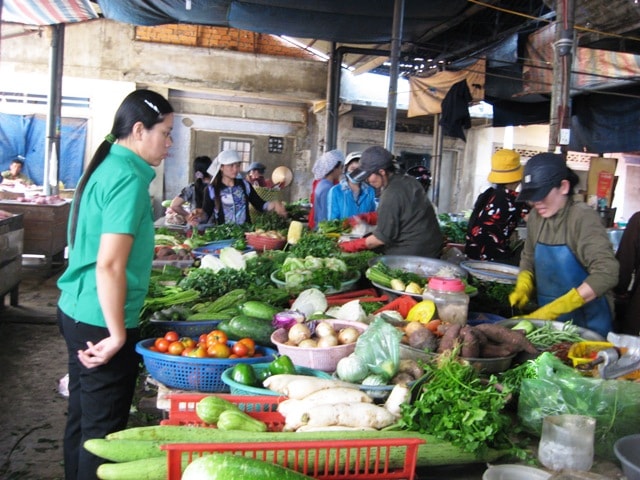 |
Having access to safe food remains a wish of housewives (illustrative image). |
In my opinion, the issue isn't that complicated. We talk a lot about controlling food from the source, so why haven't we done it until now? State management agencies could consider strengthening the capacity of commune-level authorities in managing and supervising the production of safe food.
We could assign an agricultural extension officer or agricultural officer to monitor, supervise, and provide technical support to farmers. If any individual is found to be violating regulations, such as using excessive amounts of pesticides, they should be immediately penalized. Furthermore, we should conduct research to develop methods for identifying and inspecting food. Only then can food be truly safe from the outset, and consumers can feel confident using any food available on the market.
According to Thuy Anh/danviet
| RELATED NEWS |
|---|


