
Airbus proposes collaborating with Saab to develop the FCAS sixth-generation fighter jet.
Airbus Group proactively approached Saab (Sweden) to resolve the impasse and accelerate the progress of Europe's next-generation stealth fighter project.
Airbus Defence & Space (Germany) has officially approached Saab (Sweden) to discuss potential collaboration in the Future Combat Air System (FCAS) program. This is a strategic effort to develop a sixth-generation stealth fighter jet for European air forces.
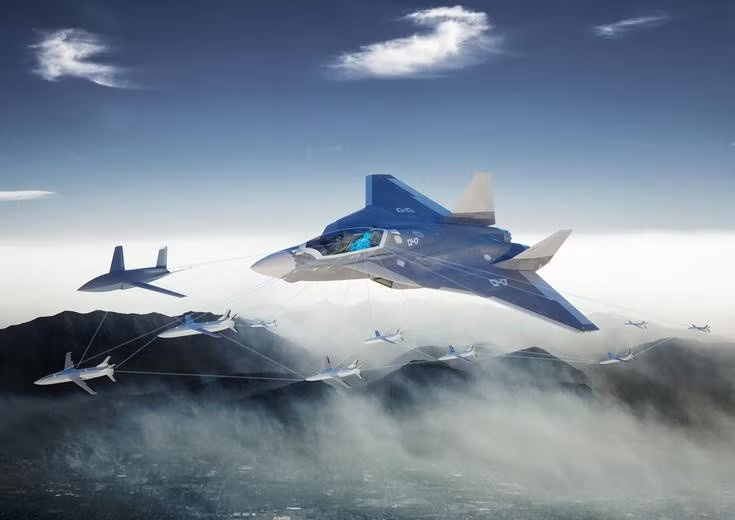
Challenges in the Franco-German-Spanish alliance
The FCAS program currently involves Germany, France, and Spain, but faces significant obstacles. The main tensions stem from the allocation of leadership roles and technology transfer between Berlin and Paris, particularly between the two key industrial partners, Airbus and Dassault.
Michael Schellhorn, CEO of Airbus Defence & Space, acknowledged that the project is facing objective difficulties. He emphasized that this is the time to proactively seek alternative options to ensure the success of the future fighter jet program.
Saab's capabilities and its goal of technological self-reliance.
Approaching Saab is seen as a logical step, given the Swedish company's extensive experience with the JAS 39 Gripen fighter jet. Previously, Sweden had considered joining the Global Combat Air Force Program (GCAP) – another sixth-generation fighter jet project being undertaken jointly by the UK, Japan, and Italy.
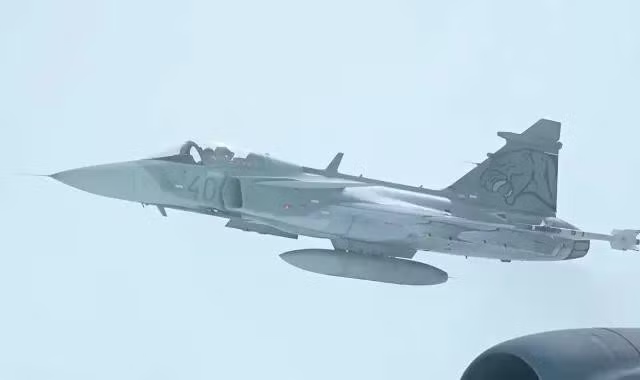
Airbus aims to soon bring sixth-generation fighter jets into service to replace the Rafale (France) and Eurofighter Typhoon (Germany, Spain) models. Airbus leaders affirm their desire for Europe to develop its own technology instead of importing fifth-generation aircraft from the United States.
Despite high expectations, the FCAS project still faces the challenge of balancing interests, as France seeks a larger stake in the program. The involvement of Saab could provide new technical impetus; however, a direct link between the FCAS and GCAP projects remains unconfirmed.


