
The AITO R7 Ultra sets a record for the lowest drag coefficient in the SUV segment at 0.217 Cd.
The AITO R7 Ultra electric SUV has just received certification for a drag coefficient of 0.217 Cd, the lowest in the world for a mass-produced SUV, significantly optimizing its driving range.
The AITO R7 Ultra electric SUV has officially received "low drag coefficient" certification with an impressive 0.217 Cd. This is confirmed as the lowest drag coefficient for a mass-produced SUV globally today, surpassing many competitors in the same segment.
CATARC's rigorous testing procedures
Mr. Zhao Changjiang, CEO and Executive Vice President of the automaker, affirmed that the AITO R7 Ultra's Cd value of 0.217 is not a theoretical figure. This result was measured directly in the wind tunnel of the China Automotive Technology Research Center (CATARC) – a leading testing facility in the region.
The testing process was conducted under standard operating conditions with the vehicle speed maintained at 120 km/h. Strict adherence to national standards demonstrates the reliability of the aerodynamic record that this SUV model has just set.
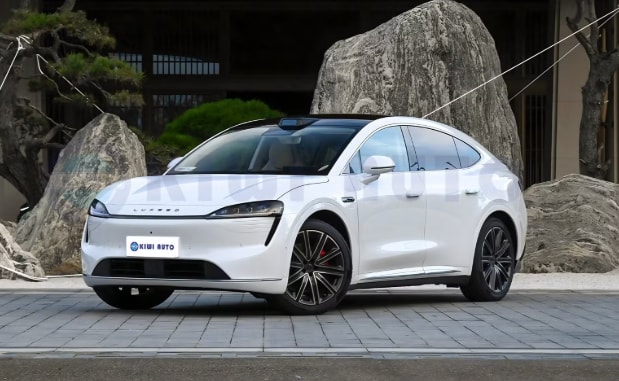
Technological solutions for optimizing aerodynamics.
To achieve ideal drag coefficient, the AITO R7 Ultra is equipped with an intelligent dynamic adjustment system. At high speeds, the vehicle's center of gravity automatically lowers to reduce drag. Conversely, the ride height is raised at low speeds to ensure optimal off-road capability. The damping system is capable of hundreds of adjustments per second, maintaining stability and eliminating turbulent airflow.
Besides the suspension system, the car also boasts a range of specialized design features for effective wind resistance:
- Active grille:It automatically closes at high speeds to reduce drag and opens when the engine needs cooling.
- Air guidance system:It incorporates a 3D front wheel wind deflector, air curtain deflectors, and hidden door handles.
- Thorough aerodynamic design:The lidar sensors are optimally shaped, the undercarriage is completely enclosed, and the rear of the car is designed in a "ducktail" shape to minimize air turbulence at the rear.
Practical value in operation
Optimizing the drag coefficient provides direct benefits to users, rather than just being a technical specification. According to Mr. Zhao Changjiang, this design helps the vehicle save energy in practice, thereby extending the driving range after each full charge. At the same time, good aerodynamics also helps the car operate more stably and quietly when traveling at high speeds.


