
Altius 600M faces difficulties against Russian electronic warfare in Ukraine.
The WSJ, citing the SBU, reported that the Altius suicide drone is vulnerable to Russian electronic warfare (EW) and will be phased out of service from 2024; Anduril, however, asserts that the system remains effective and is being updated in Ukraine.
The US-made Altius suicide drone, manufactured by Anduril, was reported by the Wall Street Journal on November 27, citing sources from frontline forces of the Ukrainian Security Service (SBU), to have experienced numerous malfunctions in combat environments, particularly against Russian electronic warfare (EW) measures. According to these sources, the Altius frequently crashed or missed its target, a level of unreliability that led the SBU to cease its use in 2024. Anduril responded that they maintain a nearly constant presence in Ukraine to update software and weapons, while emphasizing that their system has proven effective against a large amount of Russian equipment.
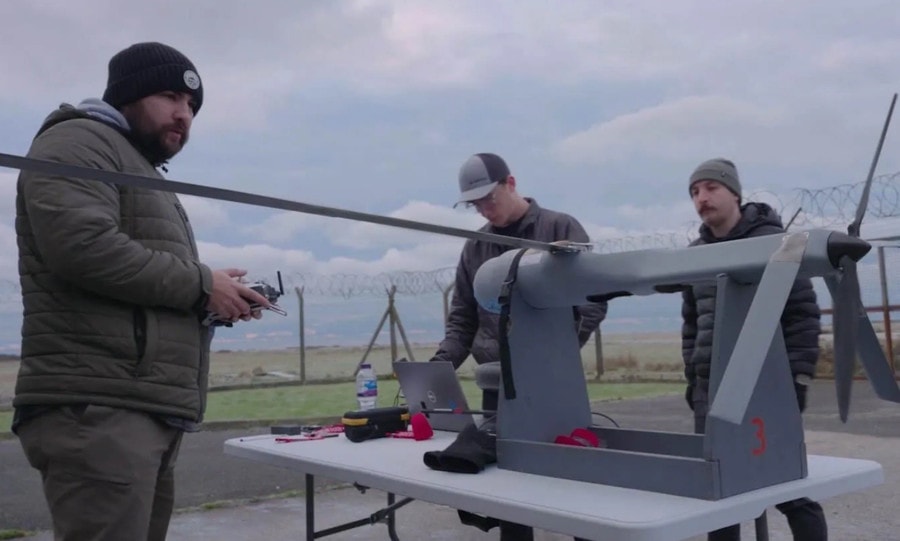
Event Overview
The SBU is Ukraine's domestic intelligence agency, tasked with counterintelligence and combating corruption, but after the conflict broke out, it became involved in combat operations. Its main force is the Alpha commando unit, specializing in disrupting command centers, electronic warfare systems, and targeting high-value targets with UAVs. In this context, the WSJ reports that the SBU found Altius unreliable when facing Russian electronic warfare (EW).
Founded in 2017, Anduril Industries is a prominent US defense startup focused on providing unmanned equipment and software. The company is valued at over $30 billion and has secured numerous contracts with the US military, ranging from suicide drones to battlefield management systems. The Ukraine conflict marks the first time Anduril's products have been deployed in a real-world scenario.
The published specifications
The flagship products include the Altius 600M (multipurpose) and the Altius 700M (larger, long-range attack version). Technical specifications are as follows:
| Sample | Characteristic | range | Operating hours | Payload/Warhead | Control |
|---|---|---|---|---|---|
| Altius 600M | Multipurpose UAV | Approximately 440 km (maximum) | Nearly 4 o'clock | Maximum 3 kg | Remote control via ground station or automatic flight along a pre-set route. |
| Altius 700M | Larger version, attacks targets from a distance. | Up to 160 km | 75 minutes | 15 kg warhead | Not specified |
Technical aspects: electronic warfare and UAVs
Information from the WSJ highlights the role of Russian electronic warfare (EW) on the battlefield. In general, electronic warfare can affect UAVs in the following ways:
- Control channel jamming: disrupting communication between the ground station and the UAV, especially in remote-controlled flight mode.
- Interfering with or deceiving navigation signals: impairs navigation accuracy, increases the risk of deviating from the flight path, missing the target, or losing control while flying along a predetermined route.
- Data link and payload attacks: causing sensors or real-time data transmission channels to become unstable.
Under high-intensity EW conditions, phenomena such as "dive" or "missed target" reflected by the SBU (according to the WSJ) are consistent with the common operational risks of UAVs when navigational instability or control interruptions occur. Anduril stated that it is updating its software and weapons on-site, demonstrating a progressively improved approach through field experience.
Deployment and tactics in Ukraine
According to the WSJ, the SBU's Alpha Commando Unit focuses on disrupting command centers, electronic warfare (EW) systems, and targeting high-value targets with UAVs. This reflects an operational environment where EW plays a significant role and is a priority target. Sources suggest that due to numerous malfunctions, the SBU ceased using the Altius system in 2024.
Contrasting assessments and operational risks
Ukrainian military sources have reportedly assessed that US-made UAVs are generally vulnerable to Russian jamming and satellite navigation systems; these systems also do not achieve the advertised range or payload capacity. Some US UAV manufacturers admitted last year that they had not anticipated the level and unpredictability of electronic warfare on the Ukrainian battlefield.
Conversely, Anduril claims its suicide drones have proven effective against large amounts of Russian military equipment, while also maintaining continuous updates in Ukraine. These two conflicting accounts reveal a complex operational picture, where actual performance depends heavily on the intensity of the electronic warfare (EW), specific combat conditions, and the software-hardware upgrade cycle.
Impact
Ukraine becoming the first real-world deployment site for the Anduril product quickly revealed the system's strengths and weaknesses in a dense EW environment. If the WSJ's information from the SBU is accurate, manufacturers will have to prioritize jamming tolerance and navigation reliability. Anduril's response shows a different approach: being present on the battlefield to update and adjust based on real-world feedback.
In the short term, the deployment results will depend on the degree of technical adaptation to EW. In the long term, lessons learned from Ukraine could shape the technical requirements for suicide UAVs, from jamming resistance to reliability assurance procedures when operating in complex signal environments.


