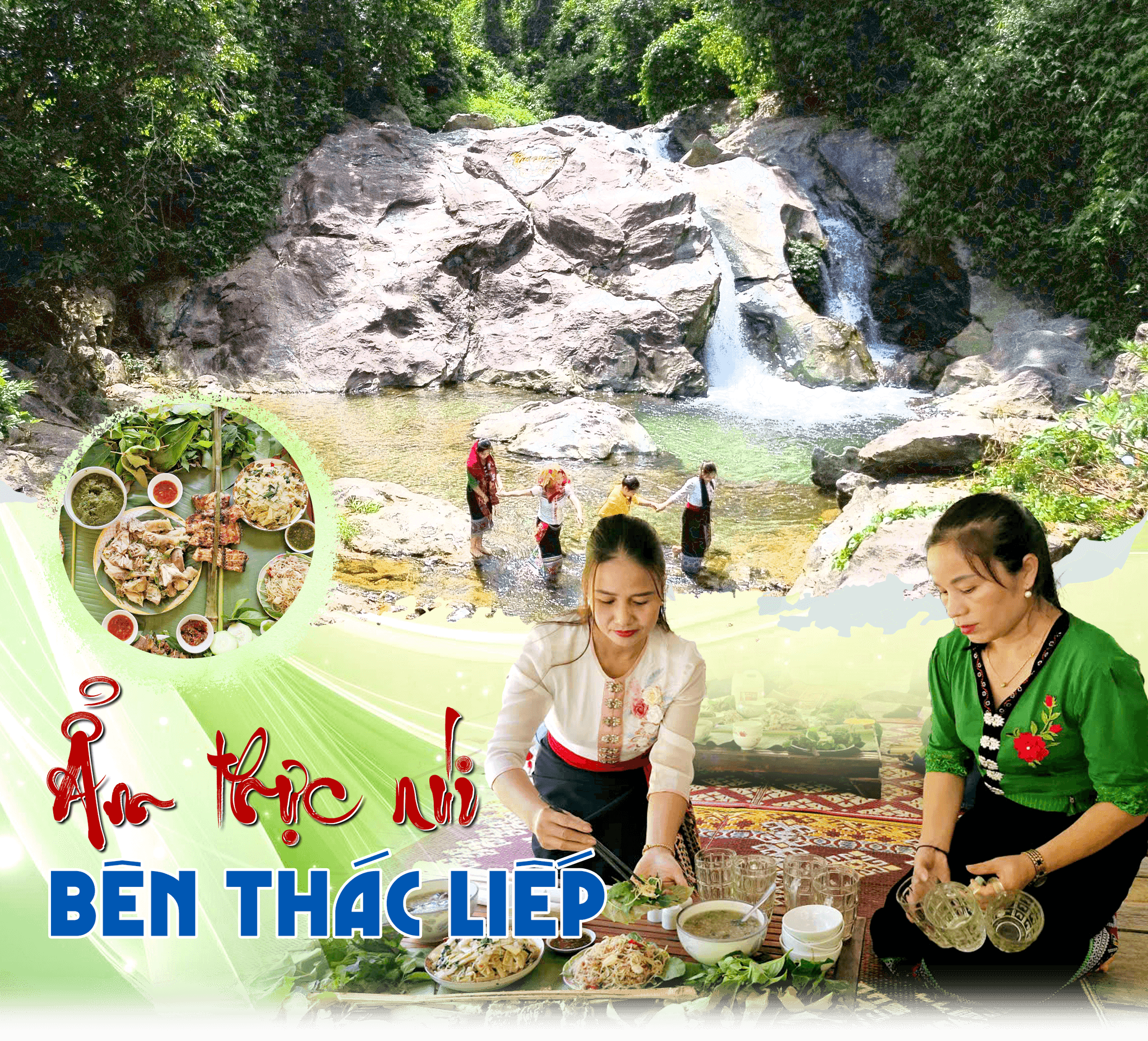
Mountain cuisine near Liếp Waterfall
Amidst the stunning natural landscapes of Liếp Waterfall, Mưa Waterfall, Lụa Waterfall, Tân Sáng beach, etc., the people of the Bản Vẽ hydroelectric resettlement area in Sơn Lâm commune have developed services linked to the cultural identity of the Thái ethnic group to attract tourists. They proudly state: "Just by coming to Sơn Lâm, tourists can experience the unique local culture of the western region of Nghệ An province..."
Nhat Lan - Tien DongPresentation:Huu QuanOctober 10, 2026
Amidst the stunning natural landscapes of Liếp Waterfall, Mưa Waterfall, Lụa Waterfall, Tân Sáng beach, etc., the people of the Bản Vẽ hydroelectric resettlement area in Sơn Lâm commune have developed services linked to the cultural identity of the Thái ethnic group to attract tourists. They proudly state: "Just by coming to Sơn Lâm, tourists can experience the unique local culture of the western region of Nghệ An province..."

Our first visit to Liếp Waterfall in Sơn Lâm commune was in January 2023. At that time, Liếp Waterfall had just emerged as a rare tourist destination in the poor mountainous commune of Thanh Sơn, Thanh Chương district (formerly), where the government had resettled people from Tương Dương district after they gave up their land for the Bản Vẽ hydroelectric project.
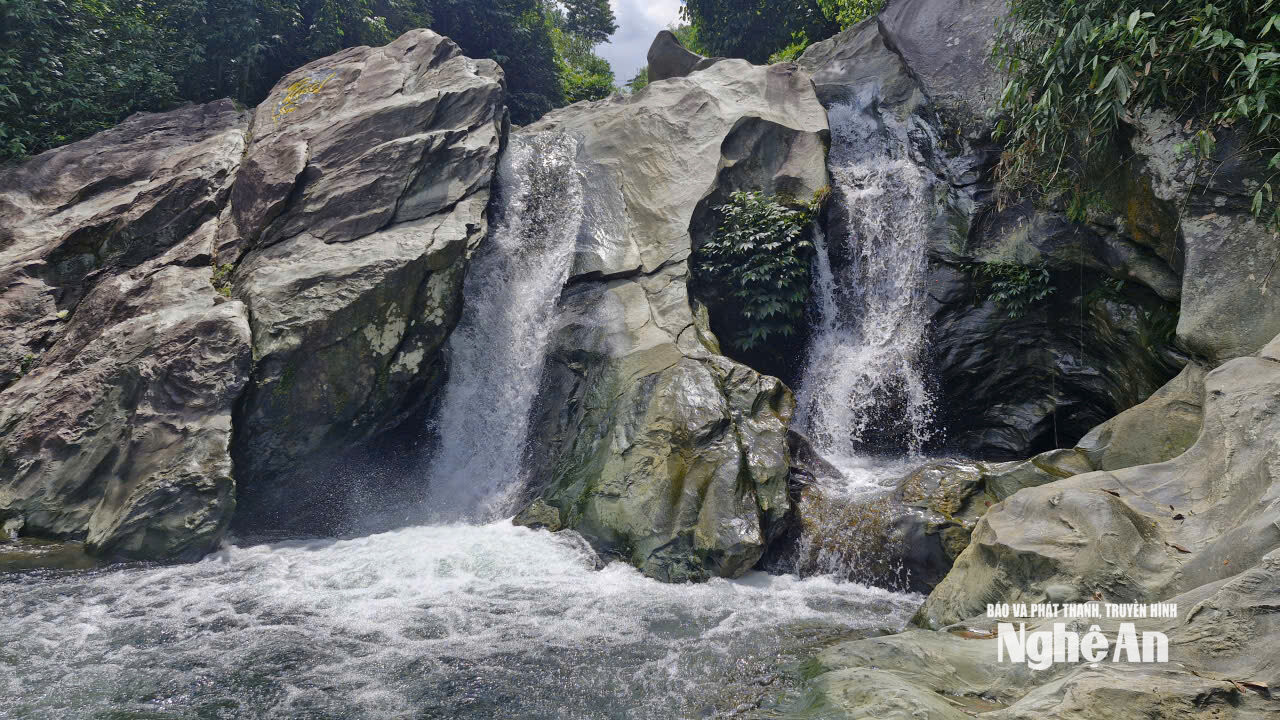
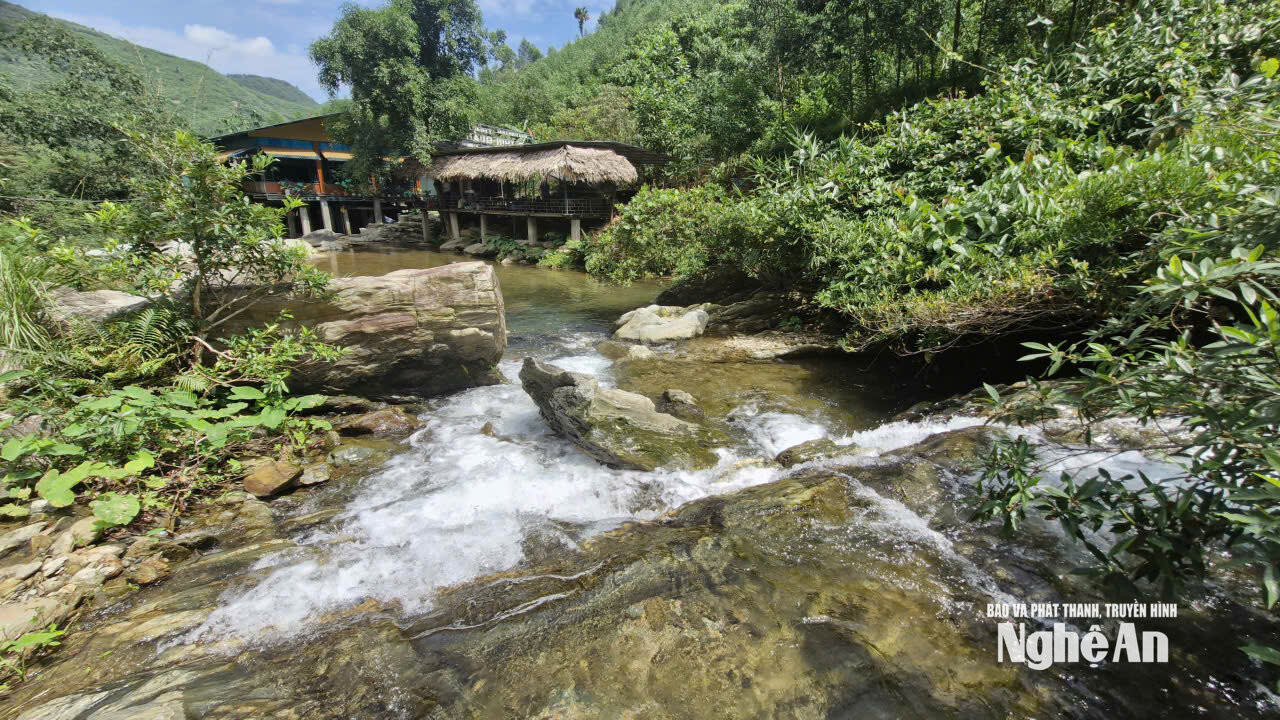
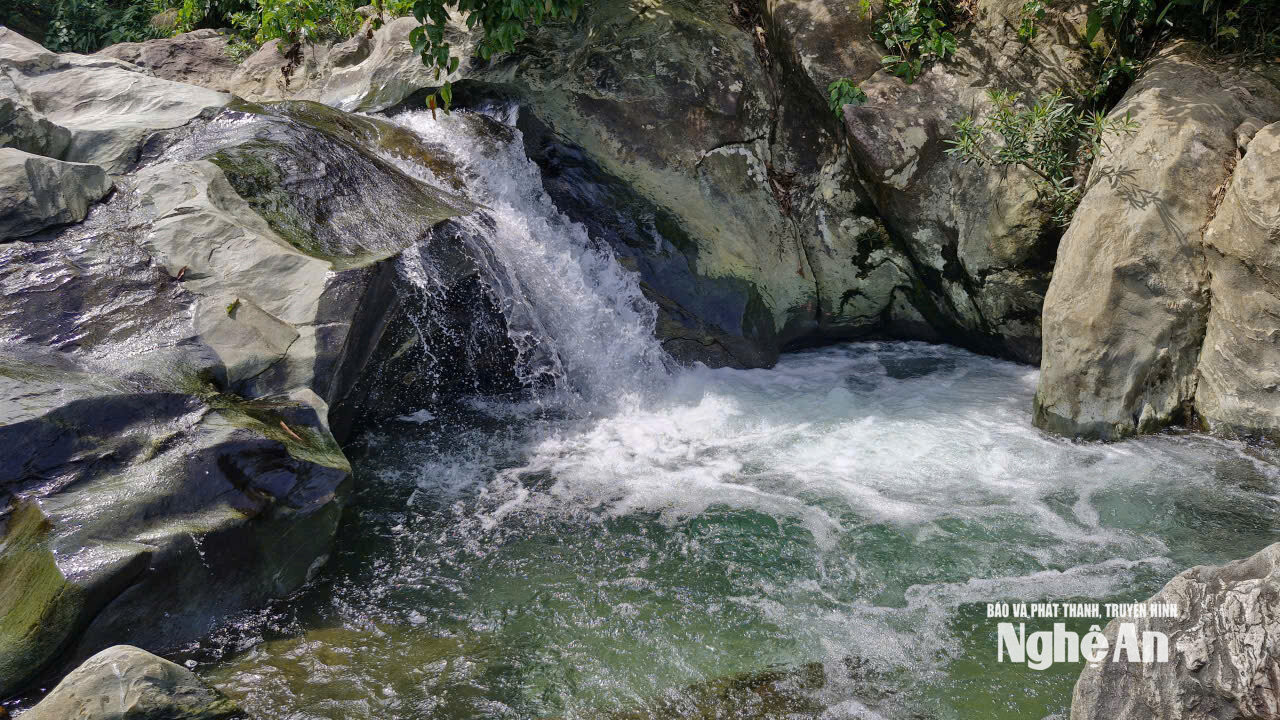
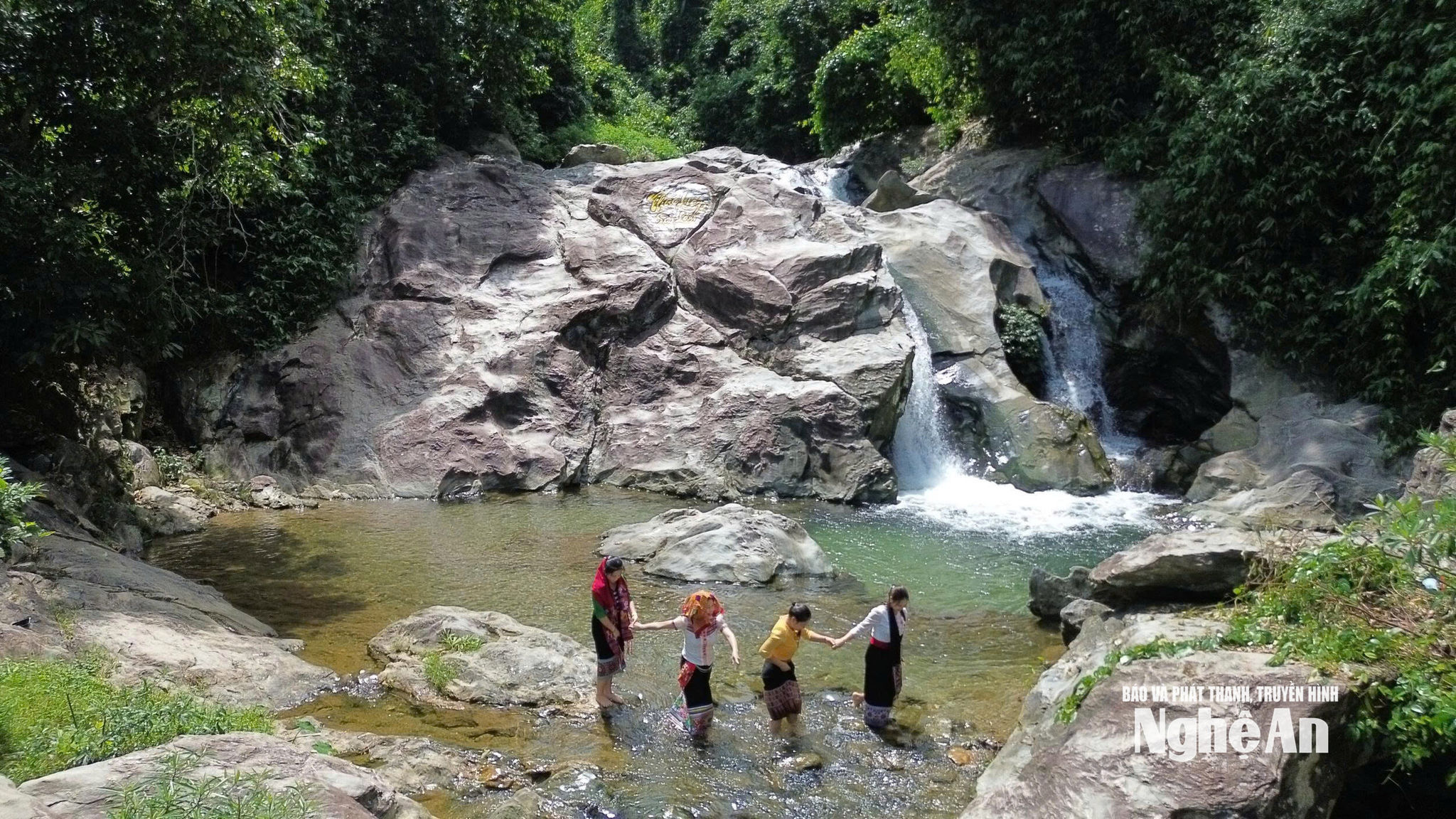
To reach Liếp Waterfall, from Vinh city, follow National Highway 46, cross Rộ Bridge, and join the Ho Chi Minh Highway, a total distance of approximately 80 km. Then, from the Hạnh Lâm intersection on the Ho Chi Minh Highway, continue for about 7 km into Thanh Sơn commune to reach Liếp Waterfall. The initial impression is that the area boasts a beautiful, pristine natural landscape. The waterfall isn't very high, but its clear, blue water cascades down, creating white foam, winding beneath lush green foliage, around towering rocks, and eventually forming several small bathing areas.
Stopping by Liếp Waterfall, I felt at one with nature, hearing the sound of the stream flowing over the rocks, the melodious chirping of birds, the rustling of plants and trees, and felt peaceful and relaxed, not wanting to leave.
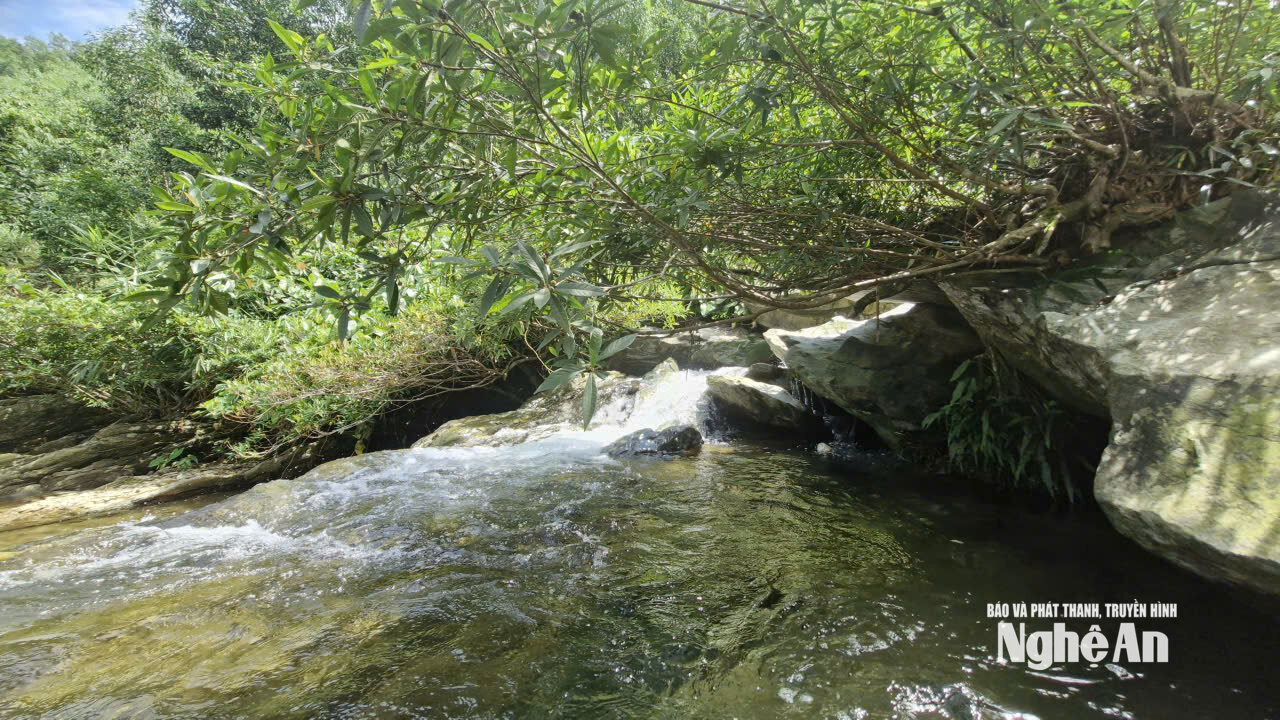
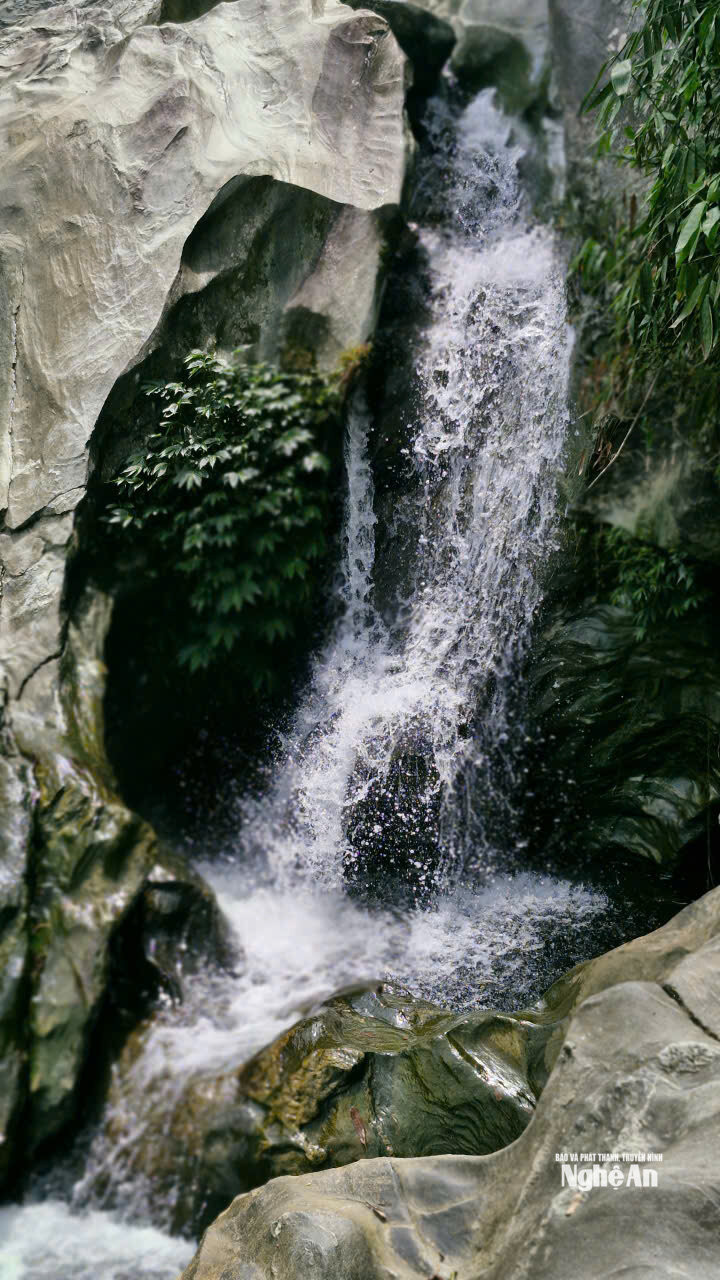
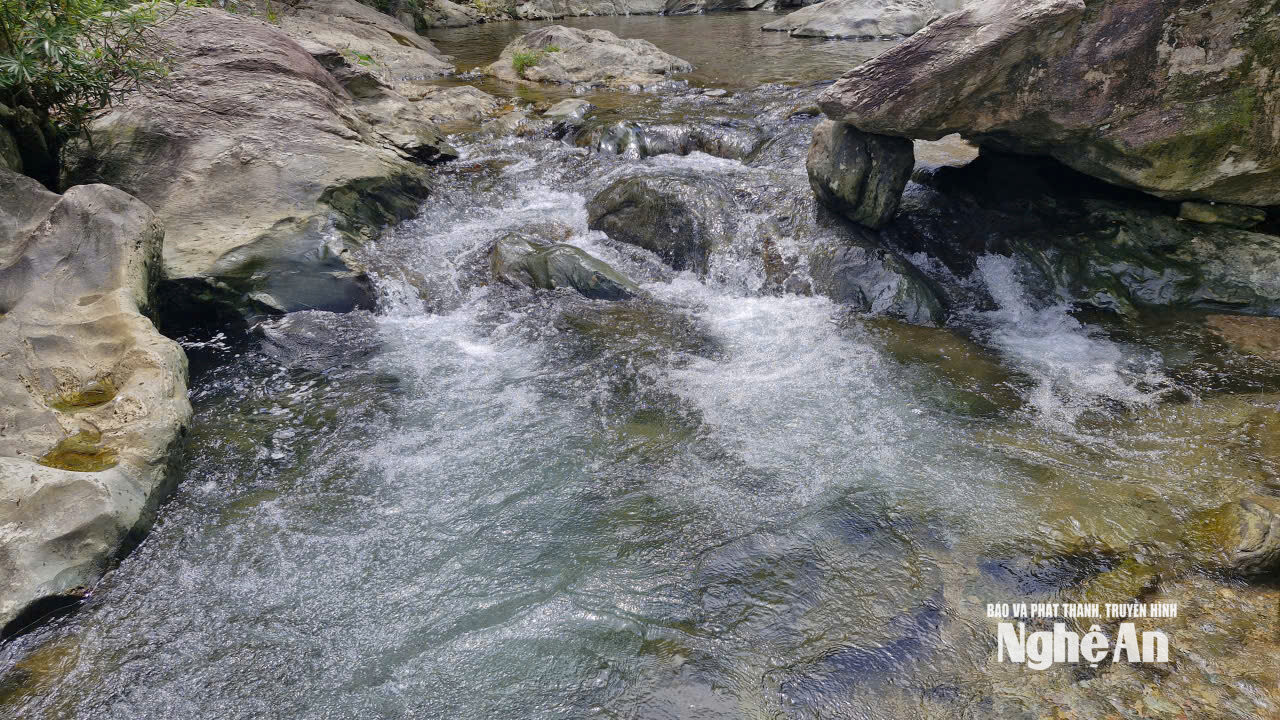
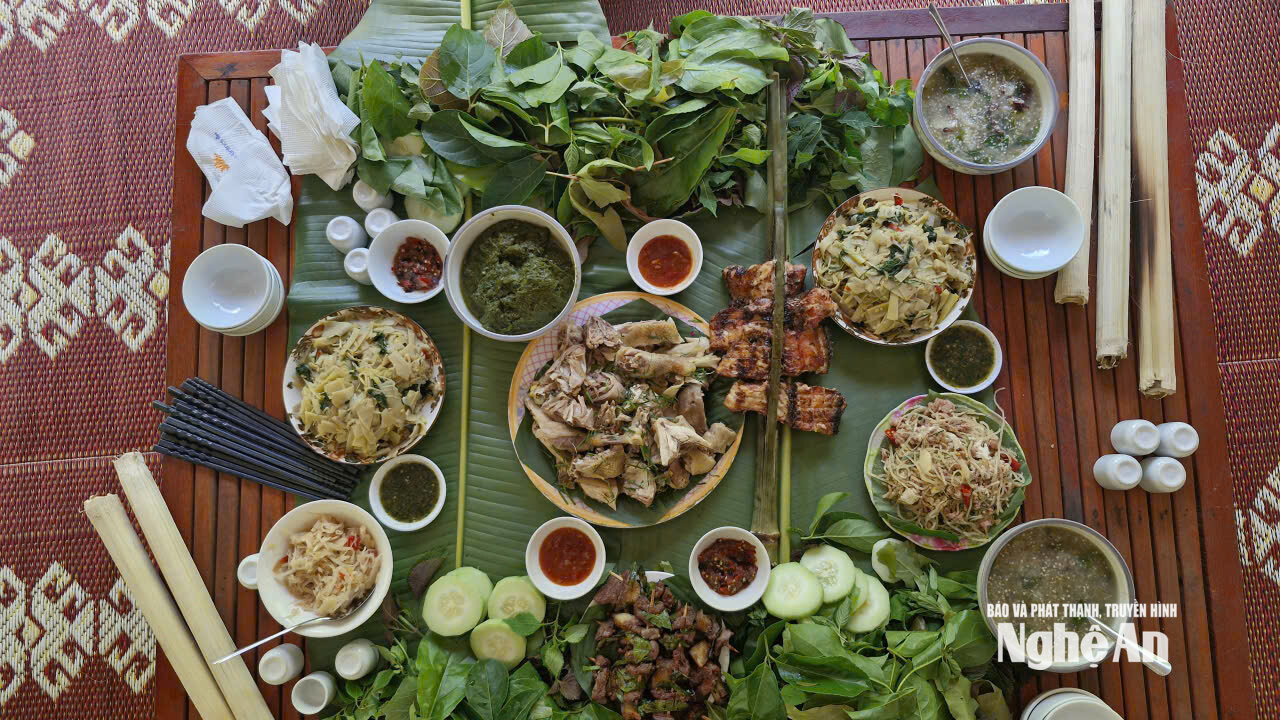
After exploring the scenery of Liếp Waterfall, a meal was served, with a few wild banana leaves used as a makeshift tray placed on a large rock. These were familiar dishes of the Thai people in western Nghe An, such as smoked buffalo meat, pickled vegetables in bamboo tubes, sliced mountain cucumbers, numerous kinds of mixed vegetables, sticky rice cooked in bamboo tubes, and various dipping sauces. Simple yet refined, it was irresistibly delicious and unforgettable.
All the dishes were delicious, but we were particularly drawn to the bamboo-cooked rice with its dipping sauces and side vegetables. It was also rice cooked in bamboo tubes, but the rice that day was different. The white, sticky, fragrant grains of rice were like pearls, wrapped in a thin, ivory-colored membrane as soft as silk, with a rich, appealing flavor.
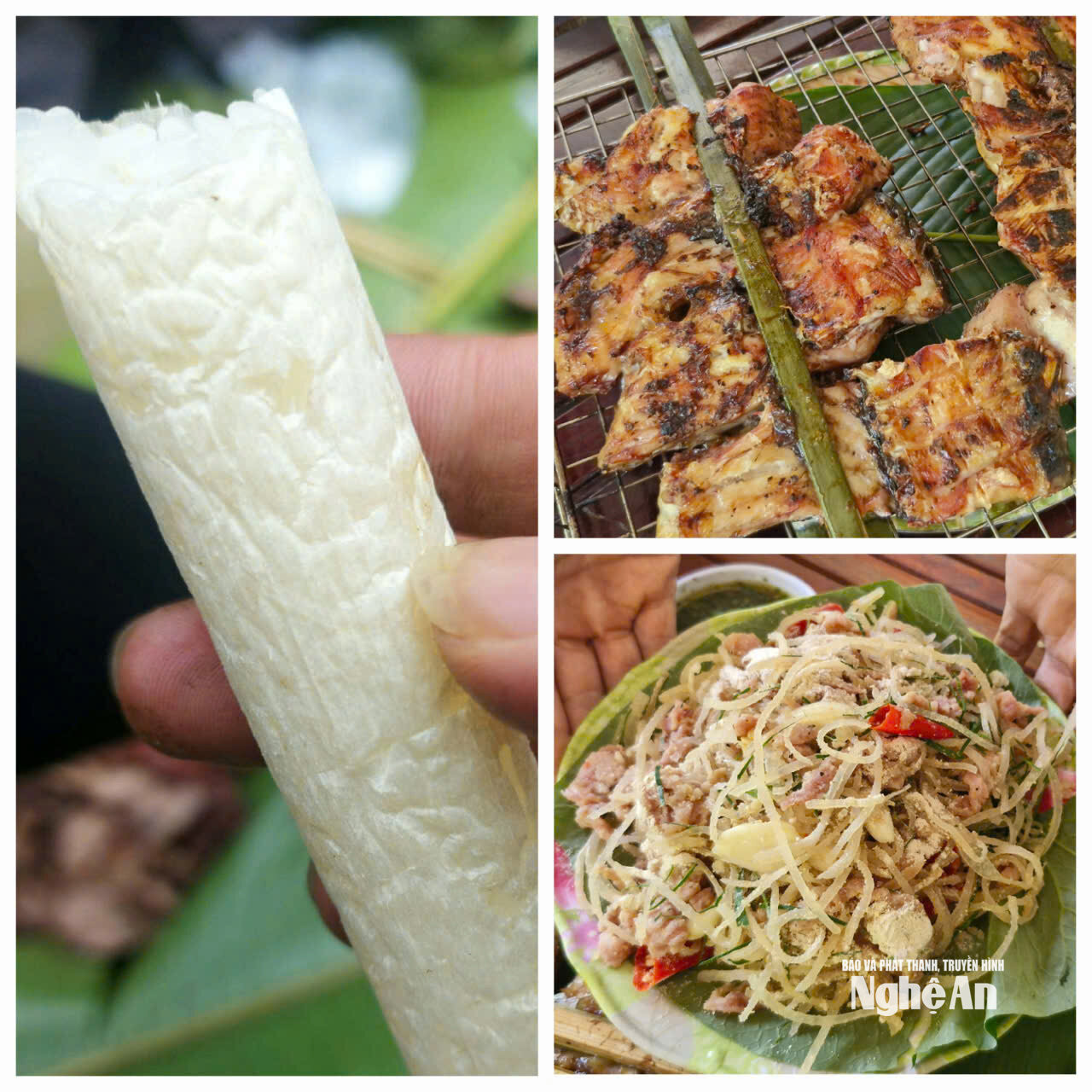
According to Thai women like Ms. Lo Thi Theu and Ms. Luong Thi Thin, to make this bamboo-cooked rice dish, they have to order young bamboo tubes from the Vietnam-Laos border region of Ky Son district (formerly). These young bamboo tubes are what make it unique. When the rice is cooked, the outer layer of bamboo is peeled off, leaving the inner membrane intact, which adds flavor and prevents the rice from sticking to the hands.
As for the mixed vegetables, along with the commonly seen perilla, mint, and basil, there are many young leaves gathered from the forest such as fig leaves, water spinach leaves, nutmeg leaves, mudwort leaves, and wild betel leaves... The diversity of these mixed vegetables makes the meal more visually appealing with its vibrant green color, enhancing the flavor of the dishes.
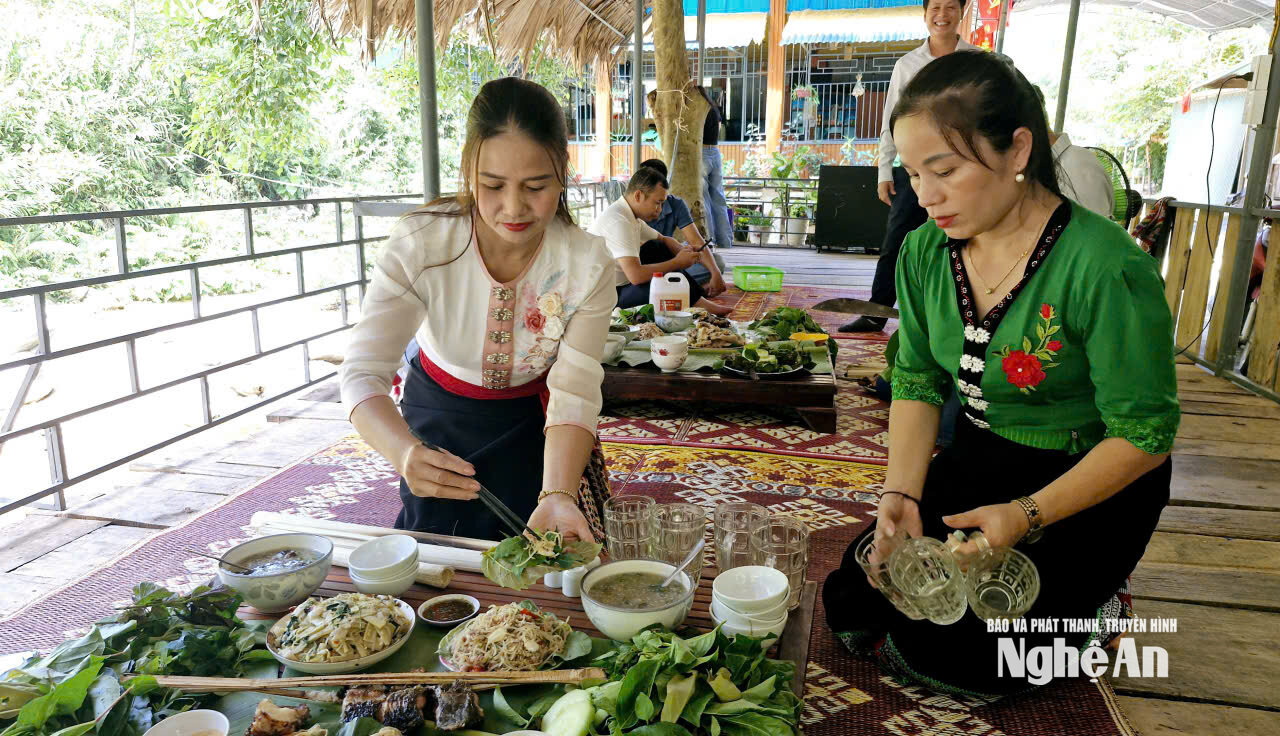
Regarding dipping sauces, there are several types. Some are used for dipping grilled meat, some are served with mixed vegetables, and some are for dipping sticky rice cooked in bamboo tubes. These sauces are meticulously made from fresh fruits such as chili peppers, mắc khén (a type of spice), young ginger, onions, chives, and sea fish... grilled until fragrant, then pounded together with a little salt and MSG.
Ms. Thêu and Ms. Thìn explained that, on the dinner table of the Thái people in western Nghệ An, the dipping sauce is the soul of the meal. Therefore, each type of food has its own specific dipping sauce. And to serve guests, it must be prepared in advance.
Similar to fresh salted mắc khén paste, the women select mature mắc khén, clean them thoroughly, and then salt them. This fresh salted mắc khén paste is then pounded together with mature lime leaves, young galangal leaves, green chili peppers, some vegetables from the home garden, along with salt and MSG, creating a thick, green mixture. When serving, a little cooled boiled water is added, and it's used as a dipping sauce for grilled or boiled dishes such as smoked meat and fish, boiled or grilled chicken, grilled pork, etc., all of which pair very well.
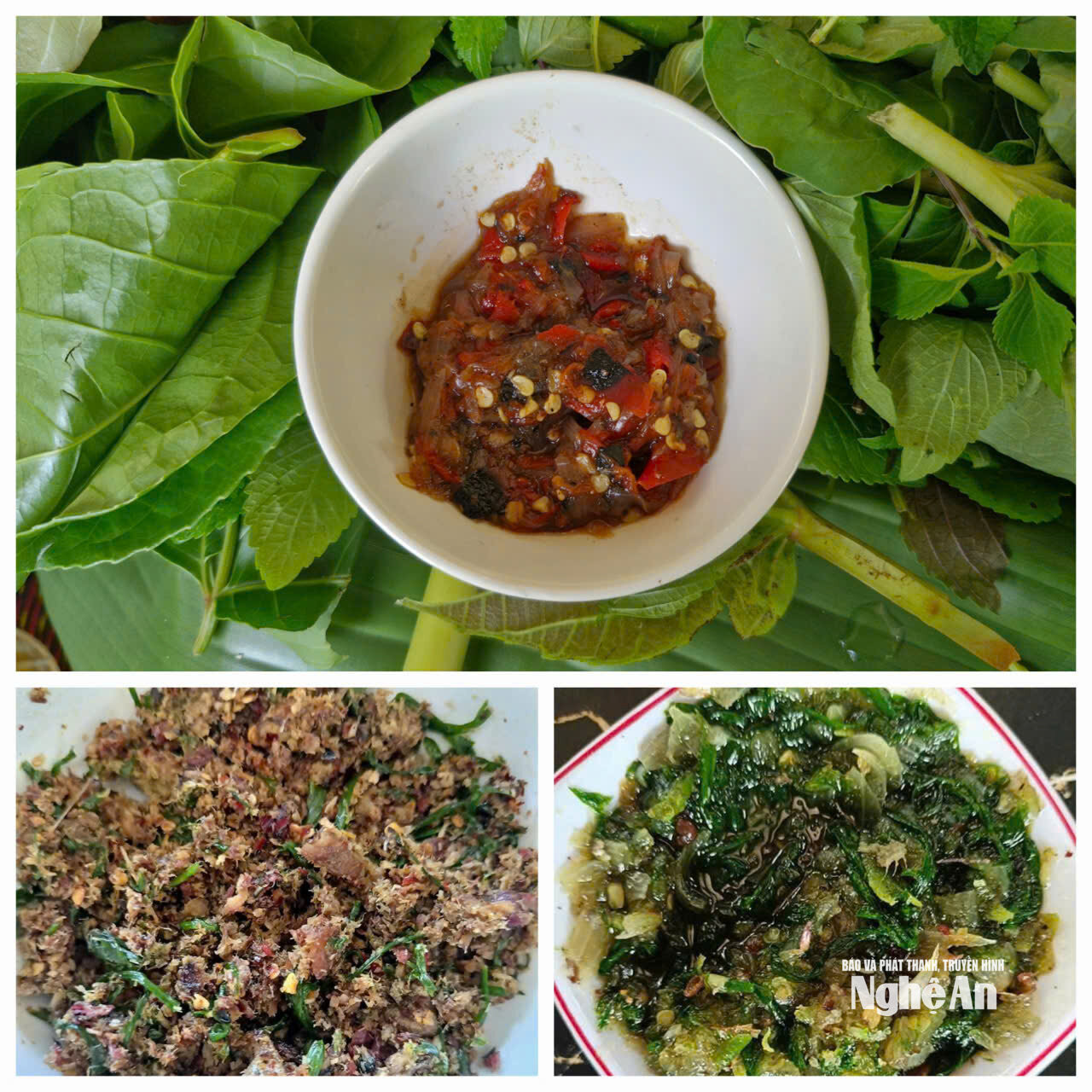
To make chive sauce, you need main ingredients such as fresh bird's eye chili, chives, and grilled sea fish. After picking, the chili peppers are grilled over charcoal until the skin is slightly charred and fragrant; the fresh chives are also grilled until aromatic, then a pinch of salt, a little MSG, and the grilled sea fish are added and pounded together in a mortar until smooth. The pungent aroma of the grilled chili, combined with the fragrant chives and sea fish, creates a rich and flavorful sauce.
"If sticky rice and bamboo-cooked rice represent affection, then a bowl of chive dipping sauce is the soul of the Thai ethnic group's meal. A bite of chewy sticky rice dipped in spicy, salty, and fragrant chive dipping sauce will immediately reveal the taste of the mountains and forests of western Nghe An province..."
Ms. Lo Thi Theu
The Thai women at Liếp Waterfall that year confided to us that Thanh Sơn was a new land for people resettled from Tương Dương. Although life was very difficult, Thanh Sơn had the potential for ecotourism that needed to be developed, so as not to waste the natural landscape bestowed upon it, and to provide additional livelihoods for the people.
From that idea, several activities were carried out, such as organizing tourism promotion for Liếp Waterfall, establishing several food service points featuring local specialties of the Thai ethnic group... The Thanh Sơn commune and Thanh Chương district (formerly) authorities also provided strong support. Subsequently, a concrete road connecting the commune center to Liếp Waterfall was invested in and connected; the Liếp Waterfall Tourism Service Cooperative was supported in its establishment...
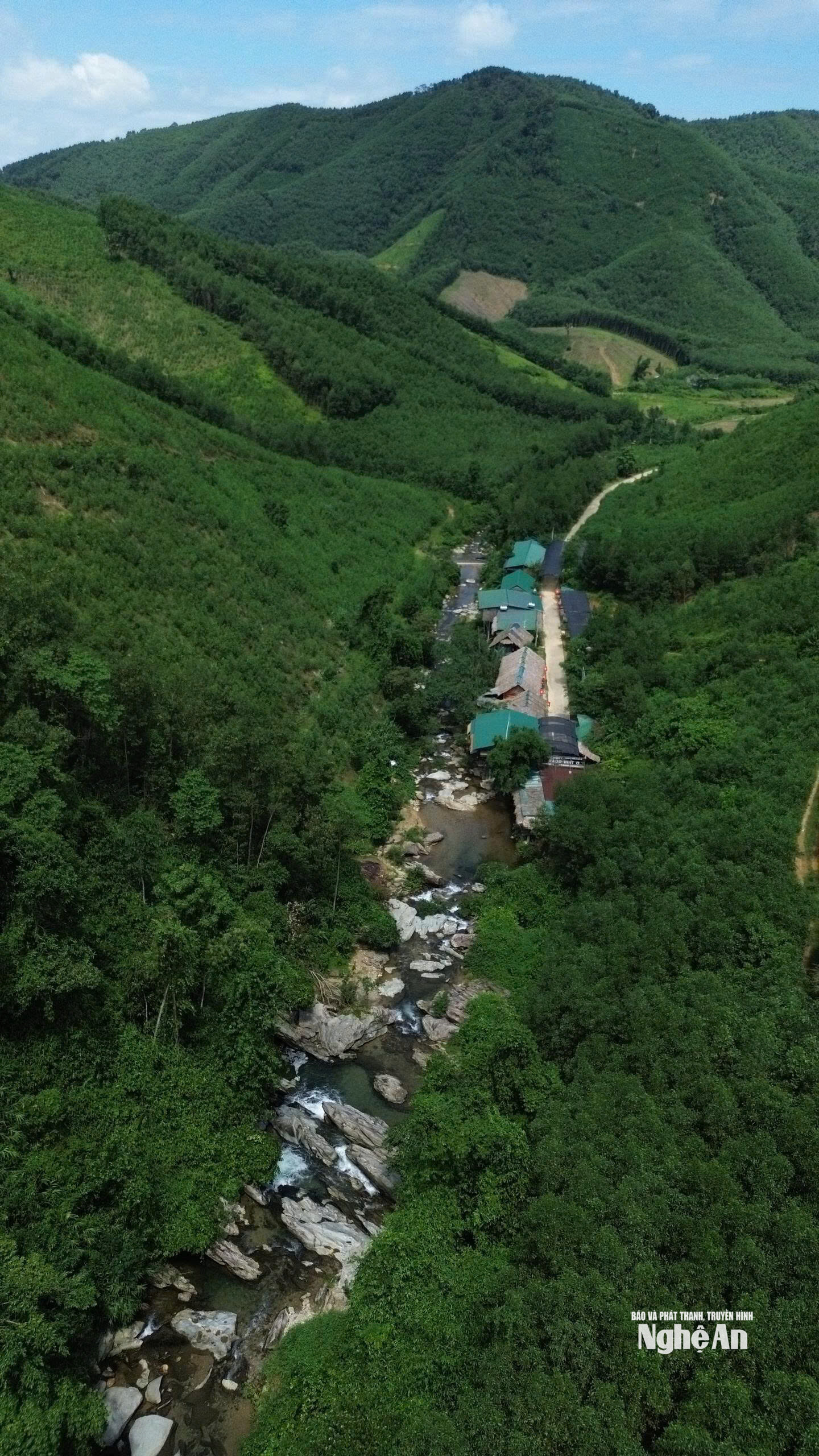
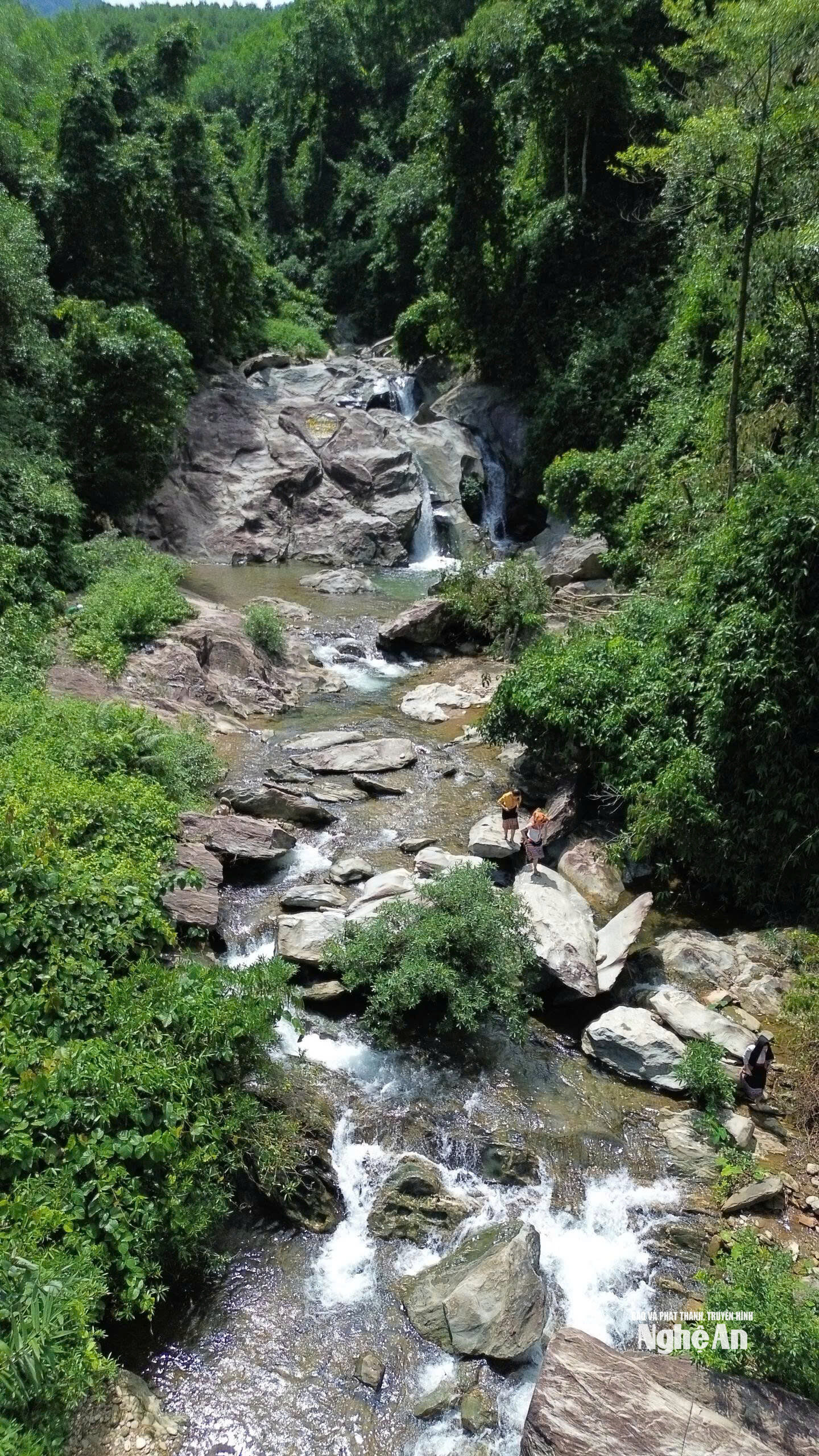

In early October 2026, upon hearing that Son Lam commune was developing a tourism project, we returned to Liep Waterfall. Along the concrete road leading to the waterfall, many more service facilities for tourists had been added. At the waterfall itself, thanks to abundant rainfall and a large volume of water flowing down, the natural scenery was truly beautiful.
Here, once again, we gathered around a table filled with authentic dishes of the Thai ethnic group from western Nghe An province. There was bamboo-cooked rice, sticky rice from mountain fields, charcoal-grilled fish, grilled meat..., various side vegetables, and many kinds of dipping sauces.
In that setting, the Chairman of the People's Committee of Son Lam commune, Trinh Van Bang, proudly stated that, besides Liep Waterfall, the area boasts many other scenic spots such as Mua Waterfall, Lua Waterfall, Lang Stream, Tron Stream, etc. These scenic spots are associated with a system of rivers, streams, and natural forests, creating an extremely clean environment. Son Lam commune also has the Ho Chi Minh Highway running through it, making it convenient to connect with key tourist destinations in the province such as Cua Lo Beach, Kim Lien Historical Site, tea islands, Bach Ma Temple, and Thanh Thuy Border Gate to form tourist tours and routes.
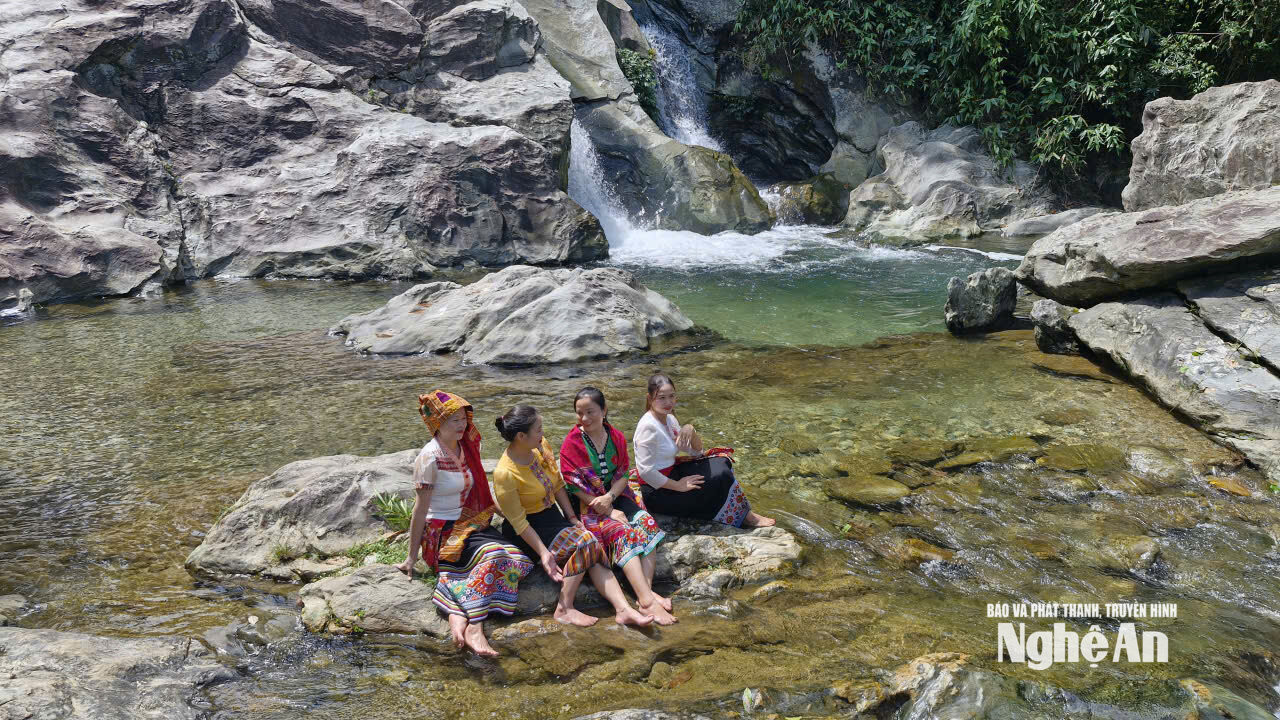
Therefore, given the cultural diversity of many ethnic groups living in the area such as the Thai, Khmu, O Du, Tay, Muong, Mong, Tho, and Kinh, the Party Committee and the local government of Son Lam commune decided to develop and approve the Project "Developing community tourism associated with the preservation and promotion of traditional cultural values of ethnic groups in Son Lam commune".
“The natural landscapes and scenic spots, along with the traditional cultural values of the ethnic groups in the area such as the rituals of worshipping deities, gong and drum art, furrow carving, Lam Vong dance, folk games, brocade weaving, rice wine making, and traditional dishes like bamboo rice, catfish, black chicken, indigenous black pig, and wild beef… will be the foundation to help Son Lam commune attract tourists,” Mr. Trinh Van Bang shared.
Despite the many challenges ahead and the much work to be done, we are confident that Son Lam commune will truly become an attractive destination in the future…”.
Mr. Trinh Van Bang - Chairman of the People's Committee of Son Lam Commune
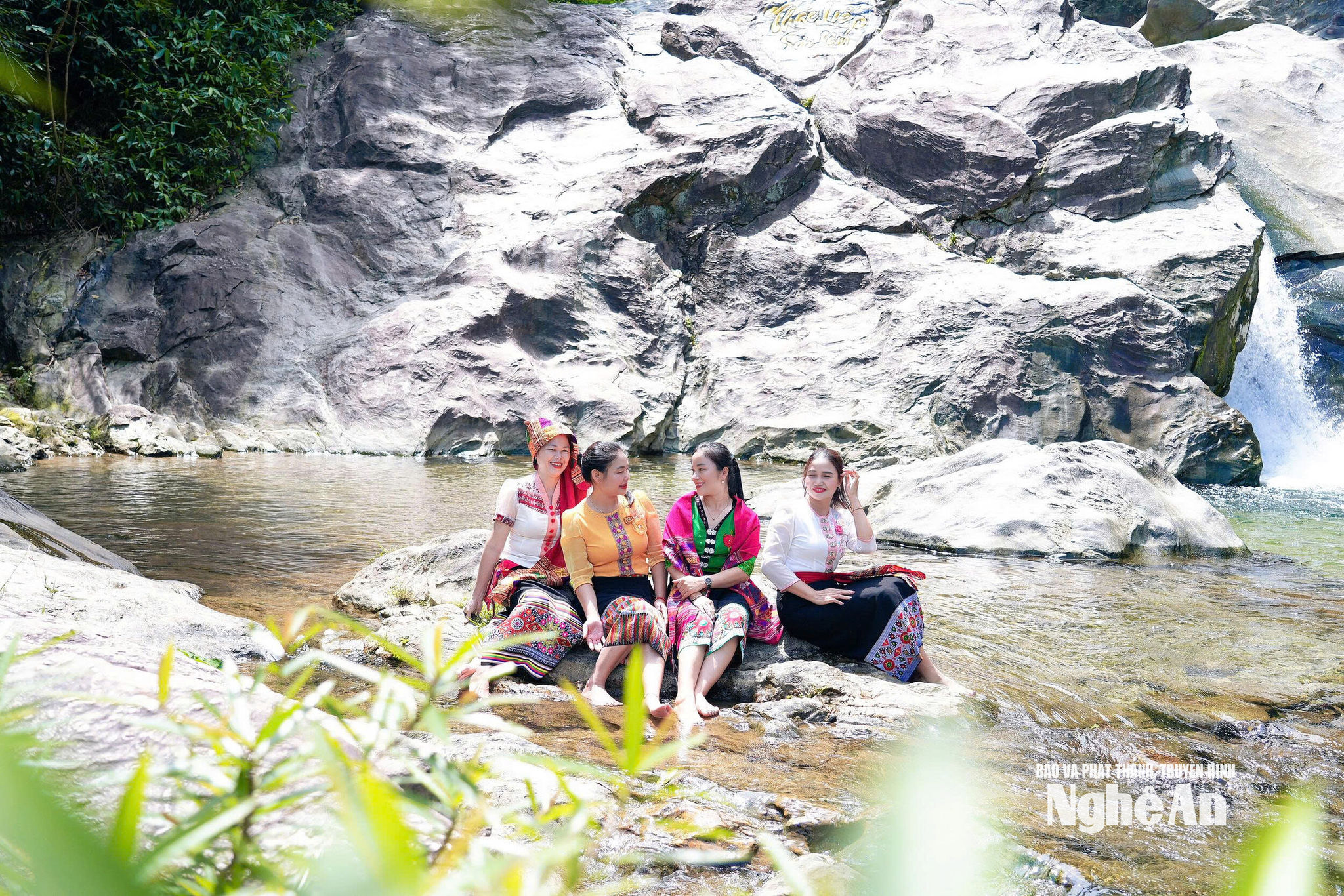
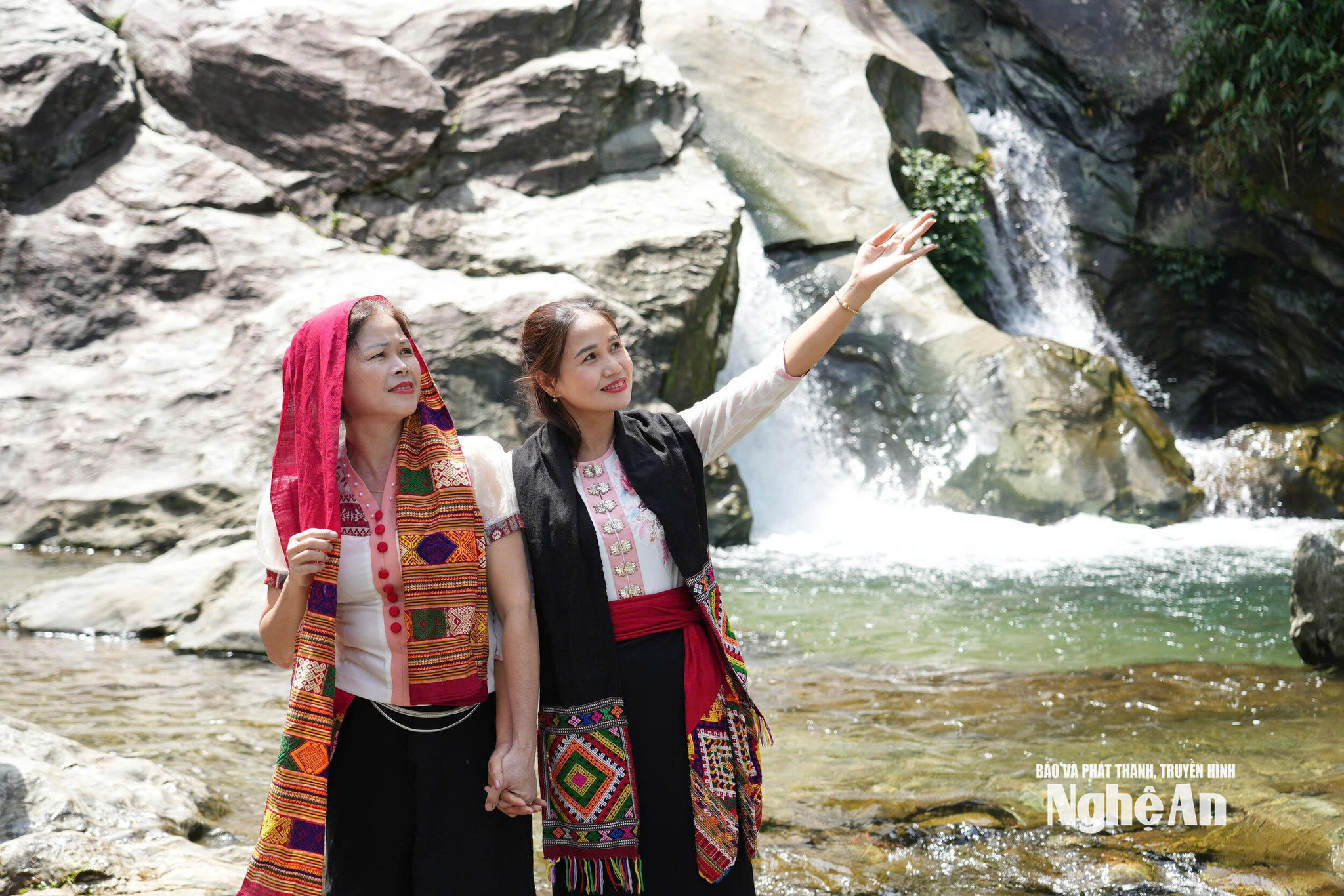
That day, we had the opportunity to meet Ms. Lo Thi Theu, Ms. Luong Thi Thin, and several members of the Liep Waterfall Tourism Cooperative... They informed us that 23 households in the commune are participating in tourism services. The Liep Waterfall Tourism Cooperative alone has 18 members involved in food, accommodation, and sightseeing experiences. At the Liep Waterfall tourist site, since the beginning of the year, approximately 6,000 visitors have come from various places to visit and experience the area, generating income for the households involved in tourism activities.
And like the Chairman of the People's Committee of Trinh Van Bang commune, the women acknowledge that service activities here still have limitations, especially in terms of infrastructure. However, they all believe that the existing natural resources, along with the diverse traditional cultures of the ethnic groups in the area that are being preserved and promoted, will be a solid foundation for the tourism project developed by the commune to achieve success.
"Just by coming to Son Lam, tourists can immerse themselves in beautiful nature and experience the unique local culture of the western region of Nghe An province...", Ms. Luong Thi My Nuong, head of the Liep Waterfall Tourism Cooperative, told us as we parted ways.