
Amorim suggested Dyche should revert to a 4-4-2 formation, keeping the 3-4-3 at Man United.
Amorim admitted that a 4-4-2 formation, as Dyche suggested, could lead to an earlier win, but he stuck with the 3-4-3 because he needed time; his three-win streak was proof of that ahead of the Nottingham Forest match.
Ruben Amorim doesn't shy away from debate. He acknowledges Sean Dyche's 4-4-2 formation might yield results sooner, but he remains steadfast in his belief that the 3-4-3 system needs time to mature. Amorim sees his current run of three consecutive wins as proof of this steadfastness, just before he faces Dyche, now managing Nottingham Forest, this weekend.
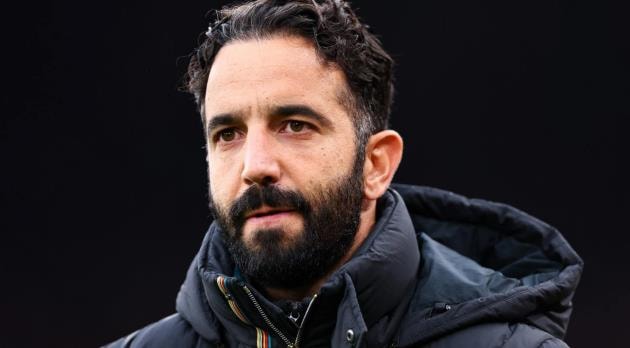
Amorim maintained the 3-4-3 formation, acknowledging that a 4-4-2 might be effective early on.
In the pre-match press conference, Amorim stated frankly: “First of all, it may be true that if we played 4-4-2, we would have won more games. But I always say that the team needs time to adapt, and in the long run, this style of play will be better.” It was a pragmatic stance: accepting short-term setbacks in exchange for a solid long-term structure.
Amorim also showed respect for Dyche: “I can see Dyche as a coach, but also as a commentator. If a commentator doesn't say anything strong, I don't want to listen! It's a different job, and I know Dyche is very intelligent and understands football well.”
Dyche: From podcast to Nottingham Forest bench
Dyche's remarks came back in May on the Stick to Football podcast, before he took on his new job. The context at the time was that Manchester United were going through their worst period in the Premier League and had subsequently lost in the Europa League final. From that perspective, Dyche offered his view on simplifying tactics for immediate solutions.
He once said: “He (Amorim) should win a few games as soon as possible. If I were managing Man United, just playing a simple 4-4-2, setting a few basic principles, I believe the team would win more. They have good players, they don’t need too much coaching.” Currently, Dyche has become the head coach of Nottingham Forest and is preparing to face Amorim in the Premier League.
3-4-3 vs 4-4-2: Tactical differences seen from the sidelines.
The debate over 3-4-3 versus 4-4-2 isn't just about numbers. With 3-4-3, Amorim prioritizes width from the wings, control of both halves of the pitch, and a four-midfielder structure that supports both attacking and transitional play. Dyche's 4-4-2, on the other hand, focuses on clear principles: a compact defensive block, man-marking, and simple triangles that allow for quicker decision-making.
| Aspect | 3-4-3 | 4-4-2 |
|---|---|---|
| Structure | Three central defenders, wide wingbacks, three forwards. | Two central defenders, two wing-backs, a pair of strikers. |
| Space control | Strong in half-space, versatile with wing-back. | The team formed a tight formation, essentially covering the corridors. |
| Change state | Requires teamwork and smooth role switching. | Simple principles, quick decisions, direct approach. |
| Adaptation required | Tall, requires time to operate smoothly. | Low to moderate symptoms, earlier onset of effects. |
Currently, Amorim's argument is tied to a process: micro-accumulation to create macro-benefits. His streak of three consecutive wins is a key indicator. Conversely, Dyche emphasizes "winning immediately" using easily understandable principles – a common logic for managers taking over during a crisis.
Impact on Man United and next steps
In the short term, the 4-4-2 formation can "unlock" immediate results; in the long term, the 3-4-3 promises even greater potential if the team is in sync. Amorim's choice shows he prioritizes identity and strategic stability, consistent with his statement that "the team needs time to adapt."
Furthermore, Director of Football Jason Wilcox confirmed that the club has clear plans to continue investing in upgrading the squad, starting as early as the January transfer window. This could provide more suitable resources for the 3-4-3 structure that Amorim is pursuing.
The Nottingham Forest match: a timely test.
The match against Dyche's Nottingham Forest will be a real test of what Amorim is building. On one side is a disciplined and direct 4-4-2, on the other a 3-4-3 that demands fluidity. While the numbers may be debatable, the philosophy is clear: Amorim is taking the harder path to find long-term value – and three consecutive wins are giving him more support.


