
Amorim reinvents Man Utd: winning through speed, not possession.
Maintaining a 3-4-3 formation but increasing the tempo, Ruben Amorim's Man Utd scored 1.79 goals per game when possession was below 50%, and only 0.83 when possession was above 50%. He prioritized control through goals.
Just two passes. That's how Ruben Amorim wanted Man Utd to finish off their opponents, and that's also the moment that defined their recent run of games: winning the ball, driving straight into the space behind the defenders, and putting the ball into the net before the opponent could settle into their formation. After 10 rounds of the 2025/26 Premier League, a direct, fast-paced, and effective Man Utd is clearly emerging.
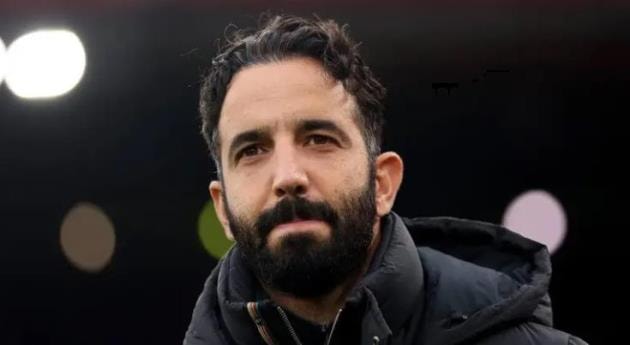
Maintain the 3-4-3 formation, increase speed and directness.
Amorim didn't break the familiar 3-4-3 formation, but adjusted it to make the team play faster and more decisively. Before the 2-2 draw with Nottingham Forest, he clarified his philosophy of choosing the tempo of play rather than rigidly building from the back: "I don't believe we have to always build play from the back. I want the team to know when to play fast, when to control the ball."
The facts support that choice. When not trying to hold onto the ball, Man Utd become more dangerous in transitions and attacking the space behind the opposing defenders.
More effective when having less possession.
The numbers clarify the trend: in matches with possession below 50%, Man Utd scored an average of 1.79 goals per game; when controlling possession above 50%, that number dropped to 0.83 goals per game. This is not a temporary phenomenon unique to Amorim, but has been ongoing for several seasons – the Red Devils often perform best on the counter-attack.
| possession rate | Average goals per match |
|---|---|
| Below 50% | 1.79 |
| Over 50% | 0.83 |
The "two-pass" philosophy: speed is paramount.
Amorim named his target: “If there’s space, I only need two passes to score. I want the players to understand when to make short passes and when to play quickly. It’s not always necessary to touch the ball a lot.”
The opening goal against Liverpool last month was exemplary: after a series of aerial duels, Bruno Fernandes won the ball, saw space behind defender Kerkez, and threaded a pass to Amad. With just one more touch, Bryan Mbeumo finished — a few touches, calculated, maximum speed.

Control by scoring goals, not by possession.
For Amorim, the team leading the score is the one in control. When Man Utd were 1-0 up against Liverpool, he was willing to concede possession, tighten up space, and force the opposition to shoot from distance or from the flanks. Therefore, Man Utd's xG (xenormous total) not being outstanding wasn't a problem if the opponent's shots came from less favorable areas.
Not new, but better organized.
Manchester United fans have seen a sharp, counter-attacking style under Mourinho, Solskjaer, and Ten Hag. The current difference lies in discipline, tempo, and consistency. However, the familiar problem remains: when facing low defensive blocks, United sometimes struggle. Amorim admitted: “When we take the lead, we often forget how to maintain the tempo. I want the players to keep possession purposefully, not just to protect the score.”
From Plan A to Plan B
Amorim's immediate priority is to perfect Plan A — a direct, fast-paced style of play — before moving on to Plan B, which involves more proactive control. Lisandro Martinez's return is expected to improve the build-up play thanks to the Argentine center-back's ability to make progressive passes.
United are currently on a four-match unbeaten run, finding a balance between pressing, counter-attacking, and controlling the tempo. Despite the impending absence of Mbeumo, Amad, and Mazraoui due to the African Cup of Nations, Amorim believes the team can still maintain its progress.
In the context of the ever-changing tactics of the Premier League, Amorim's Man Utd proved a simple truth: less possession doesn't mean weakness — sometimes, it's the shortest path to victory.


