
Is it better to eat sticky rice or regular rice?
Many people believe that eating glutinous rice causes more weight gain than eating regular rice, and that glutinous rice dishes are considered "heating" and can easily cause acne.
Sticky rice keeps you feeling full longer than regular rice because it's more nutritious.
According to Associate Professor Nguyen Thi Lam, former Deputy Director of the National Institute of Nutrition, the only difference between glutinous rice and regular rice is our perception of their stickiness and elasticity. In reality, these two types of rice are almost identical in terms of nutritional value.
100g of glutinous rice contains 344 kcal, while the same amount of regular rice contains 350 kcal. However, when eaten in the same bowl, glutinous rice will have a larger quantity because its sticky, chewy nature causes it to be compressed, while regular rice is more loose and less dense.
That's why people feel fuller and fatter when eating sticky rice compared to regular rice, but if we understand the nature of sticky rice and are mindful of the amount we consume, we won't notice this difference.
Associate Professor Dr. Nguyen Thi Lam also stated that whether one eats a lot or a little sticky rice depends on habit and preference, and eating a lot of sticky rice does not affect health; in fact, the opposite is true, sticky rice is beneficial to health.
Many people even eat sticky rice instead of regular rice.
The difference in the stickiness of these two types of rice is due to the two components, amylose and amylopectin, in each starch grain. Of these, amylopectin plays a decisive role in determining the stickiness of the grain.
In regular rice and corn, amylopectin accounts for 80%, while in glutinous rice and corn, the amount of amylopectin reaches 90%, which is why sticky rice is usually very chewy and sticky.
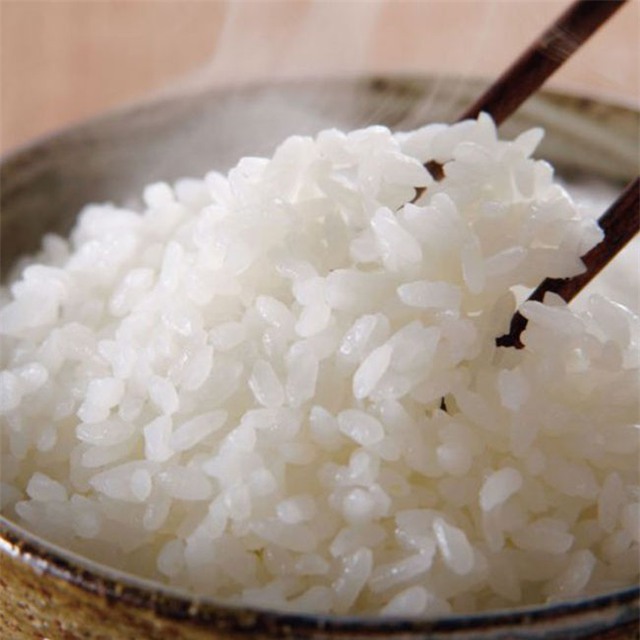 |
| The only difference between glutinous rice and regular rice is our perception of stickiness and chewiness. Both types of rice are almost identical in terms of nutritional value. |
The only difference between glutinous rice and regular rice is our perception of stickiness and chewiness. Both types of rice are almost identical in terms of nutritional value.
Sticky rice is too hot.
Regarding this, Dr. Bui Van Phao, a specialist in Traditional Chinese Medicine, said that glutinous rice has a warming nature, so eating too much can cause heat in the body.
Traditional Chinese medicine advises that people with a naturally hot or phlegmatic constitution, as well as those suffering from illnesses such as fever, yellow phlegm, jaundice, and abdominal distension, should avoid consuming glutinous rice.
Regarding the common belief that eating sticky rice will cause swelling, inflammation, and pus formation in wounds, traditional medicine practitioner Hong Minh explains: patients with pus formation are often those with a cold constitution and accumulated toxins (obese, with excessive phlegm), therefore, foods high in protein, sticky, and difficult to digest such as buffalo meat, sticky rice, and dog meat will only worsen the condition.
Medicinal remedies using glutinous rice.
According to herbalist Bui Hong Minh, glutinous rice has a sweet taste and warm nature, entering the spleen, stomach, and lung meridians. It has the effect of nourishing the body, strengthening the spleen and stomach, and benefiting the lungs and stopping sweating. Glutinous rice can be used to treat diseases according to the following prescriptions:
To nourish those who are weak: 250g glutinous rice, 500ml wine, two chicken eggs. Put all ingredients into a large bowl, steam until cooked, and divide into several servings.
For those with poor appetite or nausea: grind 30g of glutinous rice into a fine powder, cook it into a thin paste, add 30g of honey, and eat it in several portions throughout the day.
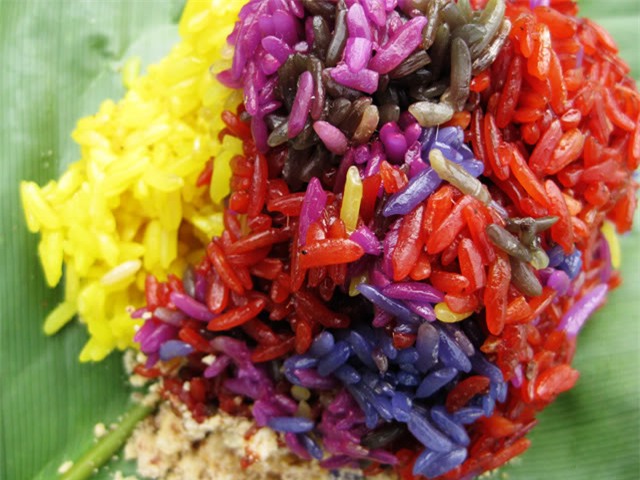 |
| Five-colored sticky rice, dyed with food coloring, is a traditional Vietnamese dish. |
Five-colored sticky rice, dyed with food coloring, is a traditional Vietnamese dish.
For people with intestinal problems and prolonged loose stools: soak 500g of glutinous rice in water overnight, drain, and then roast until fragrant.
50g of Chinese yam, roasted until golden brown. Grind both into a fine powder. Every morning, take 20-30g, stir well with boiling water, add a little brown sugar and pepper to make a breakfast dish.
For people with chronic gastritis and stomach ulcers: Take an appropriate amount of glutinous rice, add jujube dates, and cook into a thin porridge to eat. Eat 1-2 times a day.
For persistent vomiting: Sticky rice decoction with ginger: 20g of sticky rice, roasted until golden; three slices of fresh ginger, crushed. Boil both with 200ml of water until only 50ml remains, drink throughout the day.
Treatment for anemia: Cook 100g of glutinous rice, 30g of black beans, and 30g of red dates into a porridge. Eat 1-2 times a day.
To increase milk production: glutinous rice, cooked until soft with pork trotters or knuckles, the core of the Chinese angelica plant, unripe papaya, and fig leaves, will help increase milk production.
According to giadinh.net


