
Can India balance its two objectives with Russia and the US?
The Russian president's visit to India comes as New Delhi is striving to maintain its relationship with another important partner – the United States.
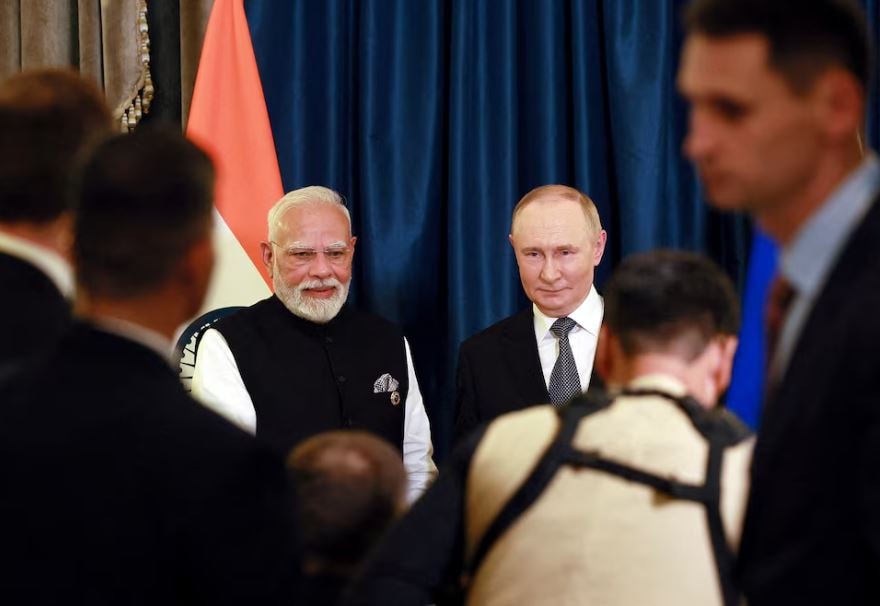
According to CNN, Russian President Vladimir Putin began his official visit to India on December 4th. Upon the Russian leader's plane landing in New Delhi, the Russian delegation was greeted with the utmost honors reserved for one of India's most enduring partners.
The visit takes place against the backdrop of Prime Minister Narendra Modi's efforts to maintain a deep strategic relationship with another key partner: the United States.
This is the diplomatic dilemma facing India. On one side is the ability to purchase advanced Russian fighter jets, cheap oil, and a strong friendship forged during the Cold War. On the other is cooperation with the US in technology, trade, and investment, along with the hope that President Donald Trump will lift the punitive tariffs.
CNN reports that, over the years, India has leveraged its strategic advantages – a huge market and a key position in the Indo-Pacific region – to attract the attention of both the White House and the Kremlin.
However, President Putin's visit comes at a sensitive time for Prime Minister Modi.
New Delhi is negotiating a much-needed trade deal with Washington, after the US imposed a 50% tariff – half of which is seen as a direct punitive measure for India's continued purchase of cheap Russian oil.
Recently, New Delhi has taken steps to appease Washington, including cutting oil imports from Russia and agreeing to purchase 2.2 million tons of liquefied petroleum gas (LPG) from the United States.
However, the top priority on President Putin's agenda for this visit is new defense agreements with Moscow, including the procurement of weapons that India considers essential. This shows that India is forced to navigate a complex "neighborhood": Russia is also a close partner of China, while Beijing is a major arms supplier to Pakistan.
By rolling out the red carpet for Russian President Vladimir Putin, New Delhi is sending a signal to both the West and China that it "has many options," according to Kanti Bajpai, a visiting professor of International Relations at Ashoka University.
The close relationship between India and Russia dates back to the Cold War.
However, the inclination toward Moscow became more pronounced in the 1970s. Russia began supplying weapons to India, and Moscow became a reliable counterweight – a role they still value today.
Although India has reduced its purchases of Russian weapons over the past four years, Moscow remains New Delhi's leading military supplier, according to the Stockholm International Peace Research Institute (SIPRI), an organization that monitors the global arms market.


