
India receives its fourth S-400 regiment and approves plans to double its size.
The Indian Air Force has just received another S-400 missile regiment from Russia and has approved the purchase of five more systems following impressive combat demonstrations in 2025.
The Indian Air Force (IAF) has officially received its fourth regiment of S-400 long-range air defense systems from Russia. The fifth regiment – the final unit under the original contract signed in 2018 – is scheduled to be delivered before the end of this year. This marks a significant milestone in the modernization program of the South Asian nation's air defense capabilities.
The contract for five S-400 regiments, worth $5.43 billion, was signed between New Delhi and Moscow in October 2018. Each regiment is structured into two battalions, each deploying eight missile launchers along with supporting radar systems, a command center, and synchronized ammunition loading vehicles.
Real-world effectiveness fuels the need for scaling up.
India's decision to expand its S-400 arsenal comes after the system underwent intensive combat testing outside Russian territory in May 2025. During these engagements, Indian S-400 units were recorded shooting down at least five fighter jets and one electronic reconnaissance or early warning (AEW&C) aircraft at distances up to 300 km.
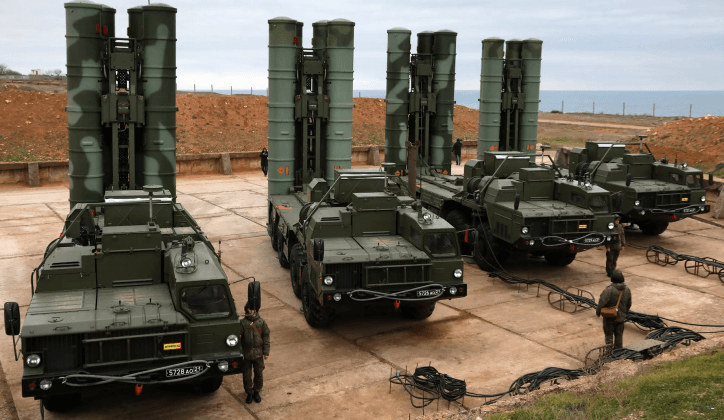
Thanks to this impressive performance, the Defence Procurement Council of the Indian Ministry of Defence approved the purchase of five more regiments in March 2026. This decision brings the total planned arms stockpile to 10 regiments, equivalent to 20 fire battalions.
Technological advantages: Mach 14 speed and stealth capabilities.
The S-400 is designed to counter the challenges posed by next-generation stealth aircraft and missiles. The system possesses superior technical characteristics, including high maneuverability and a maximum range of up to 400 km. Its missiles can reach speeds exceeding Mach 14 to destroy fast-flying targets.
Multi-layer radar system
The S-400's primary sensor is the 91N6 'Big Bird' panoramic surveillance radar, which has a detection range of up to 600 km and the ability to simultaneously track hundreds of targets. To enhance situational awareness of targets with extremely small radar cross-sections (RCS), the system now incorporates the Nebo-M 3D multi-band radar, maintaining superior observation capabilities against stealth aircraft.
Supply capacity and prospects for Russia-India cooperation.
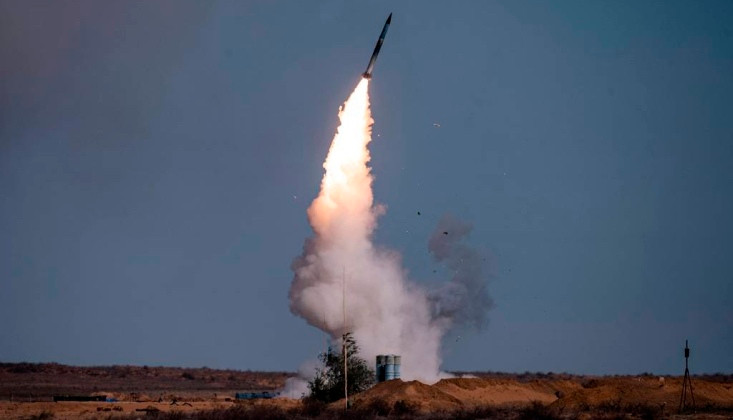
Russia has invested heavily in production facilities such as the Obukhov Plant in St. Petersburg, the Avitek Plant in Kirov, and the NMP Plant in Nizhniy Novgorod to maintain the rate of air defense system deliveries. Despite increased domestic demand due to the conflict in Ukraine, deliveries to India remain a strategic priority.
Besides the S-400, India and Russia are also discussing other major military projects, including a deep upgrade of the Su-30MKI long-range fighter fleet and the possibility of New Delhi ordering the fifth-generation Su-57 fighter. The combination of high-altitude air defense systems and new-generation fighters is expected to completely change the security landscape in South Asia.


