
India and the European Union finalize historic trade agreement.
On January 27th, in New Delhi, Indian Prime Minister Narendra Modi announced that India and the European Union (EU) had finalized a landmark trade agreement. This move opens up enormous economic opportunities for a quarter of the global economy and marks a strategic adjustment by both sides in response to the changing international situation.
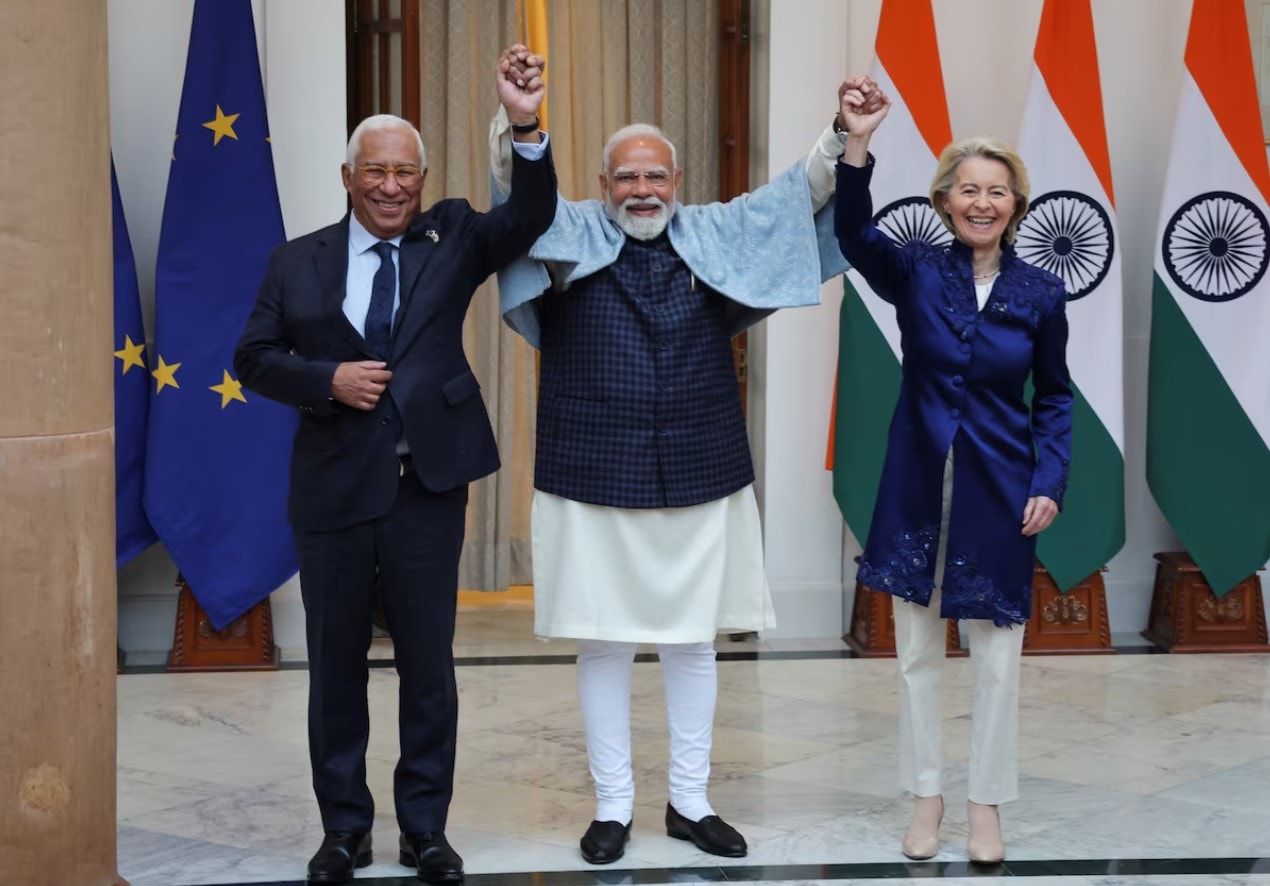
Diversification in the face of trade protectionist pressures.
After nearly two decades of negotiations marked by numerous interruptions, this agreement is hailed by observers as the "mother of all agreements," marking a significant step in connecting India's market of 1.4 billion people with the 27-nation European trade bloc.
Speaking in New Delhi, Prime Minister Narendra Modi emphasized: "This agreement represents 25% of global GDP and one-third of world trade."
European Commission President Ursula von der Leyen and European Council President Antonio Costa were in New Delhi as key guests at India's Republic Day celebrations. The presence of these high-ranking EU leaders at this momentous event highlights the unprecedented importance of the bilateral relationship.
The official announcement and specific details of the agreement are expected to be presented at the India-EU Summit taking place on the same day. However, according to government sources, signing the formal legal document will require an additional 5 to 6 months to complete the review process.
This agreement was reached amidst challenges facing both Brussels and New Delhi from the protectionist trade policies of the United States under President Donald Trump.
Last year, the US imposed tariffs of up to 50% on goods from India, severely damaging key export sectors such as textiles and gemstones. Meanwhile, the EU is also seeking to strengthen economic alliances to mitigate risks from tariff threats and shifts in policy from its transatlantic allies.
The completion of the agreement with India comes shortly after the EU signed a key treaty with the Mercosur bloc (South America), as well as agreements with Indonesia, Mexico, and Switzerland, demonstrating Europe's efforts to diversify its supply chains and seek new growth centers outside of China and the US.
The free trade agreement (FTA) is expected to significantly reduce tariff barriers between the two sides. On the EU side, the bloc expects India to remove the exorbitant import tariffs (currently over 100%) on cars, paving the way for German and European car manufacturers to enter this potentially lucrative market. In addition, the European wine and spirits industry is also awaiting a reduction in tariffs, currently at 150%.
On the Indian side, New Delhi hopes that textiles and pharmaceuticals will have access to the European market with preferential tariffs comparable to those of neighboring countries. In particular, the agreement includes a new cooperation framework on labor mobility, facilitating the employment of highly skilled Indian workers in Europe.
Trade between India and the EU reached $136.5 billion in the fiscal year ending March 2025. The new agreement is expected to significantly boost this figure. Additionally, the two sides discussed the India-Middle East-Europe Economic Corridor (IMEC) to enhance transport and energy connectivity.
Besides economic matters, a new security and defense treaty was also a central focus of this conference. This would be the EU's third defense agreement with an Asian country, following Japan and South Korea.
Against a backdrop of complex geopolitical dynamics, the EU is working to entice India to reduce its reliance on traditional Russian military supplies through enhanced defense industry cooperation and technology transfer. France has become a key partner, while Germany is pushing ahead with negotiations on submarines and military transport aircraft. This agreement also opens the possibility for India to access preferential loans from the EU's security fund.
Challenges ahead
Despite reaching a high-level consensus, negotiators still have to resolve remaining sensitive issues, particularly in the agriculture and steel sectors.
India remains concerned that opening its agricultural markets could impact the livelihoods of millions of farmers, while European farmers are also putting pressure on their governments regarding international trade agreements.
In addition, the EU's Carbon Border Adjustment Mechanism (CBAM) and steel tariffs remain bottlenecks that need to be addressed to ensure a harmonious balance of interests for both sides.


