
Angela Merkel's trip to Russia: A 'breaking the ice' journey.
(Baonghean) - German Chancellor Angela Merkel recently visited Russia to discuss with President Vladimir Putin a range of important issues concerning Europe, the world, and German-Russian relations.
The context of still strained relations between Russia and the West further underscores the importance of this trip. A warming relationship between Germany and Russia could be a catalyst for a "thawing" process between Russia and the West.
Key partners
An atmosphere of friendship permeated Sochi on May 2nd during the meeting between German Chancellor Angela Merkel and Russian President Vladimir Putin. The German Chancellor called Russia an important partner in the Group of Twenty (G20) – where Germany currently holds the rotating presidency.
The G20 summit will take place in Hamburg, Germany, in early July. The visit is seen as an official invitation from the host country to Russian President Putin. But in reality, the meeting between the Russian and German leaders will not only discuss G20 matters.
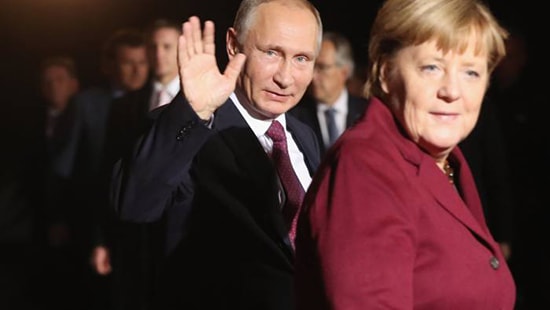 |
| German Chancellor Angela Merkel is a Western leader who has a favorable view of Russia. Photo: Financial Times |
President Putin confirmed that the discussions with the German Chancellor included the most important issues such as Ukraine and Syria, as well as other regional issues. Notably, the two sides also discussed rather sensitive issues, which have been the subject of much disagreement in relations between Russia and the West.
At a press conference following the talks, President Vladimir Putin called for a thorough and objective investigation into the suspected chemical weapons attack in the city of Khan Shaykhun, Idlib province, Syria.
The German Chancellor also endorsed accelerating the negotiation process within the Astana and Geneva frameworks, while emphasizing that the conflict in Syria can only be resolved peacefully and under the auspices of the United Nations (UN).
The Russian leader also emphasized the importance of the United States, stating that without Washington's involvement, the Syrian crisis cannot be effectively resolved.
Therefore, Russia is and will continue to engage with Western partners to resolve the six-year-long civil war in this Middle Eastern country.
Regarding the Ukraine issue, Merkel stated that Russia is a constructive partner and expressed hope that sanctions against Russia would be lifted after the successful implementation of the Minsk-2 agreement.
This could be considered Merkel's first visit to Russia since 2015, a sign that dialogue between the Russian and German leaders is resuming after two years of tension over Ukraine.
Germany has been a strong supporter of European Union (EU) sanctions against Russia, accusing Moscow of involvement in the crisis in eastern Ukraine and Russia's annexation of Crimea in 2014.
For myself, for you.
Since the Ukraine crisis, relations between Russia and the West have plummeted. Moscow has even admitted to being at their "lowest point" ever. Consequently, high-level meetings between Russian and Western leaders have become increasingly rare, and in some cases, have ceased entirely.
However, Germany is one of the few EU member states that maintains political relations with Russia. Therefore, this meeting is also seen as an opportunity for both sides to discuss cooperation, if the benefits outweigh the "barrier" of Western sanctions.
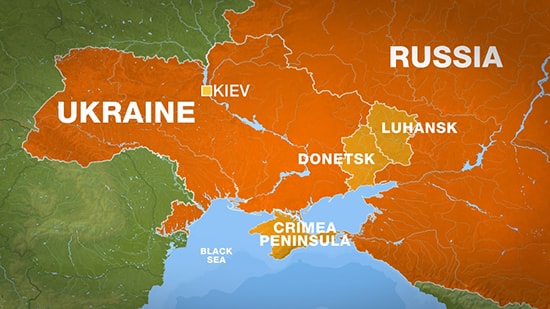 |
| The crisis in eastern Ukraine is one of the biggest issues between Russia and the West. Photo: Al Jazeera |
In fact, both Russia and Germany had their own calculations going into this meeting. Moscow understood that having the leader of a very important member of the EU and NATO like Germany dedicate an entire trip to Russia to meet with President Putin, while the US and EU were still tightening sanctions against Russia, was no simple matter.
Germany had undoubtedly prepared a packed agenda with demanding requirements, or perhaps it was a gesture aimed at leveraging the benefits of its relationship with Russia. Yet, the Russian leadership still welcomed them warmly. This shows how well Russia understood and was willing to engage in such a friendly gesture at this time.
This also provides President Putin with additional leverage to create divisions within the EU and NATO, undermining those who are hardline towards Russia.
This also means pressuring the US and EU to end economic, trade, and financial sanctions while still preserving his own position and policies. Therefore, the context and developments of the meeting are a "plus" for President Putin's foreign policy.
For Germany's part, Chancellor Merkel also has her own plans ahead of the September elections. A strong foreign policy record with key partners like Russia is a means for Merkel to build support among German voters.
Her fourth presidential campaign carries inherent political risks, so seizing opportunities like this is also a chance to showcase her capabilities.
The image of a "crisis manager" for the EU and the world, especially demonstrating the highly successful role of the G20 chair, is essential at this crucial stage. A handshake with Russian President Putin is therefore necessary and important at this time.
Thanh Son


