
Britain spends £600 million to bolster Ukraine's air defenses.
At the 32nd Ramstein Group meeting, the UK announced a £600 million package for Ukraine including air defense systems, missiles, and automated anti-UAV turrets, to be delivered by 2026. Germany also outlined plans to supply Sidewinder missiles and an additional $200 million through the PURL mechanism.
The UK announced a £600 million defense aid package for Ukraine aimed at bolstering its air defense capabilities, including air defense systems, missiles, and automated turrets to shoot down unmanned aerial vehicles (UAVs). According to British Defence Secretary John Healey, deliveries are underway and will continue until 2026.
Healey made this statement at the 32nd meeting of the Ukrainian Defence Contact Group (Ramstein Group). He said the investment was “extremely important” to help Ukraine protect its towns, cities, and energy infrastructure from Russian attacks.
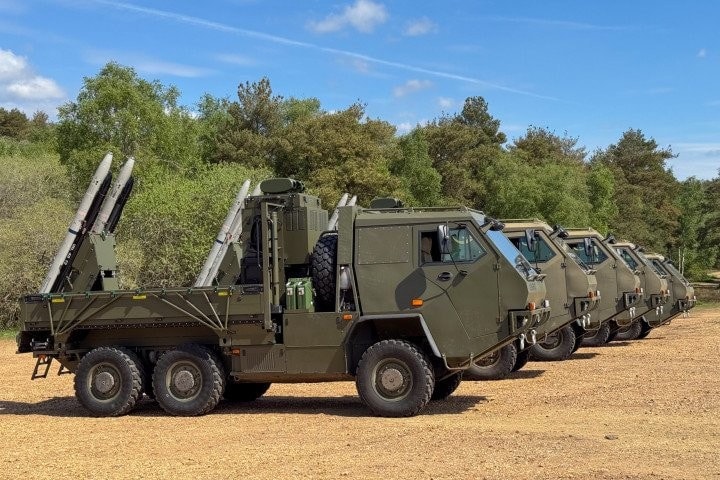
Overview: Aid focuses on anti-UAV defense.
In terms of its components, the £600 million package is described as a combination of air defense capabilities and means for intercepting small airborne targets. The source did not specify the type of air defense system, the type of missiles, or the configuration of automated turrets; therefore, the assessments below are limited to the operational principles and technological roles as published.
Components of the British aid package: air defense systems, missiles, and automated turrets.
The three equipment groups mentioned directly include:
- Air defense system: acts as a sensor, command, and firepower unit to detect and intercept airborne targets within its deployment area.
- Missile: Provides additional interceptor firepower, particularly useful when dealing with fast-flying targets or those operating outside the effective range of rapid-fire weapons.
- Automated turret for shooting down UAVs.: Targeting small, low-flying targets; tactically often used to protect key points and increase the ability to react quickly at close range.
Key points regarding progress
He stated that deliveries are underway and will continue until 2026. This indicates that the support package is designed for sustainability, not just a short-term transition.
Octopus interceptor UAVs: a "large numbers, high pace" approach
British officials noted that production of the new Octopus interceptor UAV would soon begin in the UK, with “thousands” being shipped to Ukraine each month. The source did not provide technical specifications (range, speed, seeker, payload), so only two confirmed implications can be drawn from the statement:
- Emphasize domestic production.To create a relatively stable supply chain for a fast-moving consumable item.
- Emphasize the monthly transition rhythm.: suitable for maintaining interception density against UAV attacks.
Germany: Sidewinder from reserves and budget via the PURL mechanism.
Also at the meeting, German Defense Minister Boris Pistorius announced plans to supply Ukraine with Sidewinder missiles to bolster its air defenses. He said that “next year” Germany would supply “a large number” of Sidewinders from its reserves; these are air-to-air missiles that can be launched from helicopters or fighter jets.
In addition, Germany stated that Berlin has allocated an additional $200 million for Ukraine to purchase essential weapons and ammunition from US stockpiles through the PURL mechanism (Ukraine's Priority Request List).
Summary of published items
| The publisher | Value/Plan | The item mentioned | progress |
|---|---|---|---|
| Older brother | 600 million pounds | Air defense systems, missiles, automated turrets to counter UAVs; production of Octopus interceptor UAVs. | Shipments are in progress, continuing through 2026; Octopus ships “thousands” per month. |
| Virtue | Sidewinder (large quantity from stockpile); an additional $200 million. | Sidewinder missiles; purchasing weapons and ammunition from US stockpiles via PURL. | “Next year” (for Sidewinder); $200 million under the PURL mechanism. |
Technical and tactical perspective: why focus on anti-UAV and infrastructure protection?
In the statement by the British Defence Minister, the focus of protection was on residential areas and energy infrastructure. With such fixed or semi-fixed targets, a typical defense structure would prioritize:
- Layered defenseCombining close-range interception capabilities (automatic turrets, interceptor UAVs) with missile-based air defense capabilities to handle a variety of targets.
- Cost-effectiveness by objectivesUse appropriate means for targeting (especially with large numbers of UAVs) to avoid wasting expensive weapons on cheaper targets.
- Maintain a state of readiness."Fast-moving consumables" such as interceptor UAVs require a stable monthly supply, consistent with information that Octopus is being delivered in large quantities.
The source did not provide details on how command and control, radar, or sensor networks would be integrated. Therefore, it is not yet possible to conclude the level of technical compatibility between the items in the aid package or the specific deployment configuration on the battlefield.
Key points to watch out for in subsequent announcements.
- The identity of the air defense system and the type of missiles included in the £600 million package will be revealed later, if disclosed.
- The deployment method for "automatic turrets" (point defense or mobile) and the coordination plan with other interceptor layers.
- More details about the Octopus interceptor UAV (mission, interception methods) will be available if the UK releases the specifications.


