
The farmer achieved success by raising fish in cages on the Cau Sat dam.
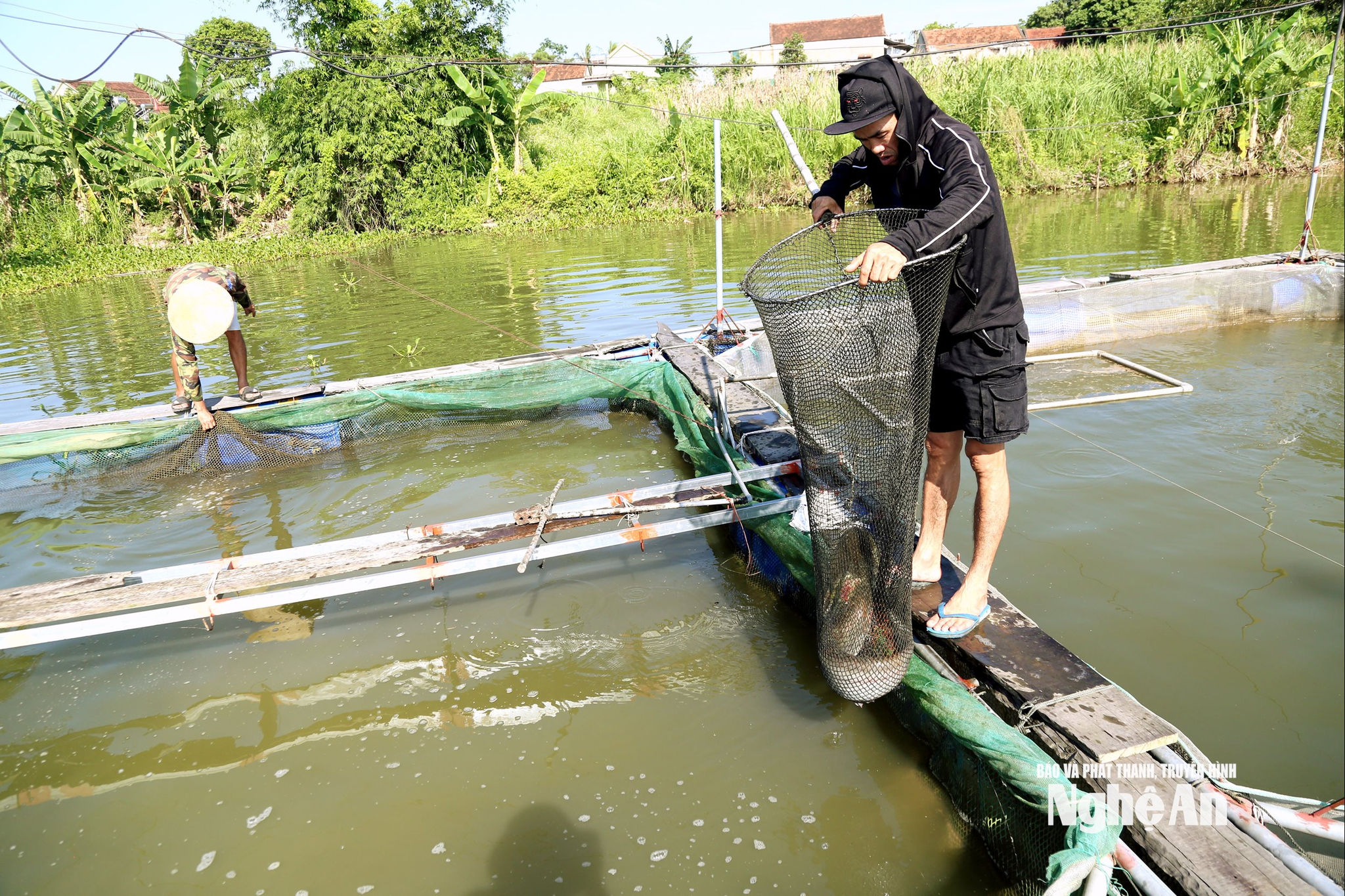
The cage fish farming model on the Cau Sat dam implemented by farmer Thai Ba Ty in Vien Thai hamlet, Tan Phu commune (formerly Tan Ky district) provides a stable annual income. Not only does it contribute to the family's economic development, but the model also opens up promising avenues for sustainable exploitation of lake and dam surface water in mountainous regions.
Exploiting the potential of water resources.
In 2020, after years of contemplating a suitable economic development direction for the local area, Mr. Thai Ba Ty boldly undertook the contract to manage the entire surface area of the Cau Sat dam, covering nearly 7 hectares. The dam's basin has an average depth of about 4 meters, and the water source is stable year-round, with minimal impact from domestic or industrial pollution.
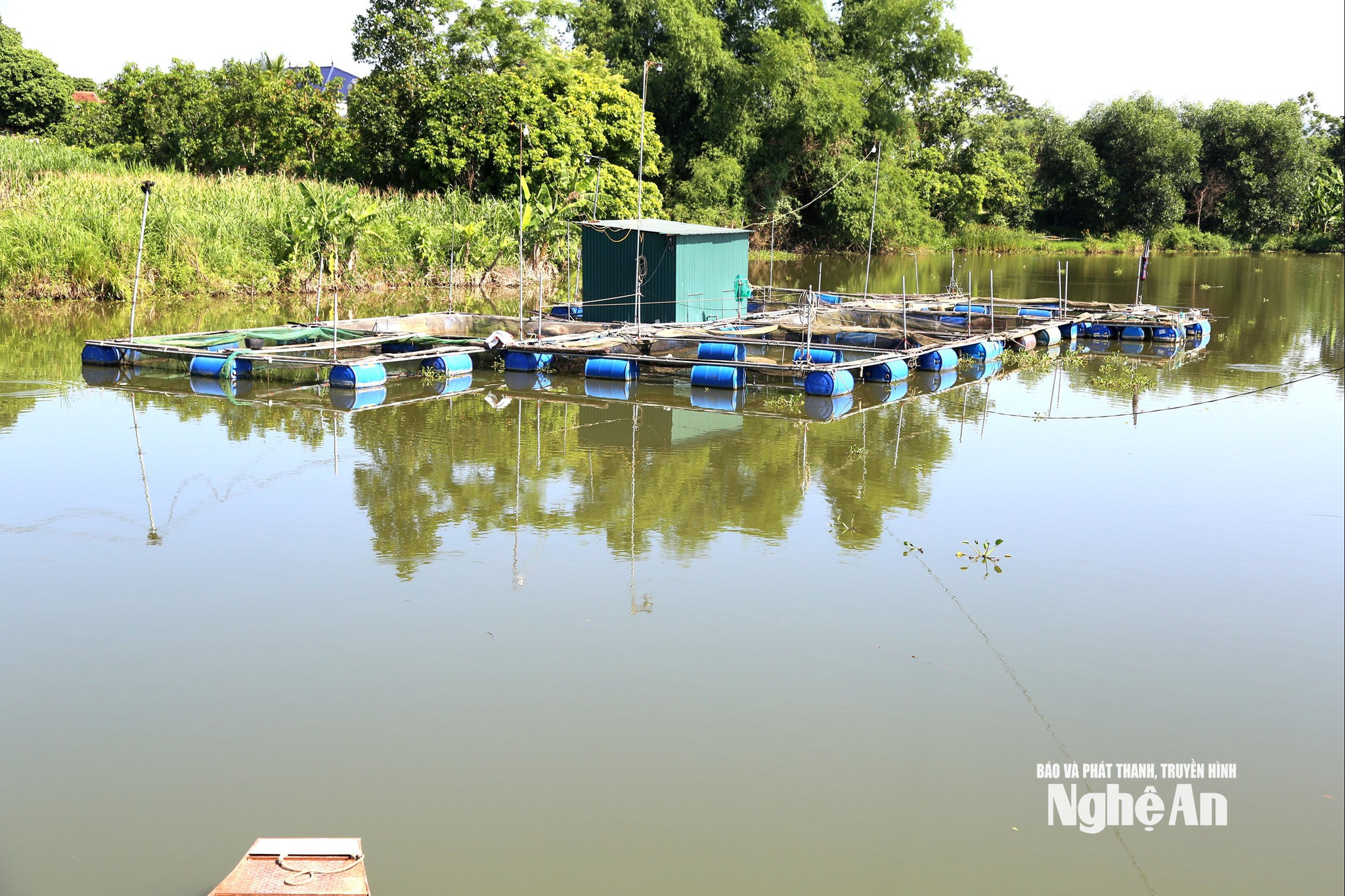
According to Mr. Ty, previously, the reservoir's surface water was mainly exploited spontaneously, with low economic efficiency. Recognizing the great potential of this water surface area, he decided to combine natural fish farming in the reservoir with investing in cage fish farming to increase production value.
"Raising fish in cages takes advantage of the flowing water, the environment is close to nature, the fish grow faster, are less prone to disease, and the meat quality is better than traditional pond farming," Mr. Ty shared.
Immediately after winning the contract, Mr. Ty invested in a system of 9 fish cages, each with a volume of approximately 120 m³ of water. The cages were arranged scientifically, ensuring appropriate spacing for good water circulation and minimizing localized pollution. Notably, his cage fish farming model also received government support of 5 million VND per cage, helping to reduce initial investment costs.
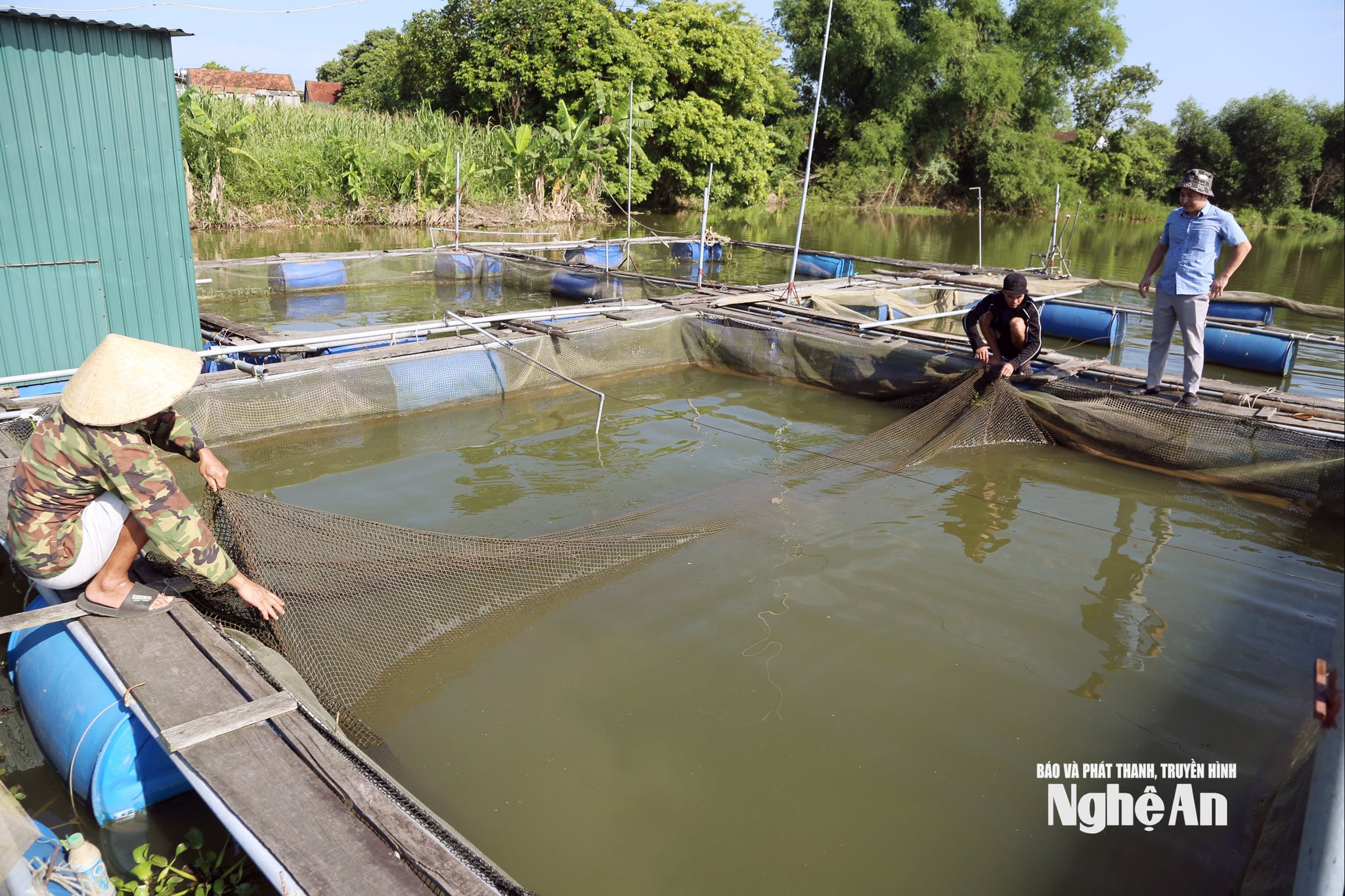
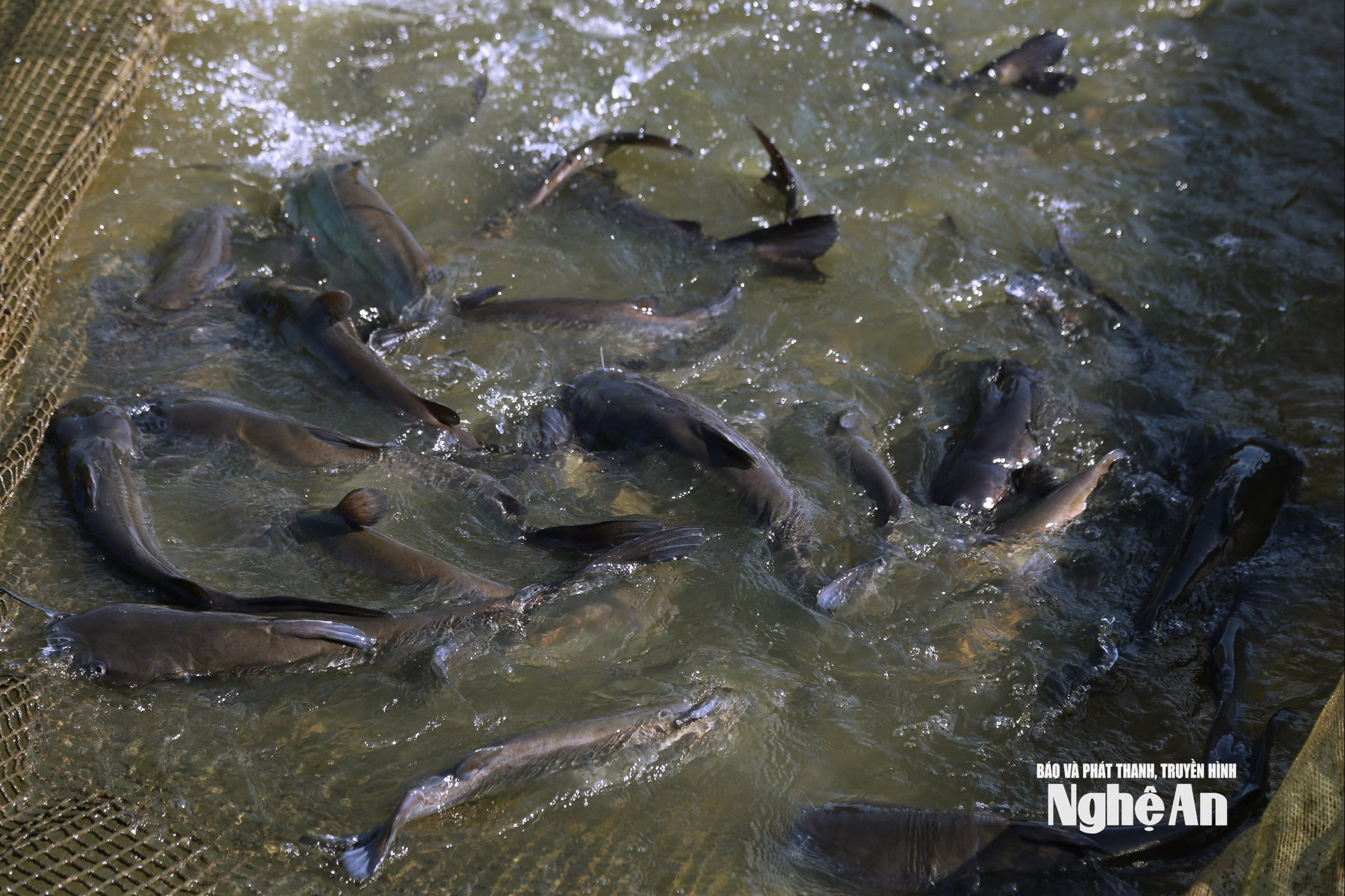
Regarding the species he raises, Mr. Ty chooses fish with high economic value that are suitable for cage farming in lakes and dams, such as snakehead fish, catfish, grass carp, and squarehead tilapia. These are all hardy species that adapt well to deep water environments, have a fast growth rate, and are popular in the market.
Every year, to proactively harvest before the rainy season, he usually buys juvenile fish (3-5 ounces/fish) to raise. This method both shortens the rearing time and reduces the risk of adverse weather conditions at the end of the year.
One of the key factors contributing to the model's success is the food source. Instead of relying entirely on commercial feed, Mr. Ty utilizes various types of trash fish caught by fishermen and anchovies as the main food for the fish raised in the cages.
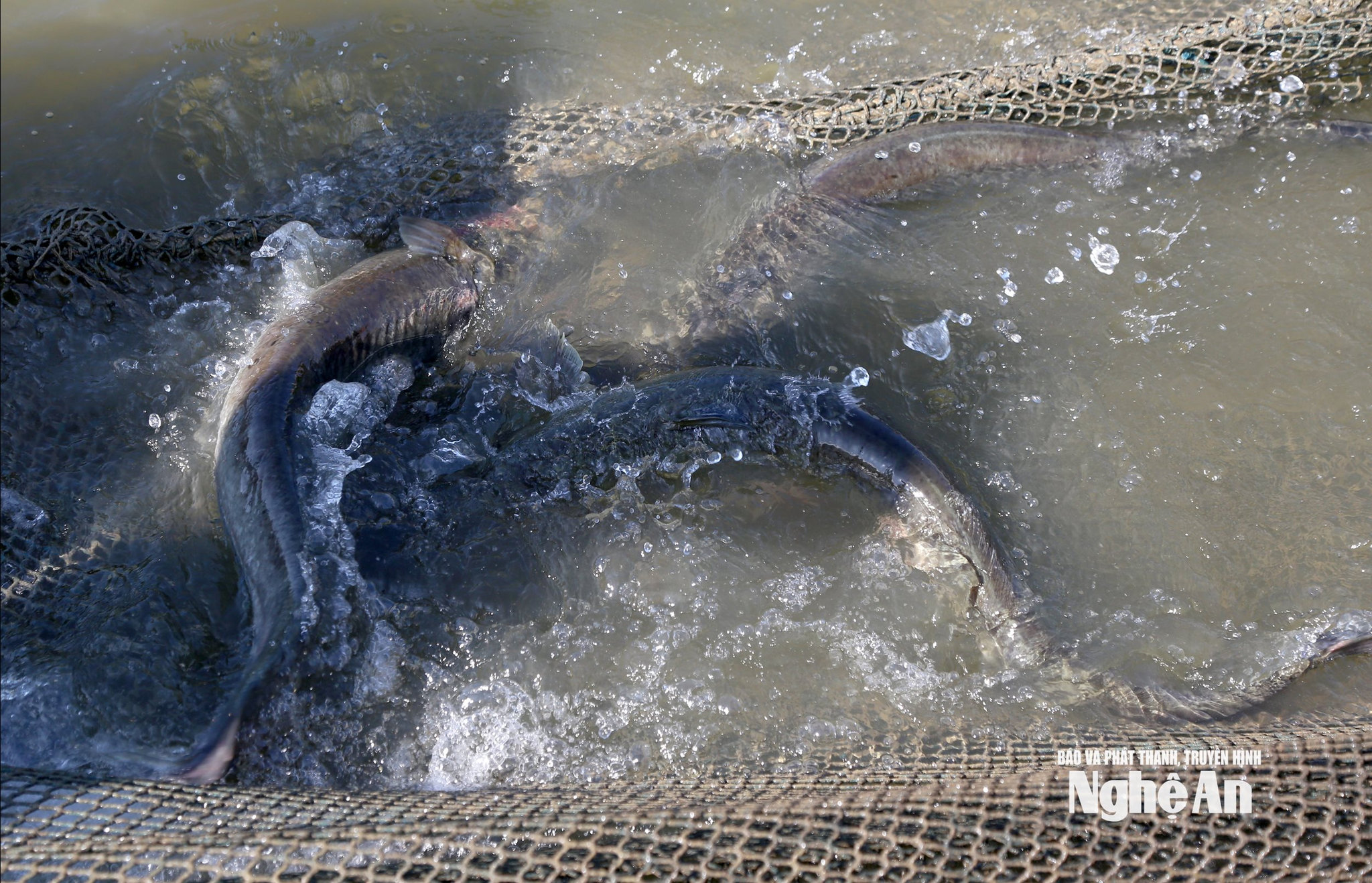
"Because the fish eat natural food, they grow quickly, and their meat is firm and sweet. Consumers really prefer fish raised this way," Mr. Ty said. Thanks to a suitable diet, after about 8-10 months of farming, the fish reach a weight of 3-7 kg/fish, depending on the species.
He also closely monitors the farming process, regularly checking the water environment, cleaning the cages, and promptly detecting and addressing any unfavorable factors. As a result, the fish survival rate is always high, and the occurrence of diseases is minimized.
With 9 fish cages, Mr. Ty sells 12-15 tons of commercial fish annually. In addition, from raising fish in the lake, his family also harvests tons of fish caught from the wild, significantly increasing their income.
Currently, the selling prices of cage-farmed fish are relatively stable: snakehead fish at around 120,000 VND/kg, catfish at 150,000 VND/kg, and grass carp at 100,000 VND/kg. Thanks to the delicious quality and clear origin of the fish, Mr. Ty's cage-farmed fish products are regularly purchased by traders and restaurants inside and outside the district, so he doesn't have to worry about finding buyers.
Besides bringing economic benefits to families, the cage fish farming model on the Cau Sat dam also contributes to the rational and sustainable exploitation of local surface water resources. Combining cage fish farming with natural fish farming helps balance the ecosystem, limit overfishing, and create stable livelihoods for the people.
Mr. Ty believes that to raise fish in cages effectively, farmers need to master the techniques, select quality fingerlings, focus on protecting the water environment, and proactively prevent natural disaster risks. "Raising fish in cages is a long-term business; you can't be impatient. The most important thing is to maintain clean water and healthy fish for sustainability," he shared his experience.
Encourage members to develop new models.
From the model of cage fish farming on the Cau Sat dam, it can be seen that, if farmers know how to take advantage of existing resources, boldly invest, and apply appropriate methods, they can completely become wealthy right on their own land.
Mr. Nguyen Quang Long, Chairman of the Tan Phu Commune Farmers' Association, said that the cage fish farming model on the reservoir's surface implemented by Mr. Thai Ba Ty is one of the exemplary effective production models of local farmers. Over the past time, along with accompanying and supporting members in developing their economy, the Commune Farmers' Association has proactively organized visits and study tours for members to learn from many effective livestock and aquaculture models in other localities. Through this, they have gradually changed production mindsets, encouraged members to boldly apply new models, diversify livestock, increase income, and develop a sustainable economy.
The midland and mountainous regions have a great advantage with their dense network of lakes and irrigation dams, and relatively stable water sources, making them very favorable for aquaculture development. If properly planned, utilizing the surface water of lakes and dams for cage fish farming would not only efficiently exploit available resources but also open up a sustainable production direction for the people.
In fact, in many localities, the government has facilitated people in contracting water surface areas, combining natural fish farming with investment in cage fish farming, thereby bringing clear economic benefits, contributing to increased income and rural economic development.


