
He tested the RF-DEW radio wave weapon against swarm UAVs.
The RapidDestroyer system uses high-energy radio waves to disable multiple UAVs simultaneously, providing an effective defense solution with low operating costs.
The British Army has completed a series of tests of a radio-guided directed energy weapon system (RF-DEW) to assess its ability to detect, track, and neutralize swarms of unmanned aerial vehicles (UAVs). According to the UK Ministry of Defence, the experimental system, called RapidDestroyer, is part of the country's high-tech weapons research program.
The tests were conducted in simulated training grounds simulating a large-scale, low-cost UAV attack scenario. The main objective was to verify RF-DEW's ability to respond quickly to small, low-flying drones that often pose difficulties for traditional radar defense systems.
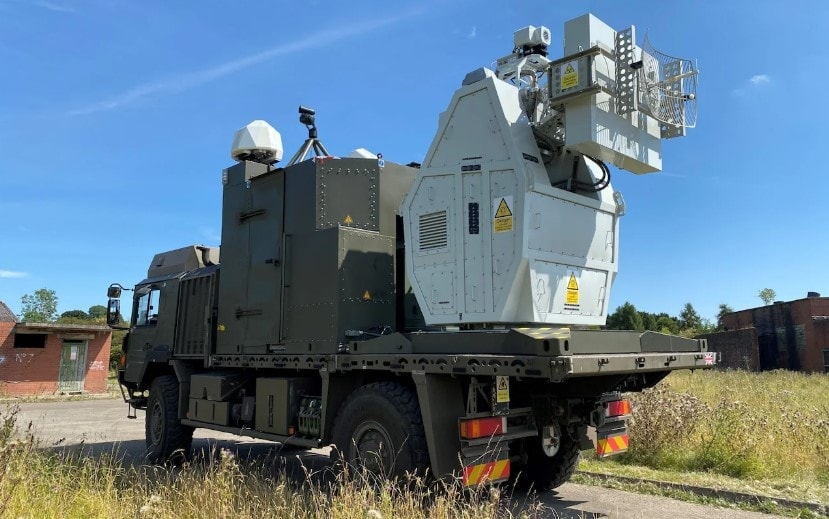
The principle of directed energy warfare.
Unlike traditional missile or artillery-based air defense systems, RF-DEW (Radio Frequency Directed Energy Weapon) uses high-energy radio waves to directly impact electronic components. These radio waves jam or destroy the control, communication, and navigation systems of UAVs, rendering them immediately inoperable.
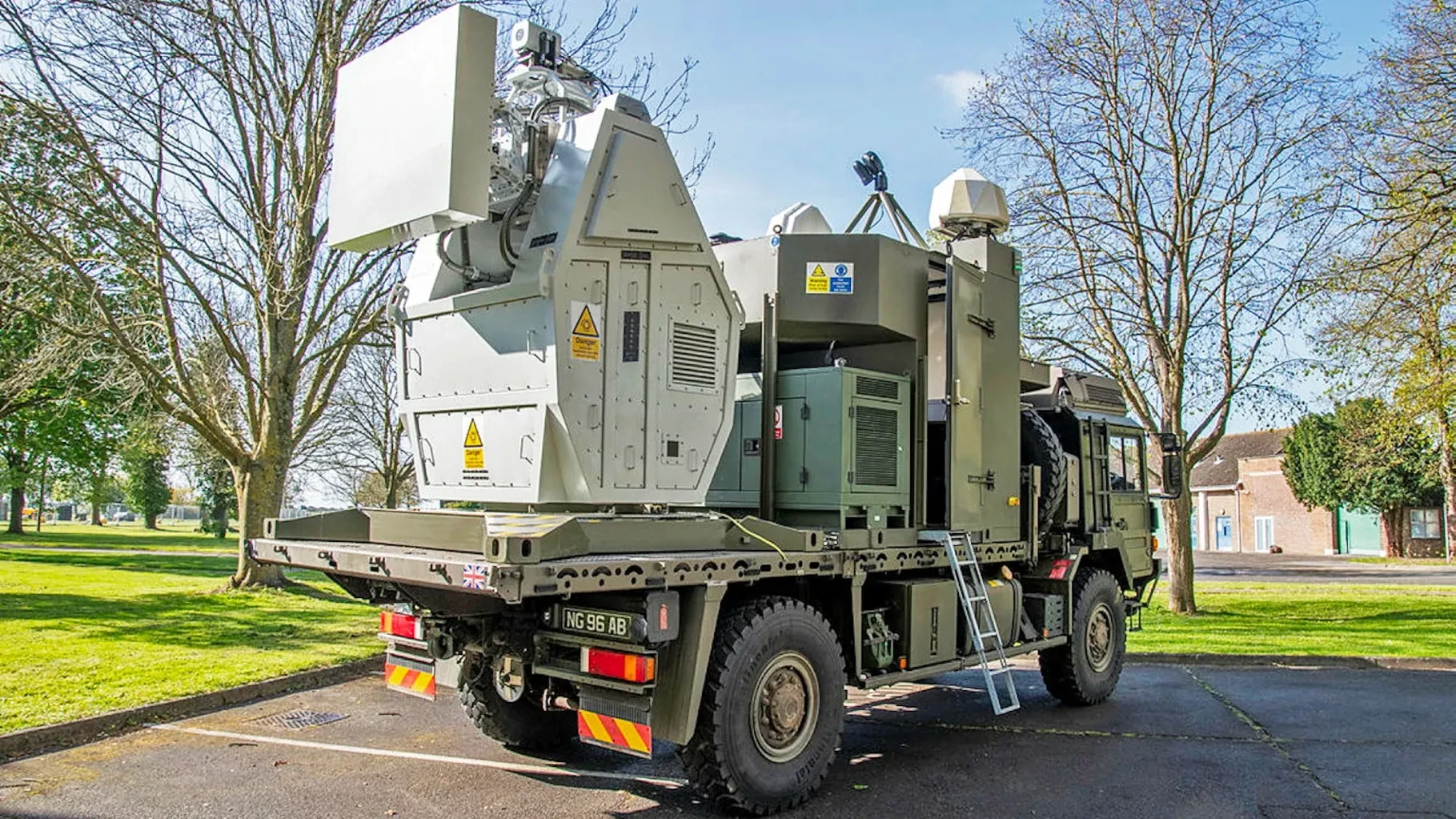
Technically, the RapidDestroyer system comprises a target detection radar, a tracking unit, and a high-power radio transmitter. The key advantage of this technology is its ability to simultaneously engage multiple targets over a wide area, rather than dealing with each drone individually as with traditional fire-based interception methods.
Advantages in response speed and cost
According to military experts, RF-DEW has a near-instantaneous response speed because the energy is transmitted at the speed of light. This significantly shortens reaction time, which is especially important when dealing with UAVs that are highly maneuverable and have unpredictable flight paths.
Beyond its technical effectiveness, RF-DEW also addresses the economic challenges in defense. In the context of the widespread availability of inexpensive UAVs, the use of expensive interceptor missiles creates a significant cost disparity. Radio-wave weapons offer a solution with extremely low cost per shot, allowing for sustained defensive capabilities.
Role in multi-layered defense structures
Despite achieving promising results, RF-DEW still has certain limitations. The effectiveness of radio waves depends on the power of the transmitter, the distance to the target, and environmental factors. Therefore, this system is positioned as an important additional layer in a multi-layered defense structure, coordinating with radar and other electronic warfare measures.
The increased testing of RF-DEW reflects the trend of military modernization, shifting from purely firepower to directed energy warfare. Compared to laser systems that require extremely high precision at a single point, RF-DEW allows for a wider impact, making it more suitable for combat against future swarm attacks.


