
Apple sues OpenAI for theft of trade secrets: A loophole created by former key players.
Apple accuses OpenAI of conducting a sophisticated corporate espionage campaign to steal core hardware technology. The lawsuit exposes security vulnerabilities and audacious poaching tactics targeting the iPhone engineering team.
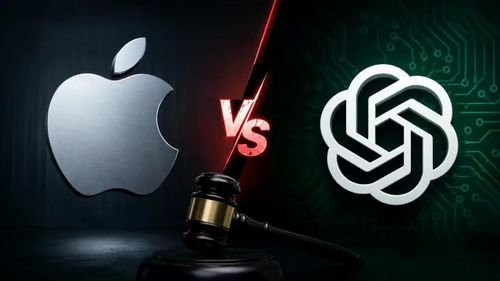
Apple has officially filed a lawsuit against OpenAI in federal court in California, accusing its competitor of conducting a systematic corporate espionage campaign to steal trade secrets related to the design of the iPhone and Apple Watch.
A network of informants from high-ranking personnel.
Apple's lawsuit focuses on two influential former employees: Chang Liu and Tang Yew Tan. Tan, a former Vice President of Product Design for iPhones and Apple Watches with 25 years of experience, currently serves as the Chief Hardware Officer at IO Products – a company later acquired by OpenAI for $6.5 billion.
Apple claims that OpenAI used these individuals to gain unauthorized access to technological secrets. Specifically, after leaving the company, engineer Chang Liu is accused of retaining a company laptop and exploiting a rare authentication vulnerability to access Apple's internal network through the computer of another employee, Yu-Ting "Alyssa" Peng. From there, a wealth of data on unreleased hardware products, specifications, and proprietary presentations were illegally downloaded.
Headhunting tactics and supply chain exploitation.
According to the lawsuit, OpenAI not only recruited but also implemented a systematic data mining process. Currently, more than 400 former Apple employees are working at OpenAI. Apple alleges that Tang Yew Tan instructed potential candidates to bring CAD designs and product prototypes from Apple to OpenAI.
Notably, engineers interviewed at OpenAI were allegedly asked to provide information based on Apple's top-secret project codenames to build trust. OpenAI is also accused of approaching Apple's battery and power supply suppliers, using specialized internal terminology to steal components specifically designed for Apple devices.
| Object/Parameter | Details related to the lawsuit |
|---|---|
| Tang Yew Tan | The former vice president of iPhone design is accused of masterminding a poaching scheme. |
| Chang Liu | The former systems engineer is accused of illegally accessing Apple's internal network. |
| Number of personnel | Over 400 former Apple employees are currently working at OpenAI. |
| Transaction value | OpenAI spent $6.5 billion to acquire Jony Ive's IO Products. |
| Legal entity | The law firm Weil, Gotshal & Manges, LLP represents Apple. |
Consequences for the future of AI technology
OpenAI has completely denied these allegations, stating that they focus solely on technological innovation and are not interested in the secrets of their competitors. However, analysts believe this is a significant lawsuit, as Apple is known for its cautious legal team and only acts when there is solid evidence.
Financial analyst Jim Cramer from CNBC believes that OpenAI is at a significant disadvantage in this legal battle. If Apple wins, the artificial intelligence (AI) features based on the GPT model on iPhones and iPads could face major structural changes or be suspended pending investigation.
The lawsuit is not just a dispute between two companies, but could also reshape standards for trade secret confidentiality and hiring practices in the global technology industry. Apple has now commissioned the leading law firm Weil, Gotshal & Manges to pursue the case to its conclusion.


