
Apple develops technology that allows devices to "see" the world: A new step forward after the iPhone?
Apple is reportedly researching artificial intelligence (AI) technology that can observe and understand the user's surroundings in real time. If realized, this could be the company's next major breakthrough after the iPhone and Apple Watch.
According to Bloomberg tech journalist Mark Gurman, Apple is stepping up research into a new direction based on "Visual Intelligence," a form of AI capable of observing the real world through cameras and understanding the context in which it is happening.
From iPhones to smart wearables
In fact, Apple hinted at this ambition on the iPhone 16 Pro, where users could take a picture of an object and ask questions for the AI to analyze. However, the long-term goal is believed to go far beyond smartphones.
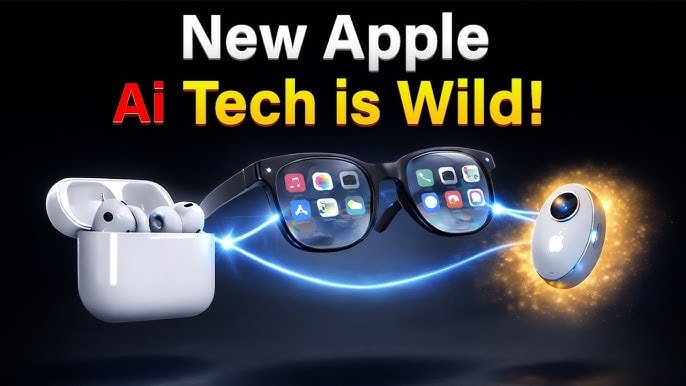
Apple is considering several new forms of wearable devices:
- Upgraded AirPods have the ability to support spatial orientation.
- Smart glasses display directions and read road signs right in front of your eyes.
- The pendant incorporates a camera that acts as a "second pair of eyes".
The core idea is to shift from "image-based search" to real-time assistance. Instead of generic directions like "go straight 150 meters," the device could say, "Turn left after Starbucks." Or, as you walk towards your front door, it could remind you that there's mail in your mailbox.
Ambition to catch up in the AI race
This move is seen as Apple accelerating its AI race, especially as rivals like Google are rapidly developing models like Gemini with multi-media processing capabilities (text, images, audio).
In fact, many companies have experimented with AI wearable devices, but haven't achieved great success. The main reason is that they are trying to completely replace smartphones – a device that is already very familiar and convenient.
Apple's strategy seems different, as instead of eliminating the phone, it adds a layer of technology that helps the device better "understand" the user's surroundings.
Fewer screens, more experiences.
The key takeaway is that this approach could help users become less dependent on screens. Instead of constantly looking down at their phones, information will appear directly within their field of vision or through audio.
Among these, smart glasses are considered the most promising product. If the design is sophisticated enough to look like regular glasses, viewing directions or recognizing acquaintances right at eye level could become a useful everyday experience.
The idea of a pendant with a camera might sound strange, but history shows that Apple has turned skeptical products into trends, much like how the Apple Watch was initially considered "unsuccessful" upon its release.
The new era of personal devices
If the leaks are accurate, Apple is aiming for a future where technology isn't just in your pocket, but truly accompanies users in every moment of their lives.
While questions remain about privacy and the level of intrusiveness of wearable cameras, it's clear that "seeing devices" could be the next big step in the era of personalized AI, where machines not only respond to commands but also proactively understand and assist humans in the real world.


