
Apple will develop a "space iPhone" with a glasses-free 3D display.
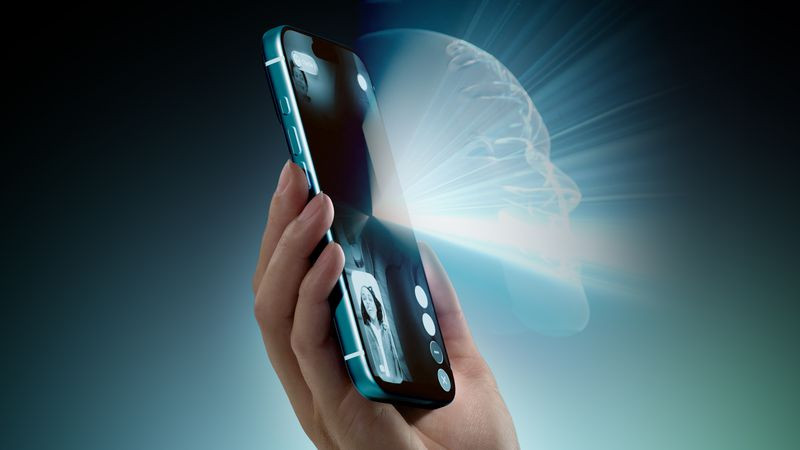
Apple is reportedly testing new 3D display technology from Samsung, paving the way for a "space iPhone" capable of displaying 3D images without the need for special glasses.
This information comes from a leaker with the username Schrödinger on social media platform X. This person claims that Apple is in discussions with its supply chain about a device called the "space iPhone".
According to leaked information, Samsung is currently developing a new type of holographic display codenamed “MH1” or “H1”, which will most likely be used in future Apple devices.
Because Apple doesn't manufacture screens directly, the company has long relied on partners like Samsung Electronics to supply OLED panels for iPhones.
How does the new 3D display technology work?
Unlike previous glasses-free 3D technologies, the new display is said to combine an eye-tracking system with diffraction beam control technology.
This technology uses microscopic structures within the display layer to precisely direct light to the user's eyes, thereby creating a sense of depth without the need for special glasses.
According to leaked information, Samsung may also integrate a nano-structured holographic layer directly into the AMOLED display. This would give 3D images the appearance of "floating" on the phone's glass surface.
Notably, users are said to be able to tilt the device to observe objects from various angles, similar to the experience of rotating around an object in real space.
Samsung has been researching holographic displays for many years.
In fact, Samsung's Advanced Technology Research Institute has been researching holographic technology for thin displays since 2020.
At that time, Samsung published a study in the journal Nature Communications about a backlight control system that expanded the viewing angle for holographic video by up to 30 times compared to traditional designs.
The prototype presented is approximately 1 cm thick and supports 4K resolution holographic video at 30 frames per second, a significant step forward for 3D display technology.
According to leaked information, the H1 display maintains 4K quality in normal mode. The 3D depth effect is only activated when needed, avoiding the loss of sharpness seen in older 3D displays.
The project is currently in its initial research phase, and the commercialization timeline mentioned is around 2030.
Apple has been pursuing 3D display technology for a long time.
Although the "space iPhone" remains just a rumor, Apple has actually been interested in 3D display technology for nearly two decades.
Since 2008, Apple has filed patents for glasses-free, auto-stereoscopic displays capable of tracking user position to display personalized 3D images.
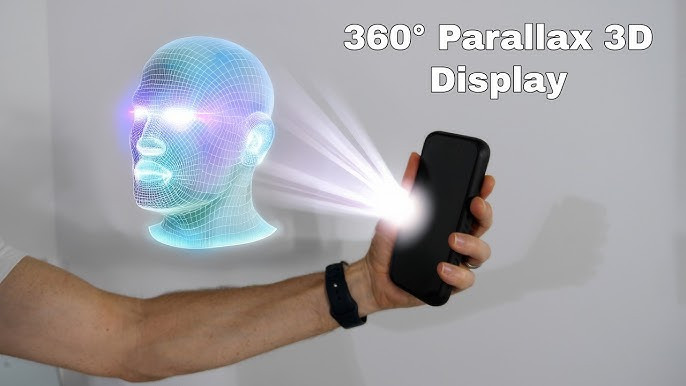
In 2014, the company was granted a patent for an "interactive holographic display" system that uses lasers, sensors, and micro-lenses to create a holographic effect on a touchscreen.
However, Apple has yet to commercialize any 3D-printed iPhone models.
Future iPhones may focus on space computing.
In recent years, Apple has consistently promoted the concept of "space computing" through Apple Vision Pro and space video recording features on new iPhones.
According to analysts, the "space iPhone" could be the next step in Apple's strategy to combine artificial intelligence (AI), augmented reality (AR), and immersive display technology.
If it becomes a reality, this "space iPhone" could offer a range of new experiences such as glasses-free 3D image display, space-based AI interface, space-based video recording and viewing, and more immersive gaming and movie viewing capabilities.
The device is also expected to support advanced eye-tracking technology and on-screen floating app effects.
Although Apple has not confirmed any plans related to a "space iPhone," sources indicate that the race to develop a next-generation smartphone with AI and 3D display technology is heating up in the tech industry.


