
Arsenal face risks due to lack of rotation: Fitness issues ahead of the big clash with Man City.
With Declan Rice and other key players exhausted, Mikel Arteta's cautious approach to squad rotation is becoming a focal point of debate ahead of the crucial stage of the season.
In top-level football, winning the Premier League title after more than two decades of waiting, alongside ambitions in the Champions League, has never been an easy task. However, Arsenal are setting themselves up for a tough challenge as they enter the crucial stage of the season with clear signs of fatigue.
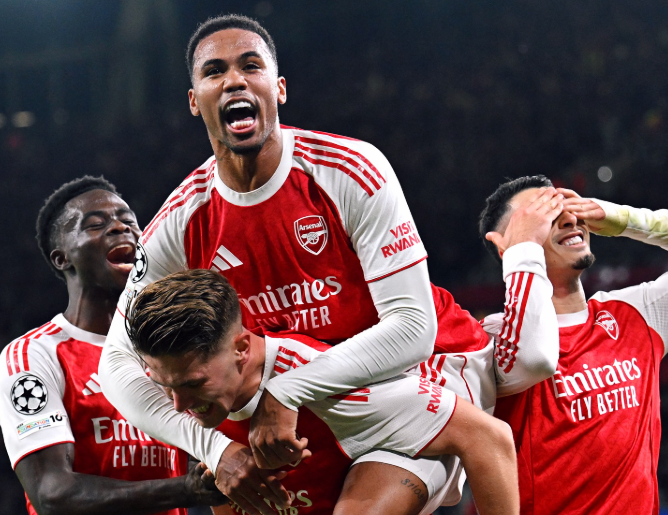
With Declan Rice admitting to burnout and other key players beginning to show signs of fatigue, questions about Mikel Arteta's personnel management have once again become the focus of heated debate.
When the engines start to overload.
Glory often comes at a physical price. Arsenal are going through a challenging period, having won only one of their last five matches in all competitions. This lackluster performance has led to a significant narrowing of the gap at the top of the Premier League table.
Following the intense continental competition, Mikel Arteta spent much of his time emphasizing the immense physical pressure the players are under. He shared that this tournament and the current schedule are exhausting every player.
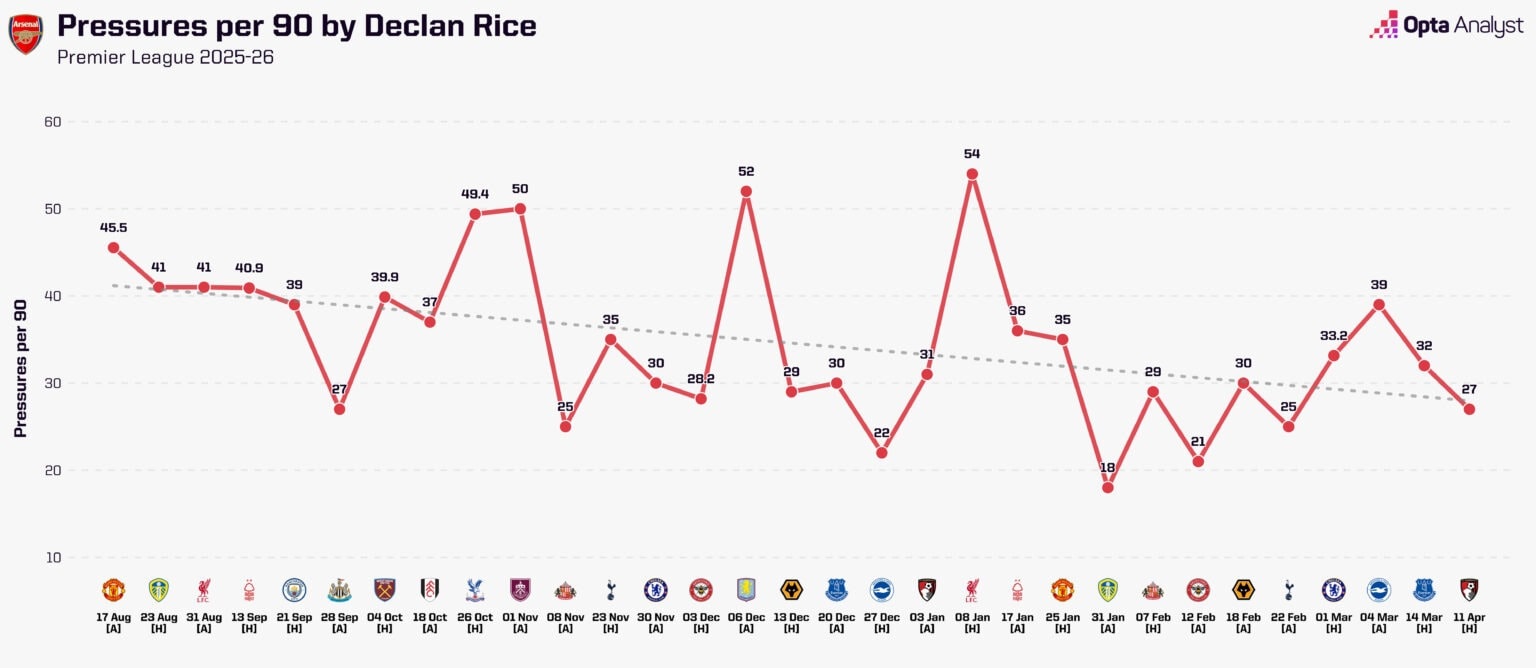
The clearest example is Declan Rice. The English midfielder, considered a symbol of endurance, has reached his limit. Arteta admitted that Rice wasn't even in peak physical condition but still had to play the full 94 minutes at maximum intensity. That's an enormous demand for any athlete.
Alarming figures on overload.
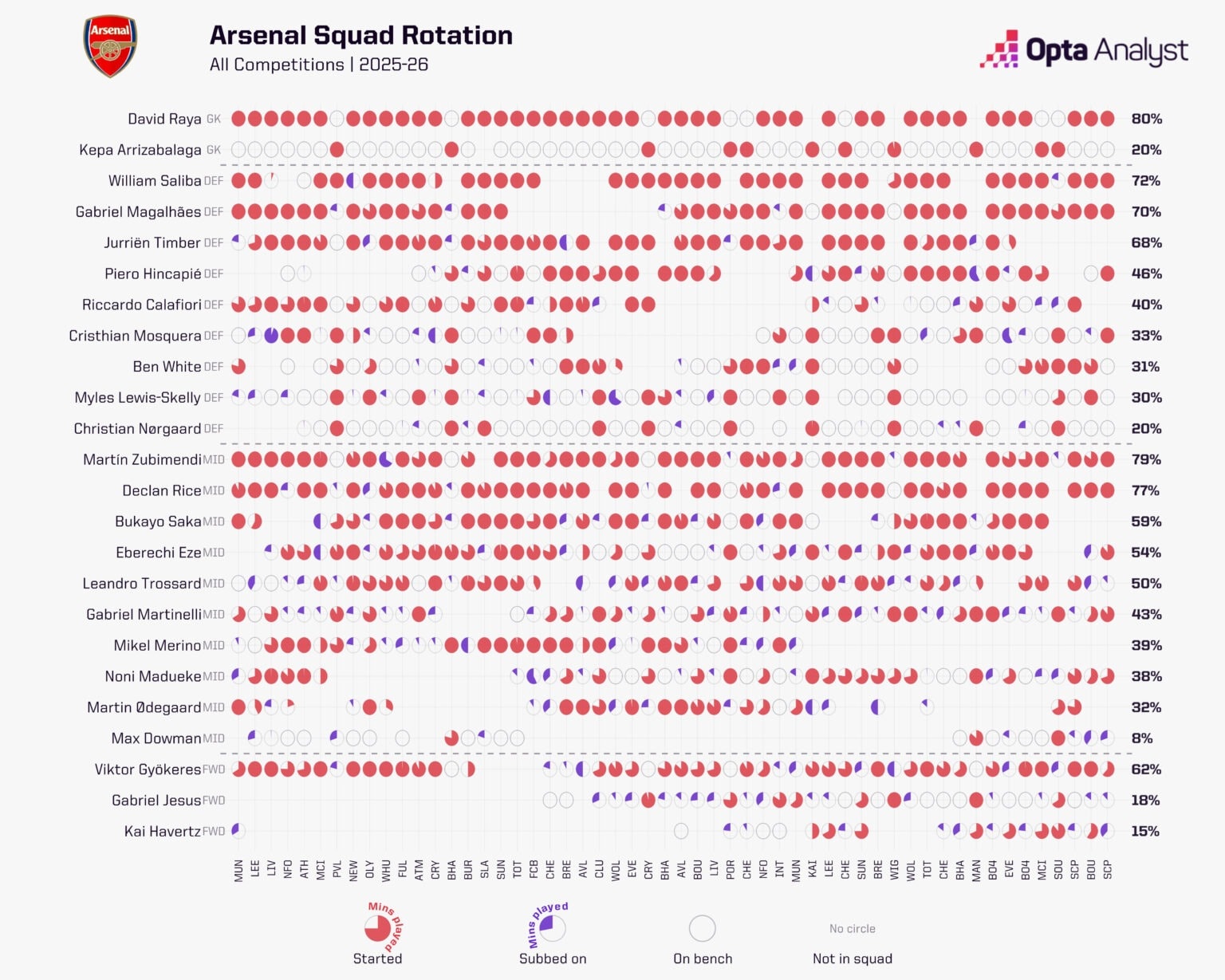
Up to this point, Arsenal is the English team that has played the most matches with 54 games, ahead of both Newcastle (52) and Manchester City (51). However, the pressure is not evenly distributed across the entire squad. Analysis of the playing time chart shows a huge dependence on the core group.
David Raya, Gabriel Magalhaes, and William Saliba almost always have to be on the pitch. Even more worrying is the burden placed on players requiring high-intensity movement, such as Jurrien Timber, Martin Zubimendi, and Declan Rice. Timber's absence due to injury has left a significant void in the Gunners' defense.
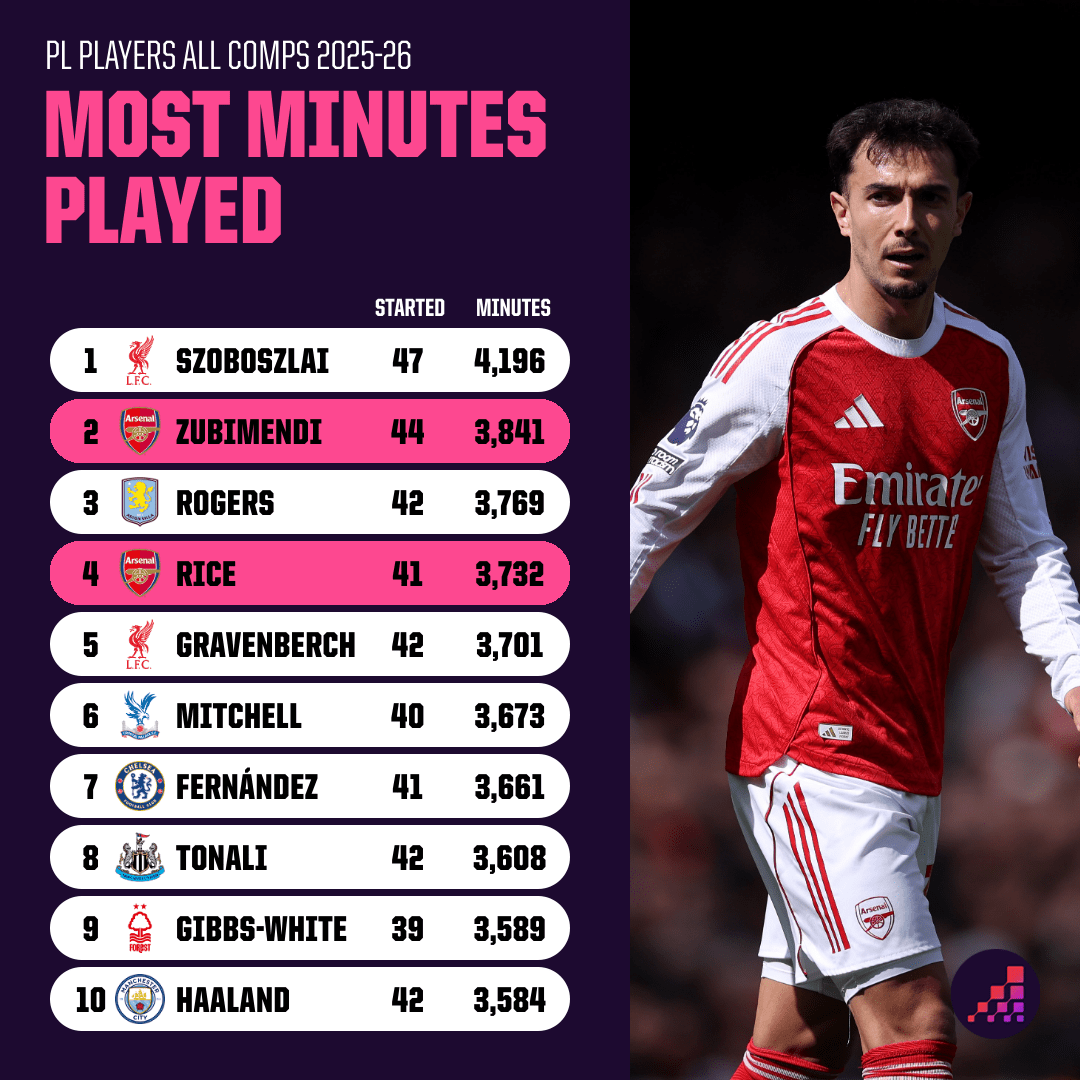
In particular, Zubimendi played for 79% of the available minutes, with Rice close behind. This is the most plausible explanation for the noticeable decline in passing accuracy and pressing intensity of these midfielders in recent rounds.
The paradox of trust on the bench.
A crucial question arises: Can Arteta manage his squad more effectively? Consider the case of Christian Norgaard. Brought in as a quality backup option, the Danish player has only been used 20% of the time, and in the Premier League that figure is a mere 2%.
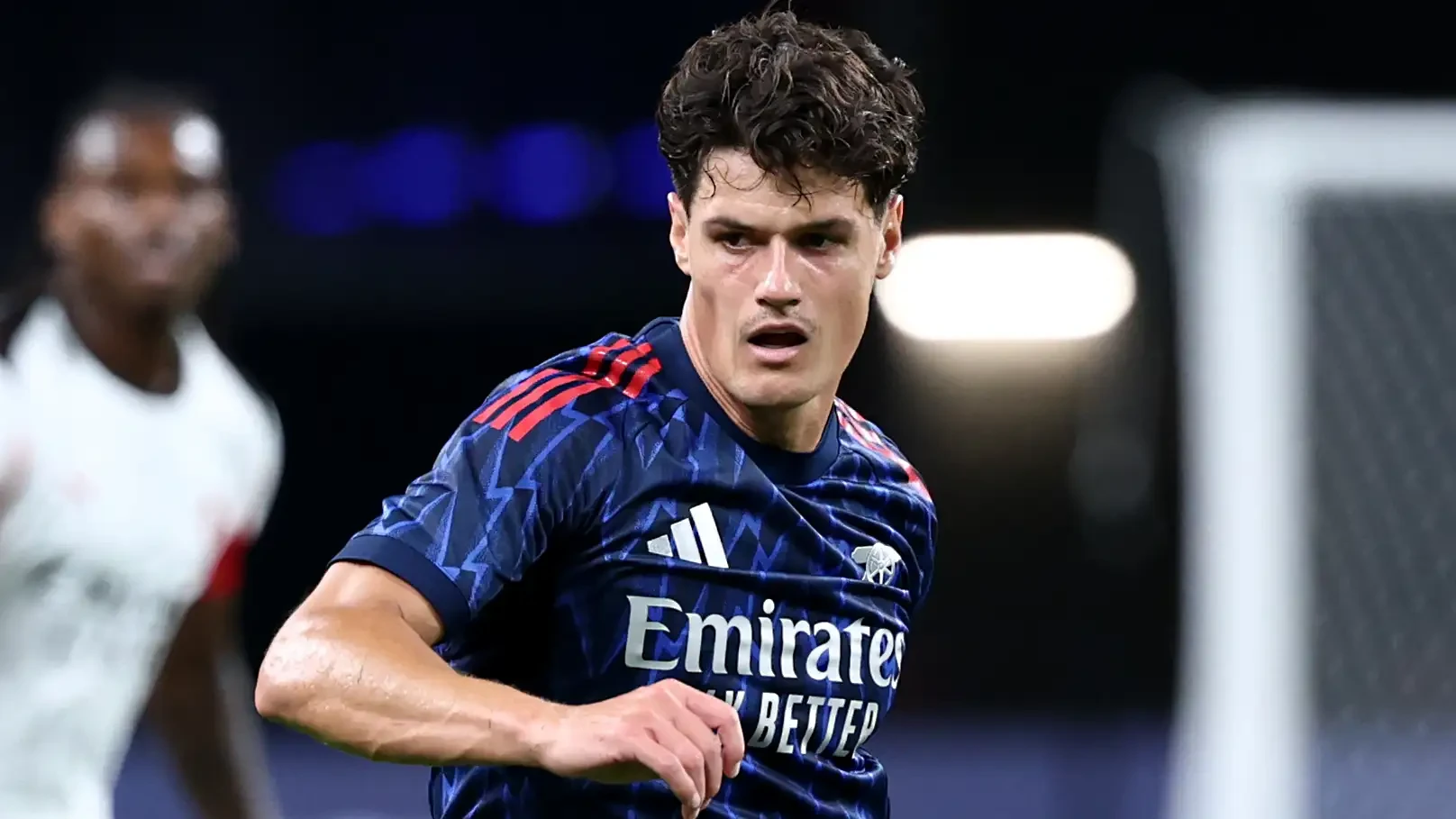
Arteta's limited trust in backup options creates a dangerous cycle: key players become exhausted, while substitutes lack the touch to be ready to replace them. Even in matches where victory is assured, the Spanish strategist rarely makes early substitutions to conserve the energy of his star players.
Championship scenario from Opta Supercomputer
Arsenal face a crucial and pivotal match against Manchester City at the Etihad. This is the moment when the players' character and physical fitness will be tested to the highest degree. Opta's supercomputer has provided some important predictions:
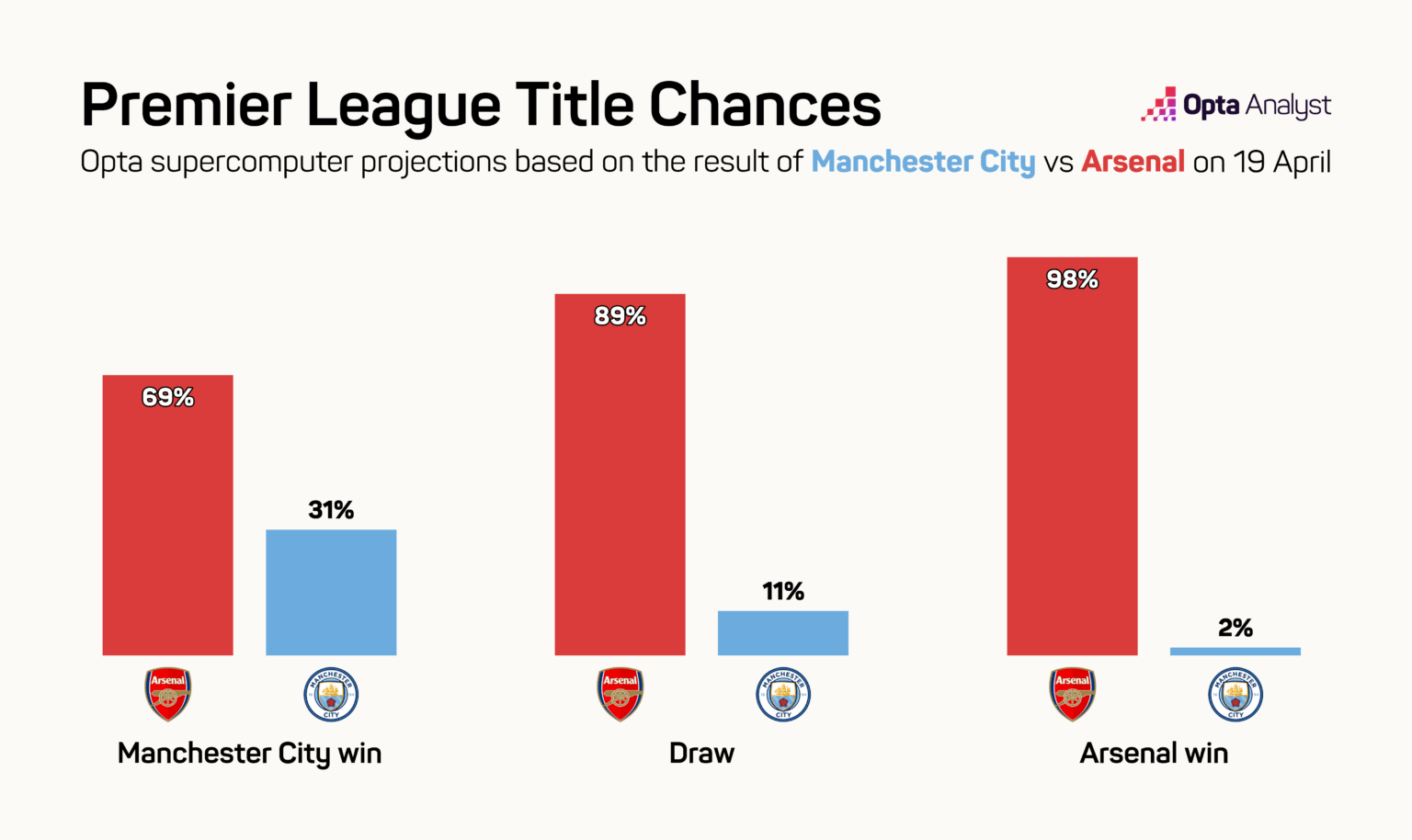
- If Arsenal win:The percentage of people who win the championship has jumped to 98%.
- If it's a draw:The percentage of people who win the championship remains very high, at around 89%.
- If you lose:Arsenal still hold a 69% chance of winning the title thanks to a relatively easy remaining fixture list compared to their rivals.
The Premier League title after 22 years is not for those who give up. If Arsenal can reach the top, it will undoubtedly be the result of extraordinary resilience and courage.
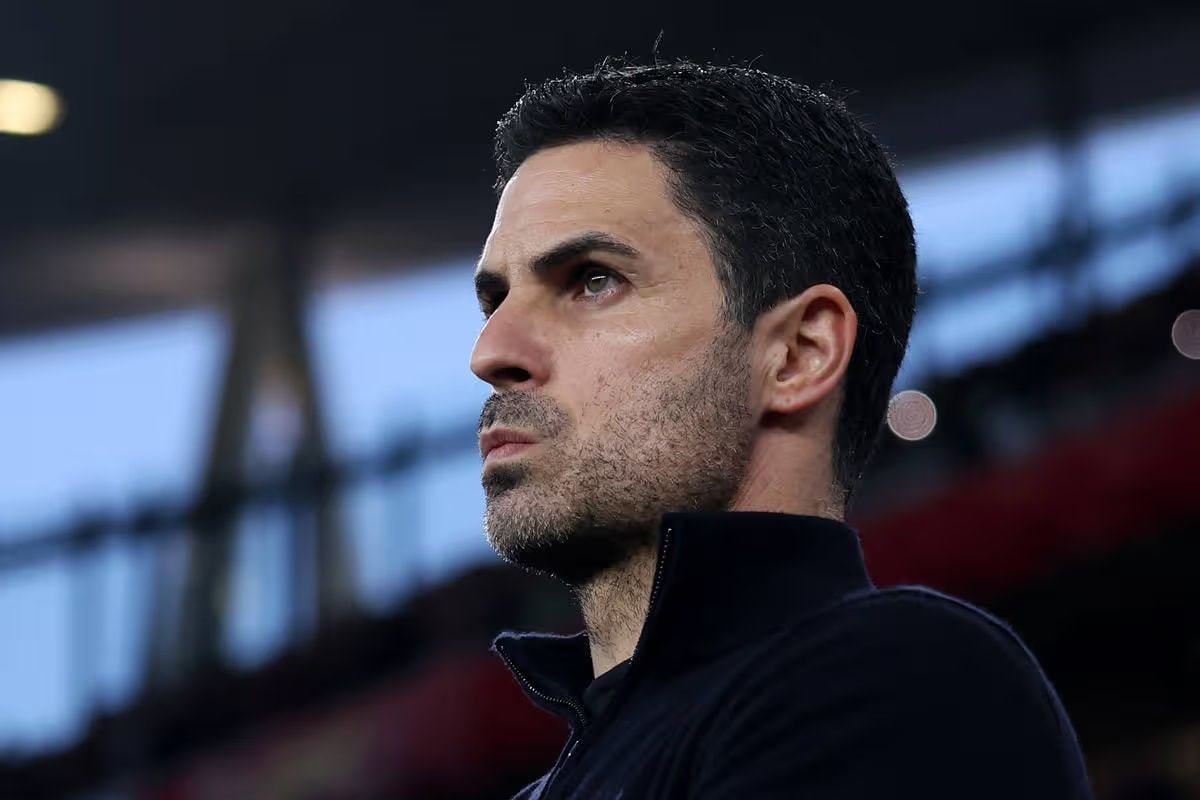
Arteta will have to find a way to unleash the last remaining energy reserves from his players. A hard-fought, arduous, and self-sacrificing victory is the image of the champion Arsenal are aiming for.


