
ASMPA-R: France enhances its airborne nuclear deterrence capabilities.
The French Navy successfully test-fired the ASMPA-R from a Rafale M during Operation Diomede; the missile has a range of 600 km, Mach 3, and maintains its deterrence capability until the ASN4G is expected to launch around 2035.
The French Ministry of Defence announced in mid-November that the Naval Nuclear Air Force (FANU) had successfully test-fired the ASMPA-R medium-range air-to-ground strategic missile from a Rafale M aircraft. This was the second test launch of the ASMPA-R and the first by FANU, just days after the missile entered service with the force. The test was part of Operation Diomede, which simulated a nuclear attack scenario, strengthening France's airborne nuclear deterrence capabilities.
Event Overview
The French Air Force (FANU) coordinated the Charles de Gaulle nuclear-powered carrier strike group and a squadron of Rafale M missiles to conduct the test. According to bulgarianmilitary.com, this operation aligns with France's 2024-2030 nuclear deterrence modernization roadmap. Prior to this, the ASMPA-R had been in service with the French Strategic Air Force (FAS) since 2023; both the French Air Force and Navy use Rafale variants as launch platforms.
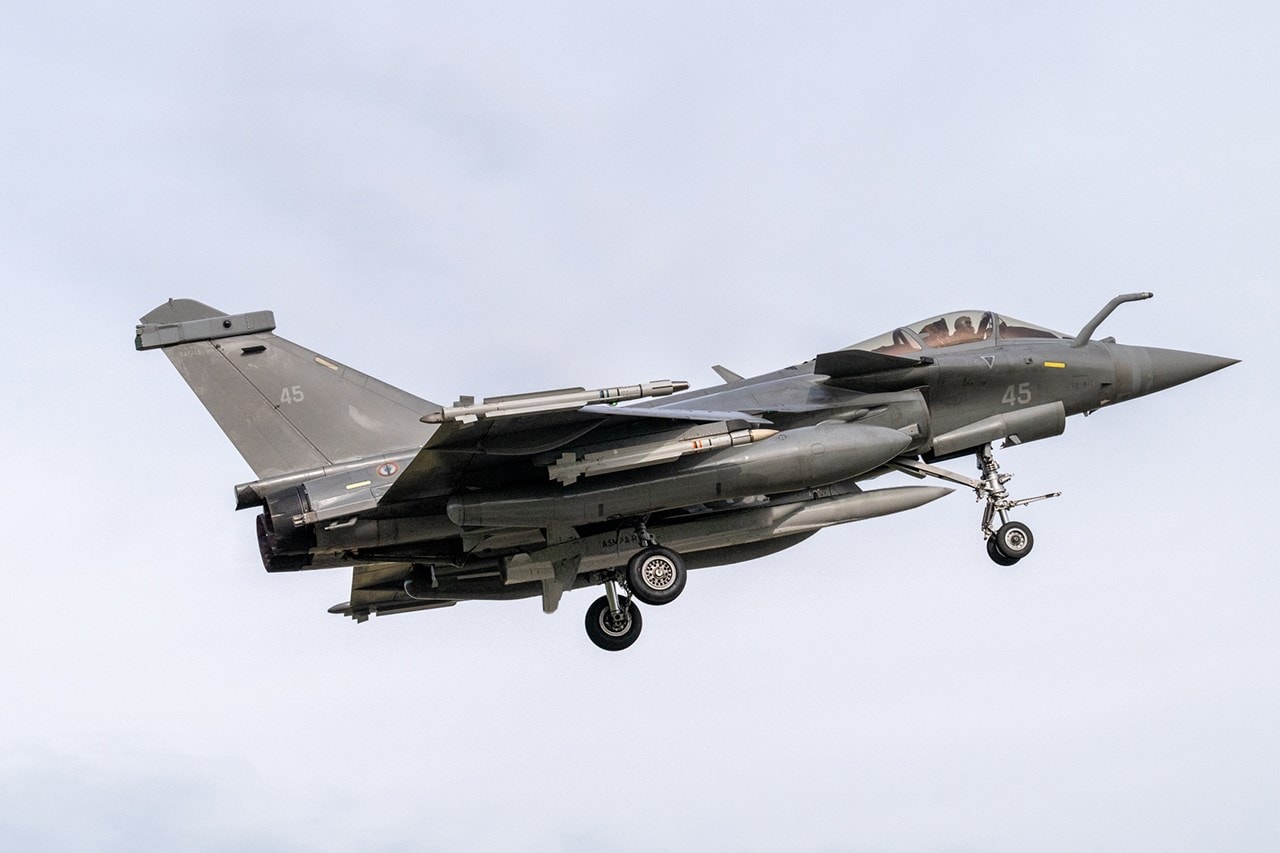
Main technical specifications
- Type: Medium-range air-to-ground strategic missile.
- Developer: MBDA France.
- Propulsion: Straight-flow jet engine, using liquid fuel.
- Maximum speed: Up to Mach 3 (both ASMPA-R and ASMPA-A).
- Range: ASMPA-R approximately 600 km; the earlier version ASMPA-A approximately 500 km.
- Dimensions/Weight (ASMPA-R): Approximately 5.38 m long; approximately 860 kg in weight.
- Flight plan: Fly low to reduce detection and increase penetration of air defenses.
- Warhead: Capable of carrying a nuclear warhead. For ASMPA-A, the reported yield is 100–300 kilotons; for ASMPA-R, there are speculations about a new warhead, but this has not been confirmed.
Summary comparison table
| System | Shooting range | Maximum speed | Warhead carrying capacity | Note |
|---|---|---|---|---|
| ASMPA-R | ~600 km | Mach 3 | Nuclear | Upgraded version, flying low to penetrate air defenses. |
| ASMPA-A | ~500 km | Mach 3 | Nuclear (100–300 kt, according to reports) | Previous version |
Deployment and tactical aspects
The ASMPA-R is integrated into the Rafale, allowing deployment from land bases or aircraft carriers. Its low-altitude flight profile combined with high speed reduces the probability of detection and interception, making it suitable for attack missions targeting strategic targets deep within enemy air defenses. The Diomede Operation test simulated a complete operational sequence for a nuclear mission, from reconnaissance and infiltration to weapon launch and safe withdrawal.
Defense industry and modernization program
MBDA France is responsible for development and production using state-of-the-art processes at multiple facilities across Europe. France's military planning law for 2024-2030 allocates budget to strengthen nuclear deterrence and support weapons R&D. However, official reports note increasing cost pressures and the prevailing economic and geopolitical context impacting resource allocation priorities.
The fact that ASMPA-R has been in service with FAS since 2023 and expanded to FANU helps France unify the launch platform across its entire Rafale force, thereby optimizing technical support, training, and combat readiness.
Role in nuclear theory
According to AeroTime, the ASMPA-R is a priority in the 2024-2030 spending plan and will remain in service until the next-generation air-launched nuclear missile, the ASN4G, is expected to appear around 2035. In France's nuclear doctrine emphasizing independent deterrence, the ASMPA-R serves a "pre-strategic" role – a means of warning before a full-scale strategic response. France currently maintains a nuclear triad consisting of submarine-launched ballistic missiles, air-launched cruise missiles, and land-based systems.
Impact and security context
The successful testing of the ASMPA-R from the Rafale M on an aircraft carrier reassured allies about France's ability to contribute to NATO's collective defense. France is also considering the idea of a "nuclear umbrella" for Europe to bolster regional security. Maintaining the capability to launch from both land and aircraft carriers provides strategic flexibility, expanding access corridors to targets in various scenarios.
Key timeline
- 2023: ASMPA-R was put into service in FAS.
- Mid-November (year mentioned in the information): FANU conducts its first test launch of ASMPA-R; the second launch of the program.
- 2024–2030: Nuclear deterrence modernization phase, maintaining ASMPA-R.
- Around 2035: ASN4G is expected to launch, succeeding ASMPA-R.
With an increased range of approximately 600 km, a speed of Mach 3, and the ability to penetrate air defenses by flying at low altitudes, the ASMPA-R significantly strengthens France's airborne nuclear deterrence, while maintaining continuity of capability until its successor, the ASN4G, appears.


