
B-587 Velikiye Luki: Lada Project 677M submarine nearing delivery.
Admiralty Shipyards is currently commissioning the B-587 Velikiye Luki after numerous delays; if all goes according to plan, the Lada Project 677M submarine will be delivered before the end of 2025.
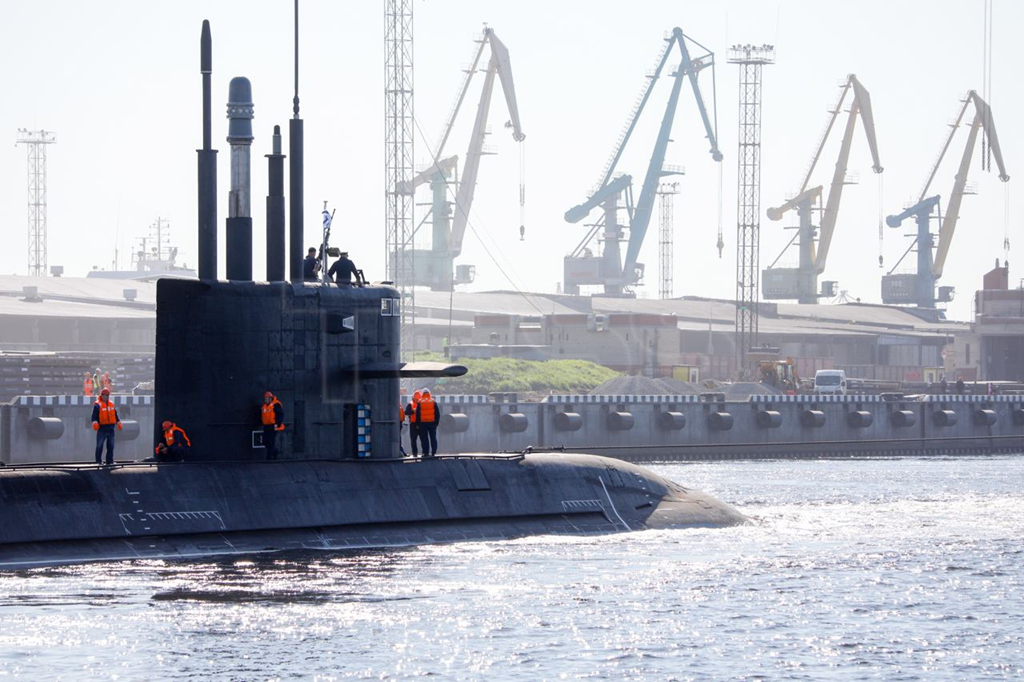
Admiralty Shipyards is pouring all its efforts into the acceptance phase of the B-587 Velikiye Luki, a diesel-electric attack submarine of the Lada class (Project 677M). After nearly two decades and numerous delays, the vessel is considered to be nearing completion and could be delivered before the end of 2025, if the schedule remains on track.
Progress and development milestones
Velikiye Luki has a remarkably complex development history for a modern Russian submarine program. The keel was laid on November 10, 2006, under the name Sevastopol, as part of the Project 677 design. Following prolonged technical problems on the lead vessel, Lada Sankt Peterburg, the program was suspended in 2009.
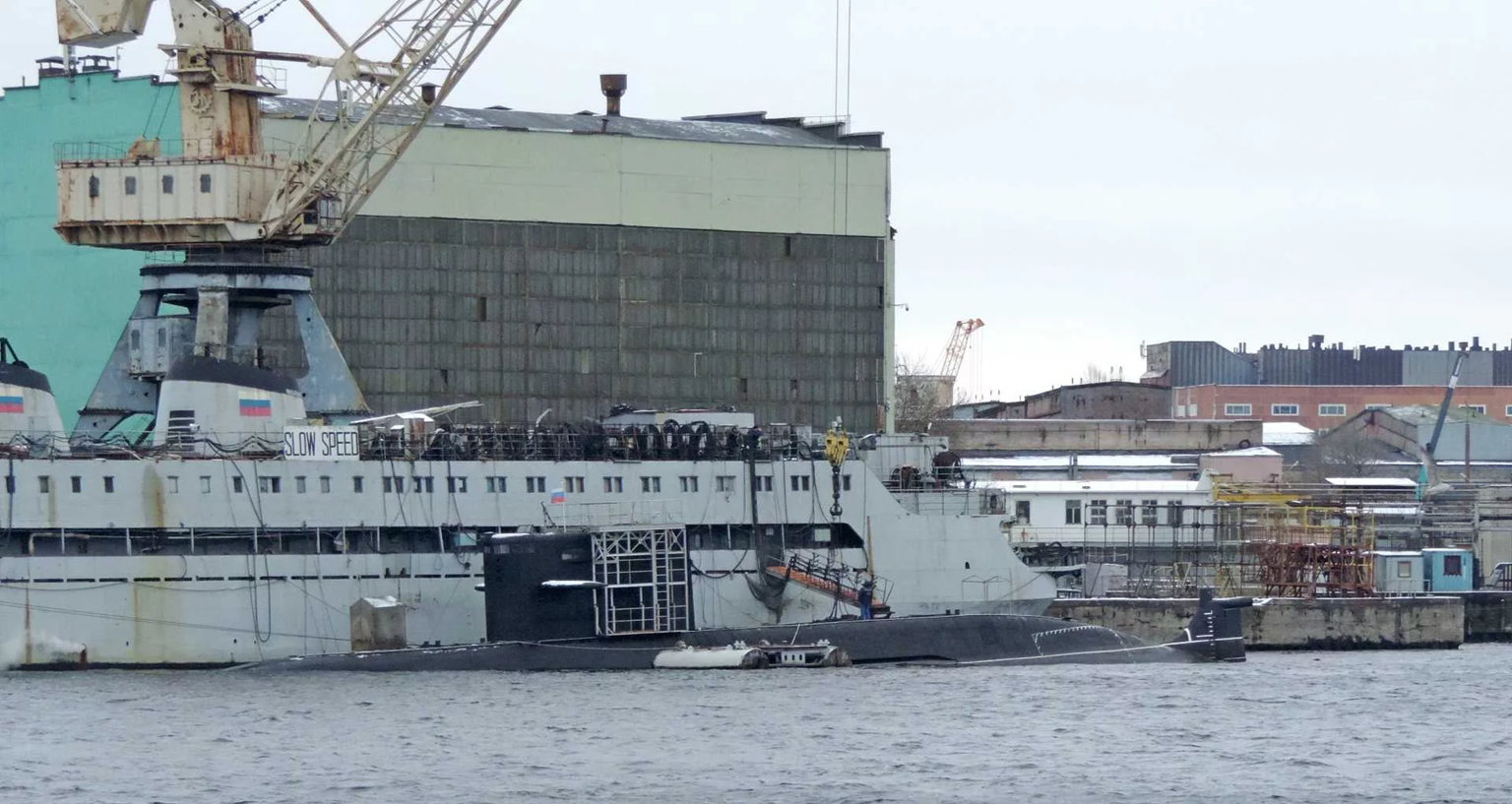
The project restarted in 2014 with an improved Project 677M configuration; in March 2015, the ship was renamed Velikiye Luki. In 2019, progress reached approximately 55%, but the delivery date was further delayed to 2021. The ship was launched on December 23, 2022, appeared in the Russian Navy parade in 2023, and entered sea trials in December 2023.
The testing process is being conducted in the Baltic Sea with high intensity, recording dives to depths of 100 m by the end of 2024 and up to 180 m in July 2024. Each cycle follows a sequence of operation, problem detection, and return to the factory for technical adjustments — an approach that prolongs the process but increases the reliability of the propulsion system, sonar sensors, and emergency response procedures.
Main technical specifications
| Item | Information |
|---|---|
| Design | Project 677M, single-hull, Molniya anti-snar coating |
| Displacement when diving | 2,650 tons |
| Length | 67 m |
| Crew | 35–36 people |
| Motivation | Two 1,250 kW diesel generators; a main electric motor of 4,050–5,500 hp; and two 102 hp auxiliary motors. |
| Power source | 2 large battery packs, 120 cells each |
| Speed | When submerged: approximately 21 knots (38.9 km/h); when surfaced: approximately 10 knots (18.5 km/h) |
| Mission duration | Up to 45 days |
| Combat system | The Lithium complex integrates sensors, guidance, and fire control. |
| Noise reduction | Molniya coating, vibration damping system |
Dynamics and acoustic signature
The compact single-hull design, combined with Molniya coatings and vibration damping measures, significantly reduces noise levels in the Velikiye Luki, making it suitable for shallow, complex marine environments such as the Baltic and Black Seas. While Russia has researched air-independent propulsion (AIP) for future versions, the Velikiye Luki retains the traditional diesel-electric configuration.
Firepower and combat systems
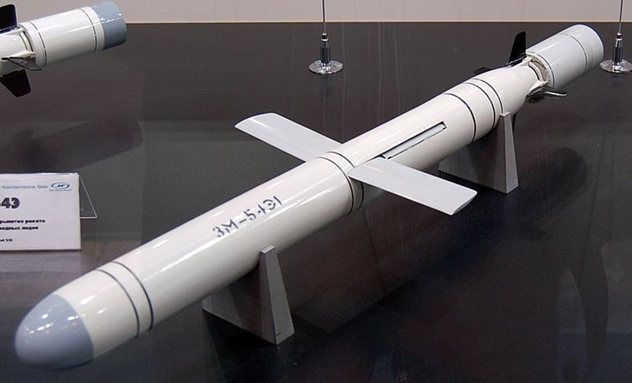
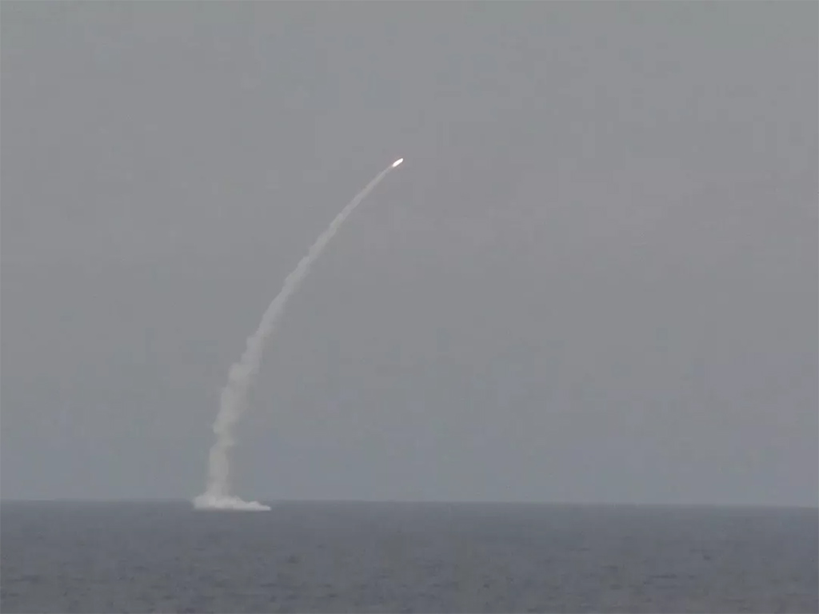
The ship is equipped with six 533 mm torpedo tubes, carrying a maximum of 18 heavy torpedoes or a combination of mines. A notable feature is its ability to launch Kalibr cruise missiles through the tubes, capable of attacking ground targets, surface ships, or submarines at long range; according to the image caption, the range to ground targets can reach up to 2,500 km. When surfaced, the ship can utilize the Igla-1M or Verba man-portable air defense system; some images show a heavy machine gun mounted on the conning tower.
Deployment tactics
Low noise levels and a compact size make the Velikiye Luki suitable for anti-submarine warfare, base protection, maritime patrol, and enhancing deterrence capabilities in coastal combat environments. With a sea endurance of up to 45 days and an integrated Litiy sensor-combat package, the vessel is designed for stealthy operation, optimized for missions in shallow waters such as the Baltic Sea.
Program impact and role for the Baltic Fleet
The completion of Velikiye Luki has significance beyond a single unit: it marks a turning point in the effort to revive Project 677 Lada. After the Sankt Peterburg-class frigates encountered a series of technical problems and were considered for decommissioning rather than upgrading by 2023, the program stalled. Export variants such as Project 677E, Amur 950, or Amur 1650 have not secured major contracts; budgetary difficulties have halted the construction of Vologda and Yaroslavl.
In this context, Velikiye Luki and its sister ship Kronstadt are being prioritized for completion, demonstrating the determination to maintain and modernize the non-nuclear submarine force alongside the Kilo/Varshavyanka class, which has served for a long time. If delivered on schedule, Velikiye Luki will significantly enhance the capabilities of the Baltic Fleet in anti-submarine warfare, base defense, and coastal deterrence missions.


