
Three layers of Russian anti-UAV armor and Denmark increases F-35 firepower.
Russian armored vehicles are applying Mangal, Meduza, and Dikobraz to reduce risks from UAVs; the US approves the sale of 200 AIM-120C-8 missiles worth $730 million to Denmark; Japan says J-15s lock down their fire control radar.
Today's weapons news focuses on three main topics: Russia deploys three additional armor structures—Mangal, Meduza, and Dikobraz—to counter UAVs; the US approves the sale of 200 AIM-120C-8 missiles to Denmark to increase the firepower of F-35A fighter jets; and the Japanese Ministry of Defense reports that Chinese J-15 fighter jets locked their fire control radar onto Japanese aircraft near Okinawa.
Three layers of anti-UAV armor on Russian armored vehicles.
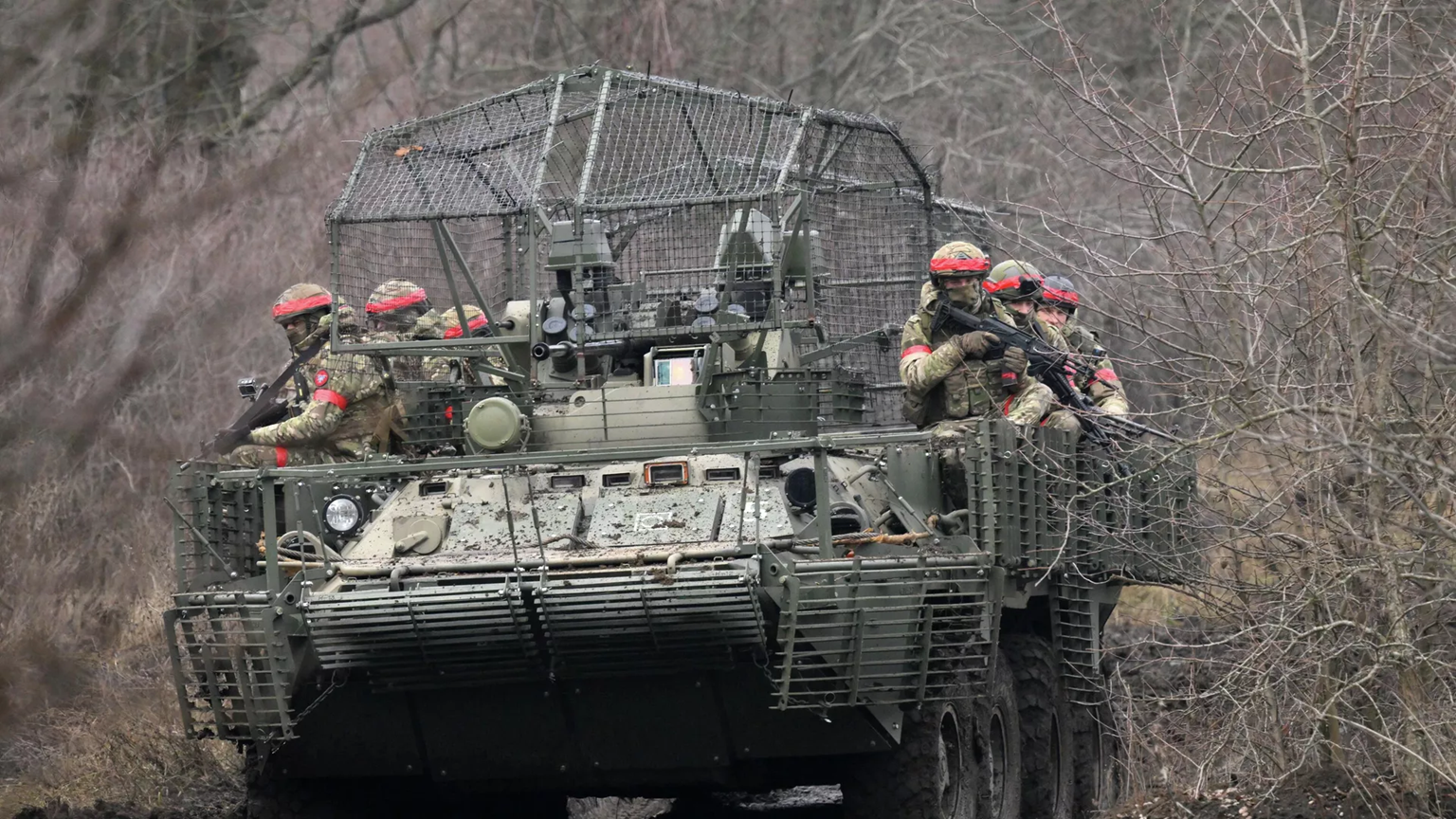
The proliferation of inexpensive reconnaissance and attack drones has left Russian tanks at greater risk of aerial attacks, forcing engineering units to seek simpler, faster-deployable defenses. This need has led to the development of three additional armor structures: Mangal, Meduza, and Dikobraz. While using common metal materials, all three provide mechanical protection to increase survivability against suicide drones.
Mangal (often called "oven") is an improved type of cage armor. A metal frame surrounding the vehicle's hull is fitted with mesh or metal bars that create a gap between the armor and the main armor, deflecting or hindering incoming UAVs and reducing the risk of hitting vulnerable points such as the turret roof. Its advantages include low cost, ease of installation, and compatibility with many tank models.
Based on that principle, Meduza developed a system of densely stretched metal cables on a steel frame surrounding the turret, creating a "soft shield" that disperses force and limits direct UAV approach. This design is particularly effective against small UAVs, which require high precision to penetrate vulnerable points.
Dikobraz ("spiny hedgehog") features cables extending outwards, with frayed ends to increase friction. When a UAV collides with these cables, the risk of propeller breakage or sensor damage increases, leading to a failed attack. Dikobraz is suitable for urban warfare, where the UAV's attack trajectory is difficult to predict.
| Solution | Structure | Main effects | Tactical notes |
|---|---|---|---|
| Mangal | Metal frame + mesh/bars create a gap between the main armor and the main body armor. | Deflect/block UAVs, protect the turret roof. | Low cost, easy to install, compatible with many car models. |
| Meduza | Thick, taut metal cables run across the steel frame surrounding the turret. | A soft shield that disperses force and limits direct contact. | Effective against small UAVs requires high precision. |
| Dikobraz | The cable was sticking out, the ends frayed. | Increased risk of damaging UAV propellers/sensors. | Suitable for urban warfare, with unpredictable attack directions. |
Denmark is increasing its F-35A firepower with the AIM-120C-8.
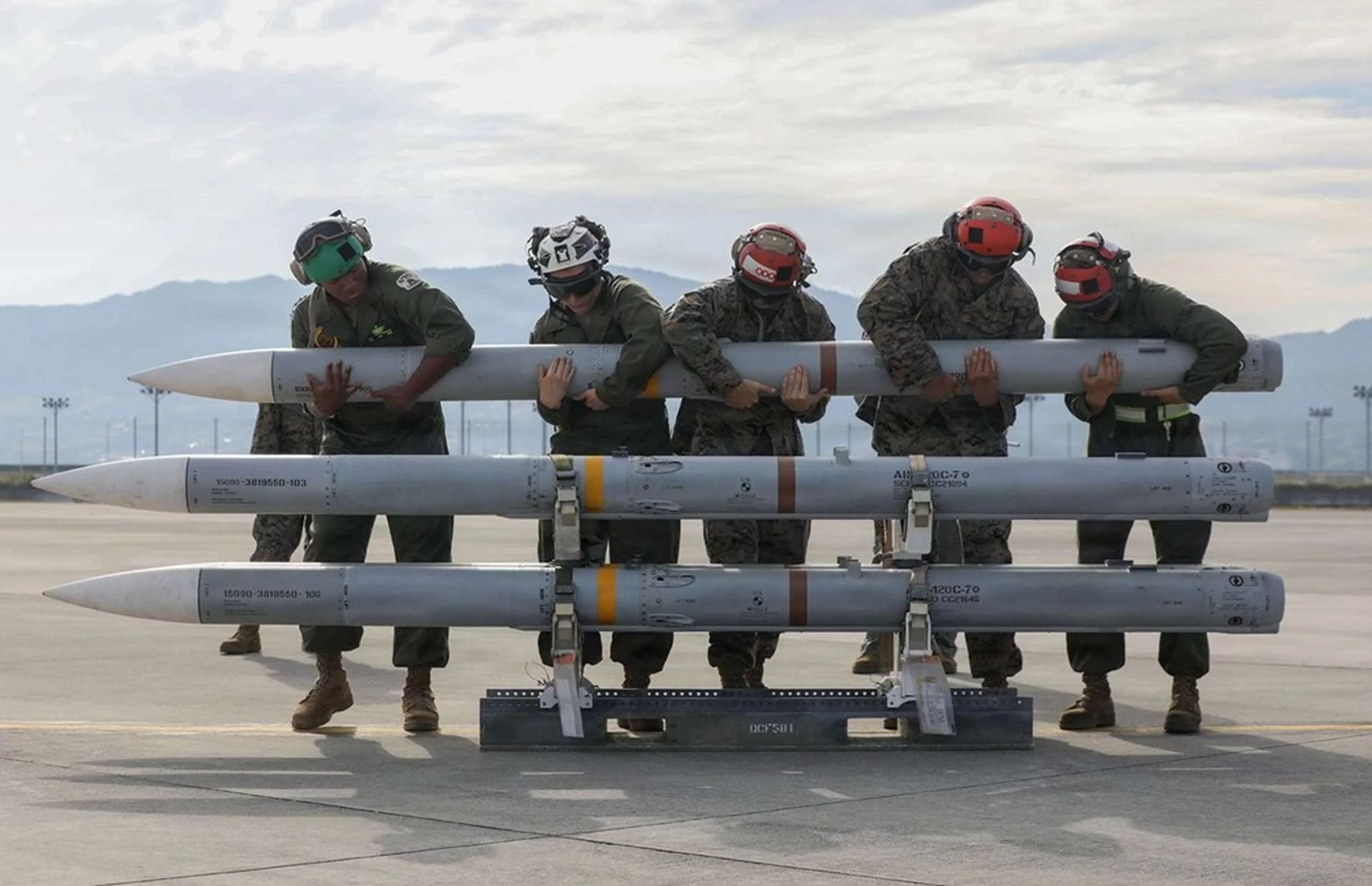
The United States has approved a $730 million arms sale to Denmark, including 200 AIM-120C-8 medium-range air-to-air missiles and a technical assistance package. According to the US Defense Security Cooperation Agency, this is a routine addition to NATO allies, enhancing Denmark's operational capabilities in Nordic airspace.
Denmark is modernizing its air force, with the F-35A at its center. Copenhagen plans to increase its fleet from 27 to 43 aircraft in a 27.4 billion crown investment, focusing on protecting the North Atlantic and the Arctic. The F-35A squadron is already operational, having intercepted a Russian Il-20 reconnaissance aircraft over the Baltic Sea in early 2025, while the F-16 will remain in service until its retirement at the end of the decade.
Technically, the AIM-120C-8 is an upgrade of the AMRAAM, weighing approximately 160 kg, with a 20 kg fragmentation warhead, a range of approximately 90 km, and inertial guidance combined with data link and active radar in the final stage. The highlight of the C-8 variant is the Form, Fit, Function Refresh package: replacing 15 guidance circuit boards, switching the source code to a modern digital architecture, compatibility with the AIM-120D-3, increased processing capabilities, and paving the way for software upgrades in the 2030s.
On the F-35A, the AIM-120C-8 is carried in the weapons bay, maintaining stealth capabilities. Active phased array radar, electro-optical sensors, and integrated data (Link-16) provide launch solutions; the "fire-and-forget" mode allows for the engagement of multiple targets with minimal workload. The AIM-120C-8 is also compatible with the NASAMS ground-based air defense system deployed by Denmark, forming a multi-layered air defense and air combat structure.
| Parameters/Upgrades | Value |
|---|---|
| Quantity in the transaction | 200 AIM-120C-8 missiles |
| Package value | 730 million USD |
| Mass | Approximately 160 kg |
| Explosive device | 20 kg fragments |
| Shooting range | Approximately 90 km |
| Guidance | Inertial + data link + active radar terminal phase |
| C-8 upgrade | Form, Fit, Function Refresh; replaceable 15 circuit boards; digital architecture; compatible with AIM-120D-3 |
| F-35A integration | In-cabin carrying; "fire-and-forget" mode; sensor coordination/data merging. |
| Air defense compatibility | Compatible with NASAMS |
Chinese J-15 fighter jets simulate attacks on Japanese aircraft.
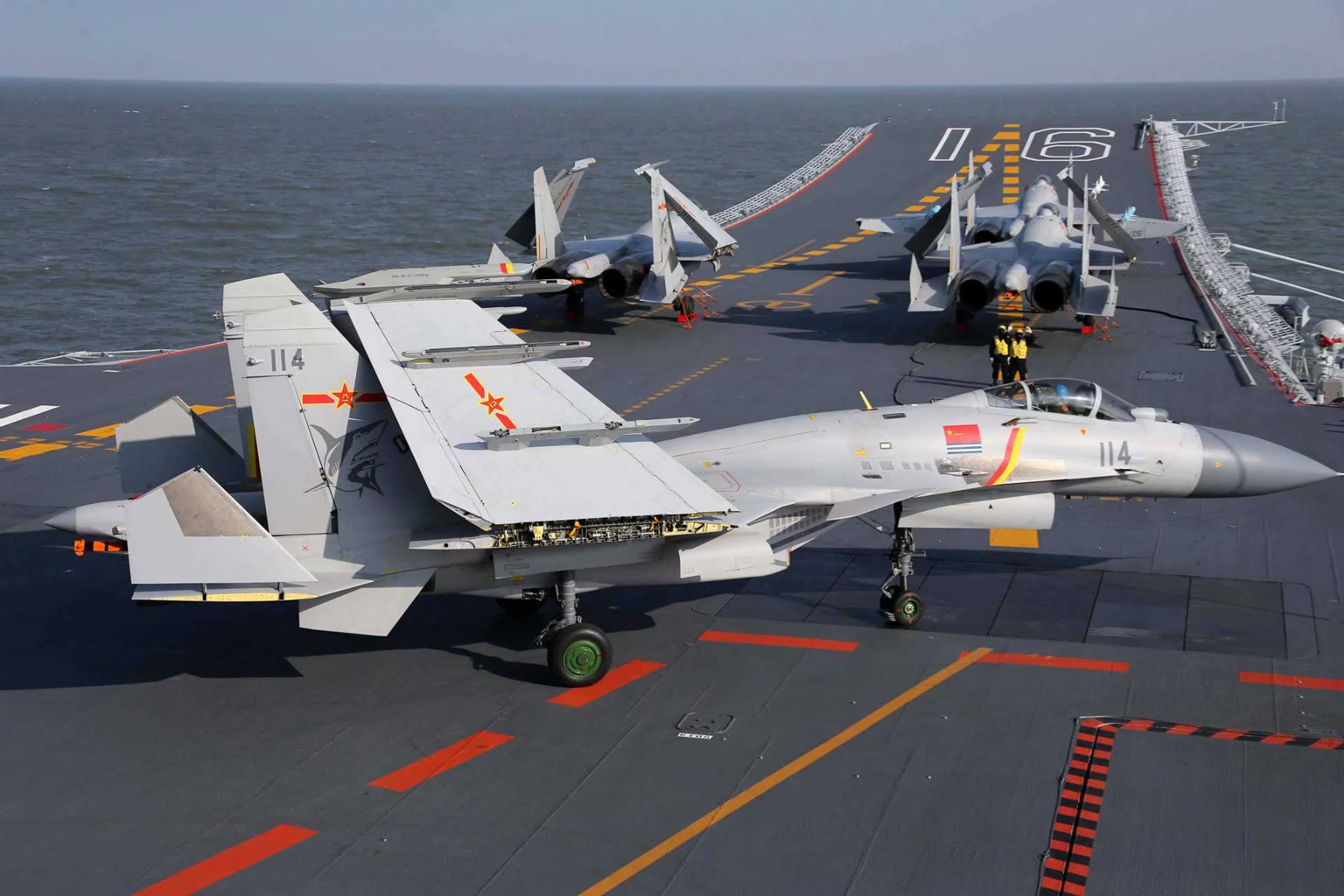
Japan's Defense Ministry said two Chinese Navy J-15 fighter jets, taking off from the aircraft carrier Liaoning, locked their fire control radar onto a Japanese Self-Defense Force aircraft while operating in waters south of Okinawa last week. Japan described the incident as a serious confrontation, reflecting increased military pressure in the East China Sea.
According to the Japanese side, when the Liaoning carrier strike group (with three escort missile destroyers) was conducting training flights, two Japanese reconnaissance aircraft were locked onto by J-15s' fire control radar – the final simulated targeting step in the missile firing cycle, a rare occurrence in peacetime. The radar signals were clearly detected by Japanese early warning aircraft.
Japan deployed F-15J aircraft from Naha base to assess the situation. No missiles were launched, but Tokyo considered the use of fire control radar against a manned target a significant escalation. The J-15, developed on the Su-33 airframe and equipped with Chinese-made radar and missiles such as the PL-12 and PL-15, is the main fighter jet on China's aircraft carriers.
Over the past decade, the Chinese Navy has shifted from coastal defense to offshore deployment, beginning with the Liaoning (2012), Shandong (2019), and Fujian with electromagnetic catapults. China has confirmed it is building a fourth aircraft carrier, which is expected to use nuclear power to increase its operational lifespan.


