
Merkel runs for a fourth term: Will Europe be stable?
Observers believe that German Chancellor Angela Merkel represents stability and reliability in the face of today's turbulent world.
German Chancellor Angela Merkel announced on November 20th her intention to run for a fourth term in next year's election. Merkel's announcement was immediately welcomed by the German public and many countries around the world as a signal of stability for Europe after the shock of the British vote to leave the EU last June.
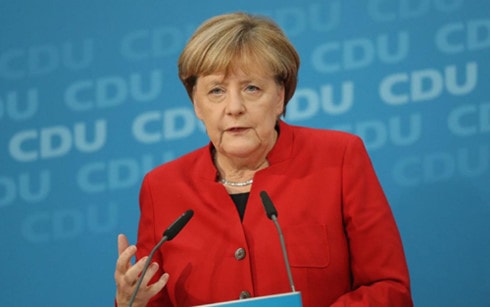 |
| German Chancellor Angela Merkel has announced her intention to run for a fourth term in next year's election. (Photo: Getty) |
Speaking at a press conference on November 20, German Chancellor Merkel said she had spent a long time thinking before making her final decision on whether to run in next year's election, ending months of speculation about her potential re-election.
Merkel emphasized: “My political goal is cooperation to keep the country united, so that we can engage in dialogue. Of course, there will be disagreements and we may have heated arguments. However, arguing does not mean hostility, belittling, or ostracizing others.”
Merkel, 62, has served as German Chancellor since 2005. Germany is a leading economic power in Europe and has no term limits for its leaders. If she were to serve another four-year term, Merkel would have held the position for 16 years, equaling the record previously held by former Chancellor Helmut Kohl.
According to observers, with no powerful successor within the party, Merkel represents stability and reliability in today's turbulent world.
Taking charge of Europe's largest economy, Chancellor Merkel steered Germany through the financial crisis. Germany's prestige also increased internationally, thanks to its efforts in resolving conflicts such as the Ukraine war.
With Trump's victory in the US election and the rise of right-wing parties in several European countries, commentators believe that Chancellor Merkel will be a strong bulwark for Western liberal values. German public opinion also welcomed Chancellor Merkel's decision.
The results of a survey published by the Bild am Sonntag newspaper on November 20th show that more than half of German voters (55%) want Merkel to continue as Chancellor, up from 42% in August.
Nevertheless, observers believe that the German Chancellor will face her biggest test yet, as her decision last year to open Germany's borders to around 900,000 migrants, mostly from conflict zones in the Middle East, angered many voters at home.
At the same time, Merkel will also have to conduct an election campaign against a backdrop of a fragmented political landscape, with the anti-migration Alternative for Germany (AfD) party gaining significant support.
Merkel acknowledged that the election would be more difficult due to the risks of social divisions and the possibility of left-wing parties forming a coalition.
US President Barack Obama also stated that if Merkel continues for another term, she will face significant burdens. Even if she wins the upcoming election, Chancellor Merkel's biggest domestic challenge will be managing the integration of refugees into a divided society, as well as ensuring that Europe's most powerful economy is on the right track.
According to VOV
| RELATED NEWS |
|---|


