
Bác Hồ với Cách mạng Tháng Tám
(Baonghean.vn) - The victory of the August Revolution and the birth of the Democratic Republic of Vietnam is one of the greatest and most outstanding victories of the Vietnamese revolution in the 20th century, a glorious milestone in the thousand-year history of the Vietnamese nation. This victory is closely linked to the immense contributions of President Ho Chi Minh.
One day in early February 1941, after 30 years of wandering in search of a way to save the country, Uncle Ho returned to his homeland. Amidst the frantic pursuit by the French and Japanese colonialists and fascists, Uncle Ho had to take refuge, sometimes in a cave, sometimes in a mountain crevice in Pac Bo cave, Cao Bang province. There, he began the task of "lighting a fire," as one of his poems says: "When the fire flickers, how many difficulties there are?...".
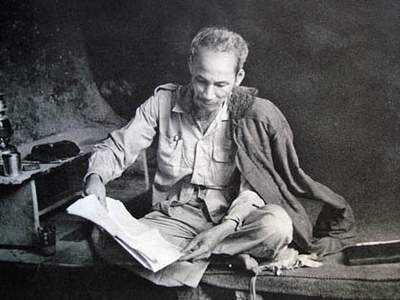 | 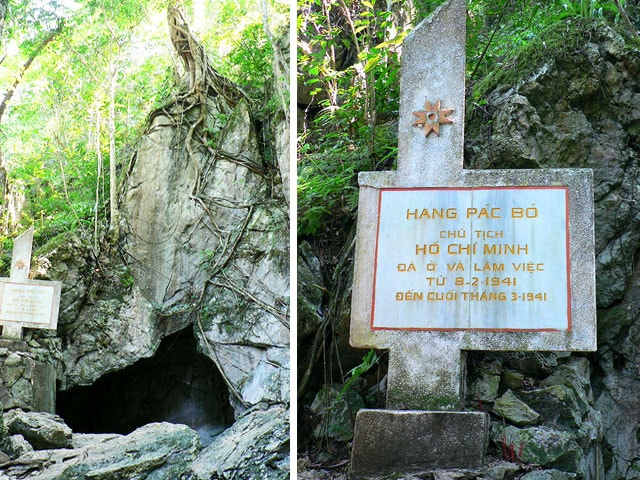 |
| Uncle Ho reading a newspaper in Pac Bo cave (Cao Bang). |
But amidst those hardships and difficulties, the brilliance of the glorious Party's sons and daughters, led by our beloved Uncle Ho, yielded brilliant judgments and assessments. Uncle Ho and the Central Committee predicted that World War II would end, the Soviet Union would win, and "this time many socialist countries would emerge, and thus revolutions in many countries would succeed." They also predicted, "At this time, if we cannot solve the problem of national liberation, if we cannot demand independence and freedom for the entire nation, then not only will the entire nation continue to suffer the fate of beasts of burden, but the rights of any segment or class will never be reclaimed, even after thousands of years."
Meanwhile, in early March 1945, there were signs that Japan would oust France. The Party and President Ho Chi Minh asked, "If that happens, what will our Party do?" Following the spirit of the previous 8th Central Committee Conference, President Ho Chi Minh and the Central Committee held an expanded meeting on March 9, 1945. This was also the moment when the Japanese coup against the French erupted. The revolution was entering its "pre-insurrection" phase.
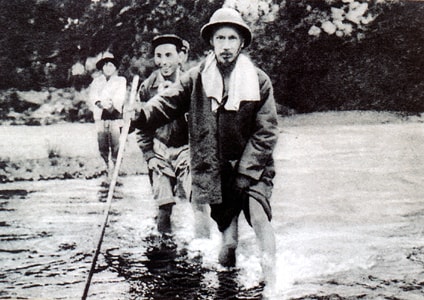 |
| President Ho Chi Minh waded through streams on his work trip. |
On March 12, 1945, our Party issued a directive: "The Japanese and French are fighting each other, and this is our course of action." Like lightning, the directive spread. Political and armed struggles, including partial uprisings, erupted vigorously in many localities, especially in the North. At this time, a severe famine was occurring, which was one of the reasons why our Party advocated "destroying enemy granaries to alleviate the famine." The movement flared up, and this large-scale economic struggle ignited the fight against the Japanese, dismantled the enemy's government, and led the masses into partial uprisings, establishing revolutionary governments in their localities.
From April to July 1945, many important events took place. President Ho Chi Minh decided that the National Congress of Delegates must be organized immediately. He said: “There may be some delegates who haven’t arrived yet, but we must still hold the meeting. Otherwise, we won’t be able to keep up with the new situation.” He emphasized: “Now the opportune moment has arrived; no matter what sacrifices we have to make, even if we have to burn down the entire Truong Son mountain range, we must resolutely win independence.”
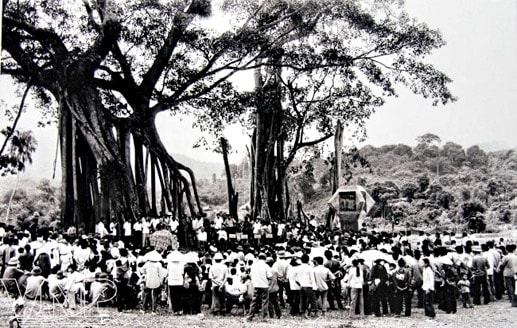 |
| Over two days (August 16-17), the National Congress in Tan Trao adopted 10 major policies of the Viet Minh, approved the order for a general uprising, decided on the national flag and anthem, and elected a provisional government. President Ho Chi Minh issued a call to the people of the whole country to rise up. |
On August 15, 1945, in Hanoi, pro-Japanese puppets established a sham "independent" government, welcoming allies and changing masters. But the masses sided with the Viet Minh. On the afternoon of August 17, tens of thousands of people flocked to the City Theater for a rally organized by the puppet government, but little did they know, these were Viet Minh agents, mobilized by the Viet Minh itself to turn the tide. Indeed, in an instant, a large red flag with a yellow star was hoisted before the vast crowd. Viet Minh cadres took over the platform, clearly stating their program for national salvation. From early morning on August 19, a forest of red flags with yellow stars appeared throughout Hanoi. A beautiful day in the historic autumn. The General Uprising lasted only about ten days. The earliest uprisings began on August 17. On the 19th, all of Hanoi rose up, on the 23rd in Hue, and on the 25th, it spread to Saigon…
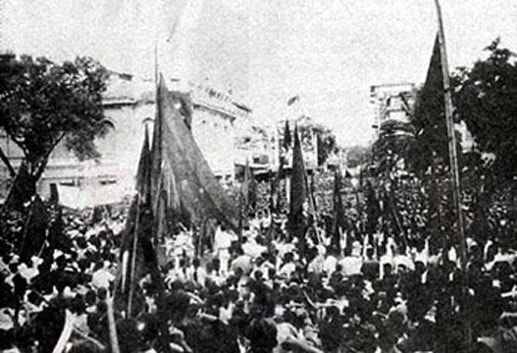 |
| On August 19, 1945, tens of thousands of people in Hanoi took to the streets to demonstrate and launch an armed uprising to seize power, with red flags bearing yellow stars fluttering throughout the streets. |
On the evening of August 26, 1945, President Ho Chi Minh arrived in Hanoi. He presided over the first meeting of the Central Standing Committee, because although the Revolution had succeeded, the central government had not yet been established. A series of new tasks and events overwhelmed the revolutionaries. The situation was extremely urgent, and the Central Standing Committee immediately decided on several pressing tasks. The Vietnam National Liberation Committee, elected by the National Congress at Tan Trao, was expanded to become the Provisional Government. Some former delegates voluntarily withdrew to make way for patriotic intellectuals and prominent figures in the Government. The slogans of our Party at this time were "National Unity," "The Fatherland Above All," "The Nation Above All"...
On September 2, 1945, the inauguration ceremony of the Provisional Government was held in Ba Dinh Square. Under the beautiful autumn sun, Hanoi was ablaze with a sea of people, a sea of flags, and a sea of flowers. Banners proclaiming "Vietnam belongs to the Vietnamese," "Independence or death," "Support the Provisional Government," "Support President Ho Chi Minh"... stretched across the streets of Hanoi. Millions of Vietnamese people, the entire nation of Vietnam, listened attentively as President Ho Chi Minh read the Declaration of Independence, giving birth to the Democratic Republic of Vietnam. He affirmed to the nation, to the world, and to humanity a truth: "The Vietnamese nation has the right to enjoy freedom and independence. The entire Vietnamese people are determined to dedicate all their spirit and strength, lives and property to uphold that right to freedom and independence."
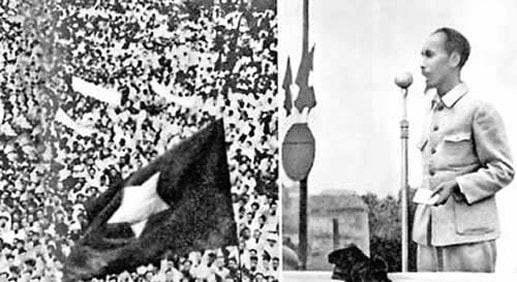 |
| On September 2, 1945, at Ba Dinh Square in Hanoi, President Ho Chi Minh read the Declaration of Independence, giving birth to the Democratic Republic of Vietnam. |
A fledgling revolutionary state was born amidst the hostile encirclement of colonialists, imperialists, and reactionary forces both domestically and internationally. Uncle Ho and our Party steered the ship of revolution to the shores of glory. It must be said that without his great mind and the brilliant leadership of our Party… what would the situation have been like? The August Revolution of 1945 and the birth of the Democratic Republic of Vietnam truly bear the indelible mark of the talent and prestige of our beloved Uncle Ho.
Peace(Synthetic)


