
Lesson 1: Identifying 'bottlenecks', changing mindsets
In practice, science, technology, innovation, and digital transformation are gradually creating positive changes in governance and improving the quality of medical examination and treatment. However, behind these initial results, there are still institutional, mechanism, and resource bottlenecks that need to be addressed, and mindsets need to be changed so that the restructuring of Nghe An's health sector can be carried out synchronously, effectively, and sustainably.

There are still "bottlenecks".
During their visit to Nghe An Oncology Hospital, the National Assembly's supervisory delegation witnessed firsthand the digital transformation process, with all electronic medical records, diagnostic results, and treatment history being instantly accessible. As one of the first specialized oncology hospitals in the country to successfully implement electronic medical records, Nghe An Oncology Hospital has gradually built a smart hospital model with many synchronized digital platforms such as online appointment registration, the eHeal software, and a Picture Archiving and Communication System (PACS) replacing film printing.
.jpg)
The experience at Nghe An Oncology Hospital shows that a scientific research and innovation environment is gradually being formed. In 2025 alone, the hospital approved 93 scientific research projects, published 57 specialized articles, including 12 international articles; implemented 16 multinational studies, 2 domestic multi-center studies, and conducted numerous clinical trials according to international standards.
Placed within the overall picture of Nghe An's health sector, these results are not isolated incidents. To date, 100% of health insurance-covered medical examination and treatment facilities in the province have implemented data linkage; 100% of hospitals meet the requirements to deploy electronic medical records. In particular, the integration of over 1.5 million electronic health records into the VNeID application is gradually forming a data platform to serve the management of the sector.
Beyond just transforming processes, the hospital has now mastered 694 out of 814 advanced techniques as classified by the Ministry of Health; many techniques previously only performed at central-level hospitals, such as personalized chemotherapy, targeted therapy, immunotherapy, and accelerated radiotherapy, are now routinely implemented.
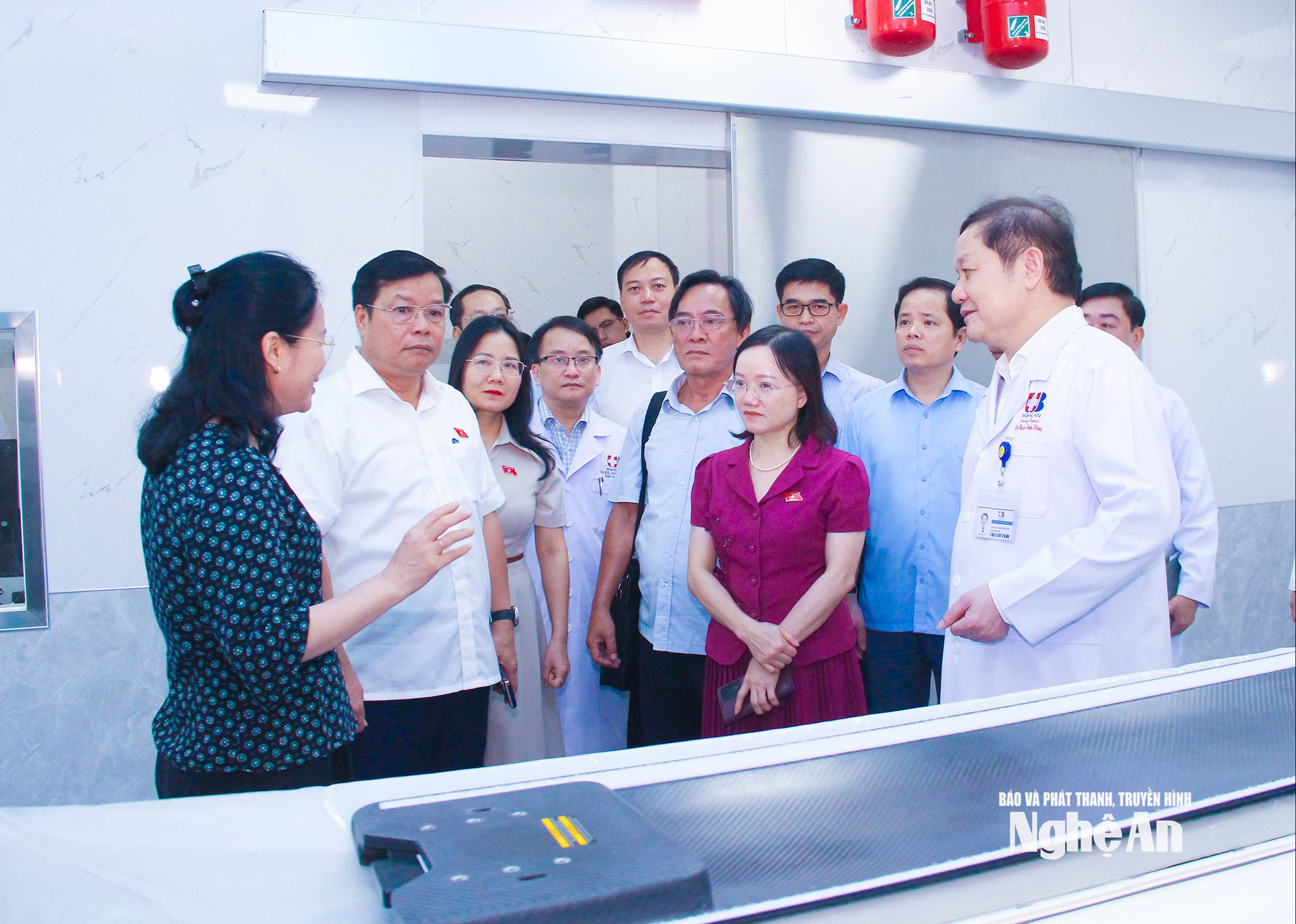
However, in discussions with the Supervisory Delegation, People's Physician, Doctor Pham Vinh Hung - Director of the Hospital, stated: "In recent times, the unit has proactively incorporated science, technology, innovation, and digital transformation as the foundation for improving management capacity and the quality of medical examination and treatment. We have mastered some techniques, but we still need the right mechanisms to apply them to mass treatment."
Observations from monitoring indicate that the first obstacle lies in the financial mechanism. Implementing electronic medical records, medical image archiving and transmission systems (PACS), data centers, information security infrastructure, and digital management platforms requires significant investment from hospitals. Meanwhile, many IT expenditures are not properly and fully accounted for in the pricing structure of medical services. This places considerable pressure on healthcare facilities operating under an autonomous management mechanism.
Besides financial mechanisms, gaps in digital infrastructure and the quality of human resources are also major obstacles. While many provincial hospitals have gradually mastered digital management platforms, many grassroots healthcare facilities still lack information technology infrastructure, data connectivity, and a team of experts in medical data, artificial intelligence, and biotechnology. These are "soft bottlenecks" but they determine the effective operation of the system after the technology is deployed.
It is evident that these "bottlenecks" all stem from a deeper cause: the pace of institutional reform has not kept up with the pace of scientific, technological, and innovative development. With many regulations on investment, finance, procurement, and data management still inadequate, the biggest obstacle no longer lies in the commitment to innovation of healthcare facilities, but in the urgent need to finalize a comprehensive and flexible policy framework so that pioneering models can develop and spread.
Unlocking resources through a comprehensive legal framework.
Sharing her vision for the development of the health sector, Dr. Le Thi Hoai Chung, a member of the Provincial Party Committee and Director of the Nghe An Department of Health, stated that the province is focusing on building a modern healthcare system based on three pillars: smart governance, smart prevention, and smart diagnosis and treatment, aiming to make Nghe An a high-tech medical center in the North Central region, as per Decision No. 3721/QD-UBND of the Provincial People's Committee.
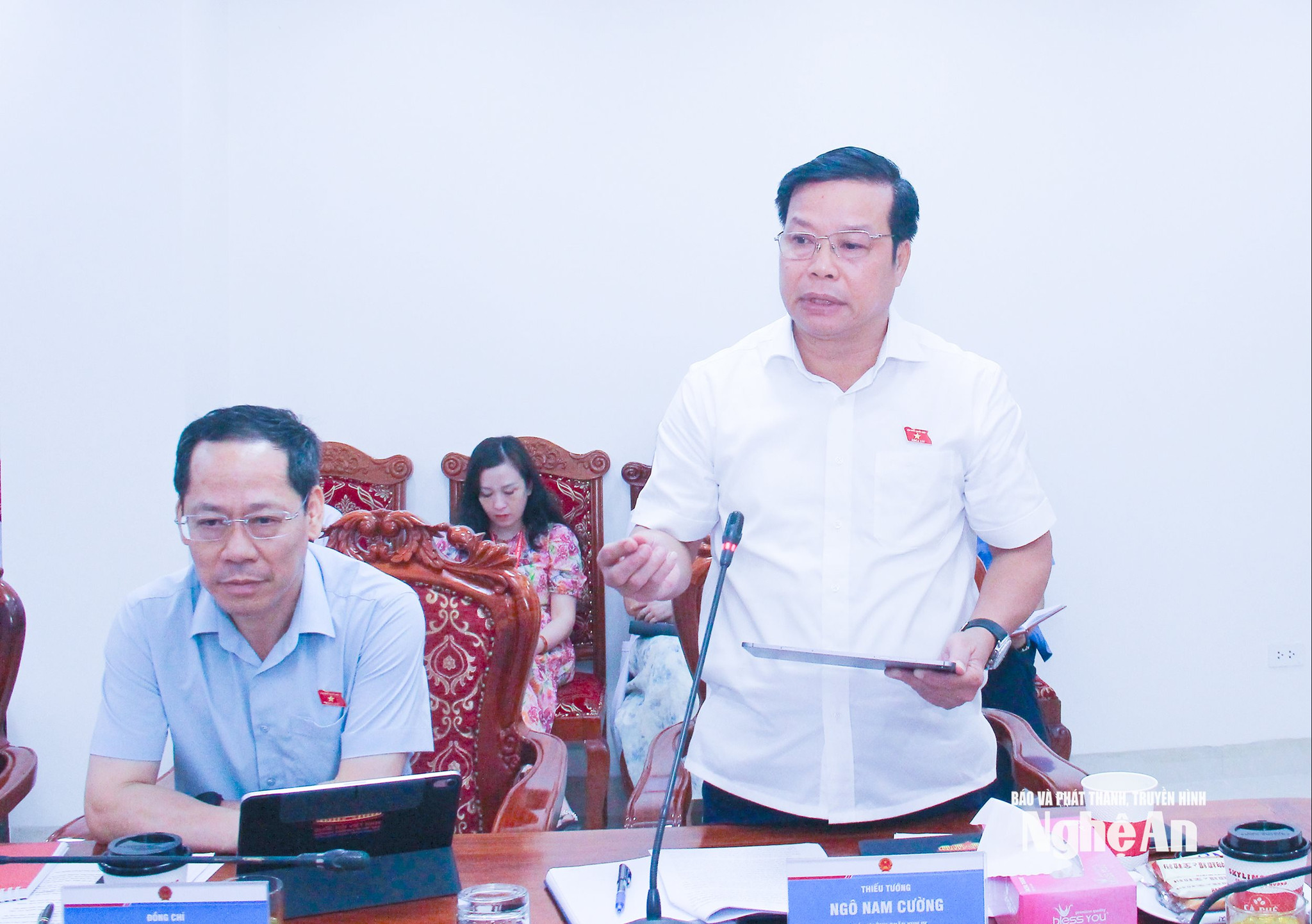
To realize that goal, according to Ms. Le Thi Hoai Chung, along with the proactive innovation of medical facilities, it is necessary to continue improving mechanisms and policies to encourage scientific research, promote technology transfer, develop high-quality human resources, and accelerate digital transformation throughout the entire sector.
From a policy-making perspective, a modern institution should not only have a management function but also create a favorable environment for science, technology, innovation, and digital transformation to flourish. When the legal framework is sufficiently synchronized, resources are unlocked, and healthcare facilities are given more autonomy, pioneering models will no longer remain isolated bright spots but will have the conditions to be replicated, contributing to the formation of an innovation ecosystem, improving governance capacity, and enhancing the quality of healthcare for the people.
For the healthcare sector, this is not just about investing in more equipment or management software, but about comprehensively reforming management methods based on data, knowledge, and technology. Surveys show that these three elements are not separate fields. Science and technology create the knowledge base; innovation transforms knowledge into new management models and solutions; and digital transformation connects all system activities on a data-driven platform, making operations increasingly accurate, transparent, and efficient. When these three elements are developed synchronously, the healthcare sector will have the conditions to transition from an administrative management model to a modern management model, meeting the requirements of decentralization and delegation of authority in the new era.
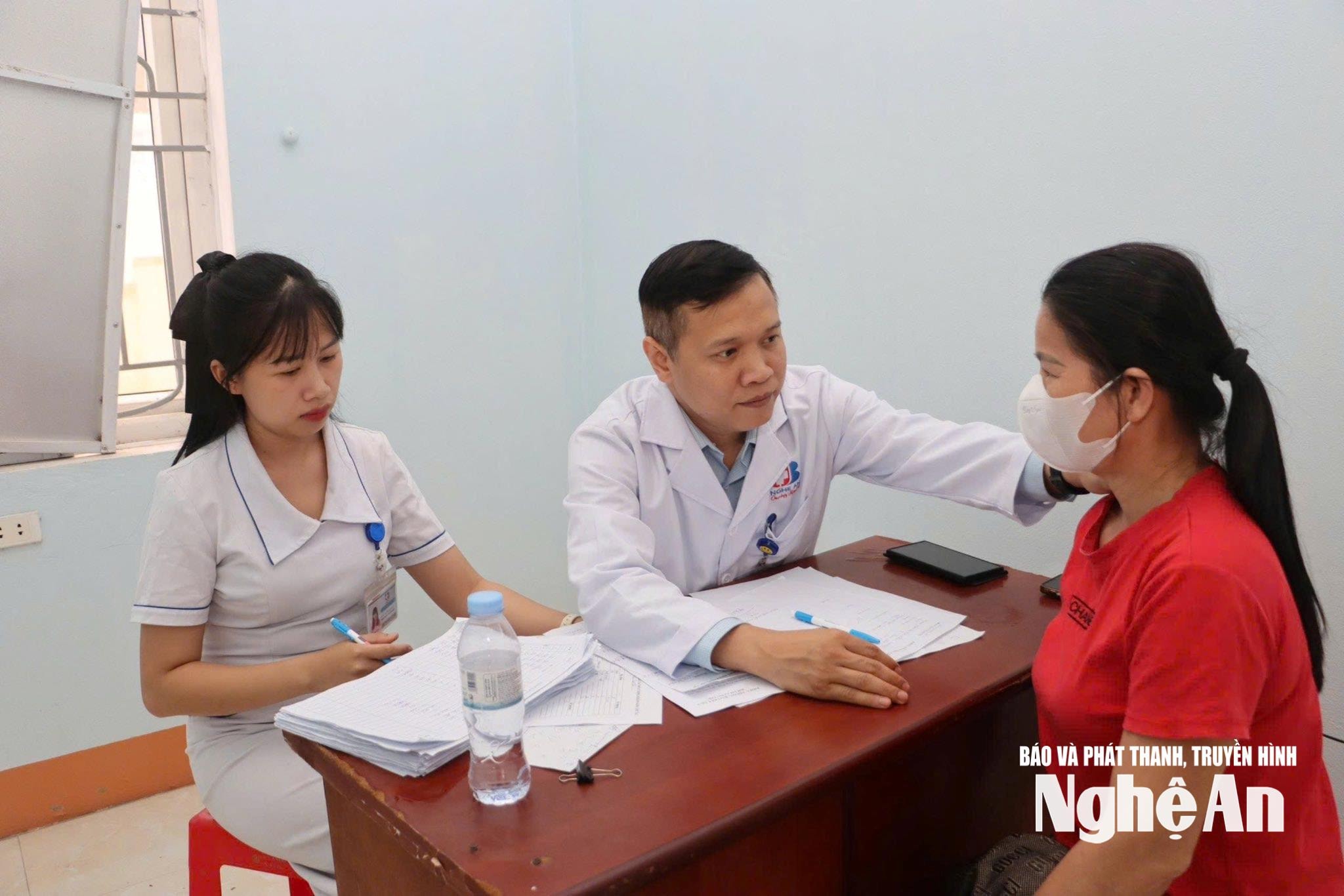
According to Thai Thi An Chung, Deputy Head of the Standing Committee of the National Assembly Delegation of Nghe An Province: “The value of the National Assembly's oversight activities is not only to acknowledge achievements or point out existing shortcomings, but also to fully identify policy bottlenecks in order to propose amendments and additions, creating conditions for effective models to be replicated. From that perspective, the practical experience of the Nghe An Oncology Hospital has provided many valid arguments for further improving policies on new drivers of development in the health sector…”


