
Lesson 2: Organic Tea Production
To build and establish a brand for Nghe An tea, farmers and entrepreneurs have been implementing production linked to the processing of organic tea that meets international standards. This approach not only helps the province's tea products reach the global market but also demonstrates its alignment with the trend of green and sustainable agriculture, in line with the circular economy development strategy.

Thu Huyen - Hoai ThuApril 25, 2025
To build and establish a brand for Nghe An tea, farmers and entrepreneurs have been implementing production linked to the processing of organic tea that meets international standards. This approach not only helps the province's tea products reach the global market but also demonstrates its alignment with the trend of green and sustainable agriculture, in line with the circular economy development strategy.

Having lived and been involved in agricultural production for more than half his life in Binh Son commune, Anh Son district, Mr. Nguyen Hong Ky said that he first joined the Binh Son Organic Tea Cooperative, which was established at the end of 2023. This agricultural production model not only introduced him to new methods in farming but also opened up new ways of thinking and knowledge for farmers. It provided insights into the advantages and trends of green, sustainable, and safe production for people and the environment, adapting to climate change.
Since 2022, the Nghe An Agricultural Extension Center has implemented the project "Building a model for organic tea production, linked along the value chain in Nghe An province, 2022-2024" in Tan Hop village, Binh Son commune. The project includes converting 10 hectares of commercial tea plantations, changing from conventional farming methods to organic farming. After nearly 3 years, the model has helped to form a clean, safe, and high-quality tea production area, with an average yield of 1.5-2.5 tons/ha/crop. Mr. Nguyen Hong Ky shared that after 3 years of registering and implementing organic tea cultivation, the households have established an organic tea cooperative with 10 participating households. Mr. Ky's household cultivates 1.5 hectares. The 2025 spring tea harvest also marked the first time his family reaped the rewards of organic tea production. They harvested 5 tons of tea buds, selling them to a purchasing company at a price five times higher than the market price, approximately 5,000 VND/kg. This is the highest price ever achieved by tea growers in Binh Son commune, and the households are very pleased, further motivating them to persevere in their green and clean farming practices.

Mr. Nguyen Xuan Son, Director of Binh Son Organic Tea Cooperative and Head of Tan Hop village, Binh Son commune, said that the organic tea growing area in Binh Son was certified as meeting organic farming standards at the end of 2024. The growing area is far from farms and livestock areas and absolutely no pesticides are used. It covers a total area of 10 hectares with 10 participating households. The household with the largest area has 2 hectares, while the average is 0.5 - 1 hectare per household. This model benefits the people from projects and scientific research from higher-level departments and agencies, receiving support from cultivation, land preparation, seeds, and care techniques. Regarding organic fertilizer (fish nitrogen fertilizer), the people contribute a portion and apply it to the tea plants manually.
The economic efficiency of selling raw tea leaves is not yet significantly higher than conventional farming methods, but after more than three years of persistent implementation, tea growers have gradually come to understand the advantages of this sustainable farming approach. The most reassuring aspect is the benefit to the health of those directly involved in production, followed by the environment and consumers. Furthermore, growing agricultural products according to organic standards increases plant resistance, reduces genetic degradation, and improves product quality.

With a similar mindset towards green and clean agriculture, and a sustainable approach, Mr. Tran Dien Vi in Thanh Duc commune, Thanh Chuong district, has also started building an organic tea growing area right in his family's hillside garden.
Although the tea plantation covers only a little over 1 hectare, I have persistently practiced green and clean manual farming for over 6 years, and at the end of 2024, it was recognized as the first organic tea farming model in the district.”
Mr. Tran Dien Vi - Thanh Duc Commune (Thanh Chuong District)
Having successfully built a brand of organic oranges that has been well-received by the market, Mr. Tran Dien Vi continues to expand his cultivation in this green production direction. Regarding tea, the young entrepreneur from the mountainous region of Thanh Duc doesn't want to stop at selling raw materials. According to Mr. Dien Vi, "this is the model I envision for the future, a closed-loop ecological chain for tourism and services, also known as agro-tourism, offering visitors the opportunity to experience harvesting and processing agricultural products while enjoying the best quality local produce."
.jpg)
According to his objectives, Mr. Dien Vi stated that his organic orange and tea farms are linked to the lives and health of his family and relatives first and foremost. Secondly, they contribute to the health of the community and the surrounding environment. Once a safe organic ecosystem is established, the organically grown crops and livestock will become a sustainable source of profit as he implements an agro-tourism model, bringing experiences from the orchards and selling products directly to consumers, minimizing intermediaries and reducing marketing costs.
Not only in Thanh Chuong district, but many other districts in the province are also implementing VietGAP tea models and organic tea standards, such as in Binh Son commune (Anh Son district), Huoi Tu commune (Ky Son district), etc. The development of tea cultivation, especially organic tea, is becoming an important part of Nghe An province's agricultural strategy.
To promote organic and VietGAP-certified tea production, the People's Committee of Nghe An province has issued decisions such as Decision No. 4288/QD-UBND dated November 11, 2021, and Decision No. 3108/QD-UBND dated October 11, 2022. The goal is to reach 8,500 hectares of tea plantations using high technology and adhering to VietGAP and organic standards by 2030, accounting for 70.8% of the province's industrial tea cultivation area. The province also provides technical support, supplies, fertilizers, and market connections for farmers transitioning to organic farming. These efforts aim to improve the quality and value of Nghe An tea products, meeting the demands of both domestic and international markets.
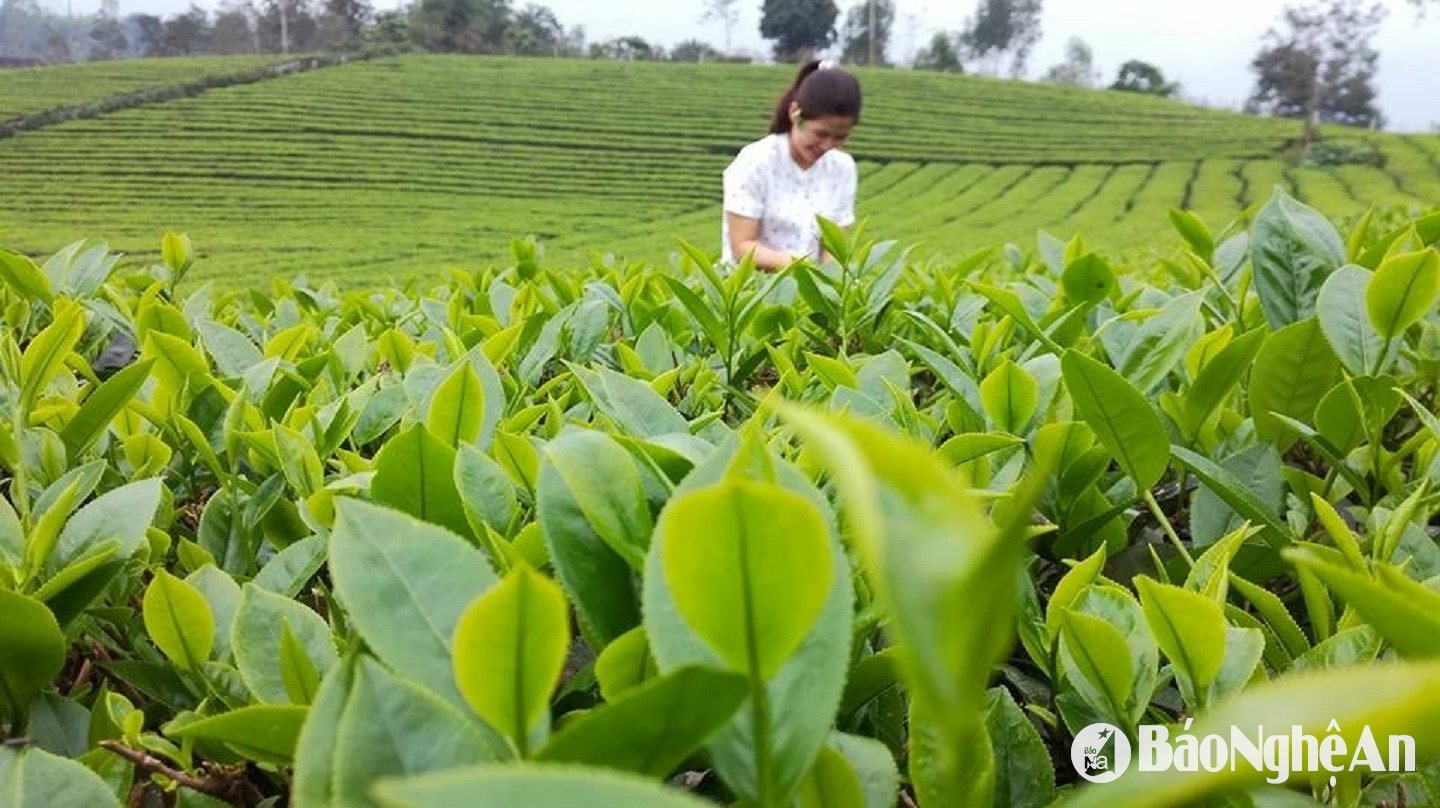

With the same mindset and aspiration to build a brand for his organic tea products, Mr. Dao Quang Vu has been persistently working with the people of Ky Son district, a high-altitude region, for many years to cultivate and produce organic Shan Tuyet tea. We have worked in Ky Son district many times, and on numerous occasions visited the high-altitude areas of Tay Son and Huoi Tu, places perpetually shrouded in clouds at altitudes above 1,000 meters above sea level. Here, there are areas of ancient Shan Tuyet tea trees growing naturally, some hundreds of years old. These towering Shan Tuyet tea trees stand majestically in the high-altitude forests, enduring rain and sun alongside generations of Mong ethnic people who have lived and protected the border mountains and forests. Beyond these ancient tea forests, Shan Tuyet tea cultivation is gradually developing and providing income for the local people in Ky Son district as businesses begin to purchase raw tea materials.
Dao Quang Vu's business also started trading this unique agricultural product in Ky Son district about four years ago. However, in addition to developing the OCOP product Shan Tuyet tea, Vu's business approach is completely new and unprecedented in this highland region. This involves establishing organic tea growing areas in the high mountains and optimizing the product's value from cultivation and care to market sales.
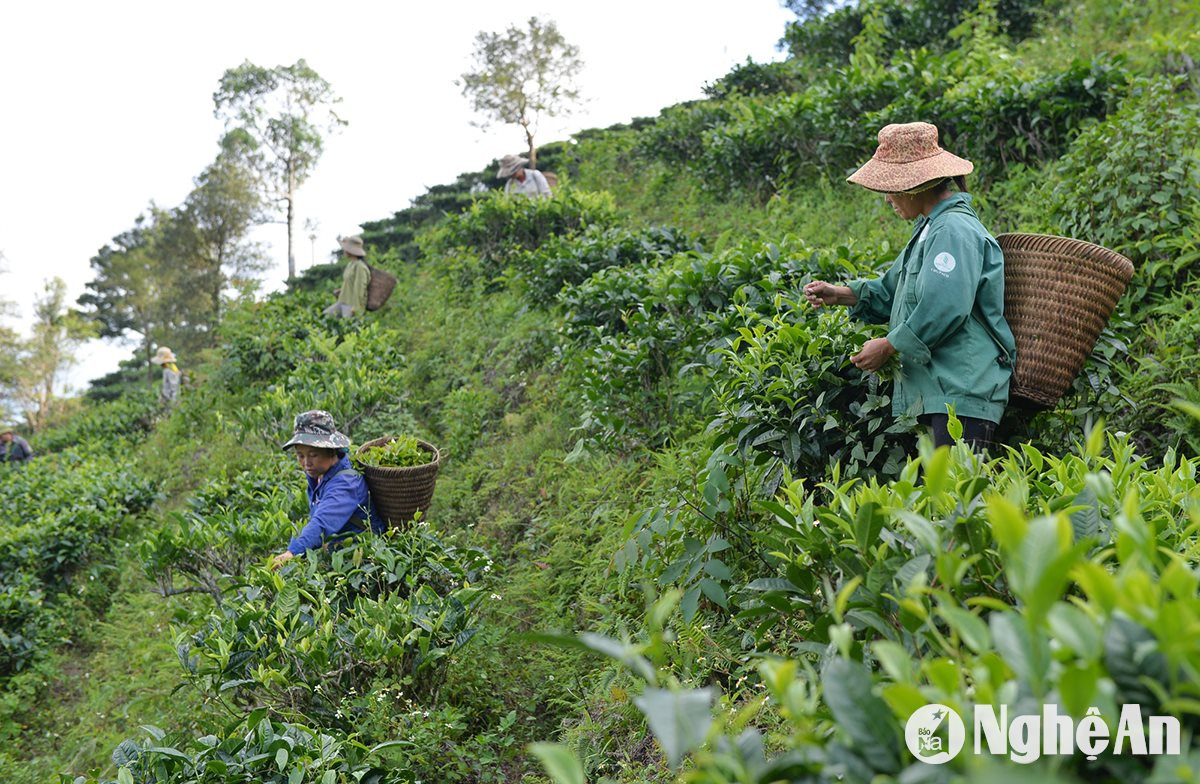
According to Mr. Dao Quang Vu, by the end of 2024, more than 8 hectares of Shan Tuyet tea cultivated along the mountain slopes and on the mountaintops in Huoi Tu commune had been certified as organic. Thanks to the joint efforts of the people in Huoi Tu commune, in addition to the tea cultivation and care process fully complying with organic farming regulations, the harvesting process is also done by hand to produce the highest quality Shan Tuyet tea. “Besides the manual roasting method for making Shan Tuyet tea, the company has also expanded its Shan Tuyet tea product range to include many varieties, suitable for the tastes of various customer segments, and has even exported products such as black tea, white tea, fermented tea, etc. From 2025, we will proceed to plant an additional 21 hectares of tea according to organic production standards,” Mr. Dao Quang Vu said.
Mr. Ha Ba Ly, Vice Chairman of the People's Committee of Huoi Tu commune, said that Shan Tuyet tea has been present in the villages of Huoi Tu for a long time. However, local people had not been able to fully utilize the value of this specialty crop until businesses in Ky Son district, mainly in the Huoi Tu area, began trading tea products. Thanks to the tea processing factory and traders buying tea buds, dozens of households in Huoi Tu commune have gained a new source of income from tea cultivation. At the same time, tea cultivation has also helped create jobs for hundreds of laborers in the villages, especially with businesses that both cultivate and process tea buds right in the commune.
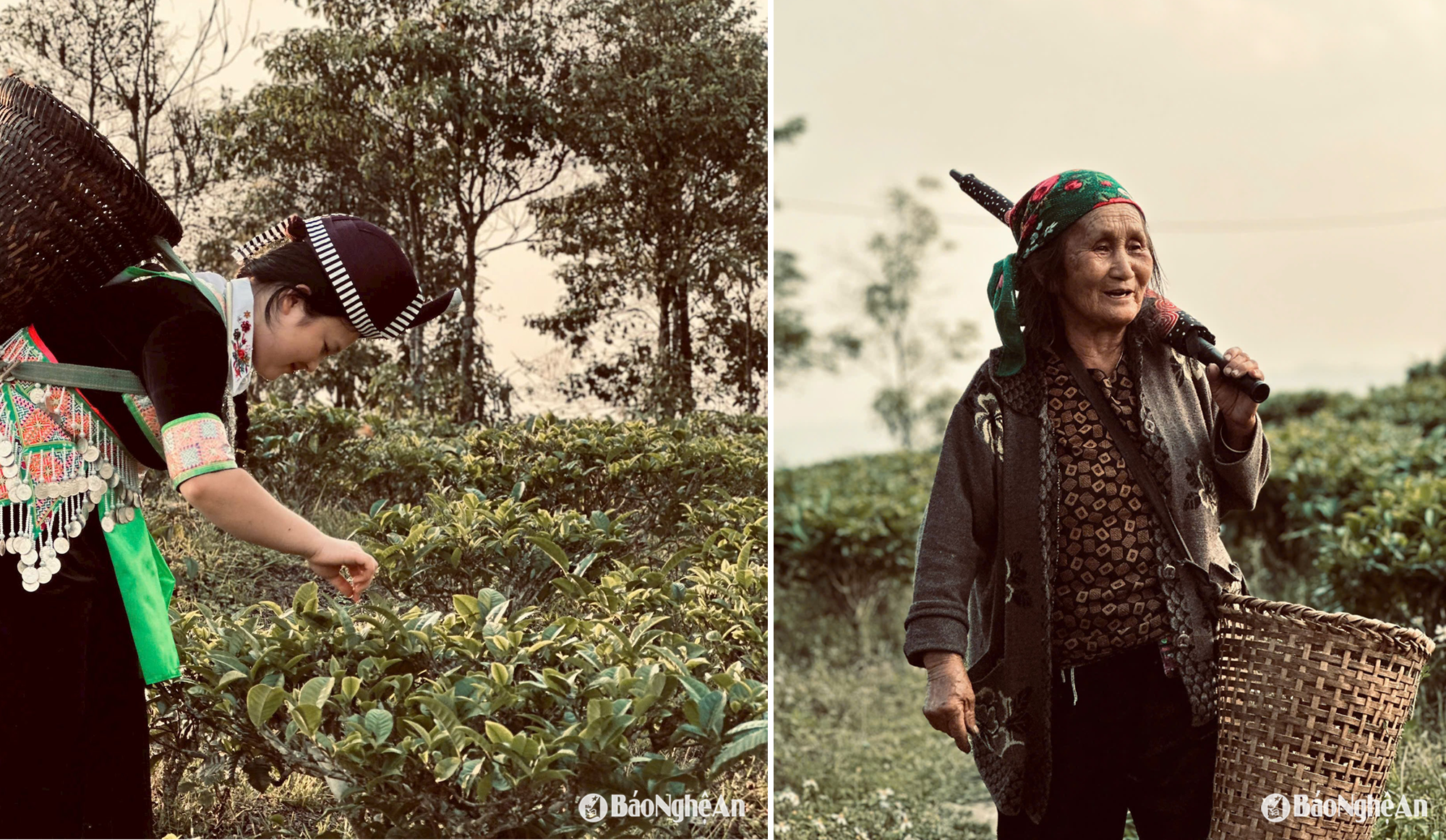
Currently, green tea and black tea products processed from Ky Son Shan Tuyet tea have been marketed and connected by the company to participate in exhibitions and promote products in many countries such as Laos, Thailand, China, India, Japan, etc. Each year, this company purchases about 30 tons of fresh tea buds from tea growers in Huoi Tu commune at a stable price, maintaining production of about 5 tons of tea annually, of which a significant amount has been exported to many countries. "In the future, we are striving to export tea to the most demanding markets in the world, which are also countries with a deep cultural appreciation for tea, namely China and Japan."
The leaders of Ky Son District People's Committee also affirmed that the bold and diligent efforts in building the Ky Son Shan Tuyet tea brand as a flagship product aimed at export have brought many changes to the people of Ky Son district. Besides having more crops and additional income, the way agricultural products are traded, linked to organic production and deep processing, and oriented towards export, has helped broaden the mindset of green and sustainable agriculture for officials and people in this remote border region.
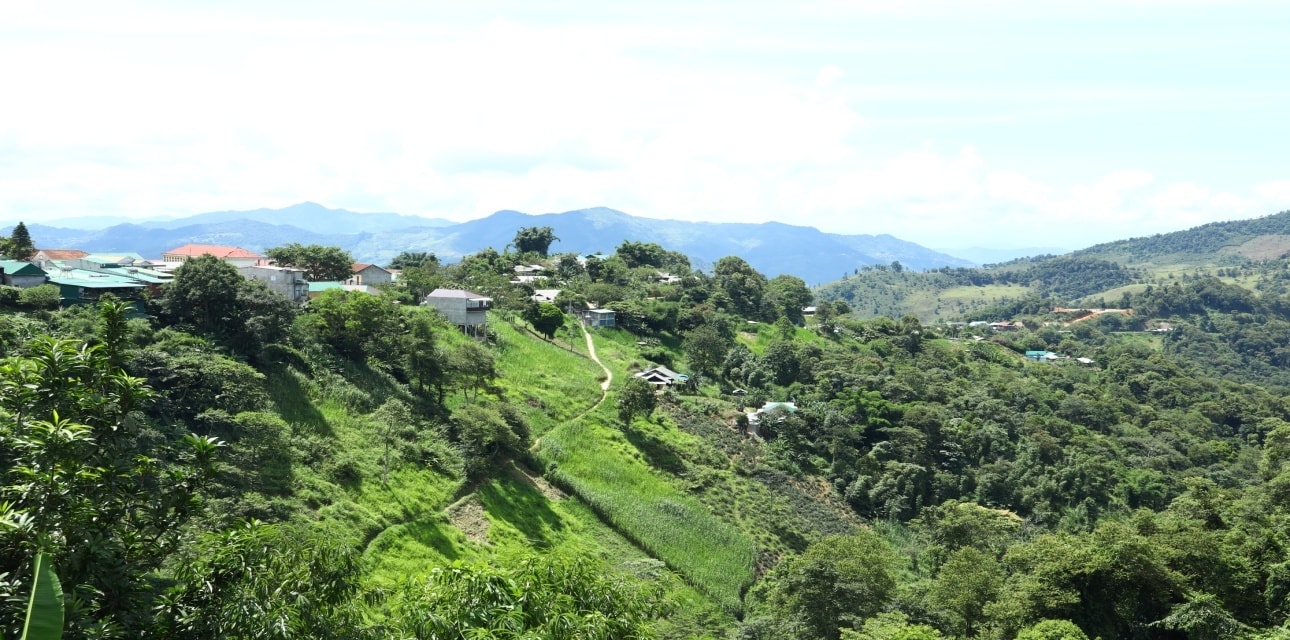
Decision 4288/QD-UBND dated November 11, 2021, approving the Project for the Development of Key Agricultural Products of Nghe An Province for the period 2021-2025, with a vision to 2030, identified tea as one of the key crops and a raw material for processing. Accordingly, the focus is on developing tea in the districts of Thanh Chuong, Anh Son, Con Cuong, Ky Son, and Tan Ky. Specifically, the area of tea cultivation applying high technology and producing according to standards and regulations (GAP, organic, etc.) is targeted to reach 8,500 hectares by 2030, accounting for 70.8% of the total industrial tea cultivation area in the province.


