Amidst the undulating mountains and forests, where smoke from cooking fires still wafts through thatched roofs, and where the crowing of roosters echoes across both countries, there are "teachers in green military uniforms" who daily sow the seeds of knowledge, teaching the villagers about the digital world... These soldiers of Uncle Ho not only protect the land and sky but also ignite the light of knowledge, helping the highlanders escape illiteracy and poverty, and catch up with modern life.
Helping people become digital citizens.
On a hazy afternoon in Huoi Cang 1 village – the central village of Bac Ly commune – the rhythmic clicking of keyboards echoed through the "Charity House" (established by the My Ly Border Guard Post), creating a pleasant melody. Here, the "digital learning class" of the My Ly Border Guard Post was attended by six students – all villagers – sitting neatly, their eyes intently focused on the screens. Some were still clumsy, their hands hesitant as they moved the mouse, but everyone seemed strangely eager.
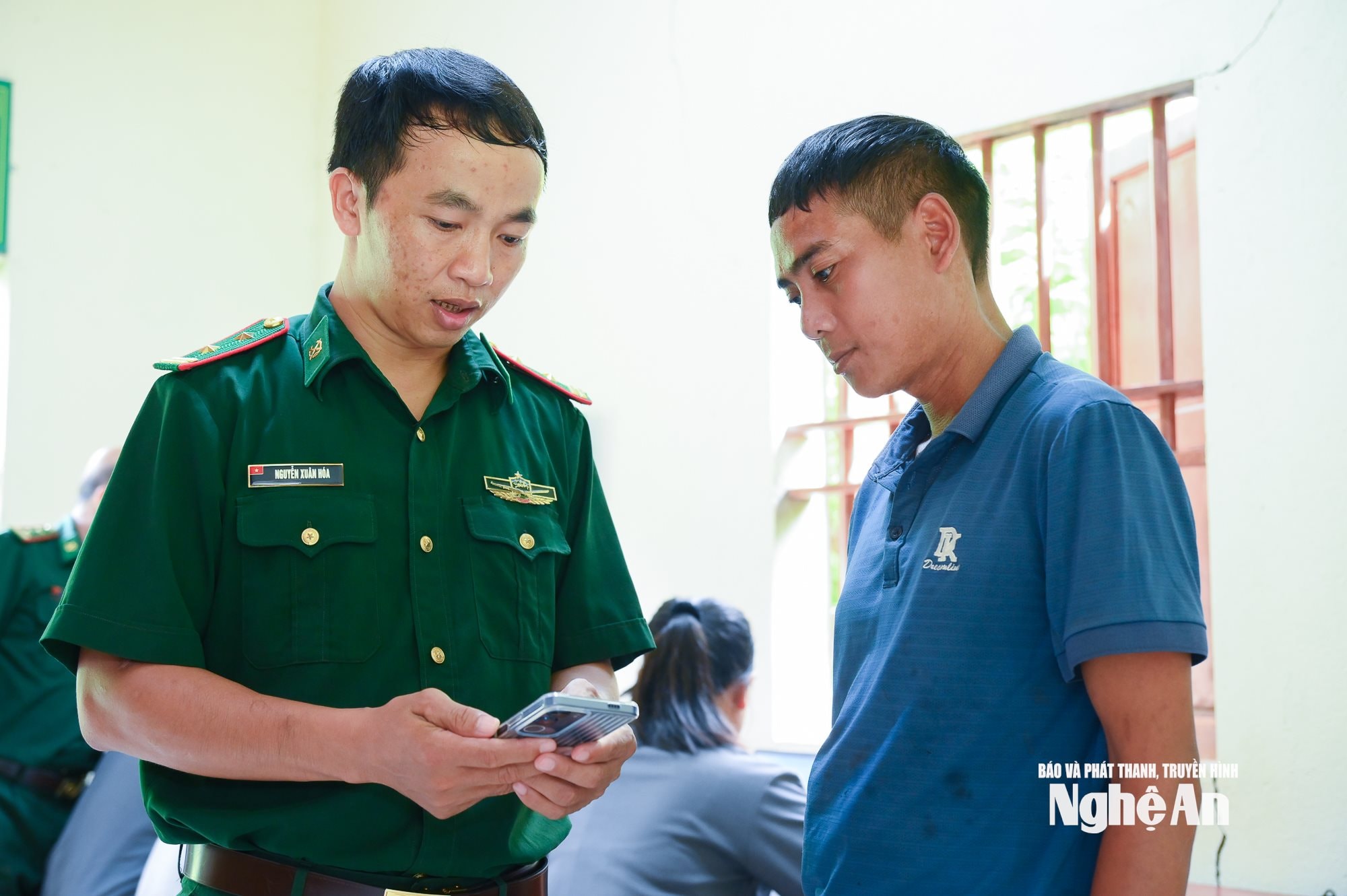
Lieutenant Colonel Nguyen Xuan Hoa - Deputy Political Officer of My Ly Border Guard Post - patiently guides trainees on using public services on the computer. Photo: Thanh Cuong
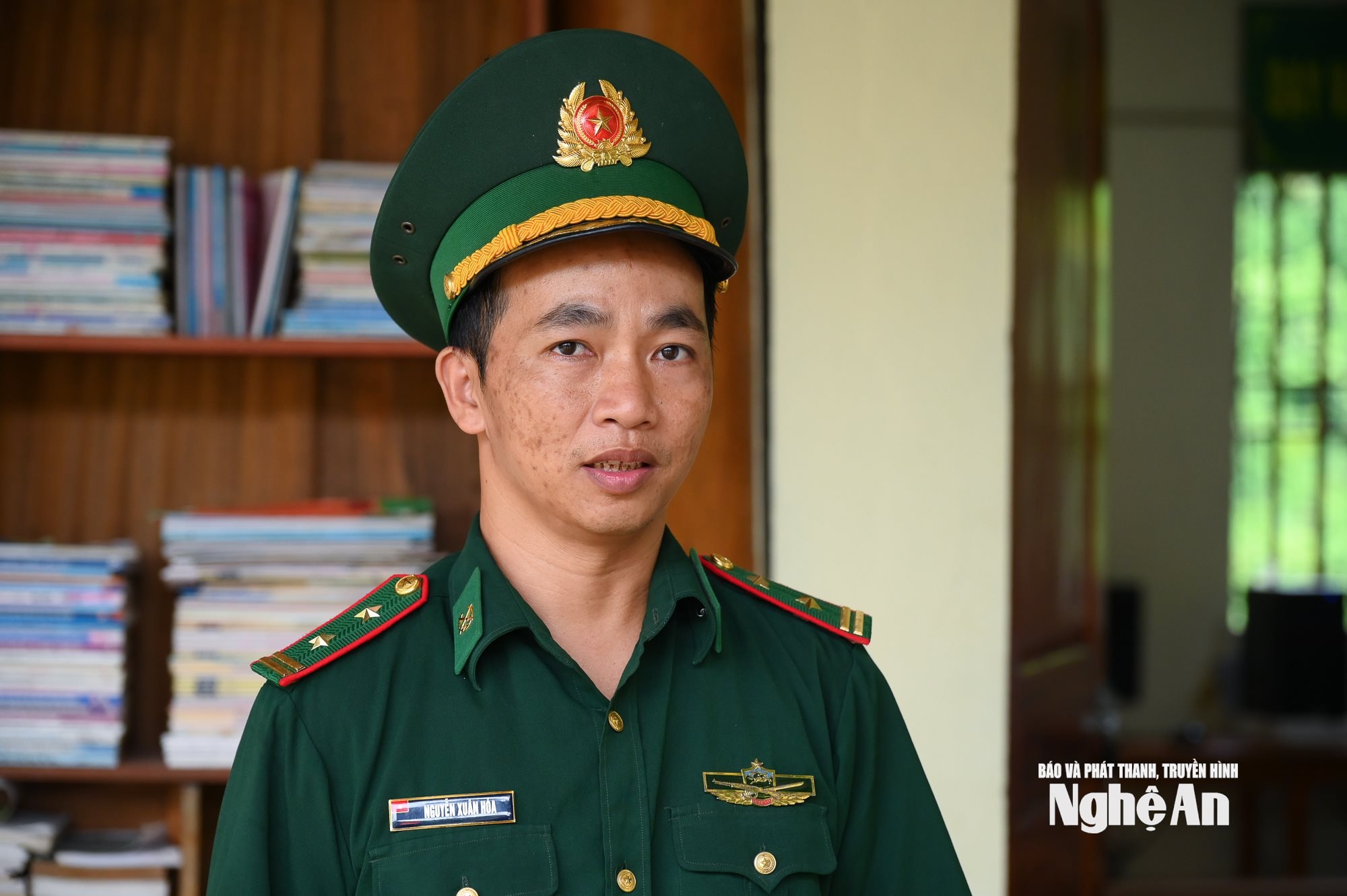
"Okay, click here and log in to your National Public Service Portal account," Lieutenant Colonel Nguyen Xuan Hoa, Deputy Political Officer of My Ly Border Guard Station, patiently instructed the trainee.
Since 2022, the My Ly Border Guard Post has been campaigning and soliciting donations to build a free computer room with 10 computers connected to the internet, located at the "Charity House" in Huoi Cang 1 village. During the summer, the My Ly Border Guard Post opens free computer classes for students at this free computer room. To date, the Post has opened three classes with 60 students. During their free time, the officers and soldiers of the Post also guide the local people in getting acquainted with computers and smartphones.
Officers from My Ly Border Guard Station guide local residents in accessing digital services. Photo: Thanh Cuong.
Ms. Lo Tra Giang, a teacher at Bac Ly 1 Ethnic Boarding High School, often brings her students to practice computer skills. She shared: “Students in border areas have limited access to technology. Since the soldiers opened the classes, the children have learned to type, send emails, access educational websites, and gain a lot of useful knowledge, entering the world of digital knowledge. Adults, on the other hand, have learned to submit applications online and search for information.”
By August 2025, when the Ministry of National Defense and Nghe An province launched the "Digital Literacy for the People" movement, the computer class at My Ly Border Guard Post was upgraded to a "Digital Literacy for the People of Bac Ly Commune." Every day, when people have free time, they come here to learn. In the class, besides the "border guard teacher," there are also commune officials who guide them on how to create electronic citizen accounts and use useful applications.
"
The people here are disadvantaged and have few opportunities for education. By helping them become familiar with technology, we are also helping to alleviate their disadvantages. That is the new mission of soldiers in the digital age.
Lieutenant Colonel Nguyen Xuan Hoa - Deputy Political Officer of My Ly Border Guard Station
Lieutenant Colonel Nguyen Xuan Hoa, Deputy Political Officer of My Ly Border Guard Station, said: "The training we provide includes how to use computers, smart technology devices, and utility software; creating accounts on the national public service portal to carry out administrative procedures; and knowledge about preventing and combating online fraud... The people here are disadvantaged and have few opportunities for education. Helping them become familiar with technology is also helping them reduce their disadvantages. That is the new task of soldiers in the digital age."
"
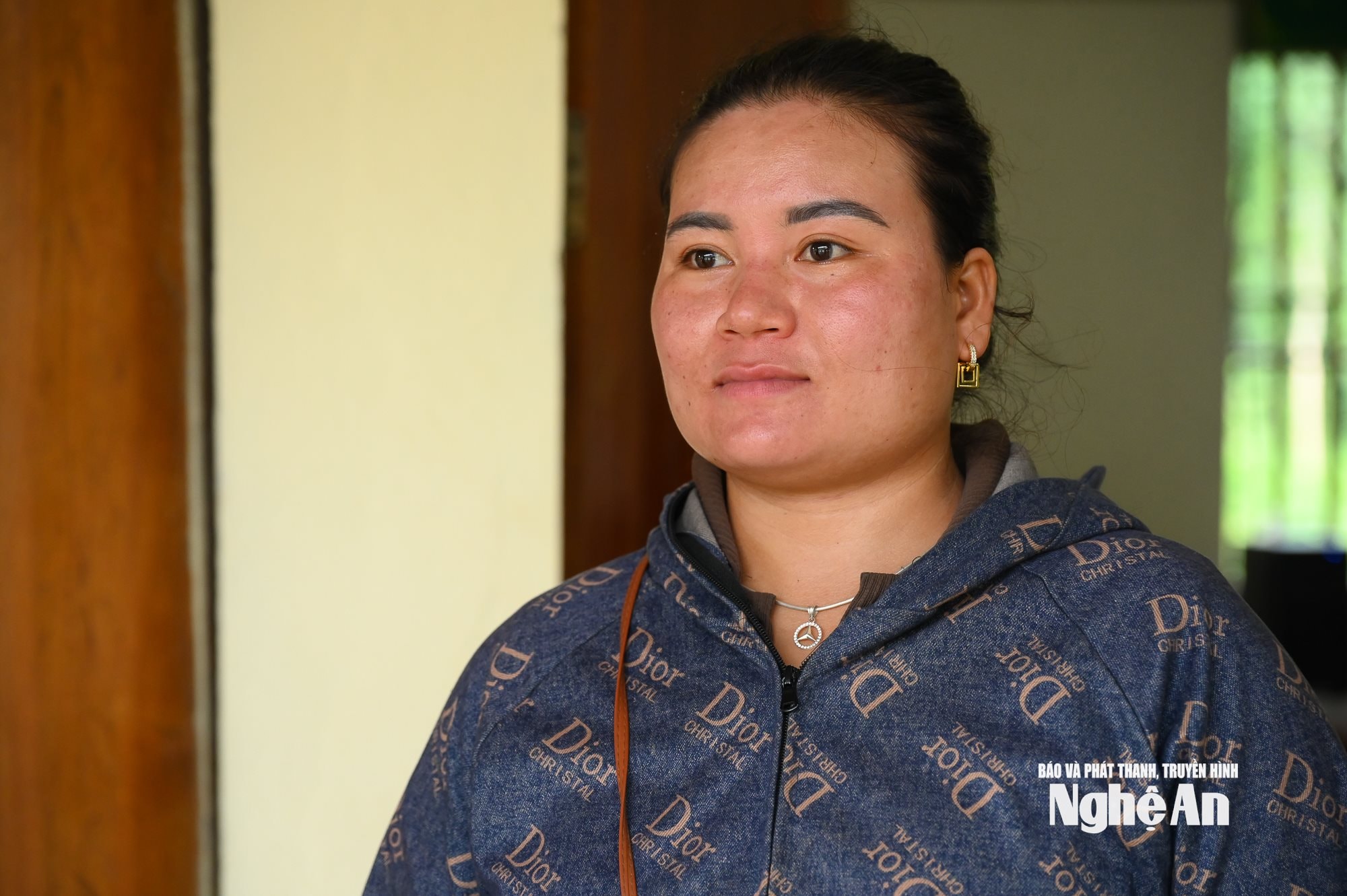
The border guards taught me how to integrate documents into VNeID, how to recognize fake news, and how to prevent scams. I even taught my husband. Now, when strangers call, I know how to check.
Ms. Lu Thi Dun, Huoi Cang 1 village, Bac Ly commune
Present at the class, Mr. Cụt Văn Thuyên (39 years old, from Huồi Cáng 2 village) proudly shared: “Thanks to the guidance, I have created an account on the National Public Service Portal; I can submit applications myself, track the processing of applications, and pay fees. Before, I had to go to the commune office for everything, which took a whole day. Now I know how to go online, submit applications, pay electricity bills, and do insurance. Everything is faster and saves time.” Similarly, Ms. Lữ Thị Đun (29 years old, from Huồi Cáng 1 village) excitedly boasted: “The Border Guard officers taught me how to integrate documents into VNeID, how to recognize fake news, and how to prevent scams. I even taught my husband. Now, when strangers call, I know how to check.”
Thanks to computer classes and digital literacy programs, many people in Bac Ly commune, who were previously only familiar with farming, have now become "digital citizens"—knowing how to handle electronic administrative procedures and protect their personal accounts. People in the commune and villages have even created Zalo groups to report landslides, forest fires, or simply share pictures of a successful corn harvest.
"
The commune, in coordination with the My Ly Border Guard Station, launched the "Popular Education Movement" throughout the commune, helping people avoid falling behind and learn effective methods to escape poverty.
Comrade Lu Quang Hung - Secretary of the Party Committee of Bac Ly Commune
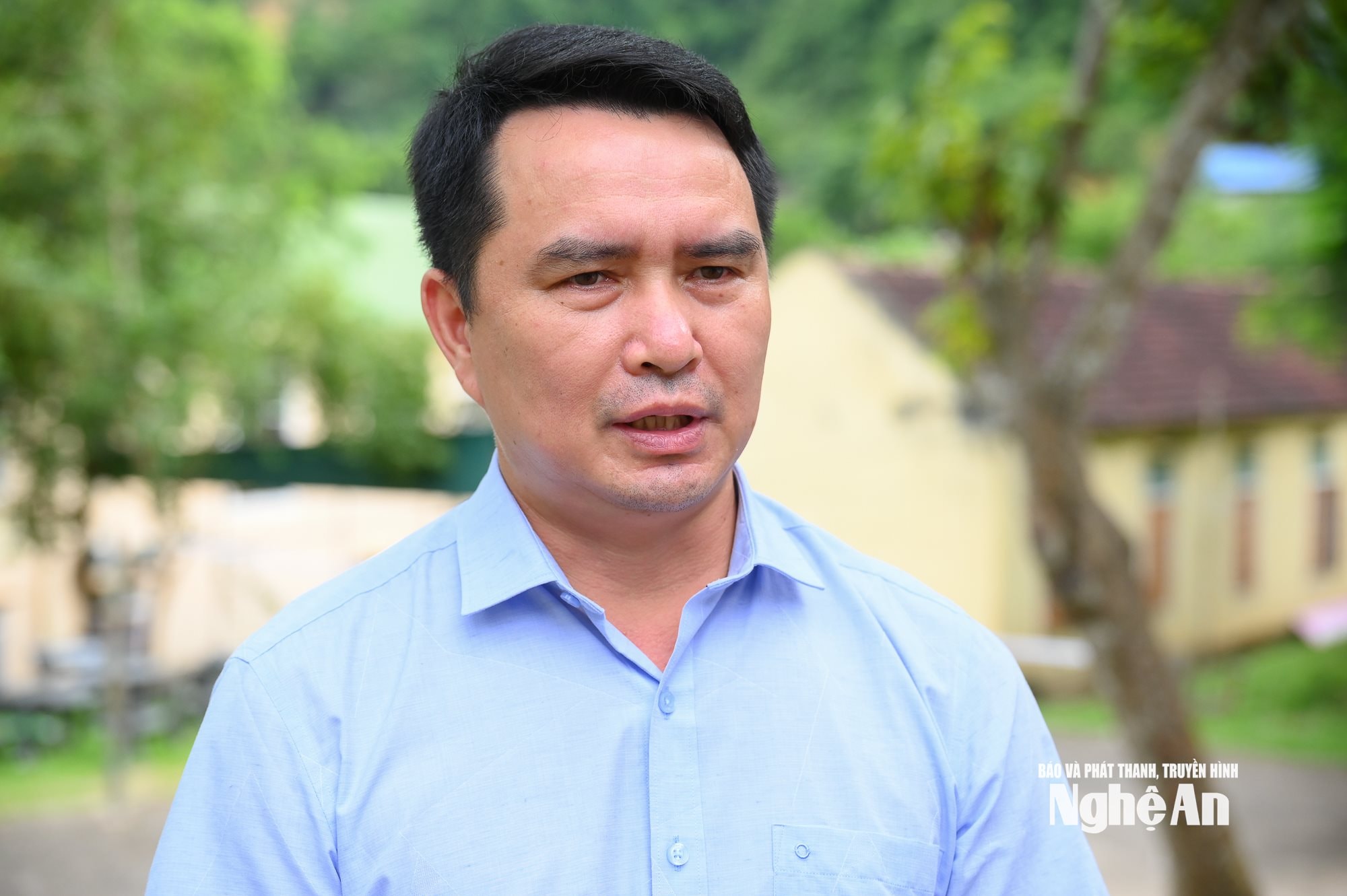
Comrade Lu Quang Hung, Secretary of the Party Committee of Bac Ly commune, said: The commune has coordinated with the My Ly Border Guard Station to launch the "Digital Literacy Movement" throughout the commune. In addition to the "Digital Literacy Movement" class, in the coming time, we will open more training courses on digital knowledge and skills for commune and village officials, union members, and youth. After these courses, the participants will return to their villages to continue guiding individual citizens; helping people avoid falling behind and learn more effective ways to escape poverty.
Bac Ly border commune has 999 households with over 5,100 inhabitants, comprising three main ethnic groups: Thai, Mong, and Khmu. The people live scattered across 13 highland villages with difficult access. The poverty rate reaches 64.56%.
Enlightening the border region
In the border region of Nghe An province, the soldiers of Uncle Ho's army are the "teachers" carrying out the task of enlightening and educating the local people. In October 2025, the literacy class in Pieng Vai village (My Ly commune) reopened after a two-month hiatus due to storms and floods. Pieng Vai is located about 30 km from the commune center, with difficult transportation. The village has 73 households and 368 inhabitants, all of whom are Mong ethnic people, and their lives are still very difficult. To this day, many women in the village still cannot read or write the common script, making it impossible for them to conduct personal transactions.
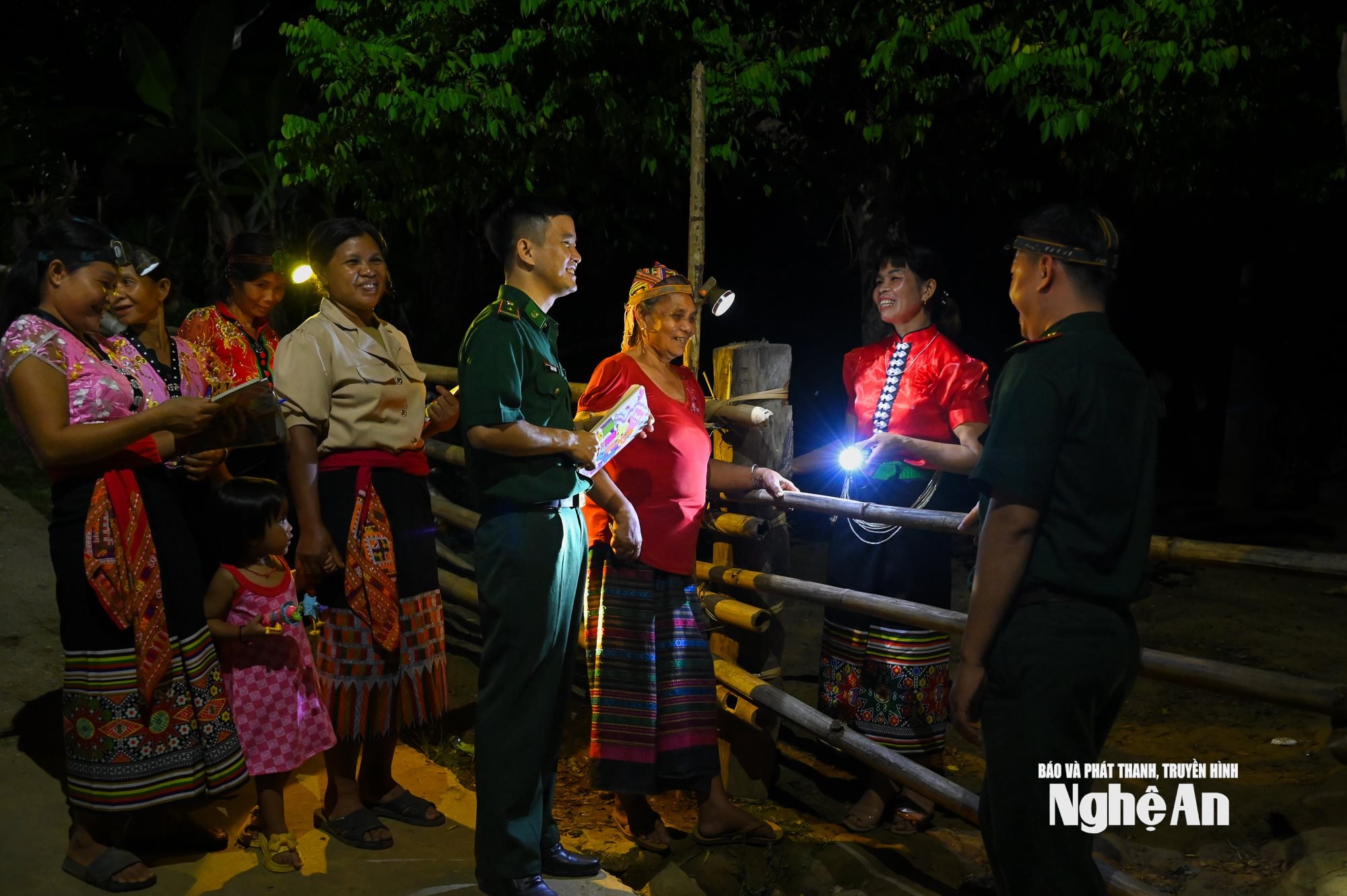
Border Guard officers in the province are urging people to participate in literacy classes in border areas. Photo: Thanh Cuong
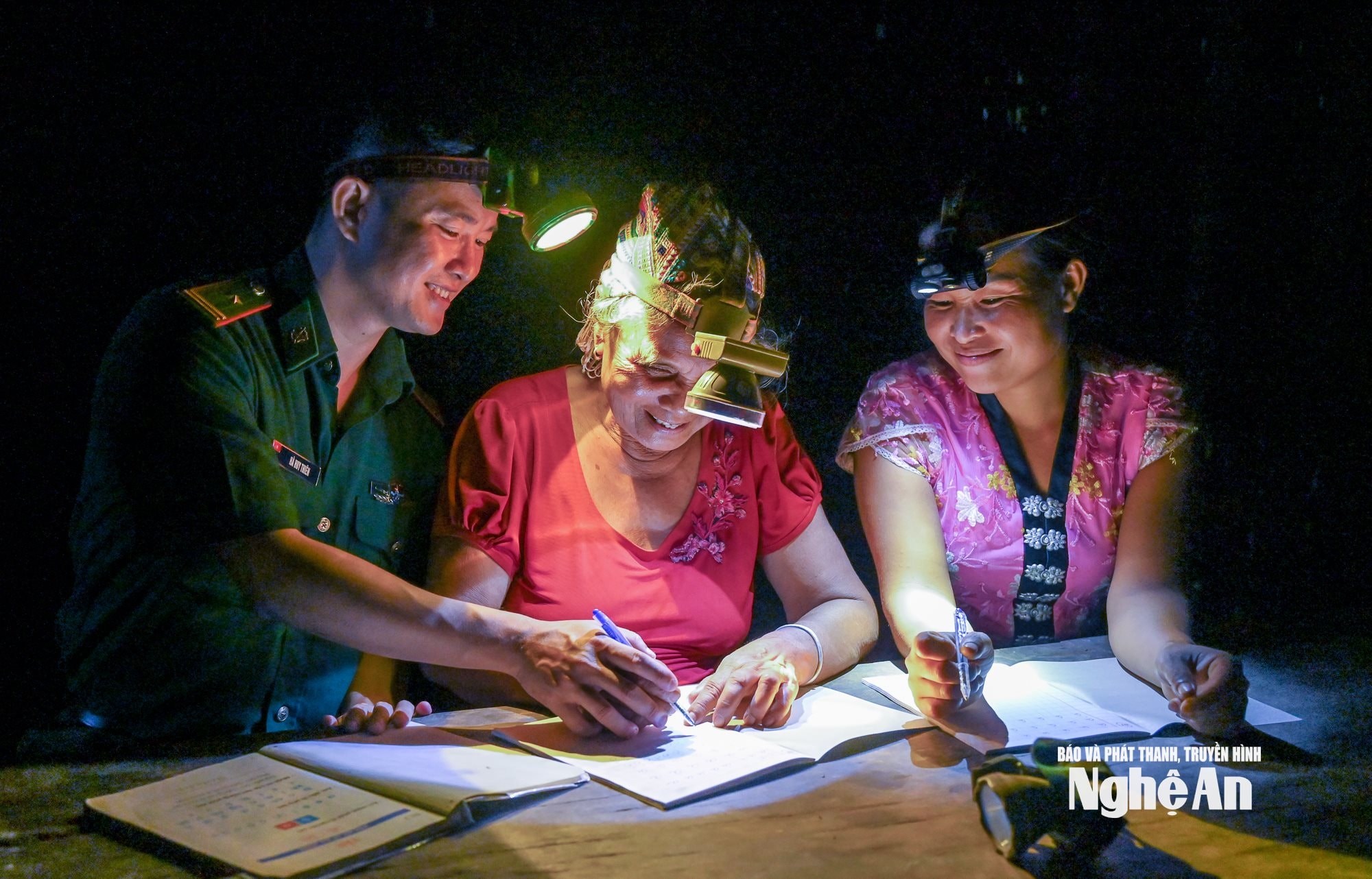
The village road is still muddy and unpaved. Yet every evening, the women carry flashlights and travel a long distance to class. The small, simple classroom is located at My Ly 1 Ethnic Boarding Primary School. Every evening, the sounds of spelling and laughter fill the air. Alongside the soldiers are the teachers from My Ly 1 Ethnic Boarding Primary School. They patiently teach the 10 elderly women how to write, do calculations, read newspapers, and sign their names.
Ms. Vu Y Xai, 48 years old, a resident of Pieng Vai village, holding an old notebook, smiled gently: “Before, writing was very difficult for me. Now that I can write my own name, I'm so happy. The border guards are like family; they gave us cows, saplings, and now they're teaching us to read and write. Everyone in the village appreciates them. The class started in May 2025. If it weren't for the floods, we would probably know how to read and write by now.”
Besides the class in Pieng Vai village, in the border area of Nghe An province, there are quite a few literacy classes organized by border guard posts in coordination with local Party committees, authorities, and schools. These include literacy classes opened by Nam Can Border Guard Post in 2018; two literacy classes opened by Tri Le Border Guard Post in Huoi Moi and Muong Long villages in 2022 and 2023-2024; and a literacy class opened by Tam Hop Border Guard Post in Phong village in 2023-2024.
Border guards instruct elderly people on how to write. Photo: Thanh Cuong
Lieutenant Colonel Ho Xuan Toan, Deputy Political Officer of Tri Le Border Guard Station, recounted: “The latest literacy class, jointly organized by the Station and the 4th Economic and National Defense Brigade at the Muong Long village cultural center, has 50 participants. At the end of phase 1 in May 2024, 35 people had completed the program, including 18 women who could read and write fluently. From the end of September 2024, the Muong Long village literacy class entered phase 2.”
In the literacy class in Muong Long village, along with teaching literacy, the "teachers" skillfully combine it with disseminating information to the women about the Party's guidelines and policies, the State's laws, hygienic living practices, and the eradication of outdated customs. The people of Muong Long village say, "They explain things very clearly; we remember it after just one listen." Ms. Xong Y Da, 34 years old, from Muong Long village, shared her joy: "After about 3 months of being taught by the teachers, I can read, write, do calculations, and text on my phone. At the end of the first phase of the class, I was able to pass my motorbike driving test. Now I transport agricultural products to the commune center to sell, keeping my own records, without needing anyone else's help."
"
Disseminating digital knowledge and skills to officials and citizens is crucial in the current period. It opens new doors – where knowledge becomes a driving force for life transformation. From being able to read, they learn how to handle procedures and conduct business calculations; from knowing how to use technology, they connect with the outside world. It is a journey from darkness to light, from poverty to self-reliant economic development.
Colonel Tran Dang Khoa - Deputy Political Commissar of the Provincial Border Guard Command
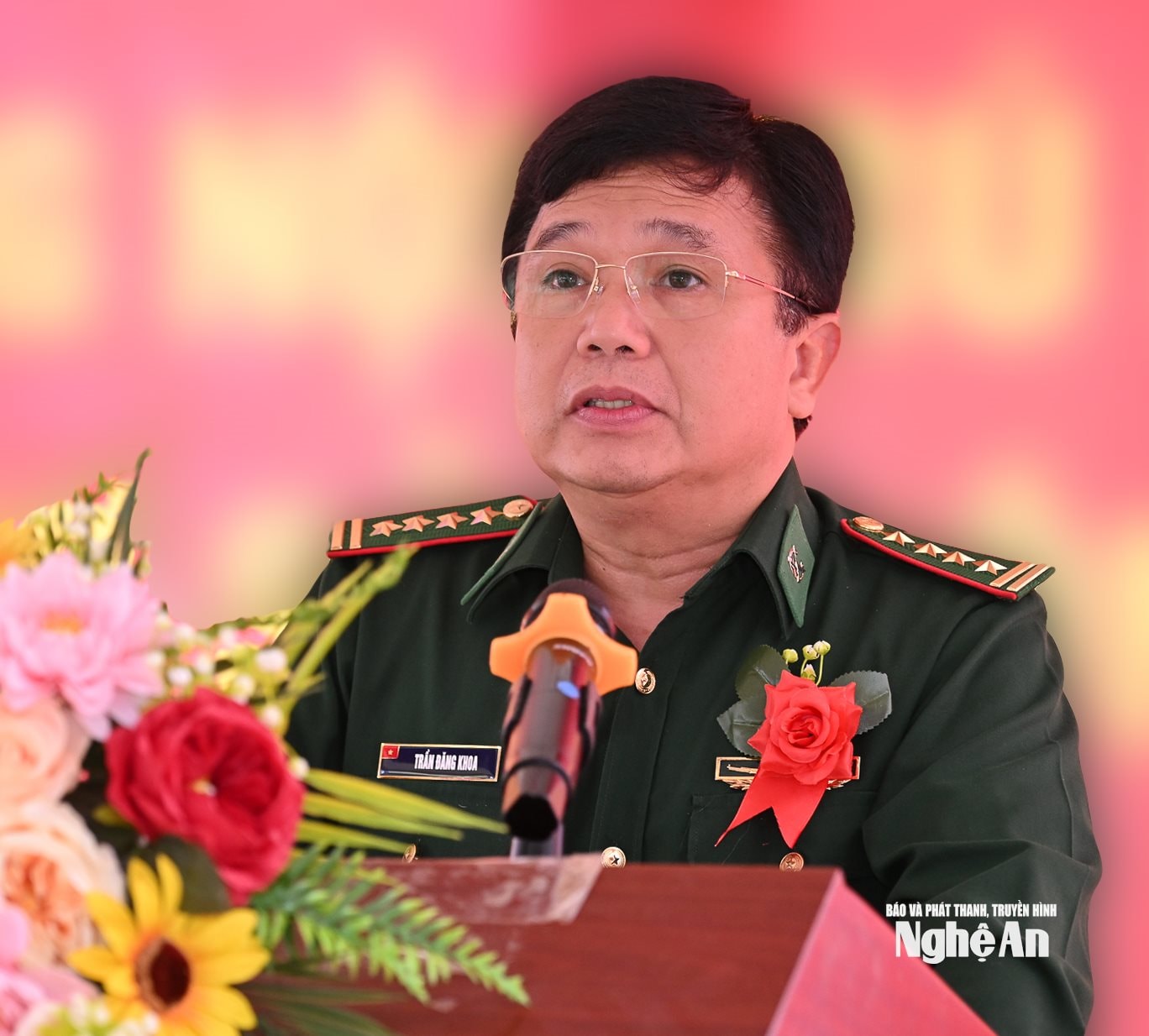
For many years, these classes have become a familiar sight in the border region of Nghe An. Each letter, each lesson, is a small but persistent step on the journey of enlightenment. Colonel Tran Dang Khoa, Deputy Political Commissar of the Provincial Border Guard Command, said: After successfully organizing literacy classes, the Nghe An Border Guard is now promoting the "Digital Literacy Movement," spreading digital knowledge and skills to officers and soldiers. After improving their digital capabilities and mastering digital skills, border guard officers and soldiers will continue to become "teachers" to spread digital knowledge to people in the highlands.
According to Colonel Tran Dang Khoa, spreading digital knowledge and skills to officials and citizens is crucial in the current period. It opens a new door – where knowledge becomes a driving force for life transformation. From knowing how to read, they learn how to handle procedures and conduct business calculations; from knowing how to use technology, they connect with the outside world. It is a journey from darkness to light, from poverty to self-reliant economic development.
Your comment has been submitted and will be displayed after being reviewed by the editorial team. The editorial board reserves the right to edit comments to comply with the newspaper's content guidelines.

.jpg)