
Banh Muot (steamed rice rolls) from Cho Gam Market - a rustic treat full of hometown charm.
For many years, regularly, even before dawn, the women of Gam Market in Quan Thanh commune have been diligently making layers of pristine white, soft, and fragrant rice paper. This simple, rustic treat is not only a means of livelihood but also a cultural tradition deeply rooted in the lives of generations of people here.
Half a century of keeping the flame of traditional crafts alive.
According to the elders in the village, the craft of making rice paper rolls at Gam Market (Quan Thanh commune) has a history of more than half a century. Through many ups and downs, this traditional craft has never faded away. In fact, some families in Quan Thanh commune today have had 4 or 5 consecutive generations dedicated entirely to making rice paper rolls.
Visiting Ms. Phan Thi Ngoc's noodle shop at dawn, we witnessed her single-handedly making five pots of rice noodles simultaneously. Amidst the swirling steam, her hands moved swiftly and nimbly from one pot to another. Each action—scooping the batter, spreading it evenly on the stretched cloth, covering it with a lid, and then rolling the cooked noodle out—was performed decisively, skillfully, and rhythmically, as if it were a habit deeply ingrained in her.
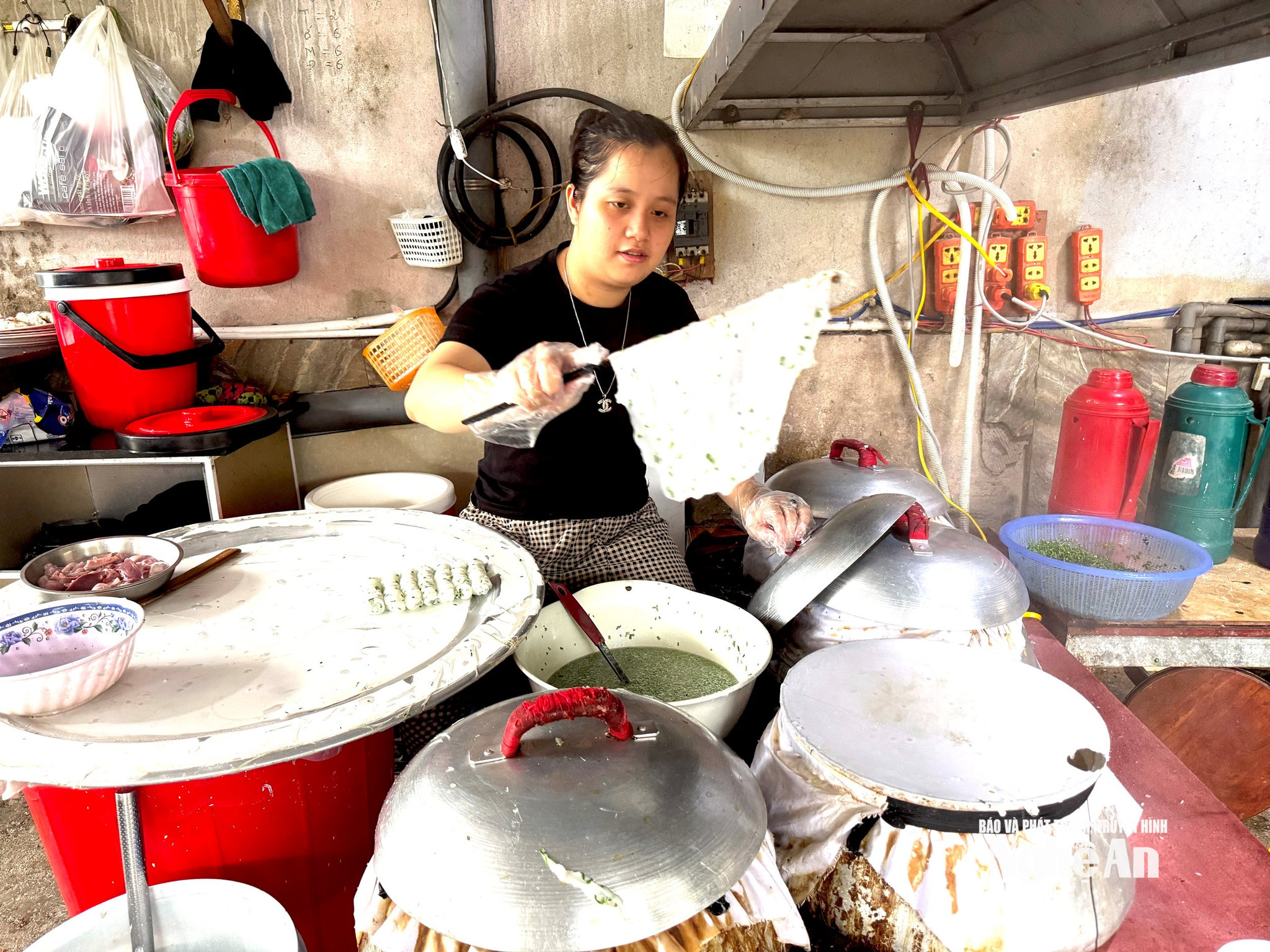
Ms. Phan Thi Ngoc shared: “Making rice noodles requires staying up late and waking up early. To retain customers, the first and most crucial factor is ensuring the quality of the noodles.” First and foremost is the selection of Khang Dan rice; the noodles shouldn't be too hard, as this will make them dry and rough, but they also shouldn't be too sticky, as this will cause them to become crumbly. The rice must have a certain "just right" consistency so that when ground and steamed, the dough achieves the perfect elasticity and chewiness.
After purchasing the rice, it is washed thoroughly and soaked in purified water. Then, it is ground into a watery flour. A special feature of the rice noodle making process in Gám market is that the flour is soaked again after grinding, resulting in a naturally pure white flour with a pure aroma. Depending on the number of orders, Ms. Ngoc can produce and sell an average of 100-150 kg of rice noodles per day. During holidays, Tet (Lunar New Year), or festivals, production capacity is maximized, reaching over 200 kg of rice noodles per day to meet market demand.
Right next to Ms. Ngoc's house, the atmosphere at Ms. Duong Thi Huyen's workshop is equally bustling as she nimbly makes five pots of rice cakes. Ms. Huyen proudly shared that her family's rice cakes now not only serve neighbors in the commune but are also packaged and sold wholesale to distributors and restaurants in the former Vinh City and Hanoi areas.
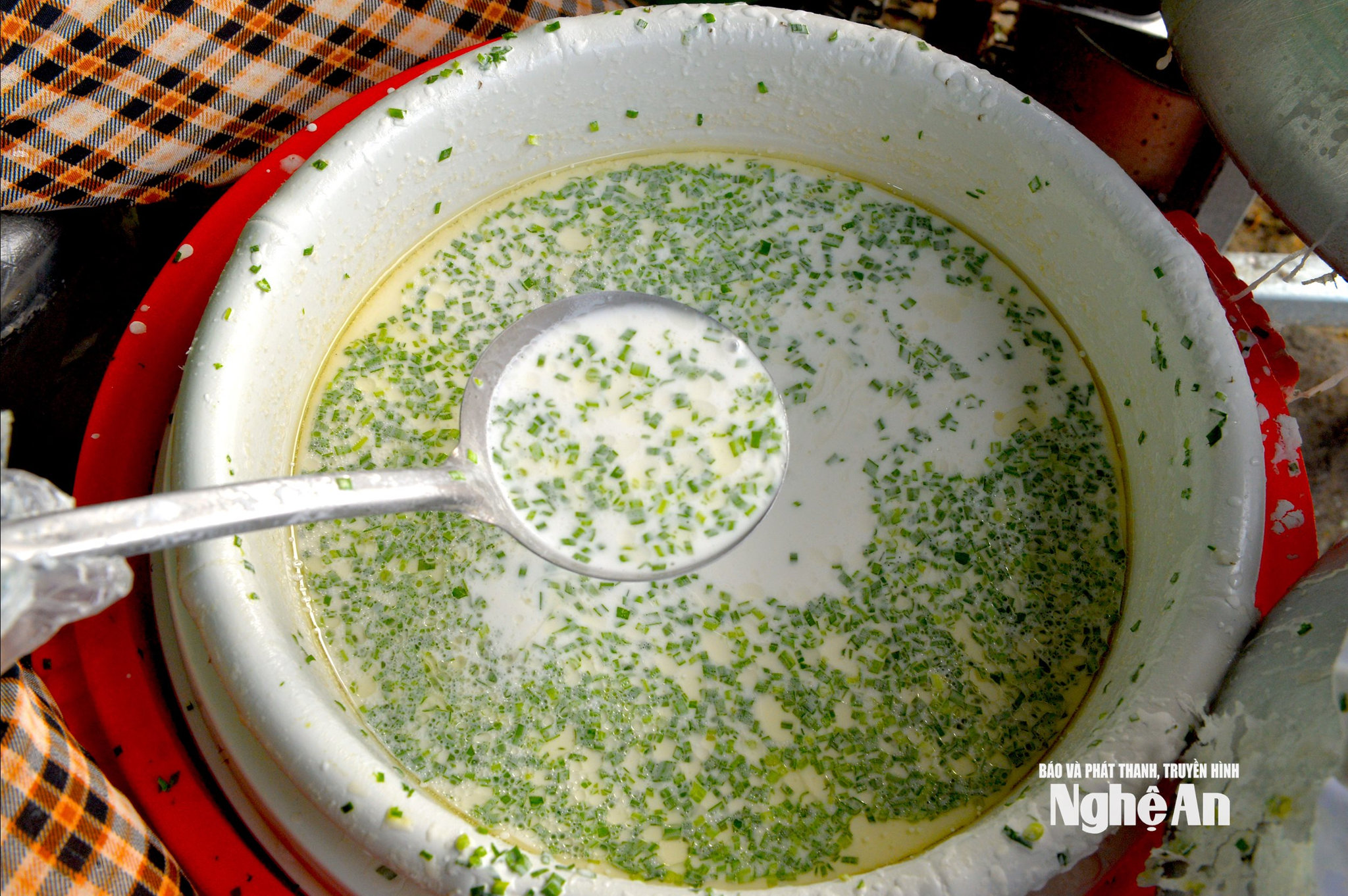
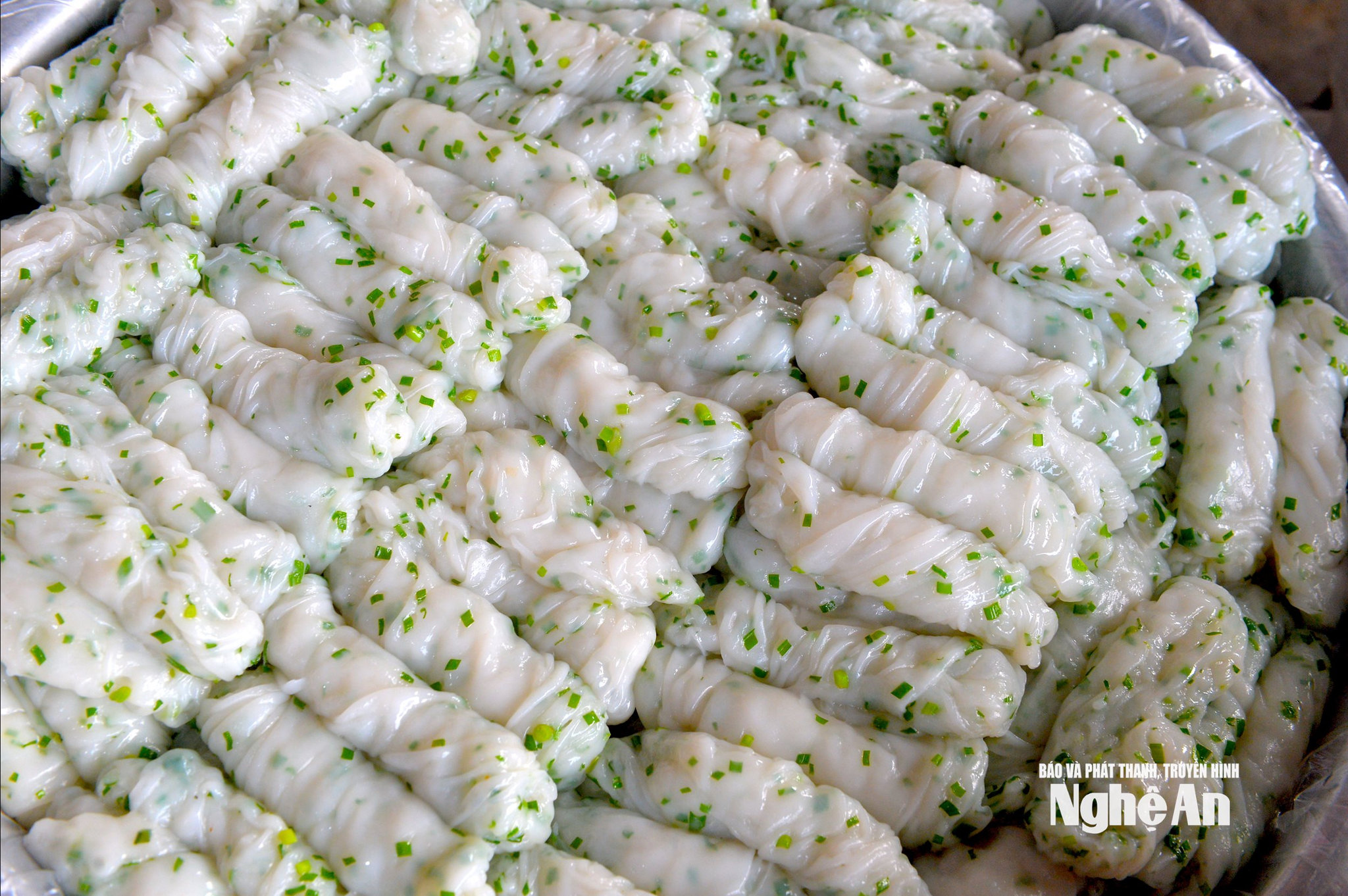
The unique flavor of Gám Market's steamed rice rolls has now transcended the village boundaries and is being exported, with many overseas customers ordering large quantities. Ms. Nguyen Thi Nhung, a bakery owner, shared: “Many overseas customers call and say that just seeing the steamed rice rolls is like seeing home. That motivates us to pour all our heart into each batch, sending a little bit of our hometown's love to those living abroad.” Therefore, to export the rolls, the packaging process is extremely strict. After completion, the rolls are carefully frozen to preserve their softness, elasticity, and distinctive flavor throughout the long journey.
The flavors of home captivate diners.
More than just a simple breakfast dish, the steamed rice rolls from Gám Market have long been a source of pride and a distinctive culinary tradition for the local people. What sets this treat apart and makes it unique is the pristine white, chewy rolls, imbued with the delicate aroma of freshly harvested rice from this rice-growing region.
The secret to this dish's irresistible appeal lies in the layer of scallion oil brushed on the outside. Finely chopped dried onions are fried until golden brown and crispy in rich pork fat. This glossy scallion oil prevents the rice sheets from sticking together and provides a rich, savory, and fragrant flavor that delights diners without being at all greasy.
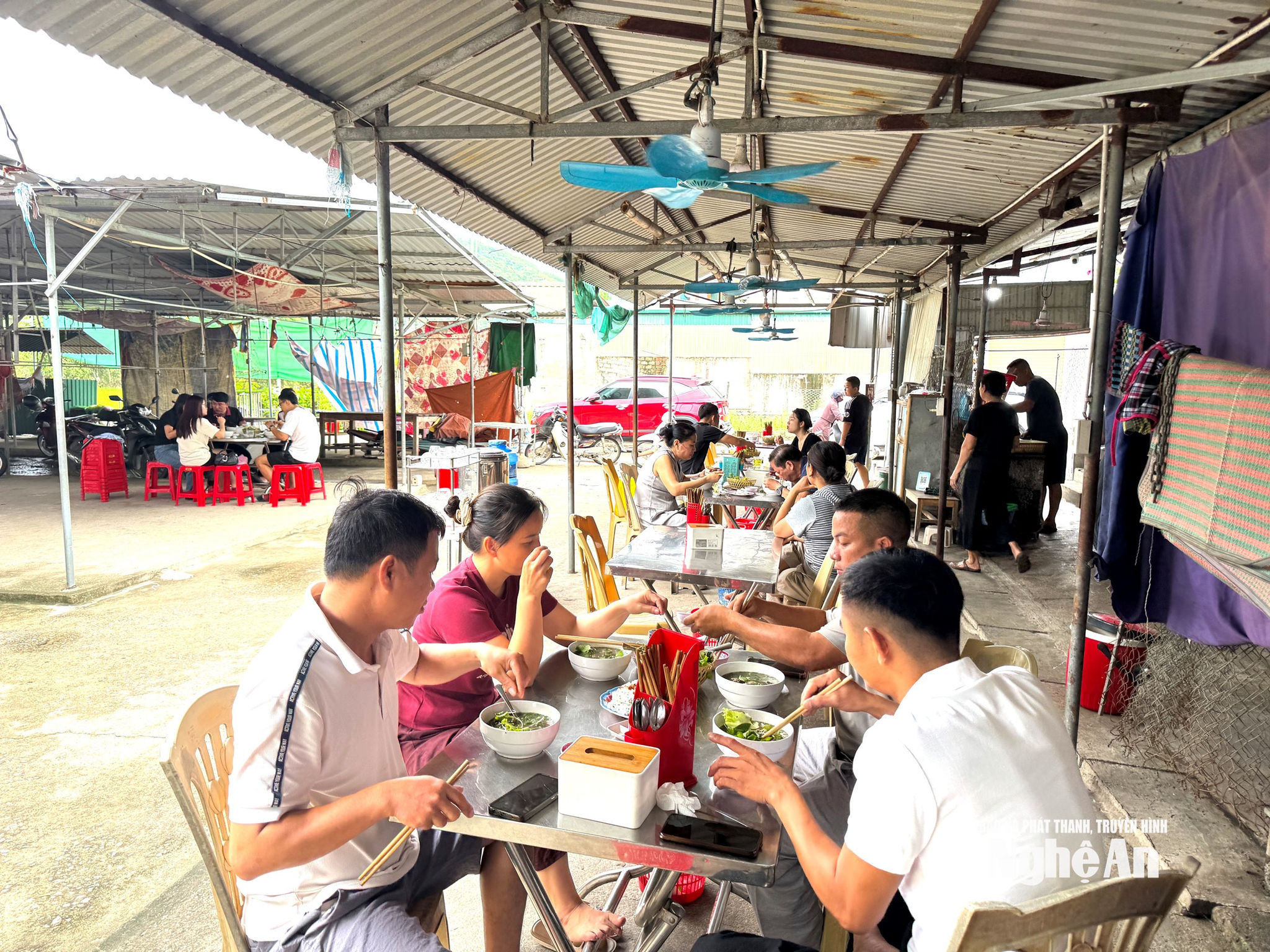
The sophistication of Gám Market's rice noodle rolls is also evident in their versatile pairings with various accompaniments. Diners can enjoy them simply by dipping them in a lime, chili, and garlic fish sauce, or combining them with pork sausage, offal stew, or chicken stew. However, the culinary "pinnacle," embodying the authentic local flavor, is the pairing of rice noodle rolls with Nghệ An-style eel soup. The harmonious blend of the refreshing taste of the rice noodles and the spicy, rich flavor of the eel soup leaves a lasting impression on visitors from all over.
Mr. Le Van Long, a resident of Yen Thanh commune, happily shared: "Every holiday, my children and grandchildren return from the South to reunite with their families. The first dish they always mention is the sticky rice cake from Gam market, served with eel soup. So, on those days, I always make sure to cycle all the way to the bakery to buy a few kilograms of freshly made cakes to treat the whole family. My grandchildren and children all praise the soft, fragrant cake, and when mixed with the spicy eel soup, it's absolutely delicious, unmatched anywhere else."".
Elevating the brand of specialty rice-growing regions.
The traditional rice noodle making craft in Gám Market is undergoing a significant transformation thanks to the application of technology in production. Instead of the arduous, hot conditions by wood-fired or charcoal stoves, which produced harmful smoke and dust, most households have boldly invested in modern electric boiler systems. The heavy, time-consuming hand-cranked stone mills have also been completely replaced by industrial flour mills.
This innovation results in finer and more uniform grinding of the flour, increasing production speed and significantly reducing labor for local people. The technological improvements also enable production facilities to strictly meet food safety and hygiene standards, elevating the brand image of local specialties.
Discussing the development direction of the craft village, Mr. Cao Xuan Toan - Vice Chairman of the People's Committee of Quan Thanh commune, said: "Currently, the entire commune has nearly 20 households maintaining the traditional rice noodle making craft, providing employment and stable income for the workforce, mainly women. On average, each household consumes 50-80 kg of rice per day, significantly contributing to improving their economic lives. In addition, some people from the village who go to work far away also bring this traditional craft with them to establish their businesses, helping to spread the reputation of the local specialty."".
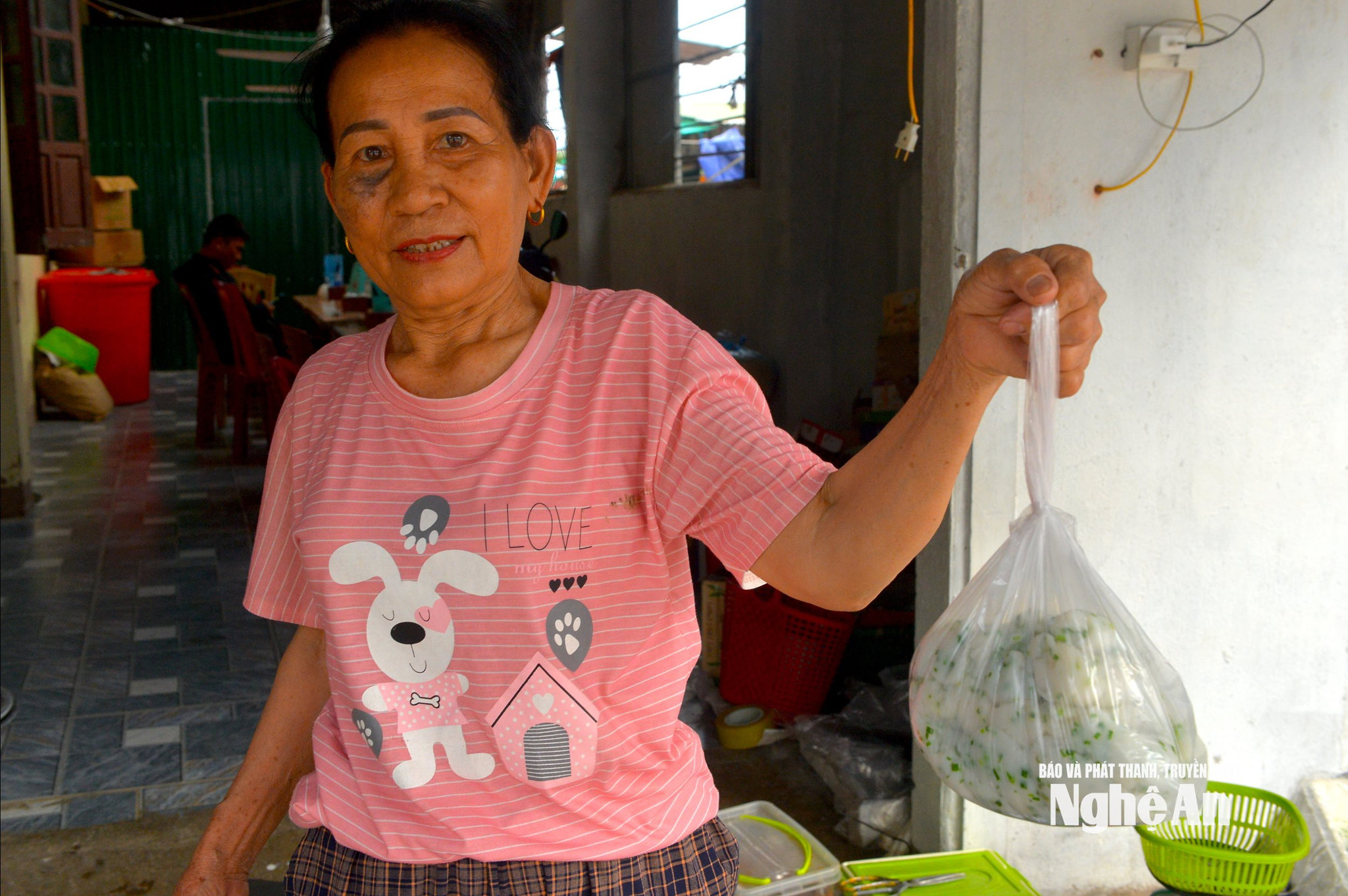
According to Mr. Toan, in the future, leveraging the advantages of a purely agricultural area adjacent to the Ru Gam spiritual and ecological tourism area, Quan Thanh commune aims to create a strong impression on tourists from all over when they come to enjoy the scenery.
The local authorities have been actively promoting and encouraging residents to develop the traditional rice noodle making craft while ensuring food safety and hygiene. The long-term goal is to establish a officially recognized traditional craft village, which will both serve the culinary needs of tourists and enhance the income value chain for local people.
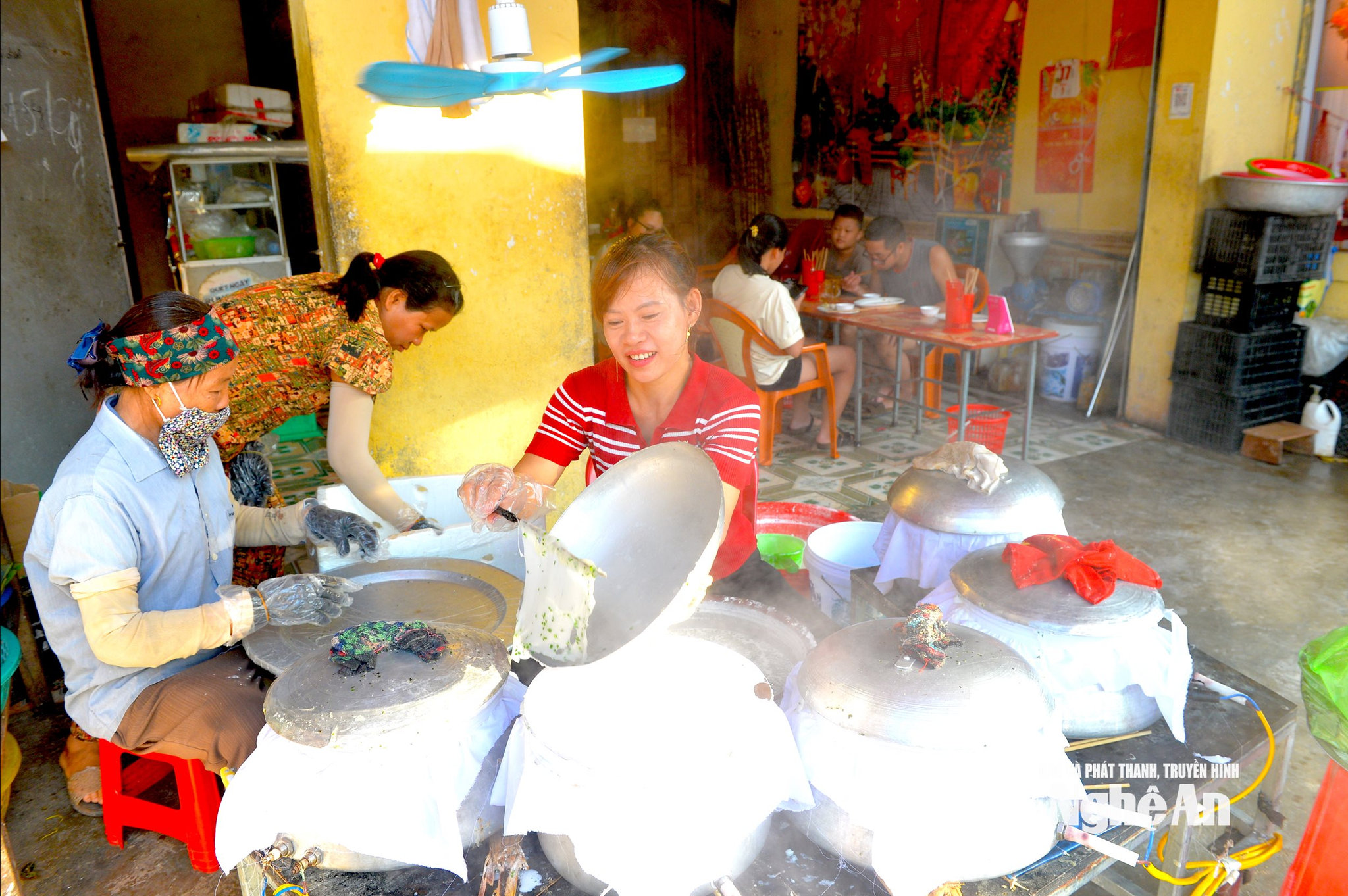
The craft of making Gám Market rice noodles today is not just a livelihood, but also a spiritual thread that strengthens love for one's homeland. Every day, carried by trucks traveling back and forth, the specialty Gám Market rice noodles are reaching every corner of the country. This treat carries with it the genuine heart and rich, warm flavor of the rice-growing countryside, so that those who leave will always fondly remember their roots.


