
Ensuring voters' right to vote in exceptional circumstances.
The elections for the 16th National Assembly and People's Councils at all levels for the 2026-2031 term are being prepared with the requirement to ensure democracy, legality, and the promotion of the people's right to self-governance. In particular, creating conditions for all voters, including those in special circumstances, to fully exercise their right to vote is a crucial aspect. Regarding this issue, our reporter interviewed Ms. Phan Thi Thu Hang, M.Sc., from the Department of State and Law, Nghe An Provincial Political School.
Perform:Phuoc Anh• March 11, 2026
*****
PV:Voting is a fundamental political right. citizens. So,What mechanisms does current Vietnamese law provide to ensure that all voters, including those in special circumstances, can exercise their right to vote?
Ms. Phan Thi Thu Hang, M.Sc.:If divided by area, human rights can be divided into two main groups: civil and political rights, and economic, social, and cultural rights.
The group of civil and political rights includes the right to life; the right not to be tortured or humiliated; the right to personal liberty and security; the right to equality before the courts; the right to freedom of religion and belief; the right to vote, stand for election, and participate in state and social affairs... The group of economic, social, and cultural rights includes the right to work; the right to form and join trade unions; the right to social security; the right to an adequate standard of living; the right to achieve the highest possible standard of health; the right to education; the right to participate in cultural life; the right to housing…
Citizenship rights originated with the constitutionalism of the bourgeois revolution and are enshrined in the Declarations and Constitutions of various nations. One of the most important political rights of citizens is the right to vote and stand for election. This right is recognized in all Constitutions of the Socialist Republic of Vietnam (Article 18 - 1946 Constitution; Article 23 - 1959 Constitution; Article 57 - 1980 Constitution; Article 54 - 1992 Constitution; Article 27 - 2023 Constitution).
.jpg)
While enshrining the right to vote in the Constitution is necessary, its practical implementation by citizens through effective mechanisms is even more crucial. This is concretized in documents such as the Law on the Election of National Assembly Deputies and People's Council Deputies, along with guiding documents for its implementation.
Currently, mechanisms to ensure that all voters, including those in special circumstances, can exercise their right to vote are primarily enshrined in the Law on Election of National Assembly Deputies and People's Council Deputies No. 85/2015/QH13 (amended and supplemented in 2025 - hereinafter referred to as Law No. 85/2015/QH13) and other related documents, as specifically stated below:
The firstRegarding the creation and public disclosure of voter lists: Local authorities create complete voter lists and publicly post them for citizens to check. Voters have the right to complain and request corrections if the information is incorrect or omitted (Articles 29 and 30 of Law No. 85/2015/QH13). This is to verify the legal status of citizens, screen citizens who are eligible to vote, those who are not yet eligible to vote, and those whose voting rights have been revoked.
Mondayi,Elections are usually held on weekends to allow all eligible citizens to conveniently arrange their personal schedules to participate in this nationwide event; ensuring maximum accessibility, guaranteeing voter turnout, and facilitating organization and logistics.
For special areas (such as remote areas, islands, or armed forces units on active duty), if permitted by the National Election Council, elections may be held earlier, but the official election day for the whole country will always remain Sunday.
Tuesday,The law organizes measures to support special voters in exercising their right to vote through various special mechanisms such as: bringing supplementary ballot boxes to the homes and workplaces of sick, elderly, or disabled people who cannot go to polling stations, those who are temporarily detained, those in remote areas, and those on islands (Article 69 - Law No. 85/2015/QH13); and organizing separate polling areas at hospitals, detention centers, compulsory education facilities, and armed forces units (Article 11 - Law No. 85/2015/QH13).
Wednesday,There are appropriate sanctions to protect the right to vote through regulations that address acts that hinder the right to vote, such as coercion, bribery, and electoral fraud.
Specifically, Article 95 of Law No. 85/2015/QH13 clearly stipulates: Anyone who uses deceptive tactics, bribery, or coercion to obstruct the election or candidacy of citizens; violates regulations on election campaigning; or any person responsible for election work who falsifies documents, commits ballot fraud, or uses other methods to distort election results or violates other provisions of election law shall, depending on the nature and severity of the violation, be subject to disciplinary action, administrative penalties, or criminal prosecution.
The 2015 Penal Code (amended and supplemented by Law No. 12/2017/QH14, Law No. 59/2024/QH15 and Law No. 86/2025/QH15) specifically stipulates two election-related offenses in Articles 160 and 161.
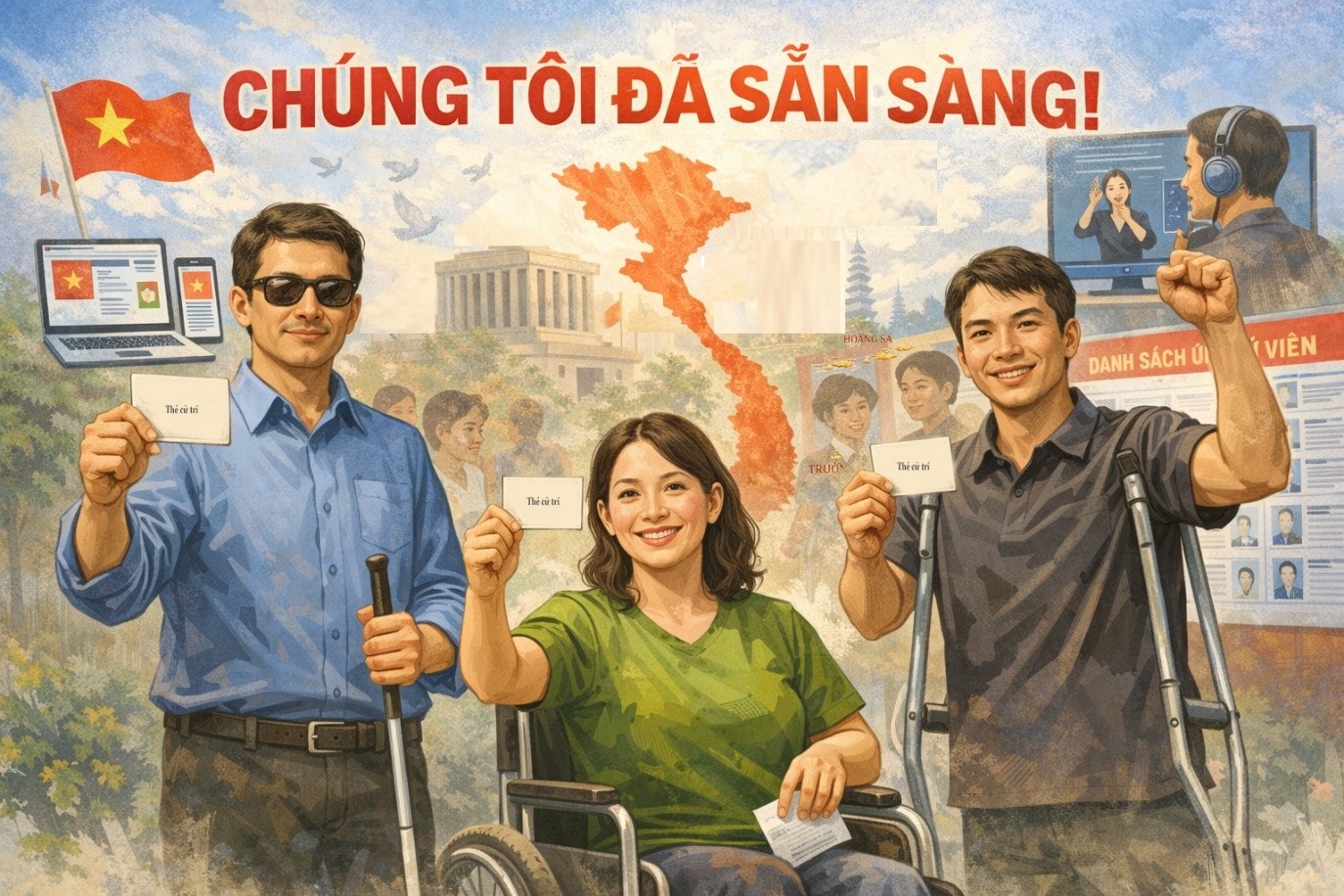
PV:For elderly, disabled, or ill voters who are unable to travel to the polling station, what legal provisions provide for assisting them in exercising their right to vote?
Ms. Phan Thi Thu Hang, M.Sc.:First, let me briefly explain the electoral principles of Vietnam, which are extremely important and are ingrained in the awareness and behavior of every citizen.
According to Clause 1, Article 7 of the 2013 Constitution, the election of National Assembly deputies and People's Council deputies is conducted according to the principles of "universal, equal, direct, and secret ballot".
The principle of "universal" stipulations that all citizens of eligible age have the right to vote (except for certain cases where individuals are not allowed to vote according to Article 27 of the 2013 Constitution and Clause 1, Article 30 of Law No. 85/2015/QH13); "equality" means each person has one vote with equal value; "direct" means voting in person, without intermediaries; "secret ballot" means the content of the ballot is kept secret, the writing and casting of ballots must be done in a private area, and no one knows who the voter is voting for.
Clause 4 of Article 69 of Law No. 85/2015/QH13 stipulates:In cases where voters are ill, elderly, or disabled and unable to go to the polling station, the Election Committee will bring a supplementary ballot box and ballots to the voter's residence or place of treatment so that the voter can receive the ballot and cast their vote..
This regulation clearly demonstrates the true nature of the state as "of the people, by the people, and for the people," realizing the principle of universal suffrage, respecting the rights and dignity of citizens, and ensuring the objectivity and honesty of election results.
PV:For voters who have difficulty filling out their ballots, such as the visually impaired or those unable to write independently, what are the legal provisions for allowing them to seek assistance from others while still ensuring the principle of secret ballot?
Ms. Phan Thi Thu Hang, M.Sc.:This concern is clearly addressed in Clause 3, Article 69 of Law No. 85/2015/QH13 as follows:Voters who are unable to write their ballots may ask someone else to write them for them, but they must cast their ballots themselves; the person writing the ballot must ensure the secrecy of the voter's ballot. If a voter is unable to cast their ballot due to a disability, they may ask someone else to place the ballot in the ballot box..
.png)
PV:In certain special cases, such as voters who are being held in custody, detention, or in compulsory education or rehabilitation facilities, how is their right to vote exercised according to the law?
Ms. Phan Thi Thu Hang, M.Sc.:For voters in special circumstances, such as being detained, imprisoned, or serving administrative sanctions at educational institutions or compulsory rehabilitation centers, the law has very specific provisions to ensure they do not lose their citizenship rights until a court ruling deprives them of those rights.
Rankbest,This is the right to be registered on the Voter List. This is stipulated in Clause 5, Article 69 of Law No. 85/2015/QH13:Voters who are currently detained, held in custody, or undergoing compulsory education or rehabilitation programs are registered on the voter list to elect representatives to the National Assembly and the Provincial People's Council in the province where they are being detained, held in custody, or undergoing compulsory education or rehabilitation programs..
Furthermore, despite their restricted freedom, these voters still have the right to full access to information about the candidates. The management of these facilities is responsible for disseminating brief biographies of candidates for the National Assembly and People's Councils at all levels through the internal broadcasting system, bulletin boards, or by distributing documents to each cell and room.
If a person is released from prison within 24 hours of the start of voting, they have the right to request removal from their previous registration and be added to the voter list at their place of permanent or temporary residence to exercise their right to vote.
MondayRegarding the form of voting: Clause 4, Article 69 of Law No. 85/2015/QH13 stipulates:For voters who are in temporary detention, undergoing compulsory education or rehabilitation in facilities where the detention center, compulsory education center, or compulsory rehabilitation center does not have a separate polling area, or for voters who are being held in temporary detention facilities, the Election Committee will bring a supplementary ballot box and ballots to the detention center, temporary detention facility, compulsory education center, or compulsory rehabilitation center so that the voters can receive their ballots and cast their votes.
PV:From a legal and practical perspective regarding election organization, what should be considered to ensure that localities best safeguard the voting rights of specific voter groups, contributing to making election day a true celebration for all citizens?
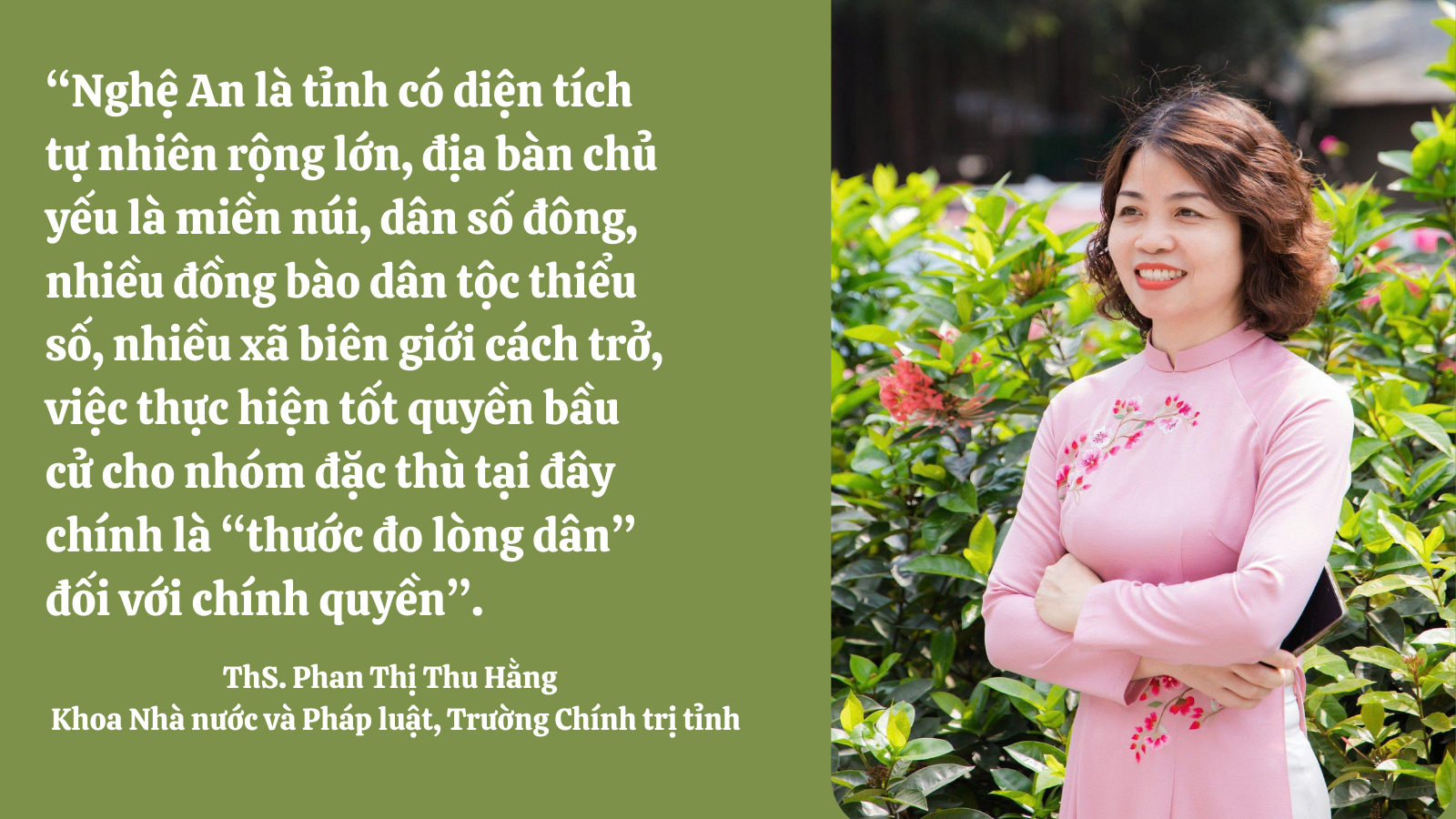
Ms. Phan Thi Thu Hang, M.Sc.:Nghe An province has a large natural area, mainly mountainous terrain, a large population, many ethnic minorities, and many isolated border communes. Ensuring the right to vote for this special group is a "measure of public sentiment" towards the government. To successfully conduct elections in our province, I believe the following points should be noted:
The first, effectively disseminate information about the right to vote to all citizens, paying attention to appropriate and effective methods of communication for each specific group of voters.
MondayIt is necessary to review and accurately classify the voter list, and based on that, appropriately arrange polling stations and supplementary ballot boxes for specific groups.
TuesdayThe mechanisms and methods for implementing the voting process need to be fully prepared, tailored to the specific characteristics of the target group, conducted in accordance with the law, in a solemn yet truly convenient manner, avoiding mere formality.
WednesdayThis will enhance the enthusiasm, dedication, and professional skills of election committee members so that they can perform their duties well, thereby building trust among specific target groups participating in the election.
Thursday, creating a festive atmosphere for the entire community in every neighborhood and residential area where polling stations are located through propaganda work, cultural and sports activities, and decorations with flags and flowers…
PV: ThankMs. Phan Thi Thu Hang, M.Sc.!


