
Preserving the Lai Tay script and the aspirations of the elderly artisan.
For nearly 20 years, dedicated to teaching the mother tongue to students with passion and responsibility, Artisan Vi Ngoc Chan remains concerned: To ensure that cultural heritage is not limited to extracurricular lessons, long-term policies are needed to preserve cultural identity within schools.
Special after-school classes
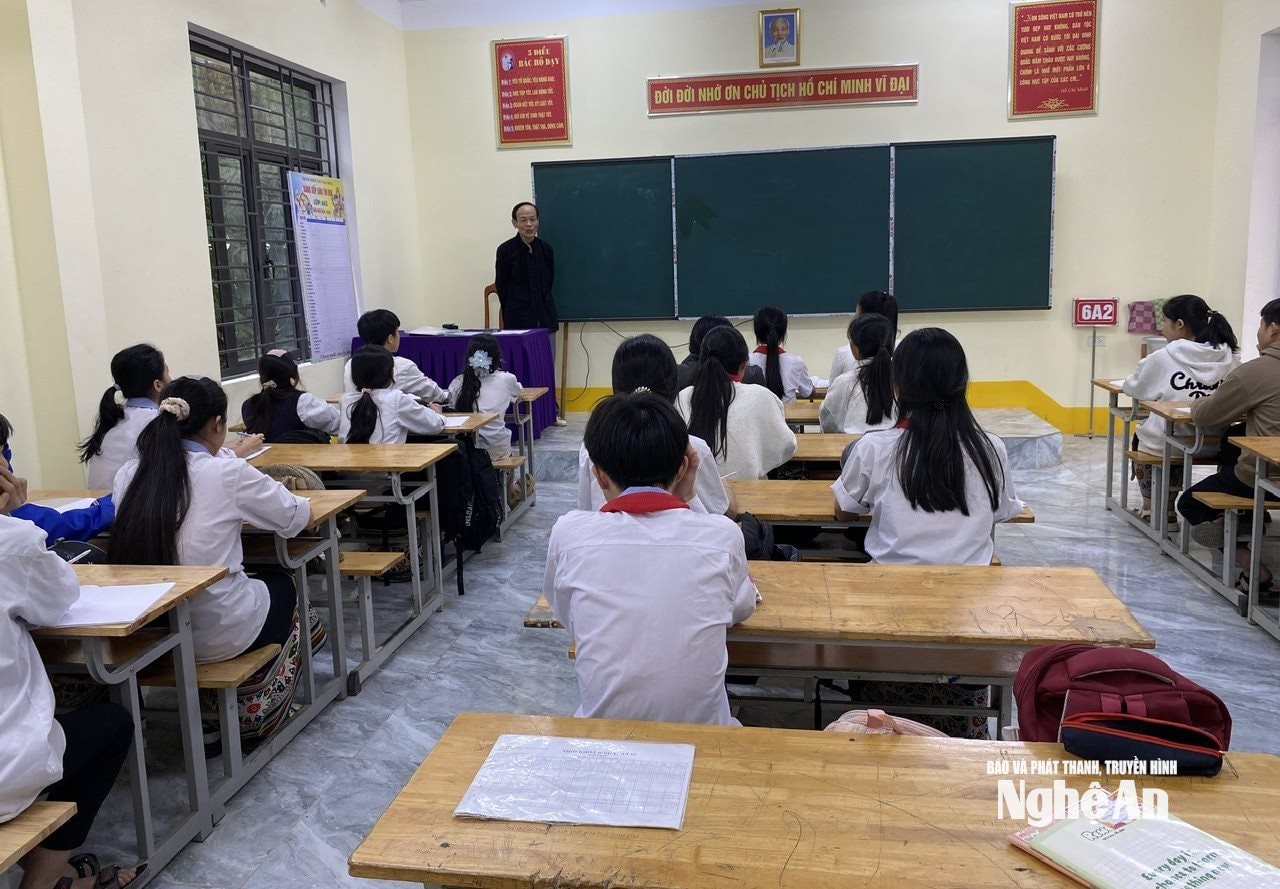
Chau Phong Ethnic Boarding Secondary School currently has nearly 80% of its students from the Thai ethnic group. At this highland school, on weekday afternoons, a special class is held with great enthusiasm. It's where students temporarily set aside their academic subjects to familiarize themselves with the Lai Tay script – a precious cultural heritage that has been associated with the Thai community for generations.
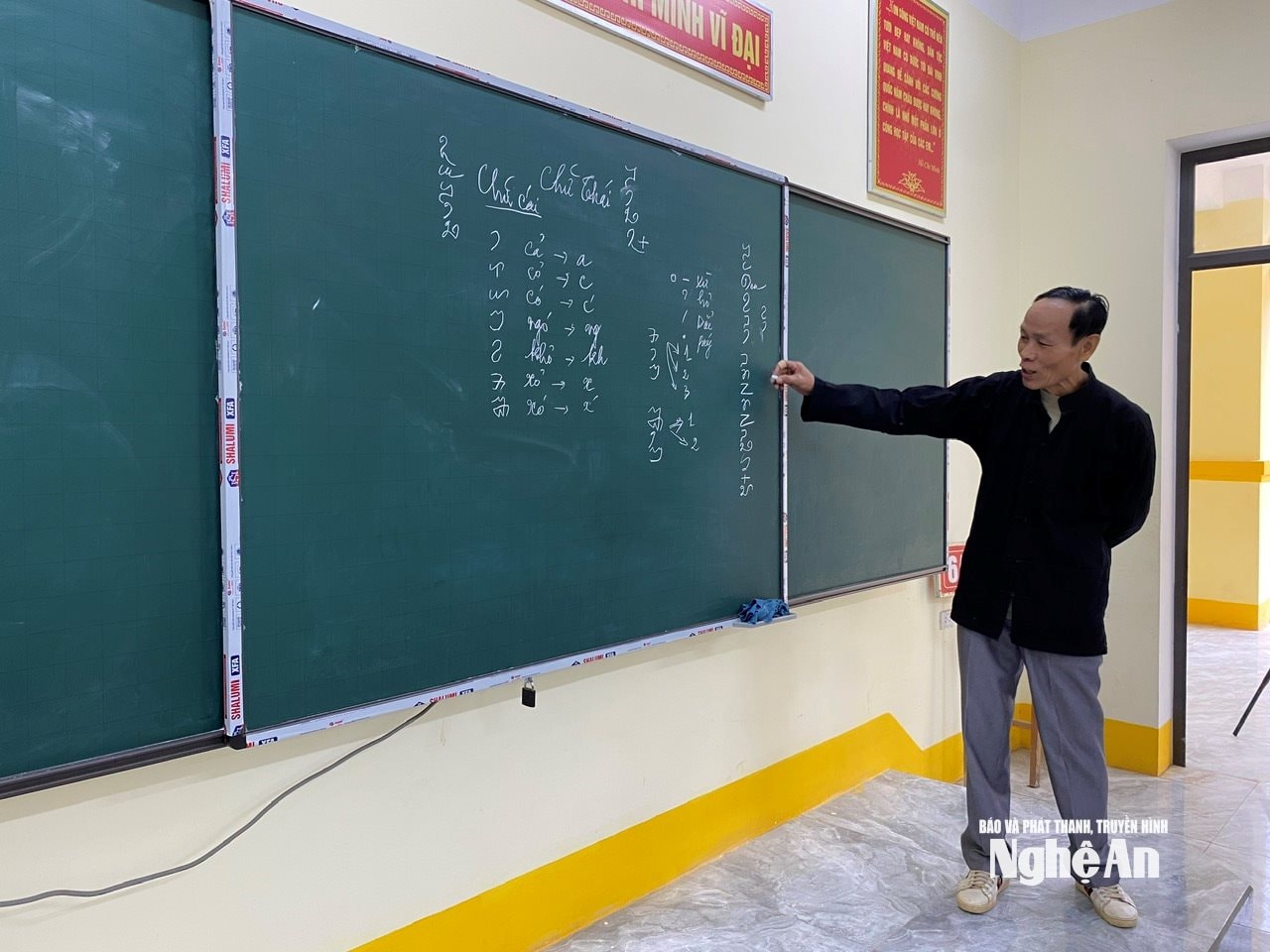
The person directly teaching and diligently imparting knowledge is Artisan Vi Ngoc Chan, residing in Cong village, Hung Chan commune (Nghe An province). With nearly 20 years of teaching experience, he previously worked at the Political Center of Quy Chau district (formerly) and participated in teaching officials and people in many localities. Driven by his passion and deep sense of responsibility for the heritage, he volunteered to teach literacy to children at school during off-hours.
His teaching tools were extremely simple, his lesson plans meticulously handwritten in the Thai script, yet they contained a great aspiration to preserve and spread traditional knowledge. Artisan Vi Ngoc Chan shared: “First and foremost, I want to preserve the Thai script so that everyone can know and use it. When children learn the Thai script, they will have the opportunity to delve deeper into the proverbs, rhymes, and folk songs of their people.”
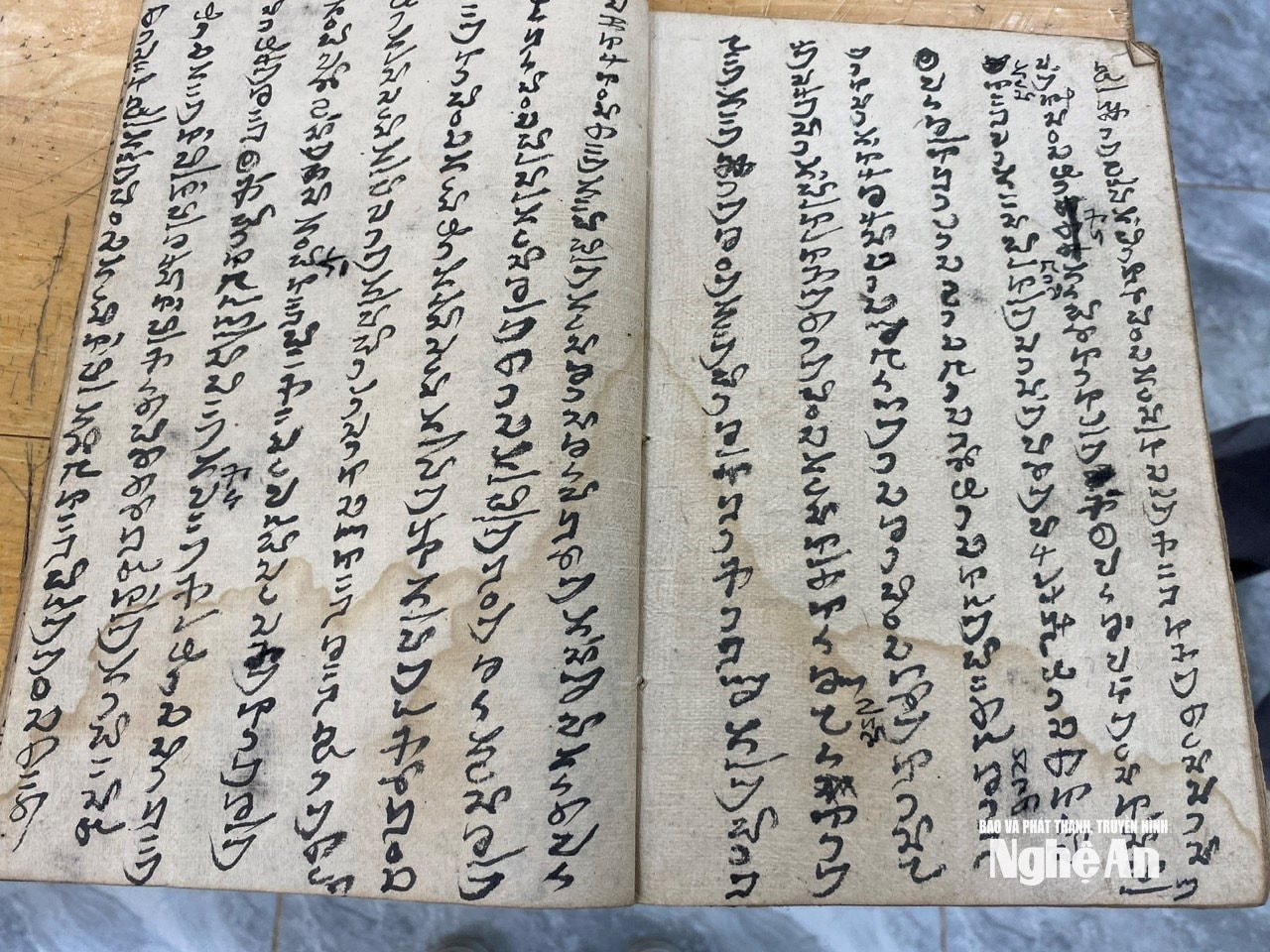
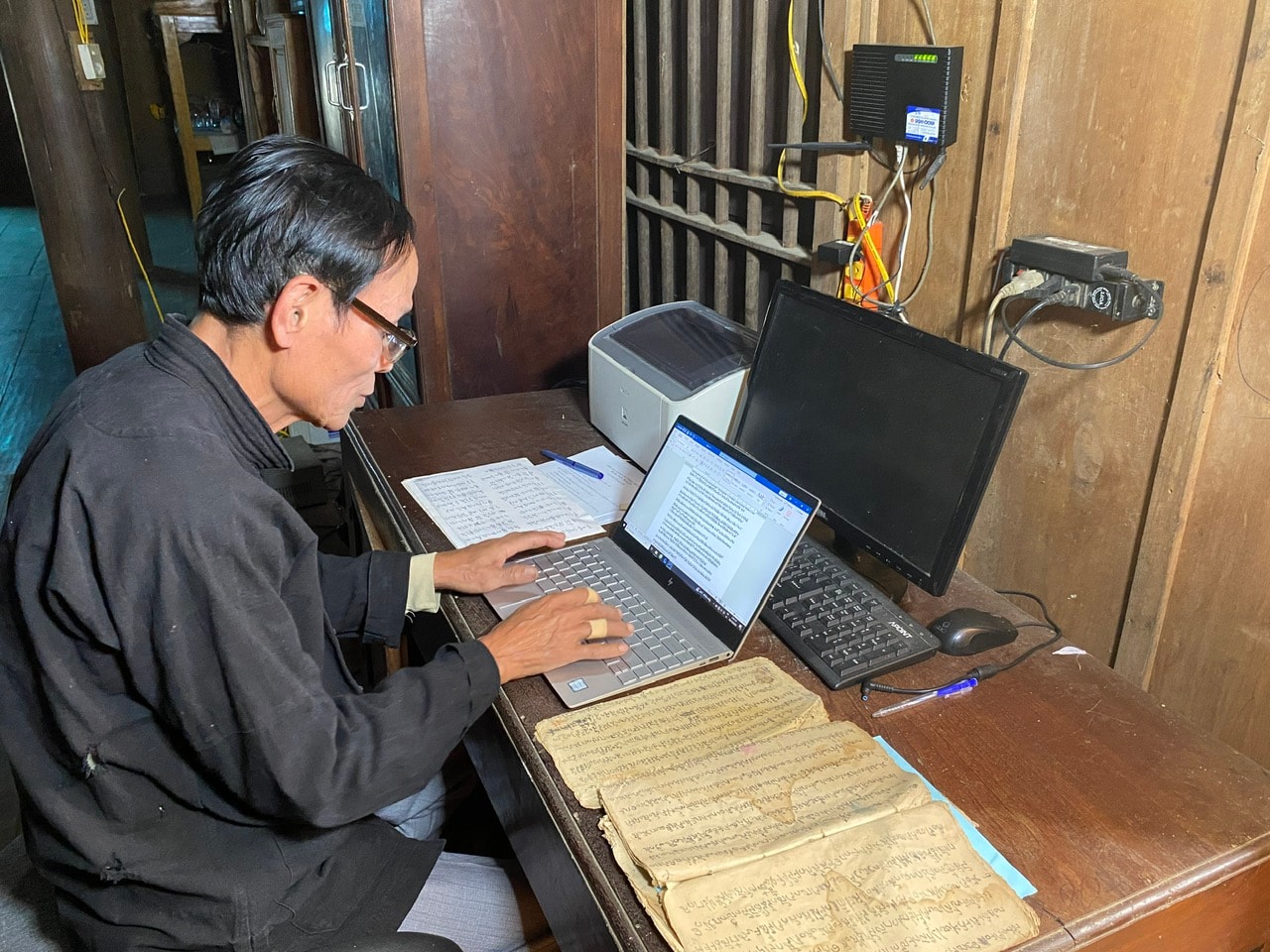
Notably, this preservation effort is no longer a matter of "trial and error," as the Lai Tay script has now been compiled by artisans and researchers into a relatively standardized curriculum and teaching materials. At the same time, this script has been encoded in the Unicode font system (Unicode 17.0), becoming part of the global language, creating extremely favorable conditions for teaching, printing, and widespread dissemination in modern life.
To ensure that our national script is not just a "guest" in schools.
Despite the teacher's dedication and the students' enthusiasm, the teaching and learning process here still faces many obstacles. The classes taught by artisan Vi Ngọc Chân are currently just spontaneous extracurricular activities, not organized regularly or systematically.
Vi Hoai Thuong, a student in class 8A, excitedly spoke about her passion: “I really enjoy learning the Thai script. Besides the knowledge I gain in class, learning the Thai script helps me understand more about the culture of my people.” However, lessons like Thuong's are still outside the regular curriculum.
According to Mr. Lo Xuan Tu, the school's Vice Principal, officially introducing the Thai script as a subject faces many difficulties regarding regulations. Mr. Tu expressed his concern: “Currently, the school is implementing the 2018 general education program. Boarding schools have their own unique characteristics; however, incorporating the Thai script into the main curriculum is very difficult due to regulations and procedures. Therefore, the school can only organize teaching in the form of extracurricular activities, after the main subjects.”
In fact, the introduction of the spoken and written languages of ethnic minorities into schools has been implemented in many localities across the country and has achieved positive results. For example, Soc Trang province (formerly) was a leader in teaching Khmer, with over 100 primary and secondary schools offering it as part of the curriculum. In Dak Lak province, most ethnic boarding schools have systematically incorporated the Ede language into their curriculum.
Meanwhile, Son La province – which has a similar ethnic structure to Nghe An – has early focused on teaching the ancient Thai script and the Hmong script to students in mountainous areas, making an important contribution to preserving cultural identity and improving the effectiveness of education in the locality… These models are clear evidence of the necessity and effectiveness of preserving and promoting ethnic languages through school education.
To ensure the sustainable preservation of the written heritage of the Thai ethnic group in Nghe An, it is time to study policies to attract, train, or sign long-term contracts with artisans – the "living treasures" of folk knowledge. This would allow them to participate in teaching in a stable manner as genuine teachers, instead of merely as "guests" in extracurricular activities. Only when systematically organized within schools can the Lai Tay script be sustainably taught, contributing to the effective promotion of the traditional cultural values of the Thai people in contemporary life.


